Anteprima in scala reale
 Condividi
 Condividi
 Dettagli
 Guida stampabile

 Scarica
 Articoli simili
 Radiografia
 Slideshow
 Statistiche
Innocence
 Oil On Canvas
- WallArt
- Romanticism
 1790
1790- Early Modern
 63.0 x 53.0 cm
 Wallace Collection
 Leggi tutto
Giclée / Stampe d'arte
Stampa giclée o su tela di qualità museale, con produzione rapida e diverse opzioni di finitura. ( Ordina la riproduzione dipinta a mano Passa all'immagine digitale)




P118B €10

P118H €10

P118W €10

P438Z €10

P508JH €12

P508YH €12

P805H €10

P805Z €10

P919BZ €10

P919G €10

P919XJ €10

P959ZH €10

P968JZ €12

W106C €8

W218G €10

W218JH €8

W218Y €10

W307PJ €10

W316G €10

W316PJ €8

W316Y €10

W398PJ €8

W4111J €10

W500HY €15

W500JH €15

W692G €12

W849H €8

W940BG €15

W953PJ €8




Scegli tra le nostre dimensioni predefinite, che rispettano le proporzioni originali dell'opera d'arte.

Type the width and the height you need, to fit your frame or your wall. A print can only be cut, never made bigger than the picture, so a size with a different shape loses a part of the image. We send you a digital mockup to approve before we print anything. The picture shown on this page does not show the real cut — only the mockup does.
Consegna in tutto il mondo () in 2 settimane invece delle normali 4/5 settimane. (14 Ottobre)

Spedizione espressa gratuita in tutto il mondo

Tela in lino di alta qualità

Assicurazione completa sulla spedizione

Garanzia di rimborso dei dazi doganali

Garanzia di perfetta fedeltà cromatica

Politica di reso entro 100 giorni (solo per difetti di fabbricazione)

Garanzia di rimborso al 100%

Sconto per acquisti multipli
 L'opzione vetro è disponibile solo per dimensioni inferiori a 110 cm

Innocence
Giclée / Stampe d'arte
Dimensioni della riproduzione
-


Prezzo totale
€ 69
A Vision of Purity: The Tender Soul of Greuze’s ‘Innocence’
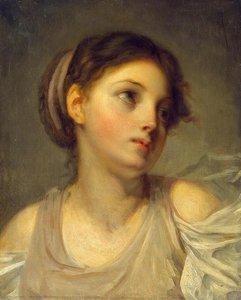
In the quiet, luminous realm of Jean-Baptiste Greuze’s “Innocence,” the viewer is invited into a moment of profound stillness that transcends the boundaries of time. Completed around 1793, this captivating portrait serves as a poignant emblem of the late eighteenth-s-century preoccupation with emotion and moral instruction. At its heart, the composition presents a young woman cradling a small, white lamb—an image of such profound simplicity and idealized beauty that it remains instantly recognizable to the modern eye. The painting does not merely depict a subject; it captures an atmosphere of vulnerability and grace, where the soft textures of the lamb’s wool and the gentle features of the woman merge to create a sanctuary of peace amidst the historical turbulence of the French Revolution.
The artistry behind this masterpiece lies in Greuze’s masterful ability to blend the decorative elegance of the Rococo style with an emerging Neoclassical sensitivity. While the palette is characterized by delicate pastel hues and graceful, flowing lines, there is a structural depth achieved through a meticulous use of chiaroscuro. By skillfully manipulating the interplay between light and shadow, Greuze sculpts the woman’s figure, allowing a soft, ethereal luminosity to radiate from her skin and illuminate the lamb in her arms. His technique, involving subtle glazing and incredibly fine brushstrokes, lends the work an almost otherworldly glow, making it an ideal centerpiece for those seeking to introduce a sense of calm, classical sophistication into a curated interior space.
Symbolism and the Language of Sentiment
Beyond its aesthetic allure, “Innocence” is deeply embedded in the Sentimental movement that swept through Europe during Greuze’s era. Every element within the frame is heavy with symbolic meaning, designed to evoke a sense of compassion and moral virtue. The lamb, a universal symbol of purity, gentleness, and sacrificial innocence, acts as a mirror to the young woman’s own character. Her tender embrace of the creature suggests a maternal devotion and a soul untouched by the cynicism of the world. This thematic focus on piety and goodness was a deliberate choice by Greuze, who sought to elevate everyday scenes into profound moral lessons, moving away from the grand, often detached mythological narratives favored by his contemporaries.
For the discerning collector or interior designer, this painting offers more than just visual beauty; it provides an emotional anchor. The subtle inclusion of a pink ribbon in her hair adds a touch of refined elegance, while the overall composition—focused on intimacy and closeness—creates a sense of warmth that can transform the ambiance of any room. Whether placed in a sunlit gallery or a quiet study, a high-quality reproduction of this work brings with it the enduring legacy of French genre painting, inviting all who gaze upon it to rediscover the beauty found in life's most tender and unpretentious moments.
Domande e risposte
In che modo "Innocence" si inserisce nei temi e nello stile di Jean-Baptiste Greuze?
All'interno della produzione di Jean-Baptiste Greuze, "Innocence" si inserisce nello stile Romanticism, affiancandosi ai temi di moral instruction, rococo sentimentality, classical idealism, pastoral virtue, female piety.
L'opera "Innocence" si trova nel paese del suo creatore?
No - l'opera si trova all'estero. The birth country of Jean-Baptiste Greuze is Francia, and the museum holding the original of "Innocence" is in Regno Unito.
Chi ha creato "Innocence" e in quale stile è realizzato?
Jean-Baptiste Greuze ha creato "Innocence" all'interno del movimento Romanticism.
Biografia dell'artista
La Giovinezza e la Formazione
Jean-Baptiste Greuze, pittore francese, nacque il 21 agosto 1725 a Tournus, in Borgogna. Suo padre, maestro coprimastri, inizialmente scoraggiò le inclinazioni artistiche del figlio, ma alla fine Grandon, un artista lyonese, incoraggiò Greuze a perseguire la sua passione. Nel 1750, Greuze si trasferì a Parigi per studiare sotto Charles-Joseph Natoire all'Accademia Reale di Pittura e Scultura.Ascesa alla Fama
La svolta di Greuze avvenne nel 1755 con il suo dipinto *Le Père de Famille Expliquant la Bible à ses Enfants*, acquistato da un appassionato d'arte, Ange-Laurent Lalive de Jully. Questo portò al riconoscimento di Greuze tra i filosofi e la comunità artistica. Successivamente, viaggiò in Italia con l’Abbé Gougenot, dove trascorse circa un anno, ispirando le sue future opere.Stile Artistico e Opere Notabili
Lo stile di Greuze è caratterizzato dalla sua attenzione alle scene di genere, catturando l'essenza della vita quotidiana. Alcune opere notevoli includono:- *A Girl with a Dead Canary* (Scottish National Gallery, Edimburgo), che mostra l’abilità di Greuze nell’evocare emozioni.
- *Savoyard with a Dancing Doll* (Albertina, Vienna), evidenziando la sua abilità nel catturare lo spirito dei suoi soggetti.
- *Boy with a Broken Egg*, c. 1756 (Albertina, Vienna), dimostrando la precoce padronanza di Greuze nella pittura di genere.
Evoluzione Artistica e Tentativi Storici
Nel 1765, il successo di Greuze raggiunse l'apice con tredici opere esposte al Salon, tra cui *La Jeune Fille qui Pleure son Oiseau Mort*, *La Bonne Mère* e *Le Mauvais Fils Puni* (Louvre). Tuttavia, il suo tentativo di passare alla pittura storica fu accolto con critiche. Greuze si sforzò di elevare il suo status artistico abbracciando soggetti storici e mitologici, ma questi tentativi non ebbero lo stesso successo delle sue opere di genere.Eredità e Vita Successiva
Greuze morì il 4 marzo 1805 nel Louvre, dopo una vita segnata sia da trionfi artistici che da difficoltà finanziarie. Nonostante le critiche ricevute per i suoi tentativi nella pittura storica, l'influenza di Greuze sulla pittura francese del XVIII secolo rimane significativa. La sua capacità di catturare la vita quotidiana e le emozioni umane con realismo e sensibilità lo ha reso un artista amato dal pubblico e apprezzato dagli storici dell’arte. Le sue opere continuano ad essere esposte in importanti musei di tutto il mondo, testimoniando il suo contributo duraturo all'arte francese.
Jean-Baptiste Greuze
1725 - 1805 , Francia
Informazioni rapide
- Data Di Nascita: 21 agosto 1725
- Luogo Di Nascita: Tournus, Francia
- Movimento Artistico: Rococò
- Nazionalità: Francese
- Nome Completo: Jean-Baptiste Greuze
- Opere Notevoli:
- A Girl with a Dead Canary
- Savoyard with a Dancing Doll
- Boy with a Broken Egg
- Le Père de Famille
Articoli correlati

I 10 Capolavori Rococò che Hanno Definito un'Epoca | Arte e Decorazioni di Lusso
Esplora i 10 capolavori del Rococò con ! Scopri Fragonard, Boucher e Tiepolo e lasciati ispirare da colori pastello e decorazioni di lusso. Quadri antichi e riproduzioni d'arte per interni eleganti. Esplora la collezione online!

The Elegance of Rococo: A Journey Through Pastel Dreams and Ornate Splendor
Embark on an elegant journey through the Rococo era. Discover the delicate beauty of pastel masterpieces, the intricate artistry of 18th-century French masters, and how this era of ornate splendor continues to inspire timeless luxury in fine art collecting.

The Rococo Aesthetic: Opulence, Rebellion & the Pursuit of Pleasure in 18th-Century Art
Explore the opulent world of Rococo art! Discover its origins, key artists like Watteau & Boucher, and lasting influence on design. Expert insights for collectors & enthusiasts.

Maurice Quentin de La Tour: Luce, Ombra e il Ritratto Rococò
Scopri Maurice Quentin de La Tour, maestro del ritratto rococò e innovatore della tecnica a pastello. Analisi approfondita dei suoi capolavori, influenze artistiche e contesto storico. Esplora l'arte settecentesca con OriginalUniqueArt.

Carlo-André van Loo e lo Studio sulla Ritrattistica Rococò alla Corte Francese
Esplora l'arte di Carlo-André van Loo e il raffinato mondo della ritrattistica rococò alla corte francese del XVIII secolo. Analisi approfondite, tecniche pittoriche e contesto storico per collezionisti ed esperti.