Anteprima in scala reale
 Invia
Invia Condividi
 Dettagli opera
 Guida
Guida

 Scarica
 Simili
 Radiografia
 Slideshow
 Statistiche
Frutta e fiori
 Olio su tela
- Opere da parete
- Età dell'oro olandese
 1720
1720- Late Medieval
 81.0 x 60.0 cm
 Wallace Collection
 Espandi i dettagli
Riproduzione a olio fatta a mano
Olio su tela dipinto a mano nelle tue dimensioni e con la tua cornice, realizzato su ordinazione dai nostri artisti. ( Passa alle stampe Passa all'immagine digitale)




P118B €10

P118H €10

P118W €10

P438Z €10

P508JH €12

P508YH €12

P805H €10

P805Z €10

P919BZ €10

P919G €10

P919XJ €10

P959ZH €10

P968JZ €12

W106C €8

W218G €10

W218JH €8

W218Y €10

W307PJ €10

W316G €10

W316PJ €8

W316Y €10

W398PJ €8

W4111J €10

W500HY €15

W500JH €15

W692G €12

W849H €8

W940BG €15

W953PJ €8




Scegli tra le nostre dimensioni predefinite, che rispettano le proporzioni originali dell'opera d'arte.

Inserisci la larghezza e l'altezza desiderate, per adattarle alla tua cornice o alla tua parete. Trattandosi di un'opera dipinta a mano, in caso di dimensioni con un formato differente, l'artista può estendere leggermente il dipinto oltre i bordi dell'immagine o ritagliare una piccola parte — la scelta spetta a te. Ti invieremo un mockup digitale da approvare prima che la realizzazione abbia inizio. L'immagine mostrata in questa pagina non rappresenta il risultato finale — solo il mockup lo fa.
Dopo l'ordine, il team di OriginalUniqueArt.com contatterà il cliente via e-mail per ricevere le istruzioni e fornirà un'anteprima del mockup
Consegna in tutto il mondo () in 3/4 settimane anziché nelle normali 5 settimane. (26 Ottobre). Nessun compromesso sulla qualità.

Spedizione espressa gratuita in tutto il mondo

Tela in lino di alta qualità

Assicurazione completa sulla spedizione

Garanzia di rimborso dei dazi doganali

Garanzia di fedeltà cromatica assoluta

Politica di reso entro 100 giorni (solo per difetti di fabbricazione)

Garanzia di rimborso al 100%

Offerta per acquisti multipli
 L'opzione vetro è disponibile solo per dimensioni inferiori a 110 cm

Frutta e fiori
Tecnica di riproduzione
Dimensioni riproduzione
-


Prezzo finale calcolato
€ 263
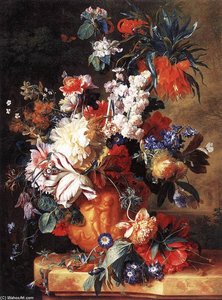
Una finestra sulla brillantezza dell'Età dell'Oro olandese: “Frutta e Fiori” di Jan van Huysum
Il mondo della pittura di natura morta evoca spesso immagini di tavole meticolosamente apparecchiate e cariche di prelibatezze, una testimonianza dell'opulenza e dell'abbondanza della società olandese del XVII secolo. Eppure, all'interno di questo genere si cela una profondità profonda, una sottile poesia nel catturare la bellezza fuggevole dei doni della natura. “Frutta e Fiori” di Jan van Huysum, dipinto intorno al 1720, non è una semplice raffigurazione di una collezione; è un'esperienza immersiva, un'illusione meticolosamente creata che invita lo spettatore a immergersi in un mondo traboccante di colore, consistenza e risonanza simbolica. Quest'opera particolare, custodita nella Wallace Collection di Londra, si erge come un esempio straordinario della maestria dell'artista, una prova della sua dedizione al realismo e della sua profonda comprensione della luce, della forma e dell'essenza stessa della bellezza.
L'arte dell'illusione: tecnica e stile
La tecnica di Van Huysum è a dir poco sbalorditiva. Egli impiegò una magistrale sovrapposizione di sottili velature di colore a olio, costruendo colore e luminosità con una precisione quasi maniacale. Questo approccio, tipico dell'Età dell'Oro olandese, gli permise di raggiungere un livello di dettaglio senza pari: dalla buccia vellutata di una pesca alle delicate venature di una foglia. Si noti come l'artista renda le texture: la lucentezza liscia delle superfici levigate, come quelle delle pesche, contrasta nettamente con la rugosità della corteccia dei rami e i dettagli intricati del fogliame. L'uso di una luce direzionale, proveniente da una fonte invisibile posta in alto e leggermente a sinistra, esalta drammaticamente la tridimensionalità degli oggetti, proiettando ombre profonde che aggiungono profondità e realismo. La composizione stessa è una danza accuratamente orchestrata di elementi sovrapposti, creando un senso di ricchezza traboccante e invitando l'occhio a esplorare ogni angolo dell'arrangiamento.
Una sinfonia di simbolismo: frutta, fiori e cherubini
Oltre alla sua brillantezza tecnica, “Frutta e Fiori” è ricco di significati simbolici. L'abbondanza di frutti – uva, pesche, zucche – parla direttamente ai temi della prosperità, della fertilità e della generosamento della natura. L'inclusione di fiori come papaveri e gigli amplifica ulteriormente questo simbolismo, ognuno con le proprie specifiche associazioni: i papaveri rappresentano la bellezza e la passione, mentre i gigli simboleggiano la purezza e l'innocenza. Ma forse l'elemento più intrigante è la sottile presenza di una piccola figura di cherubino, adagiata tra gli elementi della composizione. Questo dettaglio, un richiamo all'allusione classica, aggiunge uno strato di complessità narrativa, accennando a temi di grazia, armonia e al legame tra l'umanità e il mondo naturale. Le farfalle che volteggiano intorno alla composizione contribuiscono al senso generale di movimento e vitalità, suggerendo la natura effimera della bellezza stessa.
Un'eredità di fioriture: contesto e influenza artistica
La stirpe artistica di Jan van Huysum è profondamente radicata nell'eredità della sua famiglia. Suo padre, Justus van Huysum il Vecchio, era un rispettato pittore di fiori, e i suoi fratelli, Jacob e Michiel, seguirono le sue orme, stabilendo una tradizione di illustrazione botanica che fiorì durante l'Età dell'Oro olandese. Van Huysum stesso non fu inizialmente attratto dai soggetti floreali; sperimentò con i paesaggi all'inizio della sua carriera. Tuttavia, scoprì rapidamente la sua vera vocazione nella natura morta, padroneggiando l'arte di rendere la natura con un realismo mozzafiato e un'attenzione quasi ossessiva al dettaglio. La sua opera riflette un profondo apprezzamento per il mondo naturale, combinato con una sofisticata comprensione della tecnica artistica – una combinazione potente che consolidò il suo posto come uno dei più celebri pittori di fiori del suo tempo. L'influenza di artisti come Caravaggio, noto per il suo uso drammatico di luce e ombra, è sottilmente evidente nelle composizioni di Van Huysum, aggiungendo un senso di dramma e intensità all'opera complessiva.
Oggi, le riproduzioni di “Frutta e Fiori” offrono una straordinaria opportunità per portare questo squisito capolavoro nella propria casa o nel proprio ufficio. Ogni versione dipinta a mano cattura l'essenza dell'opera originale di Van Huysum, ricreando fedelmente il suo meticoloso dettaglio, i suoi colori vibranti e la sua atmosfera evocativa. È molto più di un semplice dipinto; è una finestra su un'epoca passata – una celebrazione della bellezza, dell'abbondanza e del potere duraturo dell'arte.
Domande e risposte
Qual è il colore dominante di "Frutta e fiori" di Jan Van Huysum?
Il colore dominante di "Frutta e fiori" di Jan Van Huysum è Espresso (#63574a).
Che emozione trasmettono i colori di "Frutta e fiori" di Jan Van Huysum?
La tavolozza Toni della terra di "Frutta e fiori" di Jan Van Huysum si sposa con il suo tono emotivo Contemplativo. Il colore è uno dei mezzi attraverso cui un'opera trasmette emozioni.
A quale periodo della carriera di Jan Van Huysum appartiene "Frutta e fiori"?
All'interno della carriera di Jan Van Huysum, "Frutta e fiori" appartiene al Periodo maturo. Questa fase permette di confrontarla con le altre opere dell'artista.
Biografia dell'artista
Jan van Huysum (1682–1749): A Master of Floral Illusion
Jan van Huysum, a name synonymous with the exquisite flower paintings of the Dutch Golden Age, was born in Amsterdam on April 15, 1682. He wasn’t simply a painter of blooms; he was a master of illusion, capable of rendering petals and droplets with such breathtaking realism that viewers felt they could almost inhale their fragrance. Born into an artistic family—his father, Justus van Huysum the Elder, was also a respected flower painter, and his brothers Jacob and Michiel followed suit—Jan’s path seemed predetermined. However, he wasn't immediately drawn to floral subjects. Early in his career, he experimented with landscapes, described as “conventional and arcadian,” but it was within the delicate world of still life that his true genius blossomed.
The foundation of Van Huysum’s artistic education was laid by his father, a formative experience that instilled in him not only technical skill but also an understanding of the art market. Amsterdam during this period thrived as a center for commerce and culture, fostering a demand for luxurious and decorative paintings like those depicting lavish floral arrangements. This environment shaped Van Huysum’s approach; he wasn’t merely replicating nature, but crafting idealized visions of beauty intended to delight and impress. His earliest dated work, completed in 1717 and now residing in the Louvre, already reveals a remarkable maturity and attention to detail, hinting at the mastery that was to come.
The Art of Detail: Technique and Style
What truly sets Van Huysum apart is his unparalleled technique. He employed smooth, glossy brushstrokes, building up layers of paint to create an almost enamel-like surface that enhanced the richness and vibrancy of his colors. But it wasn’t just about color; it was about light—the way it played across petals, illuminated water droplets clinging to leaves, and created a sense of depth and volume. He possessed an extraordinary eye for detail, meticulously capturing the textures of every flower, fruit, and leaf with astonishing precision. Stories circulated that he could paint details like ants and dew drops so realistically they were visible without magnification—a testament to his dedication and skill.
His approach was revolutionary for its time. Unlike many of his contemporaries who favored crowded, overflowing arrangements, Van Huysum consistently avoided imbalance or over-composition. He sought to capture the essence of a particular moment in nature, presenting it with serene elegance and understated beauty. His later works became more elaborate, certainly, but always maintained a sense of harmony and grace. He often incorporated elements of fantasy into his work, particularly in his landscapes which featured imaginary scenes with classical architectural details and motionless trees. These weren’t attempts at topographical accuracy, but rather evocative settings designed to showcase the beauty of the flowers they contained.
A Flourishing Reputation: Major Works and Legacy
Throughout his lifetime, Jan van Huysum enjoyed considerable acclaim and financial success. His paintings were highly sought after by collectors, and he commanded high prices for his work. Today, his masterpieces can be found in prestigious museums around the world, including the Louvre in Paris, the National Gallery in London, and collections in Berlin and Amsterdam. Among his most celebrated works are Terracotta Vase with Flowers and Fruits, a stunning display of color and texture; Flowers and Fruits, showcasing his mastery of composition; and Bouquet of Flowers in an Urn, a testament to his ability to capture the ephemeral beauty of nature.
His influence extended beyond his own time, inspiring generations of artists. Painters like Jan van Os and Johannes de Bosch clearly demonstrate his impact on subsequent floral still life traditions. He represents the pinnacle of Dutch Golden Age flower painting, a period defined by its meticulous observation of nature and its celebration of beauty. His legacy isn't simply about the numerous paintings he created, but also about the enduring appeal of his style—a style that continues to inspire artists and captivate audiences today. His work remains a powerful reminder of the artistry and skill required to transform fleeting moments of natural beauty into timeless works of art.
Family Connections & Artistic Lineage
- Justus van Huysum the Elder (1659–1716): Jan’s father, a prolific painter of flower pieces and decorative schemes.
- Jacob van Huysum (1688–1740): Jan’s brother, also a notable artist specializing in botanical illustrations.
- Justus van Huysum the Younger (1685–1707): Another of Jan’s brothers who pursued painting but died young.
- Michiel van Huysum (1703–1777): A half-brother, also a flower painter.
- Francina Margaretha van Huysum: Jan’s daughter, who assisted him in his work and was herself a skilled flower painter.
The Van Huysum family represents a remarkable artistic lineage, contributing significantly to the rich tapestry of Dutch Golden Age painting. Jan, however, stands out as the most celebrated member, leaving an indelible mark on the history of art with his exquisite and enduring floral masterpieces.

Jan Van Huysum
1682 - 1749 , Paesi Bassi
Dettagli rapidi
- Artistic Movement Or Style: Dutch Golden Age, Still life
- Artists Or Movements Influenced By This Artist: ['Justus van Huysum']
- Artists Who Influenced This Artist:
- Johannes de Bosch
- Jan van Os
- Date Of Birth: April 15, 1682
- Date Of Death: February 8, 1749
- Full Name: Jan van Huysum
- Nationality: Dutch
- Notable Artworks:
- Terracotta Vase with Flowers
- Flowers and Fruits
- Bouquet of Flowers in an Urn
- Place Of Birth: Amsterdam, Netherlands
Articoli correlati

I 10 Capolavori dell'Età d'Oro Olandese: Arte, Storia e Stile per la Tua Casa
Esplora i 10 capolavori dell'Età d'Oro Olandese con ! Rembrandt, Vermeer e altri maestri rivivono in dipinti iconici. Scopri storia, tecnica e colori di opere senza tempo per arredare la tua casa con arte di qualità museale. Esplora la collezione online!

Golden Light & Dutch Skies: The Timeless Magic of Dutch Golden Age Landscapes
Discover the breathtaking beauty of Dutch Golden Age landscapes. Explore the mastery of light, chiaroscuro, and 17th-century realism through an expert art history lens, celebrating the enduring legacy of the Dutch Masters for discerning collectors and art lovers.
Abraham Hendricksz van Beyeren: Pioneering Dutch Still Life & the Banquet Tradition
Explore the captivating world of Dutch Golden Age still life with Abraham van Beyeren. Discover his innovative techniques, symbolic banquet scenes & lasting influence on art history. Learn about collecting these masterpieces.

Rembrandt van Rijn: I 25 Capolavori Immortali da Ammirare | OriginalUniqueArt
Esplora i 25 capolavori di Rembrandt van Rijn, da 'La Ronda di Notte' ai suoi intensi autoritratti. Scopri la storia, le tecniche e l'arte barocca del maestro olandese. Riproduzioni di alta qualità su OriginalUniqueArt.com.

Jan Jansz Wijnants: A Study in Dutch Golden Age Still Life & Floral Transience
Explore the captivating world of Jan Wijnants and Dutch Golden Age still life painting. Discover symbolism, masterful techniques & lasting influence on floral art history. Learn more!