

 Anteprima in scala reale
 Invia
Invia Condividi
 Dettagli opera

 Scarica immagine
 Simili
 Radiografia
 Slideshow
Madonna col Bambino e santi


 Espandi i dettagli
Giclée / Stampe d'arte
Stampa giclée o su tela di qualità museale, con produzione rapida e diverse opzioni di finitura. ( Acquista il dipinto realizzato a mano Acquista immagine)




P118B $10

P118H $10

P118W $10

P438Z $10

P508JH $12

P508YH $12

P805H $10

P805Z $10

P919BZ $10

P919G $10

P919XJ $10

P959ZH $10

P968JZ $12

W106C $8

W218G $10

W218JH $8

W218Y $10

W307PJ $10

W316G $10

W316PJ $8

W316Y $10

W398PJ $8

W4111J $10

W500HY $15

W500JH $15

W692G $12

W849H $8

W940BG $15

W953PJ $8




Scegli tra le nostre dimensioni predefinite, che rispettano le proporzioni originali dell'opera d'arte.

È possibile inserire dimensioni personalizzate per adattare l'opera a una cornice o a uno spazio specifico. Se la dimensione selezionata non corrisponde alle proporzioni dell'immagine originale, procederemo al ritaglio dell'opera o all'estensione dell'immagine con un bordo specchiato o a tinta unita. Un mockup digitale ti verrà inviato per approvazione prima dell'inizio della produzione.
Si prega di notare che l'anteprima a schermo non riflette il ritaglio o l'estensione effettivi. Solo il mockup mostrerà accuratamente la composizione finale.
Sebbene siano disponibili dimensioni personalizzate, si raccomanda di selezionare una dimensione dall'elenco predefinito per preservare le proporzioni originali.
Consegna in tutto il mondo () in 2 settimane invece delle normali 4/5 settimane. (28 Agosto)

Spedizione espressa gratuita in tutto il mondo

Tela in lino di alta qualità

Assicurazione completa sulla spedizione

Garanzia di rimborso dei dazi doganali

Garanzia di fedeltà cromatica

Politica di reso entro 60 giorni (solo per difetti di fabbricazione)

Garanzia di rimborso al 100%

Offerta per acquisti multipli
 L'opzione vetro è disponibile solo per dimensioni inferiori a 110 cm

Madonna col Bambino e santi
Giclée / Stampe d'arte
Dimensioni riproduzione
-


Prezzo totale calcolato
$ 80
Jan van Eyck: The Architect of Detail
Jan van Eyck ( c. before 1390 – 9 July 1441) stands as one of the towering figures of the Early Netherlandish painting movement, a period that irrevocably transformed European art and visual culture. Often hailed as “the inventor of oil-painting,” his legacy extends far beyond mere technical innovation; he fundamentally reshaped artistic expression by prioritizing meticulous observation and rendering unparalleled realism—a feat achieved through groundbreaking advancements in pigment preparation and application.
Born around 1390 in Maastricht, Limburg (then Maaseyck), Van Eyck’s early life remains shrouded in obscurity. However, his burgeoning talent quickly propelled him into the orbit of artistic patronage, securing commissions from influential rulers like John III the Pitiless and Philip the Good—positions that afforded him considerable prestige and resources. His involvement in diplomatic missions underscored not only his artistic prowess but also his intellectual curiosity and trustworthiness.
The pinnacle of Van Eyck’s career arrived with his service to Philip the Good, who recognized his genius and entrusted him with overseeing monumental projects – most notably the Ghent Altarpiece—a collaborative effort that cemented his reputation as a master craftsman and visionary artist. This ambitious undertaking exemplifies his mastery of oil painting technique and his ability to convey profound spiritual emotion.
The Ghent Altarpiece: A Symphony of Light and Texture
Completed between 1432 and 1439, the Ghent Altarpiece—now housed in St Bavo’s Cathedral in Ghent—represents Van Eyck's magnum opus. It is a breathtaking testament to his artistic skill and an unparalleled achievement in visual storytelling. The altarpiece depicts scenes from the life of Christ, interwoven with intricate depictions of saints and donors—a masterful combination of narrative clarity and textural richness.
What distinguishes the Ghent Altarpiece from its contemporaries is Van Eyck’s revolutionary use of oil paint—a medium that allowed him to achieve luminosity and depth previously unattainable. His meticulous layering of glazes created an astonishing illusion of three-dimensionality, capturing subtle nuances of light and shadow with breathtaking accuracy. The resulting surface possesses a velvety smoothness—a hallmark of Van Eyck's technique—that continues to inspire admiration among art historians and connoisseurs.
Beyond Technique: Symbolism and Emotional Resonance
However, Van Eyck’s artistic genius transcends mere technical prowess; it resides in his profound understanding of symbolism and his ability to evoke powerful emotions. Each element within the Ghent Altarpiece—from the drapery folds to the facial expressions—is imbued with meaning—reflecting theological concepts and conveying spiritual aspirations.
The altarpiece’s central panel portrays Christ Pantocrator—the “Lord Almighty”—a figure of serene majesty bathed in radiant light. This depiction embodies Christian theology's assertion that God reigns supreme over all creation, radiating divine grace and compassion. The meticulous detail with which Van Eyck rendered Christ’s robe and halo underscores his unwavering commitment to realism—a stylistic choice that simultaneously elevates the image aesthetically and reinforces its spiritual significance.
Legacy: Shaping Artistic Vision
Jan van Eyck's influence on subsequent generations of artists is undeniable. His pioneering use of oil paint irrevocably altered the trajectory of European painting, establishing a new standard for realism and luminosity—a legacy that continues to resonate throughout art history. He remains an exemplar of artistic innovation and emotional depth—a testament to the transformative power of observation and meticulous craftsmanship.
His enduring fascination stems from his ability to capture not merely what is seen but also what is felt—a feat achieved through a masterful blend of technical virtuosity and symbolic insight. Van Eyck’s contribution to Early Netherlandish painting cemented his place as one of the most celebrated artists of his era, inspiring countless imitators and shaping the artistic landscape for centuries to come.
Biografia dell'artista
vitae e carriera
Jan van Eyck, una figura eminente del movimento pittorico fiammingo antico, nacque intorno al 1390 a Maaseik, Belgio attuale. Entro il 1422, si era affermato come pittore maestro con un laboratorio e assistenti ad Anversa. In particolare, ha servito Giovanni III il Crudele e successivamente Filippo il Bello, duca di Borgogna, come pittore di corte, godendo di grande stima e impegnandosi in attività diplomatiche.contributi artistici
Le opere di Van Eyck, inizialmente radicate nello stile gotico internazionale, trascendono i suoi confini attraverso il suo approccio naturalistico potenziato e l'uso innovativo della pittura a olio. Ciò ha stabilito un nuovo standard nell'arte, rendendolo un pioniere del movimento pittorico fiammingo antico. Alcune delle sue opere più importanti includono:- Dio Padre (212 x 83 cm, Rinascimento del nord, olio su tavola, visualizza su OriginalUniqueArt.com)
- Ritratto di un giovane (33 x 19 cm, Rinascimento del nord, olio su tavola, visualizza su OriginalUniqueArt.com)
- Triptico di Dresda (Vergine e bambino con San Michele e Santa Caterina e un donatore) (28 x 38 cm, Gemäldegalerie alte meister, Dresda, Germania, Rinascimento del nord, legno, visualizza su OriginalUniqueArt.com)
- Ritratto di Giovanni Arnolfini e sua moglie (dettaglio) (Galleria Nazionale, Londra, Regno Unito, olio, visualizza su OriginalUniqueArt.com)
- Uomo con turbante blu (17 x 23 cm, Museo nazionale d'arte della Romania, Bucarest, Romania, Rinascimento del nord, legno, visualizza su OriginalUniqueArt.com)
eredità e influenza
L'influenza di Van Eyck è stata profonda, ponendo le basi per la fioritura della tradizione pittorica fiamminga antica. Il suo uso innovativo della pittura a olio ha aggiunto profondità e realismo alle sue opere, rendendolo una figura rinomata nel mondo dell'arte. Per esplorare altre opere di Jan Van Eyck e del movimento pittorico fiammingo antico, visita la pagina di Jan Van Eyck su OriginalUniqueArt.com.Ulteriori letture
* Wikipedia: [Jan van Eyck](https://en.wikipedia.org/wiki/jan_van_eyck) * OriginalUniqueArt.com: pittore fiammingo nordico * OriginalUniqueArt.com: il movimento artistico fiammingo antico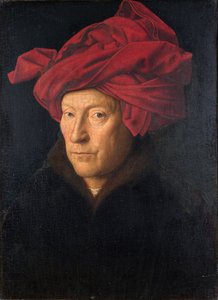
Jan van Eyck
1390 - 1441 , Paesi Bassi
Dati rapidi
- Artistic Movement Or Style: Pittura fiamminga antica
- Artists Or Movements Influenced By This Artist: ['Early Netherlandish']
- Date Of Birth: c. 1390
- Date Of Death: 1441
- Full Name: Jan van Eyck
- Nationality: Fiammingo
- Notable Artworks:
- Polittico di Gand
- Ritratto di Arnolfini
- Place Of Birth: Maastricht, Paesi Bassi
Articoli correlati

I 10 Capolavori della Pittura Fiamminga Antica: Arte, Storia e Stile per la Tua Casa
Esplora i 10 capolavori della pittura fiamminga antica! Jan van Eyck, Rogier van der Weyden e altri maestri rinascimentali. Scopri storia, tecnica e simbolismo di questi dipinti iconici. Trova riproduzioni d'arte di alta qualità per la tua casa su OriginalUniqueArt.com.

Jan van Eyck: Innovazione, Simbolismo e l'Alba della Pittura Primitiva Fiamminga
Esplora l'innovazione e il simbolismo rivoluzionari di Jan van Eyck, padre della pittura fiamminga. Analisi approfondita della tecnica ad olio, del Polittico dell'Agnello Mistico e dei suoi capolavori. Scopri la sua eredità artistica.

I 10 Capolavori del Rinascimento Netherlandese: Arte, Storia e Decorazioni di Lusso
Esplora i 10 capolavori del Rinascimento Netherlandese: Jan van Eyck, Rogier van der Weyden e altri maestri fiamminghi. Scopri la storia, le tecniche e il simbolismo di questi dipinti iconici. Riproduzioni d'arte di lusso su OriginalUniqueArt.com.

Illuminating Realism: A Comprehensive Exploration of the Early Netherlandish Renaissance Movement
Explore the captivating world of Early Netherlandish painting! Discover Jan van Eyck & other Flemish masters, their revolutionary techniques, hidden symbolism, and lasting legacy. A comprehensive guide for art enthusiasts.
Illuminating Realism: Early Netherlandish Painting (15th-16th Centuries)
Explore the captivating world of Early Netherlandish painting! Discover Jan van Eyck, Hans Memling & more. Uncover symbolism, techniques & the legacy of these Flemish masters. A comprehensive guide for art enthusiasts.



