

 Anteprima in scala reale
 Invia
Invia Condividi
 Dettagli opera
 Guida
Guida

 Scarica
 Simili
 Radiografia
 Slideshow
 Statistiche
Lieu dit II (rot)
 Oil
Oil- WallArt
- Contemporary Art
 1989
1989- Contemporary
 218.0 x 314.0 cm
 Lentos Kunstmuseum Linz
 Espandi i dettagli
L'opera d'arte visualizzata in questa pagina è protetta dalle leggi sul diritto d'autore, il che significa che non possiamo legalmente creare o vendere una riproduzione identica. Tale protezione è garantita da accordi internazionali quali la Convenzione di Berna e dalle leggi nazionali, incluse quelle stabilite da Legge sul copyright degli Stati Uniti - Titolo 17. Tutti i diritti riservati. Le immagini presenti su questo sito sono protette da copyright e non possono essere riprodotte o utilizzate senza l'autorizzazione scritta di WahooArt.com o dei rispettivi proprietari del copyright.
Questo metodo è pienamente conforme alle normative sul diritto d'autore poiché non prevede la copia o la duplicazione dell'opera protetta. Si tratta invece di una rielaborazione creativa: un nuovo dipinto che trae ispirazione dall'originale, senza tuttavia esserne identico.
Giclée / Stampe d'arte
Stampa giclée o su tela di qualità museale, con produzione rapida e diverse opzioni di finitura. ( Acquista il dipinto realizzato a mano Passa all'immagine digitale)




































Scegli tra le nostre dimensioni predefinite, che rispettano le proporzioni originali dell'opera d'arte.

Inserisci la larghezza e l'altezza desiderate, per adattarle alla tua cornice o alla tua parete. Una stampa può essere solo ritagliata, mai resa più grande dell'immagine originale; pertanto, un formato con una forma differente comporterà la perdita di una parte dell'opera. Ti invieremo un mockup digitale da approvare prima di procedere con la stampa. L'immagine mostrata in questa pagina non rappresenta il ritaglio reale — solo il mockup lo mostra.
Consegna in tutto il mondo () in 2 settimane invece delle normali 4/5 settimane. (26 Ottobre)

Spedizione espressa gratuita in tutto il mondo

Tela in lino di alta qualità

Assicurazione completa sulla spedizione

Garanzia di rimborso dei dazi doganali

Garanzia di fedeltà cromatica assoluta

Politica di reso entro 100 giorni (solo per difetti di fabbricazione)

Garanzia di rimborso al 100%

Offerta per acquisti multipli
 L'opzione vetro è disponibile solo per dimensioni inferiori a 110 cm

Lieu dit II (rot)
Giclée / Stampe d'arte
Dimensioni riproduzione
-


Prezzo finale calcolato
€ 70
A Symphony of Crimson Chaos
In the vast, immersive expanse of Lieu dit II (rot), the viewer is immediately plunged into a visceral, monochromatic world where color ceases to be merely a pigment and becomes an environment. Created in 1989 by the enigmatic German artist Jan Appel, this monumental oil painting—measuring a staggering 218 x 314 cm—commands the space it inhabits with an unapologetic intensity. The work is a masterclass in the use of red, utilizing a spectrum of scarlet, crimson, and deep vermilion to create a textured landscape that feels both tactile and atmospheric. At first glance, the composition presents a sense of profound disarray, as if a moment of creative destruction has been frozen in time. Scattered across the canvas are fragments of red fabric, scraps of paper, and even the sharp, metallic presence of scissors, all layered within a sea of crimson that blurs the line between painting and assemblage.
The technique employed by Appel in this late-career masterpiece suggests a deep engagement with the physical properties of his medium. Rather than seeking a smooth, illusionistic finish, the artist embraces the raw, sculptural quality of oil paint combined with mixed media elements. The way the fabric pieces interact with the painted surface creates a rhythmic, almost percussive visual texture, drawing the eye through a labyrinth of folds and edges. This approach evokes the spirit of late 20th-century abstraction, where the act of creation is as much about the physical struggle with materials as it is about the final image. For the collector or interior designer, this piece offers a profound sense of depth; its sheer scale and complex layering allow it to serve as a powerful focal point that changes character depending on the light and the angle of observation.
Historical Echoes and Emotional Resonance
To understand the turbulent energy of Lieu dit II (rot), one must consider the historical weight carried by Jan Appel. Though often remembered for his revolutionary political activism in early 20th-century Germany, Appel’s later artistic output reflects a lifetime of navigating social and structural upheaval. The "chaos" within this painting—the scattered remnants and the sense of fragmentation—can be read as a metaphor for the fractured nature of modern existence and the beautiful, messy process of reconstruction. There is a profound tension between the destruction suggested by the discarded scraps and the vibrant, life-affirming power of the red hue itself. It is an artwork that does not merely sit on a wall; it breathes with a restless, revolutionary spirit.
For those looking to integrate such a commanding work into a curated space, Lieu dit II (rot) offers unparalleled emotional impact. In a contemporary interior, this reproduction serves as a bold statement of sophistication and intellectual depth. It provides a warm yet provocative energy that can anchor a minimalist room or add a layer of complex history to a more traditional setting. The painting invites contemplation, prompting the viewer to find order within the disorder and beauty within the fragments. Owning a piece of this magnitude is an opportunity to possess a fragment of German art history—a work that captures the raw, unyielding pulse of human expression.
Domande e risposte
Quale origine nazionale si cela dietro il Contemporary Art di "Lieu dit II (rot)"?
L'opera Contemporary Art "Lieu dit II (rot)" è stata realizzata da un artista nato in Germania.
È possibile visualizzare un'anteprima in realtà aumentata di "Lieu dit II (rot)"?
Puoi visualizzare "Lieu dit II (rot)" di Jan Appel sulla tua parete grazie alla pagina Anteprima in AR dell'opera, utilizzando la realtà aumentata su un dispositivo compatibile.
In quale stanza si consiglia di collocare "Lieu dit II (rot)" di Jan Appel, considerando i suoi colori?
I colori Dark di "Lieu dit II (rot)" di Jan Appel si armonizzano con l'ambiente consigliato: un/una Coworking.
Biografia dell'artista
Early Life and Activism
Jan Appel, also known as Jan Voss, was born in Bremen, Germany, on August 22nd, 1890. His formative years were deeply intertwined with the burgeoning socialist movement (SPD), where he joined its ranks at a young age – specifically in 1908 – demonstrating an early commitment to political engagement and social reform. This involvement wouldn’t merely be passive observation; Appel actively participated in shaping the intellectual landscape of his time, immersing himself in Marxist thought and contributing to debates surrounding revolutionary strategy. His dedication to leftist ideals propelled him into the heart of the German Revolution of 1918, marking a pivotal moment where he ascended to prominence as a fervent communist theorist and agitator. This period solidified his conviction that art should serve as a vehicle for social critique and political transformation—a belief that would permeate his artistic endeavors throughout his life.Artistic Pursuits: Expressionism and Beyond
Despite the dominant force of his revolutionary activism, Jan Appel’s artistic inclinations deserve considerable attention. He approached painting not simply as an aesthetic pastime but as a deliberate method for conveying complex ideas and emotions rooted in the turbulent realities of his era. Appel's style leaned heavily into Expressionist tendencies, characterized by bold colors, distorted forms, and emotionally charged brushstrokes—techniques that mirrored the anxieties and upheavals experienced during the Weimar Republic. His canvases frequently tackled themes of social injustice, oppression, and the struggle for liberation, reflecting a profound sympathy for marginalized voices and a resolute determination to challenge prevailing societal norms. Appel’s artistic output wasn't merely decorative; it was an active participant in shaping public discourse and fostering awareness of pressing political concerns.Notable Works
Appel’s oeuvre remains relatively sparse compared to many other artists of his generation, presenting a unique challenge for art historians attempting to reconstruct his creative trajectory. However, several pieces stand out as emblematic of his artistic vision and stylistic choices. “Lieu dit II (rot)” exemplifies Appel's masterful use of color—primarily crimson—to evoke feelings of anger and defiance against established power structures. Similarly, "Green and Gold" showcases a harmonious blend of chromatic palettes that simultaneously convey both vibrancy and solemn contemplation – reflecting the artist’s multifaceted engagement with artistic expression. These paintings are housed in prestigious institutions like Kunsthalle Bremen and Gemäldegalerie Alte Meister, ensuring Appel's legacy continues to resonate within German art history.Influences and Connections
Jan Appel’s artistic sensibilities were undeniably shaped by the intellectual currents of his time, notably those championed by figures such as Pablo Picasso and Henri Matisse. While Appel didn’t explicitly adopt stylistic elements from these masters, their emphasis on emotional intensity and formal experimentation undoubtedly influenced his approach to painting. Furthermore, Appel's engagement with CoBrA—the Danish-Dutch-German avant-garde movement—demonstrates a willingness to embrace collaborative artistic endeavors and explore unconventional visual languages. This openness to dialogue and innovation underscores Appel’s position as a pivotal figure in the broader context of European art during the mid-20th century.Legacy and Recognition
Jan Appel's contribution to German art history is recognized through his presence in prominent museums like Kunsthalle Bremen and Gemäldegalerie Alte Meister, where visitors can contemplate his evocative paintings and gain insight into the artist’s worldview. His biographical details are meticulously documented on platforms such as Wikipedia and bundesstiftung-aufarbeitung.de, providing comprehensive information about Appel's life and political activism. Finally, Appel’s autobiography—available on libcom.org—offers a firsthand account of his experiences during the German Revolution and its aftermath—a testament to his unwavering commitment to socialist ideals and artistic expression. Jan Appel remains an artist whose work continues to inspire reflection on the intersection between art and social consciousness.
Jan Appel
1890 - 1985 , Germania
Dettagli rapidi
- Artistic Movement Or Style: CoBrA
- Artists Or Movements Influenced By This Artist: ['Wassily Kandinsky']
- Artists Who Influenced This Artist:
- Pablo Picasso
- Henri Matisse
- Date Of Birth: 22 agosto 1890
- Full Name: Jan Appel (Jan Voss)
- Nationality: Germano
- Notable Artworks:
- Lieu dit II (rot)
- Green and Gold
- Place Of Birth: Bremen, Germania
Articoli correlati

Espressionismo Astratto: I 10 Capolavori che Hanno Definito un Movimento Artistico Rivoluzionario
Esplora i 10 capolavori dell'Espressionismo Astratto con ! Scopri Pollock, Rothko e De Kooning: storia, tecnica e significato di opere iconiche per arredare la tua casa con arte di alta qualità. Esplora la collezione online!

Astrazione Geometrica: 10 Capolavori che Hanno Definito un Movimento Artistico
Esplora i 10 capolavori dell'Astrazione Geometrica: Mondrian, Malevich e Kandinsky rivoluzionano l'arte moderna. Scopri la storia, i colori e le tecniche di questi movimenti iconici. Stampe d'arte di alta qualità su OriginalUniqueArt.com!
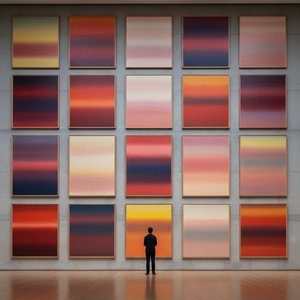
Mark Rothko: Le 25 Opere Più Iconiche per Arredare con Emozione e Profondità
Esplora le 25 opere più iconiche di Mark Rothko, il maestro dell'espressionismo astratto. Scopri la storia, i colori e l'emozione dietro ogni tela. Acquista riproduzioni artistiche di alta qualità per arredare con stile su OriginalUniqueArt.com

Crimson Threads of Narrative: Exploring Symbolism & Representation in Artworks Featuring the Red Dress
Explore the rich symbolism of the red dress in art history! From ancient power displays to iconic portraits like Cézanne’s 'Madame Cezanne', discover the cultural and artistic significance behind this captivating color. Expert analysis & insights.

Kandinsky: I 25 Capolavori che Hanno Rivoluzionato l'Arte Moderna | OriginalUniqueArt
Esplora i 25 capolavori di Wassily Kandinsky, pioniere dell'arte astratta. Scopri la storia, il significato e le tecniche dietro ogni dipinto iconico. Trova riproduzioni d'arte di alta qualità per decorare la tua casa su OriginalUniqueArt.com.