

 Anteprima in scala reale
 Condividi
 Condividi
 Dettagli

 Scarica immagine
 Articoli simili
 Radiografia
 Slideshow
Cowboys Roping a Bear


 Leggi tutto
Acquista un'immagine digitale ad alta risoluzione e ottimizzata, di qualità nettamente superiore all'anteprima online.
Ogni file è meticolosamente preparato dai nostri specialisti interni attraverso l'uso di strumenti avanzati e un sapiente ritocco manuale. Garantiamo che ogni immagine presenti una chiarezza eccezionale, una precisione cromatica impeccabile e dettagli raffinati.
Il file finale viene consegnato via e-mail entro 72 ore, ottimizzato per un uso immediato in contesti professionali, editoriali e di stampa. Si tratta della stessa qualità affidata ai più prestigiosi studi di design, editori e gallerie d'arte.
Immagine Digitale
Scarica un file ad alta risoluzione per uso personale, per la stampa e per progetti creativi. ( Ordina stampa Ordina la riproduzione dipinta a mano)
Incluso in ogni acquisto di immagini digitali
Consegna digitale professionale e garantita
Quando scegli OriginalUniqueArt.com, non riceverai solo un'immagine: riceverai un'opera d'arte digitale professionalmente ottimizzata, realizzata con la massima precisione e accompagnata da una garanzia di soddisfazione. Ecco tutto ciò che include il tuo ordine, automaticamente:

Consegna rapida via email
Riceverai il file dell'immagine digitale ad alta risoluzione via email entro 72 ore dall'ordine, pronto per un uso immediato.

File digitale potenziato dall'IA
La tua opera d'arte viene ottimizzata professionalmente attraverso l'uso di strumenti avanzati di intelligenza artificiale e una revisione manuale, garantendo il massimo livello di dettaglio, nitidezza e accuratezza cromatica.

Riconsegna gratuita a vita
Hai eliminato o perso accidentalmente il tuo file? Non preoccuparti: te lo invieremo di nuovo in qualsiasi momento, gratuitamente.

Nessun costo di importazione, mai
Goditi la tua opera d'arte istantaneamente senza costi doganali, dazi o spese di spedizione: i download digitali sono sempre esenti da tasse.

Garanzia di fedeltà cromatica
Garantiamo che la tua immagine digitale rifletta i colori originali con la massima fedeltà, grazie all'uso di strumenti professionali e a una gestione accurata del colore.

Garanzia soddisfazione 60 giorni
Se non sei soddisfatto della tua immagine digitale, la revisioneremo o ti rimborseremo il 100% entro 60 giorni, senza domande.

Garanzia di rimborso al 100%
Non sei soddisfatto? Ricevi un rimborso completo entro 60 giorni dal ricevimento del tuo file digitale, senza dover fornire spiegazioni.

Sconti per ordini multipli
Acquista 3 immagini, risparmia il 10% - Acquista 5, risparmia il 15% - Acquista 10+, risparmia il 20%. Ideale per progetti creativi, gallerie e agenzie.
Biografia dell'artista
James Walker Tucker: A Quiet Master of British Realism
James Walker Tucker (1898–1972) remains a quietly significant figure in 20th-century British art, often overshadowed by the more flamboyant movements of his era. Born in Wallsend, a North East industrial town near Newcastle, Tucker’s artistic journey began with a grounding in traditional academic training at Armstrong College and later at the Royal College of Art in London. His formative years were shaped by Sir William Rothenstein, a prominent figure in the New Generation movement, who instilled in him a respect for meticulous observation and a commitment to depicting the world around him with unflinching honesty. However, Tucker’s artistic path diverged from the prevailing trends of abstraction and modernism that dominated the art scene during much of the 20th century; he steadfastly remained committed to a rigorous form of realism, a choice that initially relegated his work to relative obscurity.
Tucker's early influences were rooted in the British landscape tradition, drawing inspiration from artists like Albert Pinkham Ryder and Constable. He developed a distinctive style characterized by sharp lines, precise detailing, and a limited palette dominated by earthy tones – browns, greens, greys, and ochres. Unlike many of his contemporaries who embraced looser brushwork and expressive color, Tucker favored a controlled, almost photographic approach to rendering his subjects. His paintings often depicted scenes of rural life, coastal landscapes, and portraits, imbued with a sense of quiet observation and understated emotion. He was particularly drawn to the rugged beauty of Northumberland, capturing its dramatic coastline, rolling hills, and quaint villages with remarkable accuracy and sensitivity.
Key Works and Themes
- Gathering Shellfish, St Servan, France (1930): This evocative painting exemplifies Tucker’s ability to capture the essence of a specific place and time. The scene depicts a group of fishermen returning from the sea, their faces etched with the weariness of labor and the satisfaction of a successful catch. The composition is meticulously rendered, with careful attention paid to the details of the boats, the shoreline, and the figures themselves.
- Amiens, France (1932): A study in light and shadow, this work showcases Tucker’s mastery of atmospheric perspective. He captures the hazy quality of a summer afternoon in Amiens, France, with subtle gradations of color and tone. The painting is notable for its sense of stillness and tranquility.
- An Idle Chat (1928): This portrait exemplifies his ability to capture character and personality through careful observation. It depicts a young woman engaged in conversation, her expression conveying both intelligence and warmth. Tucker’s attention to detail—the way she holds her hand, the subtle nuances of her facial features—is remarkable.
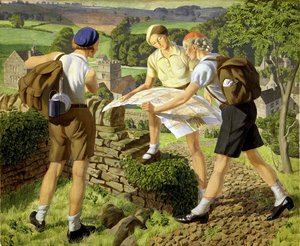
- Hikers (1934): This painting is considered one of his most important works, reflecting the changing social landscape of Britain during the interwar period. It depicts a group of young women hiking in the countryside, symbolizing their newfound independence and freedom.
Beyond these specific pieces, Tucker’s oeuvre consistently explores themes of rural life, human connection, and the beauty of the natural world. His work is not overtly sentimental or dramatic; rather, it offers a quiet meditation on the everyday experiences of ordinary people.
The Influence of Context and Historical Shifts
Tucker’s artistic trajectory was profoundly shaped by the historical context in which he worked. The interwar period was a time of significant social and political upheaval, marked by economic hardship, war, and the rise of new ideologies. Traditional values were being challenged, and artists were grappling with questions about identity, purpose, and the role of art in society. Tucker’s commitment to realism can be seen as a reaction against the prevailing trends of abstraction and modernism, which he viewed as overly concerned with form at the expense of content. His work reflects a desire to preserve a sense of continuity with the past, while also engaging with the challenges of the present.
Furthermore, Tucker’s career was impacted by the shifting priorities within the British art world. Initially championed by Rothenstein and exhibited at prestigious venues like the Royal Academy, his work gradually fell out of favor after World War II as abstract expressionism gained prominence. However, in recent decades, there has been a renewed interest in Tucker's paintings, driven by a growing appreciation for his meticulous technique, understated emotion, and quiet dignity.
Legacy and Rediscovery
Despite its relative obscurity during much of the 20th century, James Walker Tucker’s work is now recognized as an important contribution to British art. His paintings offer a unique perspective on the social and cultural landscape of his time, capturing the beauty of the British countryside and the lives of ordinary people with remarkable sensitivity and skill. The Somerset & Wood Fine Art gallery has played a key role in promoting his work, organizing exhibitions and publishing catalogues that have helped to raise awareness of his artistic achievements. Tucker’s legacy is one of quiet perseverance—a testament to the enduring power of realism and the importance of preserving a connection to the past.
His paintings are now exhibited in collections across the United Kingdom, including at Walker Art Gallery in Liverpool and James Madison University in Harrisonburg, Virginia. Tucker’s work continues to resonate with viewers today, offering a glimpse into a bygone era and reminding us of the beauty and dignity of everyday life.
james walker tucker
1898 - 1972
In breve
- Artistic Movement Or Style: Realist painting
- Artists Or Movements Influenced By This Artist: ['Gerald Brockhurst']
- Artists Who Influenced This Artist: ['Sir William Rothenstein']
- Date Of Birth: 1898
- Date Of Death: 1972
- Full Name: James Walker Tucker
- Nationality: British
- Notable Artworks:
- Gathering Shell Fish
- Amiens, France
- An Idle Chat
- Place Of Birth: Wallsend, Newcastle

