
 Anteprima in scala reale
 Invia
Invia Condividi
 Dettagli opera
 Guida
Guida

 Scarica
 Simili
 Radiografia
 Slideshow
 Domande e risposte
 Statistiche
Still Life with Fruit


 Espandi i dettagli
Giclée / Stampe d'arte
Stampa giclée o su tela di qualità museale, con produzione rapida e diverse opzioni di finitura. ( Acquista il dipinto realizzato a mano Passa all'immagine digitale)




P118B €10

P118H €10

P118W €10

P438Z €10

P508JH €12

P508YH €12

P805H €10

P805Z €10

P919BZ €10

P919G €10

P919XJ €10

P959ZH €10

P968JZ €12

W106C €8

W218G €10

W218JH €8

W218Y €10

W307PJ €10

W316G €10

W316PJ €8

W316Y €10

W398PJ €8

W4111J €10

W500HY €15

W500JH €15

W692G €12

W849H €8

W940BG €15

W953PJ €8




Scegli tra le nostre dimensioni predefinite, che rispettano le proporzioni originali dell'opera d'arte.

Inserisci la larghezza e l'altezza desiderate, per adattarle alla tua cornice o alla tua parete. Una stampa può essere solo ritagliata, mai resa più grande dell'immagine originale; pertanto, un formato con una forma differente comporterà la perdita di una parte dell'opera. Ti invieremo un mockup digitale da approvare prima di procedere con la stampa. L'immagine mostrata in questa pagina non rappresenta il ritaglio reale — solo il mockup lo mostra.
Consegna in tutto il mondo () in 2 settimane invece delle normali 4/5 settimane. (4 Novembre)

Spedizione espressa gratuita in tutto il mondo

Tela in lino di alta qualità

Assicurazione completa sulla spedizione

Garanzia di rimborso dei dazi doganali

Garanzia di fedeltà cromatica assoluta

Politica di reso entro 100 giorni (solo per difetti di fabbricazione)

Garanzia di rimborso al 100%

Offerta per acquisti multipli
 L'opzione vetro è disponibile solo per dimensioni inferiori a 110 cm

Still Life with Fruit
Giclée / Stampe d'arte
Dimensioni riproduzione
-


Prezzo finale calcolato
€ 72
A Symphony of Color and Form: James Peale’s Still Life with Fruit
James Peale's Still Life with Fruit, painted circa 1821, is more than just a depiction of perishable bounty; it’s a meticulously crafted window into the burgeoning aesthetic sensibilities of early America. This remarkable work, now housed within the collections of museums and art institutions worldwide, reveals a masterful blend of Neoclassical restraint and Baroque exuberance – a testament to Peale's artistic versatility and his deep understanding of both European traditions and the evolving American visual landscape.
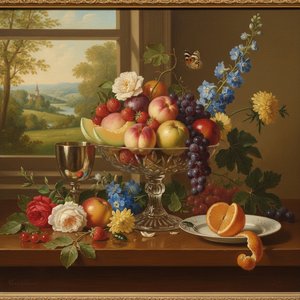
The painting immediately captivates with its rich palette. Deep crimson peaches glow alongside the vibrant yellows of ripe pears, while the verdant greens of grapes and leafy foliage provide a grounding counterpoint. Peale’s technique is characterized by an almost obsessive attention to detail; each fruit is rendered with astonishing realism – the subtle variations in skin texture, the delicate veins tracing across leaves, even the slight imperfections that speak to their natural origins. This commitment to accuracy wasn't merely technical; it reflected a broader fascination with the natural world prevalent during this period, fueled by advancements in scientific observation and botanical illustration.
The Miniature Master’s Grand Vision
While often associated with his exquisite miniature portraits – a genre where Peale truly excelled – Still Life with Fruit demonstrates his ambition to tackle larger-scale works. This shift reflects a growing interest in still life painting within the American art world, influenced by European trends and a desire to elevate the status of decorative arts. Peale’s background as a cabinetmaker undoubtedly informed his approach; he clearly valued craftsmanship and sought to imbue his paintings with a sense of tactile richness. The arrangement of the fruit itself is carefully considered – a deliberate composition designed to draw the eye across the canvas, creating a dynamic visual rhythm.
Interestingly, Peale’s career was punctuated by military service during the American Revolution, an experience that instilled in him a disciplined approach to observation and execution. This dedication translates into the painting's remarkable clarity and precision. The lighting is particularly noteworthy – a dramatic chiaroscuro effect that casts deep shadows and highlights the luminous surfaces of the fruit, adding depth and drama to the scene.
Symbolism and the American Spirit
Beyond its technical merits, Still Life with Fruit carries symbolic weight. Fruit, in this context, represents abundance, prosperity, and the rewards of labor – themes deeply resonant within the developing American identity. The variety of fruits—peaches, pears, grapes—suggests a connection to the land and a celebration of its bounty. It’s a visual affirmation of the nation's potential for growth and success.
Furthermore, the painting can be viewed as an embodiment of Neoclassical ideals – order, balance, and harmony. The carefully arranged composition, the restrained color palette, and the meticulous rendering of detail all contribute to this sense of formal elegance. However, Peale subtly infuses this formality with a touch of Baroque exuberance—the dramatic lighting, the rich colors, and the sheer abundance of fruit create an atmosphere of opulent delight.
A Timeless Appeal
Still Life with Fruit remains a captivating work of art, offering a glimpse into the artistic and cultural landscape of early America. Its meticulous detail, evocative symbolism, and masterful technique continue to resonate with viewers today. Whether admired for its historical significance or simply appreciated for its aesthetic beauty, this painting stands as a testament to James Peale’s artistry and his enduring legacy.
Domande e risposte
In che modo lo stile di "Still Life with Fruit" si relaziona all'epoca del suo autore?
In "Still Life with Fruit" di James Peale, il movimento Academic Realism incontra l'epoca Età Moderna.
Con quali altri nomi è noto James Peale?
James Peale è noto anche con i nomi Charles Willson Peale, Raphaelle Peale, Rembrandt Peale.
Quale armonia cromatica esprime "Still Life with Fruit" di James Peale?
L'armonia cromatica di "Still Life with Fruit" è descritta come Strong Color Unity.
Biografia dell'artista
James Peale: Il Ritratto della Rivoluzione Americana
James Peale (1749 – May 24, 1831) fu un pittore americano noto soprattutto per i suoi ritratti in miniatura e le sue nature morte, fratello minore del celebre artista Charles Willson Peale. La sua vita fu profondamente influenzata dall'ambiente culturale della Pennsylvania coloniale e dalla fervida energia intellettuale dell’epoca rivoluzionaria americana.- Infanzia e Formazione
- Carriera Artistica: Ritratto e Scienza
- Il Museo Peale: Un Innovatore Visionario
- Influenze Stilistiche e Tecniche
- Eredità Storica e Culturale
Infanzia e Formazione
James Peale nacque a Chestertown, Maryland, figlio di Charles Peale (1709–1750) e Margaret Triggs (1709–1791). La prematura perdita del padre ebbe un impatto significativo sulla famiglia, spingendo i genitori a trasferirsi ad Annapolis, dove James iniziò la sua formazione professionale apprendendo il mestiere della fabbricazione di selle presso il fratello maggiore. Questa esperienza precoce gli fornì una solida base tecnica e un contatto diretto con l'ambiente artigianale dell’epoca. Tuttavia, fu Charles Willson Peale a guidare James verso lo studio dell'arte, insegnandogli le basi del disegno e della pittura dal vero, una scelta che avrebbe determinato il corso della sua carriera artistica.Carriera Artistica: Ritratto e Scienza
Dopo aver completato il suo apprendistato nella fabbricazione di selle, James Peale servì nell'esercito continentale durante la Rivoluzione Americana, combattendo nelle battaglie chiave come Long Island, White Plains, Trenton, Brandywine, Germantown e Monmouth. Questa esperienza militare non solo gli fornì una conoscenza approfondita della storia americana ma contribuì anche a sviluppare un senso di disciplina e osservazione che avrebbe poi trovato espressione nella sua arte. Tuttavia, Peale fu soprattutto celebre per la realizzazione di ritratti in miniatura, un genere particolarmente apprezzato nell'ambiente aristocratico dell’epoca. Grazie alla collaborazione con il fratello maggiore, Charles Willson Peale, egli stabilì uno studio a Philadelphia dove creò opere che catturavano l’aspetto fisico e lo spirito dei suoi soggetti con una precisione sorprendente. Inoltre, James Peale si dedicò allo studio della scienza naturale, condividendo con altri artisti dell'epoca un interesse per l'anatomia umana e la fisiologia animale, attività che influenzarono profondamente il suo stile pittorico e lo ispirarono a creare opere che fossero al contempo belle ed erudite.Il Museo Peale: Un Innovatore Visionario
Nel 1796 James Peale fondò il Museo Peale, considerato il primo museo pubblico statunitense costruito appositamente per promuovere la scienza e l'arte. Questo progetto ambizioso rappresentò una vera rivoluzione culturale nel panorama americano dell’epoca, poiché contribuì a creare uno spazio dedicato alla divulgazione del sapere scientifico e all'educazione popolare. Il museo ospitava una vasta collezione di opere d'arte provenienti da tutto il mondo, nonché esemplari di anatomia umana e animale, preparati con metodi innovativi che anticipavano le tecniche utilizzate dai musei europei. Peale stesso svolse un ruolo attivo nella gestione del museo, promuovendo la ricerca scientifica e organizzando esposizioni pubbliche che attiravano visitatori provenienti da ogni angolo d'America.Influenze Stilistiche e Tecniche
Lo stile pittorico di James Peale fu influenzato dalle tendenze artistiche dell’epoca rivoluzionaria americana, in particolare dall'influenza del neoclassicismo inglese. Tuttavia, egli sviluppò una propria personalità artistica che si rivelò particolarmente evidente nella realizzazione delle sue nature morte, dove egli utilizzava colori brillanti e tecniche pittoriche sofisticate per esprimere la bellezza della natura morta con una sensibilità raffinata. Peale fu anche un maestro nell'utilizzo della tecnica dell’incisione, creando opere che potevano essere riprodotte in grandi quantità e distribuite a costi contenuti, contribuendo così alla diffusione delle idee artistiche e scientifiche nel paese.Eredità Storica e Culturale
James Peale morì a Philadelphia nel 1831 lasciando un'eredità culturale significativa che ancora oggi viene celebrata con entusiasmo. Il suo contributo alla nascita del museo americano e alla promozione della scienza naturale è stato riconosciuto dagli storici dell’arte e dalla comunità scientifica internazionale. Inoltre, i suoi ritratti in miniatura rappresentano un documento prezioso per comprendere l'ambiente sociale e culturale dell’epoca rivoluzionaria americana, testimoniando la passione per l'arte e lo splendore estetico che caratterizzarono quel periodo storico. James Peale rimane una figura emblematica della storia americana, simbolo di impegno intellettuale, innovazione artistica e spirito pionieristico.
James Peale
1749 - 1831 , Stati Uniti
Dettagli rapidi
- Artistic Movement Or Style: Neoclassicismo
- Artists Or Movements Influenced By This Artist: ['Benjamin West']
- Artists Who Influenced This Artist: ['Charles Willson Peale']
- Date Of Birth: 1749
- Date Of Death: May 24, 1831
- Full Name: James Peale
- Nationality: American
- Notable Artworks: ['George Washington']
- Place Of Birth: Chestertown, Maryland
Articoli correlati

I 25 Capolavori di Sir Alfred James Munnings: L'Anima della Campagna Inglese
Scopri i 25 capolavori di Sir Alfred James Munnings tra cavalli e paesaggi. Esplora la collezione su OriginalUniqueArt.com.

James Abbott McNeill Whistler: I 25 Capolavori che Definirono un'Epoca - Arte e Decorazioni di Lusso
Esplora i 25 capolavori di James Abbott McNeill Whistler, il maestro dell'estetismo e dei notturni. Scopri la storia, le tecniche e l'armonia unica nei suoi dipinti più famosi. Stampe d'arte e riproduzioni di alta qualità su OriginalUniqueArt.com.
Severin Roesen: Evoking National Identity Through American Still Life Painting
Explore the captivating world of Severin Roesen, a major American still life painter influenced by Dutch masters. Discover his lush compositions and the symbolism within his art – a window into 19th-century America.

Charles Willson Peale: Ritrattistica, Ideali Illuministici e la Formazione dell'Identità Americana
Esplora la vita e l'opera di Charles Willson Peale, pittore simbolo dell'Illuminismo americano. Analisi approfondita della sua ritrattistica, del realismo scientifico e del ruolo nella formazione dell'identità americana.
Titian Ramsay Peale: Precisione Botanica e Innovazione Artistica nell'America del XIX Secolo
Scopri la vita e l'opera di Titian Ramsay Peale, pioniere della pittura botanica americana e naturalista del XIX secolo. Esplora le sue illustrazioni scientifiche innovative e il suo contributo all'arte e alla scienza.

