Anteprima in scala reale
 Condividi
 Condividi
 Dettagli
 Guida stampabile

 Scarica
 Articoli simili
 Radiografia
 Slideshow
 Statistiche
Melrose


 Leggi tutto
Giclée / Stampe d'arte
Stampa giclée o su tela di qualità museale, con produzione rapida e diverse opzioni di finitura. ( Ordina la riproduzione dipinta a mano Passa all'immagine digitale)




P118B €10

P118H €10

P118W €10

P438Z €10

P508JH €12

P508YH €12

P805H €10

P805Z €10

P919BZ €10

P919G €10

P919XJ €10

P959ZH €10

P968JZ €12

W106C €8

W218G €10

W218JH €8

W218Y €10

W307PJ €10

W316G €10

W316PJ €8

W316Y €10

W398PJ €8

W4111J €10

W500HY €15

W500JH €15

W692G €12

W849H €8

W940BG €15

W953PJ €8




Scegli tra le nostre dimensioni predefinite, che rispettano le proporzioni originali dell'opera d'arte.

Inserisci la larghezza e l'altezza desiderate, per adattarle alla tua cornice o alla tua parete. Una stampa può essere solo ritagliata, mai resa più grande dell'immagine originale; pertanto, un formato con una forma differente comporterà la perdita di una parte dell'opera. Ti invieremo un mockup digitale da approvare prima di procedere con la stampa. L'immagine mostrata in questa pagina non rappresenta il ritaglio reale — solo il mockup lo mostra.
Consegna in tutto il mondo () in 2 settimane invece delle normali 4/5 settimane. (25 Ottobre)

Spedizione espressa gratuita in tutto il mondo

Tela in lino di alta qualità

Assicurazione completa sulla spedizione

Garanzia di rimborso dei dazi doganali

Garanzia di perfetta fedeltà cromatica

Politica di reso entro 100 giorni (solo per difetti di fabbricazione)

Garanzia di rimborso al 100%

Sconto per acquisti multipli
 L'opzione vetro è disponibile solo per dimensioni inferiori a 110 cm

Melrose
Giclée / Stampe d'arte
Dimensioni della riproduzione
-


Prezzo totale
€ 70
Melrose: A Vision of Light and Landscape by J.M.W. Turner
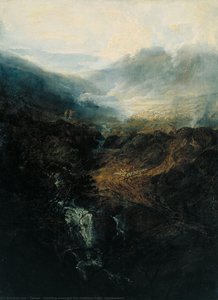
J.M.W. Turner’s “Melrose,” painted in 1831, isn't merely a depiction of a Scottish landscape; it’s an immersive experience—a fleeting moment captured on canvas where light, atmosphere, and the sublime intertwine. The painting transports us to the rolling hills and verdant valleys surrounding Melrose Abbey in the Borders region, rendered not with precise detail but with Turner’s signature blend of emotion and evocative color. It's a work that speaks volumes about his revolutionary approach to landscape art, moving beyond topographical accuracy towards an exploration of feeling and the transient beauty of nature.
Turner’s style at this period is characterized by its loose, expressive brushwork—a deliberate departure from the rigid conventions of academic painting. He employs a technique that prioritizes capturing the *impression* of light and color rather than meticulously recreating every element. Notice how the broad strokes of ochre, brown, and gray dominate the foreground, suggesting the earth and vegetation while allowing the sky to bleed into the landscape. The river, a ribbon of shimmering blues and greens, flows with an almost liquid grace, reflecting the diffused sunlight above. This deliberate blurring of edges and forms is central to Turner’s Romantic vision—a world where nature reigns supreme and human perception is secondary.
A Historical Context: Romanticism and the Sublime
“Melrose” firmly resides within the heart of the Romantic movement, a period defined by its emphasis on emotion, imagination, and the power of nature. The Romantics rejected the Enlightenment’s focus on reason and logic, instead celebrating the individual experience and the awe-inspiring grandeur of the natural world. Turner was deeply influenced by this shift, seeking to capture not just what he *saw*, but what he *felt* in response to the landscape. The concept of the “sublime”—a feeling of overwhelming beauty mixed with a sense of terror or insignificance—is powerfully evoked here. The vastness of the hills and sky, combined with the hazy atmosphere, creates an effect that is both captivating and slightly unsettling.
Interestingly, this painting was created during a period when Turner embarked on extensive travels throughout Europe, particularly in Italy and Switzerland. These journeys profoundly shaped his artistic vision, exposing him to new light conditions and inspiring him to experiment with different techniques. The influence of the Italian landscapes—particularly their dramatic lighting effects—can be seen in “Melrose,” contributing to its atmospheric intensity.
Symbolism and Emotional Resonance
Beyond its purely visual qualities, "Melrose" is rich in symbolic meaning. The distant town, barely discernible through the haze, represents human settlement and industry, dwarfed by the overwhelming power of nature. The river, a symbol of life and movement, flows relentlessly onward, suggesting the passage of time and the impermanence of all things. The prominent mountain on the left side acts as a vertical anchor, grounding the composition while simultaneously emphasizing the vastness of the scene.
Perhaps most powerfully, “Melrose” evokes a sense of tranquility and contemplation. The muted colors, soft lighting, and loose brushwork create an atmosphere of serenity—a reminder of the beauty and restorative power of nature. It’s a painting that invites us to slow down, breathe deeply, and lose ourselves in the moment, mirroring Turner's own desire to capture fleeting experiences of light and color.
Technical Details & Reproduction Considerations
Turner employed watercolor on paper for this work, utilizing layering techniques and delicate washes to achieve his characteristic atmospheric effects. The visible brushstrokes contribute to the painting’s sense of movement and energy, while the subtle blending of colors creates a luminous quality. Reproductions, particularly high-quality prints, strive to capture these nuances—the interplay of light and shadow, the texture of the paper, and the overall feeling of atmosphere. When selecting a reproduction, consider the medium – archival inks on fine art paper will best preserve the painting’s delicate colors and details for years to come.
Size: Unknown
Date: 1831
Domande e risposte
A quale emozione è associata "Melrose"?
"Melrose" è associata a una sensazione Malinconico. Il tono emotivo descrive l'impressione che l'opera trasmette.
Quale tecnica è stata utilizzata per "Melrose" di J.M.W. Turner?
J.M.W. Turner ha utilizzato la tecnica del Acrilico su tela per "Melrose". La tecnica definisce la natura materica dell'opera originale.
L'opera "Melrose" è complessivamente più luminosa o più scura?
La luminosità di "Melrose" di J.M.W. Turner è registrata come brilliant, con una luminanza di Bright Balance.
Biografia dell'artista
La Primi Anni e la Carriera
Joseph Mallord William Turner, noto nella sua epoca come William Turner, fu un rinomato pittore inglese, incisore e acquerellista romantico. Nacque il 23 aprile 1775 a Maiden Lane, Covent Garden, Londra, da una modesta famiglia della classe media-bassa. Il suo percorso artistico iniziò in tenera età. * **Prodigio:** A 14 anni, Turner si iscrisse alla Royal Academy of Arts, esponendo la sua prima opera all'età di 15 anni. * **Disegnatore architettonico:** Servì anche come disegnatore architettonico, affinando le sue abilità in prospettiva e design.Stile Artistico e Contributi
Lo stile espressivo di Turner, i suoi paesaggi immaginativi e i dipinti marini turbolenti lasciarono un segno indelebile nell'arte britannica. Le sue opere includono:- Oltre 550 dipinti a olio
- 2.000 acquerelli
- 30.000 lavori su carta
Vita Personale e gli Ultimi Anni
La vita personale di Turner fu segnata da eccentricità e reclusione. * **Padre:** Ebbe due figlie, Evelina (1801–1874) e Georgiana (1811–1843), con la vedova Sarah Danby. * **Ultimi anni e morte:** L'umore di Turner peggiorò dopo la morte del padre nel 1829. Visse in squallore e in precarie condizioni di salute dal 1845, morendo a Londra il 19 dicembre 1851 all'età di 76 anni.Eredità e Memoria
* **Sepolto nella cattedrale di St Paul:** Turner è sepolto nella cattedrale di St Paul a Londra, una testimonianza della sua duratura eredità. * **Esplora il suo mondo:** Approfondisci il mondo di Turner attraverso [https://OriginalUniqueArt.com/@/j-m-william-turner](https://OriginalUniqueArt.com/@/j-m-william-turner) e scopri i capolavori che continuano a ispirare gli appassionati d'arte in tutto il mondo. Scopri il genio turbolento di J.M. William Turner * **Visualizza le sue opere:** /it/art/list/ * **Scopri di più sull'arte britannica:** [https://en.wikipedia.org/wiki/category:british_art](https://en.wikipedia.org/wiki/category:british_art)Sviluppo Artistico e Influenze
Turner si evolse da un pittore di paesaggi relativamente convenzionali a un innovatore che esplorò i limiti della pittura con colori audaci, pennellate libere e una crescente attenzione agli effetti atmosferici. Fu influenzato dal movimento sublime, che cercava di evocare sentimenti di meraviglia e terrore di fronte alla potenza della natura. Le sue opere riflettono anche un interesse per la scienza, in particolare l'ottica e i fenomeni meteorologici, come dimostrano le sue rappresentazioni dettagliate di tempeste, nebbia e luce solare. La sua sperimentazione con la tecnica dell’acquerello lo portò a sviluppare uno stile unico che combinava trasparenza, colore e pennellate fluide per creare immagini vibranti ed evocative.
J.M.W. Turner
1775 - 1851 , Regno Unito
Informazioni rapide
- Artistic Movement Or Style: Romanticismo
- Artists Or Movements Influenced By This Artist: ['Impressionismo']
- Date Of Birth: 23 aprile 1775
- Date Of Death: 19 dicembre 1851
- Full Name: Joseph Mallord William Turner
- Nationality: Britannico
- Notable Artworks:
- La Battaglia di Temeraire
- Mostra la Tempesta
- Pioggia, Vapore e Velocità
- Place Of Birth (City And Country): Londra, Regno Unito
Articoli correlati

Ephemeral Visions: Exploring the Artistic Legacy & Nuances of Watercolor Painting
Explore the captivating world of watercolor painting! Discover its rich history, essential techniques, influential artists & collecting tips from art experts. A comprehensive guide for enthusiasts.

Ephemeral Visions: Exploring the History & Emotional Resonance of Watercolor Painting
Explore the captivating history of watercolor painting, from ancient techniques to modern masters like Kandinsky & Blake. Discover essential artists, collecting tips & the emotional power of this luminous medium. Expert insights for art enthusiasts.

I 10 Capolavori dell'Acquerello che Hanno Rivoluzionato l'Arte | OriginalUniqueArt
Esplora i 10 capolavori dell'acquerello che hanno cambiato la storia dell'arte! Da Turner a Monet, scopri le storie e le tecniche di questi artisti iconici. Trova riproduzioni di alta qualità e idee per decorare casa con OriginalUniqueArt.com.

L'Affascinante Mondo dell'Acquerello: Storia, Tecniche e Pratica Contemporanea
Esplora il fascino dell'acquerello! Scopri la sua storia, le tecniche fondamentali e gli artisti contemporanei. Guide pratiche e consigli per iniziare a dipingere con successo.

Ephemeral Visions: Exploring the Artistic Legacy & Contemporary Practice of Watercolor Painting
Explore the captivating world of watercolor painting! Discover its rich history, essential techniques, influential artists & collecting tips. A comprehensive guide for art enthusiasts from OriginalUniqueArt.