

 Anteprima in scala reale
 Invia
Invia Condividi
 Dettagli opera

 Scarica immagine
 Simili
 Radiografia
 Slideshow
Girl with Dagger
 1942
1942 16.0 x 7.0 cm
 Espandi i dettagli
Riproduzione a olio fatta a mano
Olio su tela dipinto a mano nelle tue dimensioni e con la tua cornice, realizzato su ordinazione dai nostri artisti. ( Acquista stampa Acquista immagine)




































Scegli tra le nostre dimensioni predefinite, che rispettano le proporzioni originali dell'opera d'arte.

È possibile inserire dimensioni personalizzate per adattare l'opera a una cornice o a uno spazio specifico. Se la dimensione selezionata non corrisponde alle proporzioni dell'immagine originale, provvederemo a ritagliare l'opera o a estendere il dipinto con elementi aggiuntivi dipinti a mano. Un mockup digitale ti sarà inviato per approvazione prima dell'inizio della produzione.
Si prega di notare che l'anteprima a schermo non riflette il ritaglio o l'estensione effettivi. Solo il mockup mostrerà accuratamente la composizione finale.
Sebbene siano disponibili dimensioni personalizzate, consigliamo di selezionare una dimensione dall'elenco predefinito per preservare le proporzioni originali.
Dopo l'ordine, il team di OriginalUniqueArt.com contatterà il cliente via e-mail per le istruzioni e fornirà un'anteprima del mockup
Consegna in tutto il mondo () in 3/4 settimane anziché nelle normali 5 settimane. (28 Agosto). Nessun compromesso sulla qualità.

Spedizione espressa gratuita in tutto il mondo

Tela in lino di alta qualità

Assicurazione completa sulla spedizione

Garanzia di rimborso dei dazi doganali

Garanzia di fedeltà cromatica

Politica di reso entro 60 giorni (solo per difetti di fabbricazione)

Garanzia di rimborso al 100%

Offerta per acquisti multipli
 L'opzione vetro è disponibile solo per dimensioni inferiori a 110 cm

Girl with Dagger
Tecnica di riproduzione
Dimensioni riproduzione
-


Prezzo totale calcolato
$ 300
Biografia dell'artista
A Quiet Observer of the Urban Stage
Helen Levitt, a name perhaps less instantly recognizable than some of her photographic contemporaries, nevertheless occupies a pivotal position in the history of 20th-century photography. Born in Brooklyn in 1913 and passing away in 2009 at the age of 95, she dedicated nearly seven decades to documenting the vibrant, often overlooked moments of everyday life in New York City. Levitt wasn’t interested in grand narratives or sweeping statements; her vision was focused on the ephemeral poetry found within the ordinary—children playing stickball, chalk drawings adorning sidewalks, fleeting interactions between strangers. She possessed a remarkable ability to blend into the urban landscape, becoming an almost invisible observer who captured scenes with a disarming intimacy and spontaneity. Her work wasn’t about *showing* life; it was about *feeling* its pulse.From Portrait Studio to Poetic Accident
Levitt's path to photography wasn’t predetermined. Dropping out of high school during the Depression, she initially found employment as a darkroom assistant at J. Florian Mitchell’s commercial portrait studio in the Bronx. This practical experience provided her with a foundational understanding of photographic technique, but it was an encounter with the work of Henri Cartier-Bresson that truly ignited her artistic passion. Seeing his photographs at the Julien Levy Gallery proved transformative; she realized photography could be more than just documentation—it could be art. She acquired a 35mm Leica, mirroring Cartier-Bresson’s favored tool, and began to explore the streets of New York with a newfound purpose. Simultaneously, her involvement with the Photo League exposed her to a community of socially conscious photographers, but Levitt ultimately forged her own distinct path, one less concerned with overt social commentary and more attuned to the aesthetic qualities of urban life. She wasn’t simply photographing *at* people; she was rather *with* them, creating a sense of shared experience. He famously stated that among his contemporaries, only Cartier-Bresson and Levitt possessed truly original voices.Influences and Artistic Vision
Levitt's artistic sensibilities were profoundly shaped by several key influences. Henri Cartier-Bresson’s humanist approach—his belief in capturing decisive moments with unwavering honesty—served as a guiding principle throughout her career. Similarly, Walker Evans’ meticulous attention to detail and his commitment to portraying the realities of American life instilled in Levitt a desire to depict subjects with uncompromising realism. Stieglitz's championing of modernism and his exploration of abstraction encouraged her to push boundaries and experiment with new techniques. These artists recognized Levitt’s innate talent for capturing emotion and atmosphere, recognizing that true artistry resided not merely in technical proficiency but in conveying profound human experience. Her vision was rooted in a deep appreciation for the beauty inherent in everyday life—a perspective that resonated powerfully with audiences across generations.The Chalk Drawings and the Children of the Streets
In the late 1930s, while teaching art classes to children in New York City, Levitt became captivated by the chalk drawings that blossomed on sidewalks throughout the city’s neighborhoods. These transient works of art—hopscotch grids, games, messages—became a recurring motif in her work. She meticulously documented these creations and the children who brought them to life, capturing their imaginative play and the fleeting nature of childhood itself. This project culminated in *In the Street: Chalk Drawings and Messages, New York City 1938–1948*, published in 1987, a book that cemented her reputation as a master of street photography. Her approach was characterized by a remarkable sensitivity to her subjects; she rarely intervened or directed them, preferring instead to capture authentic moments as they unfolded. This resulted in images that feel remarkably unposed and natural, offering a glimpse into the lives of ordinary people without judgment or sentimentality. She wasn’t simply photographing *at* people, but rather *with* them, creating a sense of shared experience.Major Achievements and Legacy
Helen Levitt's contribution to photography extends far beyond her iconic images of children playing in New York City. Her groundbreaking work on the streets established a new paradigm for documentary photography—one that prioritized spontaneity and emotional resonance over formal composition or narrative structure. The Photo League, where she collaborated closely with fellow artists like Evans, fostered a vibrant intellectual environment that encouraged experimentation and challenged conventional artistic norms. Despite facing personal hardships – including Meniere’s syndrome and a bout of pneumonia – Levitt remained dedicated to her craft throughout her life. She was a fiercely independent spirit who shunned publicity and preferred to let her work speak for itself. Her influence on subsequent generations of photographers is undeniable, inspiring countless artists to look beyond the iconic landmarks and grand narratives and find beauty in the everyday moments that often go unnoticed. Levitt’s legacy lies not just in the photographs she created, but in the way she taught us to see—to appreciate the poetry hidden within the ordinary, and to recognize the humanity in every face and every street corner. Her images continue to resonate with viewers today, reminding us of the power of observation and the enduring beauty of human connection.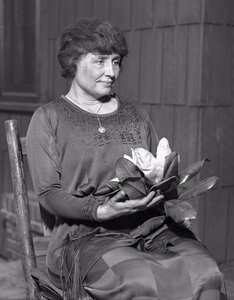
Helen Levitt
1913 - 2009 , Stati Uniti d'America
Dati rapidi
- Artistic Movement Or Style: Fotografia di strada
- Artists Who Influenced This Artist:
- Henri Cartier-Bresson
- Walker Evans
- Date Of Birth: 1913
- Date Of Death: 2009
- Full Name: Helen Levitt
- Nationality: Americana
- Notable Artworks:
- Mexico City (Boys in School Yard)
- New York City
- New York
- Place Of Birth: Brooklyn, USA

