

 Anteprima in scala reale
 Condividi
 Condividi
 Dettagli
 Guida stampabile

 Scarica
 Articoli simili
 Radiografia
 Slideshow
 Statistiche
Untitled (D2WW32)
 Oil On Canvas
- WallArt
- Abstract Expressionism
 1953
1953 198.0 x 86.0 cm
 Metropolitan Museum of Art
 Leggi tutto
Riproduzione a olio fatta a mano
Olio su tela dipinto a mano nelle tue dimensioni e con la tua cornice, realizzato su ordinazione dai nostri artisti. ( Passa alle stampe Passa all'immagine digitale)




P118B $10

P118H $10

P118W $10

P438Z $10

P508JH $12

P508YH $12

P805H $10

P805Z $10

P919BZ $10

P919G $10

P919XJ $10

P959ZH $10

P968JZ $12

W106C $8

W218G $10

W218JH $8

W218Y $10

W307PJ $10

W316G $10

W316PJ $8

W316Y $10

W398PJ $8

W4111J $10

W500HY $15

W500JH $15

W692G $12

W849H $8

W940BG $15

W953PJ $8




Scegli tra le nostre dimensioni predefinite, che rispettano le proporzioni originali dell'opera d'arte.

È possibile inserire dimensioni personalizzate per adattare l'opera a una cornice o a uno spazio specifico. Se la dimensione selezionata non corrisponde alle proporzioni dell'immagine originale, provvederemo a ritagliare l'opera o a estendere il dipinto con elementi aggiuntivi dipinti a mano. Un mockup digitale ti sarà inviato per approvazione prima dell'inizio della produzione.
Si prega di notare che l'anteprima a schermo non riflette il ritaglio o l'estensione effettivi. Solo il mockup mostrerà accuratamente la composizione finale.
Sebbene siano disponibili dimensioni personalizzate, consigliamo di selezionare una dimensione dall'elenco predefinito per preservare le proporzioni originali.
Dopo l'ordine, il team di OriginalUniqueArt.com contatterà il cliente via e-mail per ricevere le istruzioni e fornirà un'anteprima del mockup
Consegna in tutto il mondo () in 3/4 settimane anziché nelle normali 5 settimane. (26 Settembre). Nessun compromesso sulla qualità.

Spedizione espressa gratuita in tutto il mondo

Tela in lino di alta qualità

Assicurazione completa sulla spedizione

Garanzia di rimborso dei dazi doganali

Garanzia di perfetta fedeltà cromatica

Politica di reso entro 100 giorni (solo per difetti di fabbricazione)

Garanzia di rimborso al 100%

Sconto per acquisti multipli
 L'opzione vetro è disponibile solo per dimensioni inferiori a 110 cm

Untitled (D2WW32)
Tecnica di riproduzione
Dimensioni della riproduzione
-


Prezzo totale
$ 300
A Glimpse into the Soul: Hedda Sterne's Abstract Interior
Hedda Sterne’s 1953 painting, “Untitled (D2WW32),” isn’t merely a depiction of a room; it’s an immersion. It’s a carefully constructed echo of memory and emotion, rendered in the rich, earthy palette of a bygone era. The canvas breathes with a quiet intensity, inviting the viewer to lose themselves within its layered complexity. This work, born from the heart of the New York School of painters, stands as a testament to Sterne's unique ability to translate the intangible—the feeling of a space, the weight of history—into visual form.
The composition immediately commands attention with its towering verticality – columns and arches dominate the scene, suggesting a grand hall or perhaps even a cathedral. Yet, this sense of monumental scale is subtly undermined by the artist’s deliberate distortion of perspective. Lines converge and recede in unexpected ways, creating an atmosphere of both stability and disorientation. It's as if we are navigating a space that exists simultaneously within our conscious and subconscious realms. The interplay between these strong vertical elements and the more fluid, curvilinear shapes – arches, rounded forms – generates a dynamic tension, preventing the image from feeling static or predictable.
The Language of Texture: Technique and Materiality
Sterne’s technique is strikingly tactile. Thick impasto—a generous application of paint built up in visible layers—dominates the surface, creating a palpable sense of texture. Each brushstroke feels deliberate, imbued with energy and movement. The artist doesn't shy away from revealing her process; rather, she embraces it as an integral part of the artwork’s expressive power. Close examination reveals subtle shifts in color and tone within these textured areas, hinting at hidden depths and complexities.
The choice of materials—primarily oil paints on canvas—contributes significantly to the work's overall effect. The rich, warm tones – golds, browns, beiges, and greys – evoke a sense of history and tradition, while also suggesting a certain melancholy or introspection. The use of muted colors allows for an extraordinary depth of shadow and light, creating a dramatic interplay between illumination and darkness that draws the eye deeper into the composition.
Echoes of Surrealism and Memory
Sterne’s work is deeply rooted in the principles of Surrealism, particularly her exploration of automatism—a technique that encourages spontaneous creation without conscious control. This manifests itself in the painting's dreamlike quality, its unsettling juxtapositions, and its refusal to offer a straightforward representation of reality. The architecture depicted isn’t a specific location but rather a composite of memories, experiences, and emotions – a landscape of the mind.
Born Hedwig Lindenberg in Bucharest, Romania, Sterne's life was marked by displacement and transformation. Her journey from Europe to New York, fueled by the upheaval of World War II, profoundly shaped her artistic vision. “Untitled (D2WW32)” can be interpreted as a reflection on this experience—a meditation on loss, memory, and the search for stability in an uncertain world. The painting’s evocative atmosphere invites us to contemplate our own personal histories and the ways in which they shape our perceptions of space and time.
A Timeless Resonance: Symbolism and Emotional Impact
Beyond its formal qualities, “Untitled (D2WW32)” possesses a profound emotional resonance. The painting’s sense of scale and mystery evokes feelings of awe, contemplation, and perhaps even a touch of unease. It's a work that rewards repeated viewing, revealing new layers of meaning with each encounter.
The painting’s enduring appeal lies in its ability to tap into universal themes—memory, loss, identity, and the search for connection. It serves as a powerful reminder of the transformative power of art and its capacity to illuminate the complexities of the human experience. Whether viewed as a historical artifact or a contemporary masterpiece, “Untitled (D2WW32)” continues to captivate and inspire viewers with its haunting beauty and profound emotional depth.
Biografia dell'artista
Hedda Sterne: A Pioneer of Surrealism and Abstract Expressionism
Hedda Sterne (August 4, 1910 – April 8, 2011) was a Romanian-born American artist who stands as one of the most distinctive voices within the New York School—a movement that redefined artistic expression in postwar America. Her life’s journey spanned continents and embraced diverse influences, culminating in an oeuvre characterized by profound introspection and a masterful manipulation of form and color to convey complex philosophical ideas. Born Hedwig Lindenberg in Bucharest, Romania, Sterne’s early education prioritized music and languages, fostering a sensitivity to nuance and expression that would permeate her artistic practice throughout her life. Her father, Simon Lindenberg, was a language teacher who instilled in her siblings—including Edouard—a love of intellectual inquiry.Early Influences and Artistic Formation
Sterne’s formative years were marked by exposure to the avant-garde fervor of Bucharest during the interwar period. She immersed herself in a vibrant cultural landscape shaped by Dadaism, Surrealism, and Constructivism—movements that profoundly impacted her artistic sensibilities. Encouraged by Max Hermann Maxy, Sterne’s instructor at Bucharest National University of Arts, she pursued formal training with Frederic Storck, sculptor extraordinaire, honing her skills in classical sculpture alongside exploring the radical ideas of German philosophy. Her travels to Vienna and Paris further broadened her horizons, allowing her to engage directly with influential artists and movements—including Fernand Léger and André Lhote—who championed innovative approaches to artistic expression. These experiences instilled in her a deep appreciation for experimentation and a willingness to challenge conventional norms. Notably, Sterne’s fascination with Surrealism began early on, fueled by encounters with Marcel Janco and Victor Brauner—artists who became mentors and collaborators during this pivotal period.Surrealist Roots and Artistic Breakthrough
The Surrealist movement exerted an undeniable influence on Sterne’s artistic vision, shaping her stylistic choices and informing her conceptual framework. Embracing the principles of automatism—a technique that prioritized spontaneity and chance encounters—she created collages that captured dreamlike disorientation and explored subconscious imagery. Her early collaborations with Marcel Janco and Victor Brauner solidified her connection to Surrealist circles in Paris, where she witnessed firsthand the burgeoning excitement surrounding André Breton’s manifesto and Marcel Duchamp’s groundbreaking experiments. Sterne's participation in group exhibitions—including *First Papers of Surrealism*—demonstrated her commitment to artistic dialogue and her willingness to engage with challenging ideas. Her work during this period reflected her unique position as an outsider looking in, grappling with the complexities of American culture while retaining a distinctly European sensibility.The New York School and Artistic Evolution
Moving to New York City in 1941—following the harrowing experience of witnessing the Bucharest pogrom—Sterne quickly established herself within the burgeoning Abstract Expressionist movement. Embracing the ethos of spontaneity and emotional intensity championed by artists like Jackson Pollock and Willem de Kooning, she explored new techniques and materials—particularly aerosol spray paint—to capture the dynamism of urban life and convey profound philosophical reflections. Her paintings from the 1950s and 60s—works such as *Third Avenue El* and *Machine 5*, for example—became emblematic of this era’s aesthetic concerns, reflecting a preoccupation with movement, light, and geometric abstraction. Sterne's exploration of landscape and architectural motifs—evident in pieces like *Alaska I*—further underscored her artistic versatility and demonstrated her ability to synthesize disparate influences into cohesive visual narratives.Legacy and Recognition
Hedda Sterne’s enduring legacy rests on her unwavering commitment to artistic independence and her pioneering role within the New York School—a movement that irrevocably transformed American art history. Her distinctive style—characterized by layered textures, fragmented forms, and ambiguous spaces—continues to inspire artists today. Beyond her individual artworks, Sterne served as a vital conduit between European Modernism and American Abstract Expressionism, fostering artistic dialogue and challenging conventional perceptions of beauty and form. Perhaps most famously remembered for her appearance in the iconic photograph of “The Irascibles”—a group of rebellious artists who protested against the Metropolitan Museum of Art’s exclusionary policies—Sterne stands as a testament to the importance of artistic courage and intellectual curiosity. Her work has gained increasing recognition in recent years, cementing her place as one of the most significant figures within twentieth-century art—an artist whose vision transcended stylistic boundaries and whose enduring legacy continues to resonate with audiences worldwide.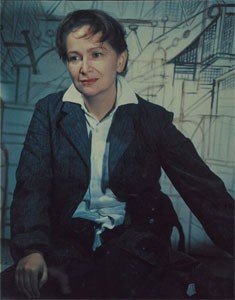
Hedda Sterne
1910 - 2011 , Romania
Informazioni rapide
- Artistic Movement Or Style: Abstract Expressionism, Surrealism
- Artists Or Movements Influenced By This Artist: ['New York School']
- Artists Who Influenced This Artist:
- Marcel Janco
- Victor Brauner
- Fernand Léger
- André Lhote
- Date Of Birth: August 4, 1910
- Date Of Death: April 8, 2011
- Full Name: Hedda Sterne
- Nationality: Romanian-American
- Notable Artworks:
- Tondo
- Third Avenue El
- Untitled (D2WW32)
- Place Of Birth: Bucharest, Romania
Articoli correlati

Espressionismo Astratto: I 10 Capolavori che Hanno Definito un Movimento Artistico Rivoluzionario
Esplora i 10 capolavori dell'Espressionismo Astratto con ! Scopri Pollock, Rothko e De Kooning: storia, tecnica e significato di opere iconiche per arredare la tua casa con arte di alta qualità. Esplora la collezione online!

Kandinsky: I 25 Capolavori che Hanno Rivoluzionato l'Arte Moderna | OriginalUniqueArt
Esplora i 25 capolavori di Wassily Kandinsky, pioniere dell'arte astratta. Scopri la storia, il significato e le tecniche dietro ogni dipinto iconico. Trova riproduzioni d'arte di alta qualità per decorare la tua casa su OriginalUniqueArt.com.

Expressionist Abstraction: A Procurement Guide to Bold Colors and Emotional Impact for Modern Hotel Interiors
Elevate hospitality spaces with Expressionist Abstraction. A professional procurement guide for hotel designers on sourcing bold, large-scale abstract oil paintings to create impactful, high-end modern interiors through reliable bulk-order art solutions.

Unlocking Contemporary Abstraction: A Designer's Guide to Curating Emotion and Color for Modern Interiors
Master the art of decorating with contemporary abstraction. Our expert guide for designers explores how to use color, geometry, and emotion to transform modern interiors into soulful, curated spaces through professional art selection and placement strategies.
Equilibrio e Audacia: L'Integrazione dell'Arte Contemporanea negli Interni Classici per un'Eleganza Senza Tempo
Scopri come integrare l'arte contemporanea negli interni classici con stile ed eleganza. Consigli esperti, ispirazioni e soluzioni personalizzate per una casa di lusso unica.
