

 Anteprima in scala reale
 Condividi
 Condividi
 Dettagli

 Scarica
 Articoli simili
 Radiografia
 Slideshow
 Statistiche
Vanitas Still-Life
 Oil
Oil- WallArt
- Baroque
 1640
1640- Early Modern
 39.0 x 51.0 cm
 National Gallery
 Leggi tutto
Giclée / Stampe d'arte
Stampa giclée o su tela di qualità museale, con produzione rapida e diverse opzioni di finitura. ( Ordina la riproduzione dipinta a mano Passa all'immagine digitale)




P118B $10

P118H $10

P118W $10

P438Z $10

P508JH $12

P508YH $12

P805H $10

P805Z $10

P919BZ $10

P919G $10

P919XJ $10

P959ZH $10

P968JZ $12

W106C $8

W218G $10

W218JH $8

W218Y $10

W307PJ $10

W316G $10

W316PJ $8

W316Y $10

W398PJ $8

W4111J $10

W500HY $15

W500JH $15

W692G $12

W849H $8

W940BG $15

W953PJ $8




Scegli tra le nostre dimensioni predefinite, che rispettano le proporzioni originali dell'opera d'arte.

È possibile inserire dimensioni personalizzate per adattare l'opera a una cornice o a uno spazio specifico. Se la dimensione selezionata non corrisponde alle proporzioni dell'immagine originale, procederemo al ritaglio dell'opera o all'estensione dell'immagine con un bordo specchiato o a tinta unita. Un mockup digitale ti verrà inviato per approvazione prima dell'inizio della produzione.
Si prega di notare che l'anteprima a schermo non riflette il ritaglio o l'estensione effettivi. Solo il mockup mostrerà accuratamente la composizione finale.
Sebbene siano disponibili dimensioni personalizzate, si raccomanda di selezionare una dimensione dall'elenco predefinito per preservare le proporzioni originali.
Consegna in tutto il mondo () in 2 settimane invece delle normali 4/5 settimane. (19 Settembre)

Spedizione espressa gratuita in tutto il mondo

Tela in lino di alta qualità

Assicurazione completa sulla spedizione

Garanzia di rimborso dei dazi doganali

Garanzia di perfetta fedeltà cromatica

Politica di reso entro 100 giorni (solo per difetti di fabbricazione)

Garanzia di rimborso al 100%

Sconto per acquisti multipli
 L'opzione vetro è disponibile solo per dimensioni inferiori a 110 cm

Vanitas Still-Life
Giclée / Stampe d'arte
Dimensioni della riproduzione
-


Prezzo totale
$ 80
The Silent Echoes of Mortality
In the quietude of a dimly lit room, Harmen Steenwijck’s Vanitas Still-Life stands as a profound meditation on the ephemeral nature of human existence. Created in 1640, during the height of the Dutch Golden Age, this masterpiece does not merely depict objects; it orchestrates a silent symphony of transience. As one gazes upon the arrangement, the eye is immediately drawn to the stark, skeletal presence of two skulls, positioned with a haunting intentionality that anchors the composition. These are not mere anatomical studies but powerful memento mori—reminders of the inevitability of death. Surrounded by the remnants of intellectual and worldly pursuits, such as scattered books and delicate glassware, the painting invites the viewer into a contemplative space where the boundaries between life and decay begin to blur.
The artistry of Steenwijck lies in his ability to transform the mundane into the monumental through masterful technique. His brushwork, likely influenced by the precision of his father’s craft as an eyeglass maker, captures the tactile reality of every surface. One can almost feel the cold, calcified texture of the bone, the smooth weight of the ceramic bowl, and the fragile glint of light reflecting off a glass bottle. The artist employs a dramatic chiaroscuro, utilizing deep, velvety shadows to push the objects forward into the light, creating a sense of three-dimensional depth that pulls the observer into the scene. This interplay of light and shadow does more than create realism; it heightens the emotional tension, casting a somber, reverent glow over the entire arrangement.
A Tapestry of Symbolism and Soul
Every element within this composition serves as a character in a larger philosophical drama. The books, spread across the table, represent the fleeting nature of human knowledge and the vanity of intellectual ambition; even the greatest wisdom cannot forestall the passage of time. The presence of vessels—vases and bottles—suggests the containment of life and pleasure, yet their stillness hints at an emptiness that follows the departure of the spirit. For the discerning collector or interior designer, this painting offers more than just aesthetic beauty; it provides a profound intellectual anchor for a space. It is a piece that demands a moment of pause, encouraging a slower, more mindful engagement with one's surroundings.
Integrating a high-quality reproduction of this work into a contemporary setting allows for the infusion of historical gravity and soulful elegance. Whether placed in a minimalist study or a richly textured library, the Vanitas Still-Life acts as a window into the 17th-century Dutch psyche—a period where prosperity was always tempered by a spiritual awareness of life's fragility. To possess such an image is to hold a piece of history that speaks of the beauty found in the fleeting, making it an incomparable choice for those who seek art that resonates with both visual splendor and deep, enduring meaning.
Biografia dell'artista
Harmen Steenwijck: A Master of Dutch Still Life
Harmen Steenwijck, born in Delft around 1612, stands as a prominent figure within the illustrious Dutch Golden Age artistic landscape. While precise birthdates remain elusive – estimations are based on his earliest documented painting in 1633 – his formative years were shaped by the intellectual fervor and artistic patronage prevalent during this era. Like many aspiring artists of his time, Steenwijck benefited from familial connections; his father, Evert Steenwijck, recognized David Bailly’s talent as a teacher and ensured Harmen received instruction alongside his brother Pieter in Leiden. This mentorship proved invaluable, fostering a deep understanding of Baroque painting techniques and establishing a stylistic lineage rooted in Bailly's influence. Between 1628 and 1633, Steenwijck honed his skills in Leiden, immersing himself in the burgeoning artistic environment. However, recognizing opportunities for growth and expanding his horizons, he relocated back to Delft from 1633 until his untimely death in 1656. During this period, Delft flourished as a center of artistic innovation, attracting skilled craftsmen and fostering collaborative endeavors—a dynamic that undoubtedly contributed to Steenwijck’s artistic development. Notably, he undertook a significant journey to the Dutch East Indies between 1654 and 1655, exposing him to exotic flora and fauna which would later find their way into his paintings. Steenwijck's oeuvre is characterized by exquisitely rendered still lifes—particularly those depicting fruit, fish, and symbolic vanitas elements. These compositions exemplify the Baroque aesthetic’s preoccupation with mortality and the transient nature of earthly existence. His masterful use of chiaroscuro – dramatic contrasts between light and dark – imbues his canvases with palpable atmosphere and draws viewers into a contemplative gaze. The meticulous attention to detail—from the subtle variations in color to the precise depiction of textures—demonstrates Steenwijck’s unwavering commitment to realism, elevating his works beyond mere representation to convey profound emotional resonance. He sought to capture not just what was seen but also what it meant to contemplate life's fleeting beauty and inevitable decay. His most celebrated achievement remains “An Allegory of the Vanities of Human Life,” a monumental painting housed at the National Gallery in London. This ambitious artwork encapsulates the philosophical concerns of its time, presenting a complex visual sermon that explores themes of earthly pleasure and spiritual contemplation. The painting’s intricate symbolism—featuring skulls, hourglasses, decaying fruit, and withered flowers—serves as a poignant reminder of human mortality and encourages reflection on the importance of piety. Steenwijck's masterful execution solidified his reputation as one of Delft’s foremost painters and cemented his place within the canon of Dutch Golden Age art. Steenwijck’s legacy extends beyond individual masterpieces; he represents a pivotal voice in shaping the artistic sensibilities of his era. His dedication to Baroque principles—particularly chiaroscuro and meticulous observation—influenced subsequent generations of artists, ensuring that his contribution to Dutch painting continues to inspire admiration and scholarly study today. Harmen Steenwijck's enduring artistry testifies to the transformative power of artistic training and the profound beauty achievable through unwavering commitment to craftmanship.
Harmen Steenwijck
1612 - 1656 , Paesi Bassi
Informazioni rapide
- Artistic Movement Or Style: Golden Age
- Artists Who Influenced This Artist: ['David Bailly']
- Date Of Birth: Delft, Netherlands (1612)
- Date Of Death: Leiden (1656)
- Full Name: Harmen Steenwijck
- Nationality: Dutch
- Notable Artworks:
- Still Life with Fish and Fruit
- Still life of fruit, fresh-water fish on an earthenware platter
- Place Of Birth: Delft
Articoli correlati

25 Must-See Masterpieces at the Mauritshuis: A Journey Through Dutch Golden Age Art
Step into the Dutch Golden Age with our curated guide to 25 iconic masterpieces from the Mauritshuis. From Vermeer’s luminous light to Rembrandt’s drama, explore the stories behind these timeless works and find museum-quality art inspiration. Discover all masterpieces on OriginalUniqueArt.com.
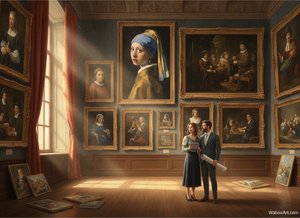
10 Capolavori Iconici che hanno Definito l'Età dell'Oro Olandese
Scopri i 10 capolavori dell'Età dell'Oro Olandese: dai giochi di luce di Vermeer al dramma di Rembrandt. Esplora la storia e la tecnica dietro questi iconici dipinti e trova riproduzioni d'arte di pregio per il tuo arredamento su OriginalUniqueArt.com. Esplora l'intera collezione online.

I 10 Capolavori dell'Età d'Oro Olandese: Arte, Storia e Stile per la Tua Casa
Esplora i 10 capolavori dell'Età d'Oro Olandese con ! Rembrandt, Vermeer e altri maestri rivivono in dipinti iconici. Scopri storia, tecnica e colori di opere senza tempo per arredare la tua casa con arte di qualità museale. Esplora la collezione online!

10 Capolavori Iconici che hanno Definito l'Età dell'Oro Olandese
Scopri i 10 capolavori dell'Età dell'Oro Olandese: dai giochi di luce di Vermeer al dramma di Rembrandt. Un viaggio tra storia e bellezza per ispirare il tuo arredamento con riproduzioni d'arte di pregio. Esplora la collezione completa su OriginalUniqueArt.com.
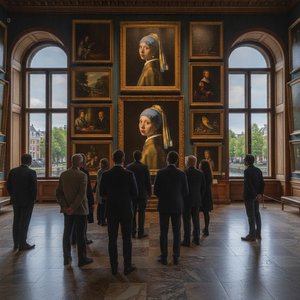
I 25 capolavori del Mauritshuis: un viaggio nell'Età dell'Oro olandese
Esplora i 25 capolavori del Mauritshuis: dai misteri di Vermeer alla forza di Rembrandt. Scopri la storia e l'emozione dell'Età dell'Oro olandese con le nostre riproduzioni d'arte di alta qualità per il tuo arredamento. Esplora l'intera collezione su OriginalUniqueArt.com.