Anteprima in scala reale
 Condividi
 Condividi
 Dettagli
 Guida stampabile

 Scarica
 Articoli simili
 Radiografia
 Slideshow
 Statistiche
Young Woman and Death
 Tempera On Panel
- WallArt
- Mannerism
 1517
1517- Renaissance
 15.0 x 30.0 cm
 Kunstmuseum Basel
 Leggi tutto
Giclée / Stampe d'arte
Stampa giclée o su tela di qualità museale, con produzione rapida e diverse opzioni di finitura. ( Ordina la riproduzione dipinta a mano Passa all'immagine digitale)




P118B $10

P118H $10

P118W $10

P438Z $10

P508JH $12

P508YH $12

P805H $10

P805Z $10

P919BZ $10

P919G $10

P919XJ $10

P959ZH $10

P968JZ $12

W106C $8

W218G $10

W218JH $8

W218Y $10

W307PJ $10

W316G $10

W316PJ $8

W316Y $10

W398PJ $8

W4111J $10

W500HY $15

W500JH $15

W692G $12

W849H $8

W940BG $15

W953PJ $8




Scegli tra le nostre dimensioni predefinite, che rispettano le proporzioni originali dell'opera d'arte.

È possibile inserire dimensioni personalizzate per adattare l'opera a una cornice o a uno spazio specifico. Se la dimensione selezionata non corrisponde alle proporzioni dell'immagine originale, procederemo al ritaglio dell'opera o all'estensione dell'immagine con un bordo specchiato o a tinta unita. Un mockup digitale ti verrà inviato per approvazione prima dell'inizio della produzione.
Si prega di notare che l'anteprima a schermo non riflette il ritaglio o l'estensione effettivi. Solo il mockup mostrerà accuratamente la composizione finale.
Sebbene siano disponibili dimensioni personalizzate, si raccomanda di selezionare una dimensione dall'elenco predefinito per preservare le proporzioni originali.
Consegna in tutto il mondo () in 2 settimane invece delle normali 4/5 settimane. (27 Settembre)

Spedizione espressa gratuita in tutto il mondo

Tela in lino di alta qualità

Assicurazione completa sulla spedizione

Garanzia di rimborso dei dazi doganali

Garanzia di perfetta fedeltà cromatica

Politica di reso entro 100 giorni (solo per difetti di fabbricazione)

Garanzia di rimborso al 100%

Sconto per acquisti multipli
 L'opzione vetro è disponibile solo per dimensioni inferiori a 110 cm

Young Woman and Death
Giclée / Stampe d'arte
Dimensioni della riproduzione
-


Prezzo totale
$ 80
A Haunting Encounter: The Intimacy of Mortality
In the quiet, shadowed corners of art history, few images possess the visceral, unsettling power of Hans Baldung’s 1517 masterpiece, Young Woman and Death. This painting is not merely a depiction of a scene; it is an immersive psychological experience that pulls the viewer into a claustrophobic embrace with the inevitable. At its heart, the work presents a striking, almost paradoxical intimacy: a beautiful young woman entwined with the skeletal personification of Death. There is no struggle here in the traditional sense, but rather a profound, heavy stillness—a moment frozen between the vitality of youth and the cold certainty of decay. The composition utilizes converging lines and subtle, masterful shading to draw the eye inward, creating a space that feels both deeply personal and cosmically significant.
For the discerning collector or lover of fine art, the emotional resonance of this piece lies in its ability to confront the viewer with the memento mori tradition. It serves as a poignant meditation on the precariousness of human existence, making it an ideal centerpiece for those who appreciate art that provokes deep thought and conversation. The way the figures are positioned defies conventional anatomical ease, opting instead for a stylized tension that heightens the sense of impending doom and spiritual transition.
Mastery of Mannerist Expression and Technique
To look closely at Baldung’s technique is to witness the brilliance of the Northern Renaissance transitioning into the expressive distortions of Mannerism. The artist rejects the serene, idealized beauty of his predecessors, choosing instead to employ a meticulous layering of oil paint on panel that builds an incredible sense of texture and depth. One can almost feel the weight of the pigments as they are applied in multiple layers, creating a surface that is both rich and ruggedly expressive. His brushstrokes, far from being hidden, contribute to an overall impression of deliberate imperfection—a stylistic choice that breathes life and raw emotion into the figures.
The color palette is a masterclass in dramatic contrast. Warm, earthy tones of ochre, gold, and deep reddish hues dominate the flesh of the young woman, suggesting warmth, blood, and life. These are sharply set against the stark, achromatic skeletal form and a dark, receding background. This use of directional lighting creates profound shadows that sculpt the musculature of the figures, lending them a sculptural presence. For interior designers seeking to add drama to a sophisticated space, the interplay of light and shadow in this work offers a timeless elegance that complements both classical and contemporary settings.
A Legacy of Symbolism and Historical Depth
Born from the intellectual ferment of the Reformation era in Basel, Switzerland, this painting is steeped in the spiritual anxieties of its time. The early 16th century was a period of immense social upheaval, where questions of faith, human psychology, and the afterlife were at the forefront of the European consciousness. Baldung Grien, a student of the legendary Albrecht Dürer, infused his work with this pervasive preoccupation with mortality. The embrace between the maiden and the skeleton can be interpreted through various lenses—as a symbol of lost love, the fleeting nature of beauty, or even an eroticized confrontation with the end of all earthly desires.
The symbolism is layered and complex, making every viewing a new discovery. The skeletal figure does not merely represent death as an external predator, but as an inescapable companion to the human condition. This profound depth ensures that a high-quality reproduction of Young Woman and Death remains more than just decoration; it becomes a window into the soul of the Renaissance. It is a piece designed for those who seek art that transcends the decorative, offering instead a hauntingly beautiful reflection on the very essence of what it means to be alive.
Biografia dell'artista
La Vita e la Formazione di Hans Baldung
Hans Baldung, pittore e incisore tedesco, nacque intorno al 1484 a Schwäbisch Gmünd, in Germania. Fu il primo uomo della sua famiglia a non frequentare l'università, scegliendo invece una carriera artistica. Iniziò la sua formazione verso il 1500 nella Renania Superiore sotto la guida di un artista proveniente da Strasburgo.L'Apprendistato presso Albrecht Dürer
Nel 1503, Baldung divenne apprendista del rinomato pittore tedesco Albrecht Dürer. Questo periodo ebbe un profondo impatto sul suo sviluppo artistico. Apprese rapidamente l'influenza e lo stile di Dürer, e i due divennero amici stretti. Durante il secondo soggiorno veneziano di Dürer, Baldung gestì la sua bottega.Stile Artistico e Temi
Baldung sviluppò uno stile distintivo caratterizzato da colore, espressione e immaginazione. I suoi talenti erano vari e produsse un'ampia varietà di opere, tra cui:- Ritratti
- Xilografie (Woodcuts)
- Pale d'altare (Altarpieces)
- Disegni
- Arazzi (Tapestries)
- Allegorie
- Motivi mitologici
Opere Principali e Eredità
Alcune delle opere più caratteristiche di Baldung sono di piccole dimensioni, con allegorie spesso enigmatiche ed erotiche e lavori mitologici. Il suo lavoro all'altare maggiore a Münster, in Germania, testimonia il suo sostegno al movimento della Riforma.- Visualizza le opere di Hans Baldung su OriginalUniqueArt
- Leggi di più su Hans Baldung Grien su Wikipedia
Musei e Collezioni
La Gemäldegalerie Alte Meister, in Germania, ospita un'impressionante collezione di dipinti europei dal XV al XVIII secolo. Sebbene non si concentri specificamente sull'opera di Hans Baldung, fornisce un contesto per comprendere il periodo artistico in cui visse.Conclusione
Hans Baldung Grien o Grün, con la sua miscela unica di colore, espressione e immaginazione, rimane una figura significativa nella storia dell'arte tedesca. La sua esplorazione di temi come la stregoneria e il soprannaturale aggiunge un livello affascinante al suo corpus di opere.
Hans Baldung
1485 - 1545 , Germania
Informazioni rapide
- Artisti Influenti: ['Albrecht Dürer']
- Data Di Nascita: 1485 (circa)
- Luogo Di Nascita: Baviera, Germania
- Movimento Artistico: Rinascimento tedesco
- Nazionalità: Tedesca
- Nome Completo: Hans Baldung Grien
- Opere Notevoli:
- Morte e la Putida
- San Giovanni Battista a Patmo
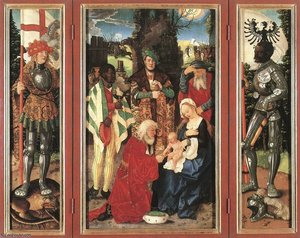
- Triptyque des Trois Rois
Articoli correlati
I 10 Capolavori del Rinascimento Nordico che Hanno Definito l'Arte | .it
Esplora i 10 capolavori del Rinascimento Nordico con .it! Jan van Eyck, Dürer e altri maestri rivivono in stampe di alta qualità. Trova l'arte perfetta per la tua casa e lasciati ispirare dalla bellezza senza tempo. Scopri tutta la collezione online!
Hans Baldung Grien: Allegoria, Innovazione e Grottesco nel Rinascimento Tedesco
Esplora la vita e le opere di Hans Baldung Grien, maestro del Rinascimento tedesco. Analisi approfondita del suo simbolismo unico, il grottesco e l'influenza sui suoi contemporanei. Scopri un artista enigmatico e innovativo.

Hans Holbein il Giovane: Realismo psicologico e la maestria del ritratto rinascimentale
Scopri Hans Holbein il Giovane, maestro del Rinascimento tedesco e ritrattista di corte. Analisi approfondita del suo realismo psicologico, tecniche pittoriche e l'eredità artistica che lo rende un punto di riferimento nella storia dell'arte.
Hans von Aachen: Mannerism's Courtly Visionary & Imperial Portraiture
Explore the captivating world of Hans von Aachen, a leading Mannerist painter renowned for his exquisite imperial portraits & mythological scenes. Discover his legacy and influence on 16th-century European art.

Timeless Innocence: An Expert Exploration of the Most Iconic Portraits of Young Girls in Art History
Journey through art history with an expert exploration of iconic portraits of young girls. From Mary Cassatt to Renoir, uncover the profound beauty of childhood in art. Discover museum-quality, hand-painted oil reproductions and bespoke commissions for the discerning collector.