- Home

- Stampa su tela
- Gustav Klimt
- Signora con Cappotto

 Preview
 Invia
Invia Condividi
 Dettagli opera

 Scarica
 Simili
 Radiografia
 Slideshow
Signora con Cappotto


 Scopri di più
Giclée / Stampa d'arte
Stampa giclée o su tela di qualità museale, con produzione rapida e diverse opzioni di finitura. ( Switch to hand made Painting Switch to Image)




P118B $10

P118H $10

P118W $10

P438Z $10

P508JH $12

P508YH $12

P805H $10

P805Z $10

P919BZ $10

P919G $10

P919XJ $10

P959ZH $10

P968JZ $12

W106C $8

W218G $10

W218JH $8

W218Y $10

W307PJ $10

W316G $10

W316PJ $8

W316Y $10

W398PJ $8

W4111J $10

W500HY $15

W500JH $15

W692G $12

W849H $8

W940BG $15

W953PJ $8




Scegli tra le nostre dimensioni predefinite, che rispettano le proporzioni originali dell'opera d'arte.

È possibile inserire dimensioni personalizzate per adattare l'opera a una cornice o a uno spazio specifico. Se la dimensione selezionata non corrisponde alle proporzioni dell'immagine originale, procederemo al ritaglio dell'opera o all'estensione dell'immagine con un bordo specchiato o a tinta unita. Un mockup digitale ti verrà inviato per approvazione prima dell'inizio della produzione.
Si prega di notare che l'anteprima a schermo non riflette il ritaglio o l'estensione effettivi. Solo il mockup mostrerà accuratamente la composizione finale.
Sebbene siano disponibili dimensioni personalizzate, si raccomanda di selezionare una dimensione dall'elenco predefinito per preservare le proporzioni originali.
Consegna in tutto il mondo () in 2 settimane invece delle normali 4/5 settimane. (29 Luglio)

Spedizione espressa gratuita in tutto il mondo

Tela in lino di alta qualità

Assicurazione completa sulla spedizione

Garanzia di rimborso dei dazi doganali

Garanzia di fedeltà cromatica

Politica di reso entro 60 giorni (solo per difetti)

Garanzia di rimborso al 100%

Sconto per acquisti multipli
 L'opzione vetro è disponibile solo per dimensioni inferiori a 110 cm

Signora con Cappotto
Giclée / Stampa d'arte
Dimensioni riproduzione
-


Prezzo totale finale
$ 80
Descrizione dell'opera
A Vision of Femininity: Unveiling Klimt’s ‘Lady with Cape’
Gustav Klimt's *Lady with Cape*, painted in 1916, stands as a poignant example of his mature style – a captivating synthesis of Symbolism, Art Nouveau, and the burgeoning Vienna Secession movement. Created during a period of personal and societal upheaval leading up to and including World War I, this portrait transcends mere representation; it’s an exploration of female identity, inner strength, and the anxieties of a changing world.Subject and Composition: A Study in Intimacy
The painting presents a close-up view of a woman draped in an opulent cape, her face occupying the central focus. Klimt deliberately crops the figure, omitting any contextual background beyond suggestions of interior space. This compositional choice intensifies the intimacy between viewer and subject, drawing us into her private world. The woman’s gaze is averted, lending an air of mystery and introspection. Her expression isn't one of overt emotion but rather a quiet contemplation, inviting speculation about her thoughts and feelings.Style and Technique: The Golden Touch
*Lady with Cape* exemplifies Klimt’s celebrated “Golden Phase.” He masterfully employs gold leaf – a technique inspired by Byzantine mosaics he encountered during his travels – to create a shimmering, otherworldly effect. This isn't merely decorative; the gold symbolizes wealth, spirituality, and an idealized realm beyond everyday reality. The cape itself is not rendered realistically but as a tapestry of geometric patterns and vibrant colors, echoing motifs found in Japanese art which greatly influenced Klimt. His brushwork is loose and expressive, prioritizing texture and emotional impact over precise detail. The layering of paint creates depth and luminosity, particularly within the folds of the fabric.Symbolism and Interpretation: Layers of Meaning
The symbolism embedded within *Lady with Cape* is rich and multi-layered. The cape can be interpreted as a protective shield, concealing yet simultaneously revealing the woman’s inner self. It suggests both vulnerability and resilience. Some scholars believe that Klimt's preoccupation with mortality and the fleeting nature of beauty, themes prevalent in his work during this period, are subtly reflected in the painting’s muted palette and melancholic atmosphere. The intricate patterns adorning the cape may represent the complexities of female identity or the constraints imposed by societal expectations. The averted gaze hints at a hidden interior life, a realm inaccessible to the outside world.Historical Context: Vienna on the Brink
1916 was a pivotal year in European history. World War I raged across the continent, casting a long shadow over Viennese society. Klimt’s art, while seemingly detached from immediate political concerns, subtly reflects the anxieties and uncertainties of the time. The opulent beauty of *Lady with Cape* can be seen as both an escape from reality and a defiant assertion of artistic values in the face of destruction. Klimt's work challenged traditional academic norms and embraced new forms of expression, aligning him with the progressive spirit of the Vienna Secession.Emotional Impact: A Resonance of Mystery
*Lady with Cape* evokes a sense of quiet melancholy and enigmatic beauty. It’s a painting that invites prolonged contemplation, prompting viewers to project their own emotions and interpretations onto the subject. The combination of luxurious materials, symbolic imagery, and expressive brushwork creates a powerful emotional resonance. It is not simply a portrait; it's an atmosphere, a mood, a glimpse into the soul.- Experience the allure of Klimt: Explore our collection of meticulously hand-painted reproductions of *Lady with Cape* at OriginalUniqueArt.com, crafted by skilled artists to capture the essence and beauty of the original.
- Discover more Klimt treasures: Browse our extensive selection of Gustav Klimt reproductions at /art/list/?Filter=GustaveKlimt.
- Immerse yourself in Viennese art: Visit the Leopold Museum in Vienna, Austria, to view Klimt’s masterpieces firsthand, including *Death and Life*.
Early Life and Artistic Beginnings
Gustav Klimt, born July 14, 1862, in Baumgarten near Vienna, emerged from a family touched by both artistic inclination and financial hardship. His father, Ernst Klimt, was a gold engraver, a profession that would subtly yet profoundly influence the young Gustav’s aesthetic sensibilities—the allure of gold leaf, the meticulous detail, the sheer opulence. The family's struggles meant frequent moves within Vienna, a transient upbringing that perhaps fostered in Klimt a keen observation of his surroundings and a sensitivity to human experience. Even as a child, his drawing skills were remarkable, nurtured by his father’s profession and an innate talent that quickly became apparent. In 1876, he entered the Vienna Kunstgewerbeschule (School of Applied Arts), embarking on formal training in architectural painting under Ferdinand Laufberger. This provided him with a solid technical foundation, but also exposed him to the prevailinBiografia dell'artista
Gustav Klimt: Vita, Arte e Eredità
Primi Anni di Vita ed Educazione (1862-1883)
- Nato il 14 luglio 1862 a Baumgarten, vicino a Vienna, Austria.
- Figlio di Ernst Klimt, incisore d'oro, e Anna Finster. La sua famiglia affrontò difficoltà finanziarie, portando a frequenti trasferimenti all'interno di Vienna.
- Talento precoce: Dimostrò abilità disegniche preminenti coltivate dalla professione del padre e dalle inclinazioni artistiche familiari.
- Si iscrisse alla Vienna Kunstgewerbeschule (Scuola Politecnica) nel 1876, studiando pittura architettonica sotto Ferdinand Laufberger. Questo fornì una solida formazione tecnica ma lo espose anche a stili accademici tradizionali.
- Nel 1877, formò la “Compagnia degli Artisti” con suo fratello Ernst e Franz von Matsch, ottenendo commissioni per affreschi e soffitti.
La Compagnia degli Artisti e Primi Successi (1883-1900)
- Continuò a lavorare con la “Compagnia degli Artisti” dopo aver lasciato la Kunstgewerbeschule, ottenendo riconoscimento per progetti decorativi come affreschi al teatro municipale di Karlsbad e ai camini al Burgtheater di Vienna.
- Contribuì alle decorazioni del Kunsthistorisches Museum di Vienna, dimostrando competenza tecnica ma suggerendo un desiderio di rompere con i vincoli artistici.
Il Soffitto dell'Università di Vienna e Controversie (1900)
- Ricevette una prestigiosa commissione intorno al 1900 per dipingere affreschi sul soffitto della Grande Sala dell'Università di Vienna, rappresentando Filosofia, Diritto e Teologia.
- Opere controverse: Gli affreschi, in particolare *Filosofia*, furono ritenuti provocatori e persino pornografici dai critici, causando un clamore pubblico.
- Klimt rifiutò ulteriori commissioni pubbliche dopo la controversia, segnando una svolta nella sua carriera.
La “Fase Dorata” e Maturità Artistica (1901-1918)
- Entrò nella sua “fase dorata”, caratterizzata da un uso lussuoso della foglia d'oro ispirato ai mosaici bizantini e ai manoscritti miniati medievali.
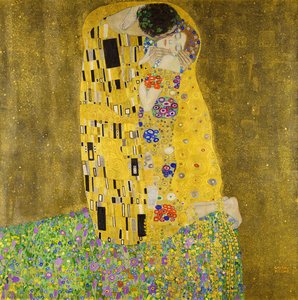
- Opere chiave: *Il Bacio* (1907-1908) esemplifica lo stile opulento e la ricchezza simbolica di questo periodo.
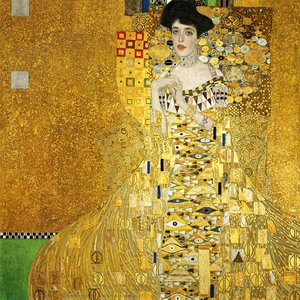
- *Ritratti:* I ritratti come *Ritratto di Adele Bloch-Bauer I* (1907) divennero molto richiesti, mostrando la sua capacità di catturare sia la somiglianza fisica che la profondità psicologica.
- Integrava sempre più elementi decorativi nelle composizioni, sfumando i confini tra pittura e ornamentazione.
Influenze e Stile Artistico
- Hans Makart: Prime ammirazioni per il pittore storico di spicco di Vienna influenzarono la sua formazione accademica iniziale.
- Arte Giapponese (Japonismo): Profondamente influenzato dai stampe giapponesi, in particolare dalla loro prospettiva piatta, dai motivi decorativi e dall'enfasi sulla linea.
- Arte Bizantina: L'uso della foglia d'oro e dell'ornamentazione ricca nei mosaici bizantini ha profondamente influenzato la sua “fase dorata.”
- Caratteristiche dello stile: Unico mix di Simbolismo, Art Nouveau ed elementi decorativi; colori audaci, motivi intricati e rappresentazioni sensuali della figura femminile.
Anni Successivi e Eredità (1918)
- Continuò a dipingere prolificamente fino alla sua morte il 6 febbraio 1918, a causa di un colpo apoplettico.
- Le sue opere successive esplorarono forme più astratte e paesaggi, dimostrando un'evoluzione artistica continua.
- Significato storico: Riconosciuto come uno dei personaggi più importanti della storia dell'arte austriaca ed esponente di spicco del Secessione viennese. I suoi dipinti raggiungono prezzi elevati all'asta e la sua influenza è vista nell'arte e nel design contemporanei.
- Il Kunsthistorisches Museum di Vienna conserva una collezione significativa delle sue opere, assicurando che la sua eredità continui a ispirare.

Gustav Klimt
1862 - 1918 , Austria
Dati rapidi
- Artisti Influenti: ['Hans Makart']
- Artisti Influenzati: ['Egon Schiele']
- Data Di Morte: 6 febbraio 1918
- Data Di Nascita: 14 luglio 1862
- Luogo Di Nascita: Baumgarten, Austria
- Movimento Artistico: Simbolismo, Art Nouveau
- Nazionalità: Austriaco
- Nome Completo: Gustav Klimt
- Opere Notevoli:
- Il Bacio
- Adele Bloch-Bauer I
- Speranza
- Parco
- Isola nell'Attersee
Articoli correlati

Gustav Klimt: I 25 Capolavori Immortali dell'Arte e Decorazioni di Lusso
Esplora i 25 capolavori di Gustav Klimt, pittore simbolo dell'Art Nouveau. Scopri la storia, le tecniche e l'oro iconico delle sue opere più famose come 'Il Bacio'. Trova riproduzioni d'arte di alta qualità per decorare casa con stile su OriginalUniqueArt.com
Art Nouveau: I 10 Capolavori che Hanno Definito un'Epoca | .it
Esplora i 10 capolavori che hanno definito l'Art Nouveau! Scopri le storie di Mucha, Klimt e altri maestri. Quadri iconici, colori vibranti e decorazioni uniche per la tua casa. Trova riproduzioni d'arte di alta qualità su .
Claude Monet: I 25 Capolavori Essenziali per Amare l'Impressionismo | OriginalUniqueArt
Esplora i 25 capolavori di Claude Monet, il maestro dell'Impressionismo. Scopri la storia, i colori e le tecniche dietro ninfee, paesaggi iconici e dipinti famosi. Trova riproduzioni artistiche di alta qualità per arredare casa con stile su OriginalUniqueArt.com.
I 10 Dipinti Più Famosi Dominati dal Grigio: Maestri e Storie d'Arte per la Tua Casa
Esplora i 10 dipinti più famosi dominati dal grigio, dai capolavori di Monet a Hopper. Scopri storie d'arte, tecniche e l'impatto emotivo di queste opere iconiche. Trova riproduzioni di alta qualità su !
I 10 Capolavori Simbolisti che Hanno Definito un'Epoca | Arte e Decorazioni di Lusso
Esplora i 10 capolavori del Simbolismo con OriginalUniqueArt.com! Scopri le storie di Moreau, Munch e altri maestri, i loro colori evocativi e l'impatto su arte e arredamento. Acquista riproduzioni artistiche di alta qualità per la tua casa.