Northern Renaissance · 1598
Forest Landscape (Gillis Van Coninxloo, 1598)
Gillis Van Coninxloo (1544–1607) ha realizzato Forest Landscape. Risale al 1598. Fa parte del movimento Northern Renaissance. È realizzato in Oil On Panel. È conservata presso il Museo Liechtenstein a Vienna, Austria. Le dimensioni sono 42 × 61 cm.
- 1598
- Oil On Panel
- 42 × 61 cm
- Museo Liechtenstein, Vienna

 Anteprima in scala reale

 Dipinto a olio fatto a mano
 Invia
 Condividi
 Scheda didattica


 Scarica
 Simili
 Radiografia
 Slideshow
 Domande e risposte

 Statistiche
Forest Landscape, in breve
- Titolo
- Forest Landscape
- Artista
- Gillis Van Coninxloo (1544–1607)
- Artista nato a
- Anversa, Belgio
- Date
- 1598
- Tecnica
- Oil On Panel
- Dimensioni
- 42 × 61 cm
- Dove vederlo
- Museo Liechtenstein, Vienna, Austria
- Movimento
- Northern Renaissance
- Epoca
- Early Modern
- Soggetto
- forest landscape, dark woods, path, village view, atmospheric, tranquility
Cosa raffigura Forest Landscape?
Identification of the Forest Landscape Artwork
The artwork titled Forest Landscape is a painting by the Flemish artist Gillis Van Coninxloo. Executed in 1598, this work is an oil on panel. The physical dimensions of the piece are 42 x 61 cm. It is currently held within the Liechtenstein Museum in Vienna, Austria.
This specific composition depicts a dense woodland environment. The scene features a winding path that leads into a thicket of trees. The foliage consists of various shades of green, while the trunks and branches create a heavy canopy overhead. In the background, a small village is visible through the gaps in the trees, providing a sense of distance within the forest setting.
The subject matter focuses on the natural world, specifically the textures of bark, leaves, and moss. A single, small human figure is positioned beneath a tree within the landscape. The composition utilizes a dark palette of browns, greens, and ochres to define the wooded area. Light filters through the upper branches, creating a contrast between the shadowed recesses of the undergrowth and the illuminated patches of the clearing.
Composition and Visual Elements
The composition is largely symmetrical, organized around a winding path that leads the eye toward the center of the image. This path cuts through a dense woodland, where the trunks and branches of trees intertwine to form a thick canopy overhead. Only a few small patches of sky are visible through the gaps in the foliage. Within this enclosed space, a single tiny human figure reclines beneath a tree, positioned near the center of the scene. The scale of the trees and the surrounding undergrowth dwarfs the figure, emphasizing the vastness of the natural environment.
Color is concentrated in the various hues of green found in the leaves and the mossy textures of the forest floor. These greens contrast with the dark browns and ochres of the tree trunks and the earth. In the background, a small village is visible through the trees, providing a sense of distance and depth. The lighting creates a chiaroscuro effect, with strong contrasts between the deep shadows of the thickets and the light that filters through the canopy onto the path and the reclining figure.
Technique and Artistic Style
The artist utilized oil on panel to establish a sense of depth and a tangible texture across the surface. The application of paint likely involves multiple layers and glazing, a method used to achieve a specific luminosity within the darker sections of the composition. This technique allows light to appear as though it is filtering through the canopy, creating a chiaroscuro effect through the deliberate placement of light and shadow. The resulting atmosphere is defined by a palette of dark colors and a high degree of intricate detail.
The composition is built upon a dense arrangement of ancient oaks and thick undergrowth. There is a clear priority placed on the textural richness of the natural elements, specifically the bark of the trees, the individual leaves, and the presence of moss. These organic forms are rendered with meticulous care, contributing to the overall density of the woodland scene. The interplay of light and shadow defines the verticality of the trunks and the irregular shapes of the foliage, emphasizing the physical presence of the forest environment.
Artistic Influence and Legacy
Gillis Van Coninxloo occupied a central position in the evolution of Northern landscape art. His technical approach functioned as a bridge between the intricate traditions of Mannerism and the atmospheric depth characteristic of the early Baroque. Through his development of the forest landscape, he moved away from panoramic vistas toward intimate, enclosed woodland scenes. This shift prioritized the textural details of bark, leaves, and moss, often submerging small human figures within an expansive, detailed natural environment.
The influence of his method extended to several prominent painters of the period. Jan Brueghel the Elder and Pieter Schoubroeck were among those affected by his stylistic developments. His approach to dense, immersive woodland compositions also impacted the work of Roeland Savery and various other Flemish and Dutch landscape painters. This specific work, created about 1598, represents his technical skill and craftsmanship in rendering the natural world.
In quale museo si trova Forest Landscape?
Museo Liechtenstein
Vienna, Austria
Un Gioiello dello Splendore Barocco Viennese Immerso nel cuore della storica Ringstraße di Vienna, il Museo Liechtenstein risiede in un contesto che è tanto un capolavoro quanto i tesori che custodisce. Ospitato nel magnifico Palais Liechtenstein, il museo offre un viaggio immersivo nell'anima dell'eleganza aristocratica e nel profondo retaggio della Casa di Liechtenstein. Mentre i visitatori si avvicinano alla struttura palaziale, vengono accolti dalla grandezza architettonica di un'epoca passata, dove ogni cornice dorata e ogni maestosa scalinata sussurrano racconti di prestigio imperiale.


Immagini ad alta risoluzione di Forest Landscape

Pubblico dominio: l'artista è deceduto nel 1607.
Altre dimensioni, ritagli e citazioni →Gillis Van Coninxloo, Forest Landscape (1598), Museo Liechtenstein. Pubblico dominio
Domande su Forest Landscape, risposte
Dove è esposta oggi l'opera "Forest Landscape" di Gillis Van Coninxloo?
"Forest Landscape" di Gillis Van Coninxloo è esposta presso Museo Liechtenstein, Vienna, Austria. La scheda del museo si riferisce all'opera originale e non a riproduzioni.
In che anno è stata realizzata l'opera "Forest Landscape" di Gillis Van Coninxloo?
"Forest Landscape" di Gillis Van Coninxloo è stata creata nel 1598.
Quale tecnica è stata utilizzata per "Forest Landscape" di Gillis Van Coninxloo?
Gillis Van Coninxloo ha utilizzato la tecnica del Oil On Panel per "Forest Landscape". La tecnica definisce la natura materica dell'opera originale.
Quali sono le dimensioni reali di "Forest Landscape" di Gillis Van Coninxloo?
"Forest Landscape" misura 42 x 61 cm nella sua forma originale. Le dimensioni originali sono un utile riferimento per scegliere la dimensione di una riproduzione.
Qual è il soggetto di "Forest Landscape"?
I soggetti di "Forest Landscape" sono forest landscape, dark woods, path, village view, atmospheric, tranquility, nature scene, 16th century.
"Forest Landscape" è di pubblico dominio?
Per quanto riguarda il copyright, "Forest Landscape" è di pubblico dominio - il copyright è scaduto.
Chi ha creato "Forest Landscape"?
"Forest Landscape" è stata creata da Gillis Van Coninxloo. Le informazioni contenute in questa pagina descrivono l'opera originale di Gillis Van Coninxloo.
A quale stile appartiene "Forest Landscape"?
"Forest Landscape" è un'opera di Northern Renaissance. Il movimento indica la tradizione artistica di cui l'opera fa parte.
A quale periodo della carriera di Gillis Van Coninxloo appartiene "Forest Landscape"?
All'interno della carriera di Gillis Van Coninxloo, "Forest Landscape" appartiene al Late 16th Century. Questa fase permette di confrontarla con le altre opere dell'artista.
Informazioni sull'artista, Gillis Van Coninxloo
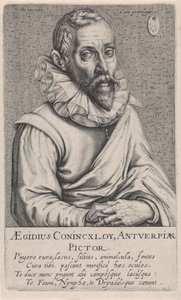
1544–1607, Belgio
Gillis Van Coninxloo
Un Maestro del Regno Verdeggiante Gillis van Coninxloo si erge come una figura cruciale nell'evoluzione del paesaggio dell'arte nordica, fungendo da ponte vitale tra le intricate tradizioni manieriste e la nascente profondità atmosferica del primo Barocco. Nato ad Anversa, in Belgio, la sua vita fu profondamente intrecciata con la ricca stirpe artistica dei Paesi Bassi. Figlio di un pittore, fu immerso in un mondo dove l'artigianato e l'osservazione della natura erano primari. La sua formazione iniziale sotto maestri come Pieter Coecke van Aelst il Giovane e Lenaert Kroes gli fornì una base rigorosa, ma fu il periodo trascorso nella bottega di Gillis Mostaert a permettere al suo talento di fiorire davvero, consentendogli di contribuire a opere professionali mentre affinava la sua visione unica.
Su Gillis Van Coninxloo Opere celebri di Gillis Van Coninxloo
Altre opere di Gillis Van Coninxloo
 Giona che predica ai Niniviti1583
 Bosco con San Girolamo1583
 Paesaggio con il giudizio di Mida1598
 Paesaggio con il Giudizio di Paride1610
Saggi su Forest Landscape
 Pittori francesi della Scuola di BarbizonScopri i capolavori della Scuola di Barbizon con Rousseau e Daubigny. Esplora la collezione su OriginalUniqueArt.com.
 Incanto Silvestre: 10 Capolavori che Raccontano la Magia del BoscoDalla forza di Van Gogh al lirismo di Klimt, scopri 10 capolavori del bosco. Esplora la collezione su OriginalUniqueArt.com.
 Mastering the Horizon: An Art Historian’s Guide to the World's Most Iconic Landscape PaintingsExplore the profound history of landscape painting with our expert guide. From Impressionist light to Chinese traditions, discover the tech…