

 Anteprima in scala reale
 Invia
Invia Condividi
 Dettagli opera

 Scarica immagine
 Simili
 Radiografia
 Slideshow
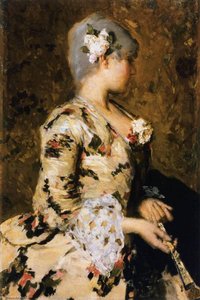
Self Portrait

 Espandi i dettagli
Riproduzione a olio fatta a mano
Olio su tela dipinto a mano nelle tue dimensioni e con la tua cornice, realizzato su ordinazione dai nostri artisti. ( Acquista stampa Acquista immagine)




































Scegli tra le nostre dimensioni predefinite, che rispettano le proporzioni originali dell'opera d'arte.

È possibile inserire dimensioni personalizzate per adattare l'opera a una cornice o a uno spazio specifico. Se la dimensione selezionata non corrisponde alle proporzioni dell'immagine originale, provvederemo a ritagliare l'opera o a estendere il dipinto con elementi aggiuntivi dipinti a mano. Un mockup digitale ti sarà inviato per approvazione prima dell'inizio della produzione.
Si prega di notare che l'anteprima a schermo non riflette il ritaglio o l'estensione effettivi. Solo il mockup mostrerà accuratamente la composizione finale.
Sebbene siano disponibili dimensioni personalizzate, consigliamo di selezionare una dimensione dall'elenco predefinito per preservare le proporzioni originali.
Dopo l'ordine, il team di OriginalUniqueArt.com contatterà il cliente via e-mail per le istruzioni e fornirà un'anteprima del mockup
Consegna in tutto il mondo () in 3/4 settimane anziché nelle normali 5 settimane. (27 Agosto). Nessun compromesso sulla qualità.

Spedizione espressa gratuita in tutto il mondo

Tela in lino di alta qualità

Assicurazione completa sulla spedizione

Garanzia di rimborso dei dazi doganali

Garanzia di fedeltà cromatica

Politica di reso entro 60 giorni (solo per difetti di fabbricazione)

Garanzia di rimborso al 100%

Offerta per acquisti multipli
 L'opzione vetro è disponibile solo per dimensioni inferiori a 110 cm

Self Portrait
Tecnica di riproduzione
Dimensioni riproduzione
-


Prezzo totale calcolato
$ 300
Biografia dell'artista
The Soul of Venice: The Life and Art of Giacomo Favretto
Giacomo Favretto was not merely a painter of scenes, but a chronicler of the very heartbeat of Venice. Born on August 11, 1849, into a modest family where his father worked as a carpenter, Favretto’s early years were steeped in the tactile, industrious atmosphere of Venetian craftsmanship. This foundation of manual skill and observation would later manifest in a technique that balanced rigorous precision with a breathtaking, spontaneous energy. Before he was an acclaimed master, legend suggests he was discovered working in a stationer's shop, meticulously cutting out silhouettes to earn a living—a humble beginning that belied the immense visionary talent waiting to be unleashed upon the art world. His formal education began at the Accademia di Belle Arti di Venezia in 1864, under the watchful eye of Pompeo Marino Molmenti. It was here that Favretto began to diverge from the rigid, often heavy-handed academic traditions of his era. While many of his contemporaries sought solace in grand historical or mythological narratives, Favretto turned his gaze toward the streets, the canals, and the faces of the common people. His journey was marked by both profound inspiration and personal hardship; notably, a severe infection in 1877 cost him the sight in one eye, an experience that many believe deepened his emotional connection to the light and shadow of his subjects, forcing a new, perhaps more concentrated, way of perceiving the world around him.A Master of the Everyday
The true brilliance of Favretto lies in his ability to elevate the mundane to the level of the magnificent. He became the preeminent painter of Venetian genre scenes, capturing the rituals, customs, and daily rhythms of late nineteenth-century life with an almost cinematic sensitivity. His breakthrough at the Brera Academy Exhibition of 1873 caught the attention of the influential critic Camillo Boito, who recognized that Favretto possessed a rare gift for capturing the essence of Venetian society. Whether depicting a lively promenade in the Piazzetta or the quiet intimacy of a family gathering, his work breathes with the vitality of a living city. His stylistic approach was a sophisticated dance between detail and impression. He often employed a technique that alternated between meticulously finished, luminous areas and loose, expressive brushstrokes that suggested movement and atmosphere. This duality allowed him to convey not just the physical reality of a scene, but its emotional temperature. Influenced by the works of Domenico Morelli, he embraced an ethos of observation over artifice, preferring the spontaneous truth of a street vendor's gesture or the play of light on a silk gown to the staged drama of historical painting.Legacy and Artistic Triumph
Favretto’s career was a series of ascending triumphs that solidified his place in the pantheon of Italian art. His travels, including a trip to Paris for the Universal Exhibition in 1878 alongside Guglielmo Ciardi, expanded his horizons and brought a cosmopolitan flair to his Venetian subjects. By 1880, he had won the prestigious Prince Umberto Prize at the Brera Academy, and his participation in national exhibitions in Turin further cemented his reputation as a master of both contemporary life and nostalgic scenes in eighteenth-century costume. Though his life was tragically short, ending in Venice in 1887, the impact of his work remains profound. He left behind a body of work that serves as a vibrant, colorful window into a vanished era of Venetian splendor. His significance lies in his role as a bridge between academic tradition and a more modern, observational style that prioritized the human experience. To look upon a Favretto painting is to step into the streets of 1880s Venice, feeling the warmth of the sun on the stone and hearing the distant echoes of a city that continues to live through his brushstrokes.- Early Life: Born in Venice (1849) to a carpenter; trained at the Accademia di Belle Arti.
- Style: Venetian genre painting characterized by spontaneity, light, and everyday subject matter.
- Key Achievements: Recognition by Camillo Boito; winner of the Prince Umberto Prize (1880).
- Historical Significance: A pivotal figure in late 19th-century Italian art, moving away from academicism toward realism and impressionistic observation.
giacomo favretto
1849 - 1887
Dati rapidi
- Artistic Movement Or Style: Venetian Genre Painting
- Artists Or Movements Influenced By This Artist: ['Michelangelo Grigoletti']
- Artists Who Influenced This Artist: ['Pompeo Marino Molmenti']
- Date Of Birth: August 11, 1849
- Date Of Death: June 12, 1887
- Full Name: Giacomo Favretto
- Nationality: Italian
- Notable Artworks:
- The Poultry Seller
- After the Bath
- Entrance to a Noble Home
- Place Of Birth: Venice, Italy

