Anteprima in scala reale
 Condividi
 Condividi
 Dettagli
 Guida stampabile

 Scarica
 Articoli simili
 Radiografia
 Slideshow
 Statistiche
Astronomer
 Oil On Canvas
- WallArt
- Baroque
 1650
1650 27.0 x 29.0 cm
 Stedelijk Museum De Lakenhal
 Leggi tutto
Giclée / Stampe d'arte
Stampa giclée o su tela di qualità museale, con produzione rapida e diverse opzioni di finitura. ( Ordina la riproduzione dipinta a mano Passa all'immagine digitale)




P118B €10

P118H €10

P118W €10

P438Z €10

P508JH €12

P508YH €12

P805H €10

P805Z €10

P919BZ €10

P919G €10

P919XJ €10

P959ZH €10

P968JZ €12

W106C €8

W218G €10

W218JH €8

W218Y €10

W307PJ €10

W316G €10

W316PJ €8

W316Y €10

W398PJ €8

W4111J €10

W500HY €15

W500JH €15

W692G €12

W849H €8

W940BG €15

W953PJ €8




Scegli tra le nostre dimensioni predefinite, che rispettano le proporzioni originali dell'opera d'arte.

È possibile inserire dimensioni personalizzate per adattare l'opera a una cornice o a uno spazio specifico. Se la dimensione selezionata non corrisponde alle proporzioni dell'immagine originale, procederemo al ritaglio dell'opera o all'estensione dell'immagine con un bordo specchiato o a tinta unita. Un mockup digitale ti verrà inviato per approvazione prima dell'inizio della produzione.
Si prega di notare che l'anteprima a schermo non riflette il ritaglio o l'estensione effettivi. Solo il mockup mostrerà accuratamente la composizione finale.
Sebbene siano disponibili dimensioni personalizzate, si raccomanda di selezionare una dimensione dall'elenco predefinito per preservare le proporzioni originali.
Consegna in tutto il mondo () in 2 settimane invece delle normali 4/5 settimane. (14 Ottobre)

Spedizione espressa gratuita in tutto il mondo

Tela in lino di alta qualità

Assicurazione completa sulla spedizione

Garanzia di rimborso dei dazi doganali

Garanzia di perfetta fedeltà cromatica

Politica di reso entro 100 giorni (solo per difetti di fabbricazione)

Garanzia di rimborso al 100%

Sconto per acquisti multipli
 L'opzione vetro è disponibile solo per dimensioni inferiori a 110 cm

Astronomer
Giclée / Stampe d'arte
Dimensioni della riproduzione
-


Prezzo totale
€ 69
The Astronomer’s Quiet Reverie: Gerrit Dou's Baroque Masterpiece
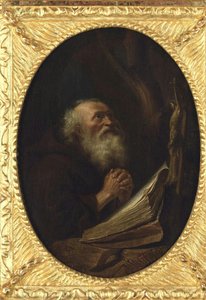
Gerrit Dou’s “Astronomer by Candlelight,” painted around 1665, isn’t merely a portrait; it’s a meticulously crafted window into the contemplative heart of the Dutch Golden Age. The painting immediately draws you in with its dramatic chiaroscuro – the stark contrast between light and shadow – reminiscent of Caravaggio but imbued with Dou's uniquely subtle touch. It depicts an elderly scholar, likely an alchemist or astronomer, deeply engrossed in his celestial globe, illuminated by a single, flickering candle. This isn’t a scene of frenetic activity; rather, it exudes a profound sense of quiet contemplation, inviting the viewer to share in the man's intellectual journey.
Dou was a master of “fijnschilder” painting – a technique characterized by painstaking detail and an almost photographic realism. He achieved this through countless layers of thin glazes applied over time, creating surfaces that shimmer with an incredible depth and luminosity. Notice the delicate rendering of the scholar’s hands, gripping the globe with a precise yet gentle touch; the subtle variations in texture across his clothing, suggesting both age and wealth; and the meticulous depiction of the candle flame itself – not as a simple source of light, but as a dynamic element casting intricate patterns on the surrounding objects. This level of detail speaks to Dou’s dedication and his mastery of oil paint.
A Window into 17th-Century Knowledge
The painting is firmly rooted in the intellectual ferment of the Dutch Golden Age – a period marked by burgeoning scientific inquiry, exploration, and a fascination with both classical learning and emerging discoveries. The celestial globe itself represents more than just an instrument for astronomical observation; it symbolizes humanity’s relentless quest to understand the cosmos and our place within it. The inclusion of books and instruments—a sextant, a compass, and various measuring tools—further emphasizes this pursuit of knowledge. It's a scene that echoes the spirit of the Renaissance, where a renewed interest in classical texts and scientific investigation fueled an era of unprecedented intellectual growth.
Furthermore, the scholar’s attire and surroundings hint at his social standing – he is clearly a man of means, comfortable enough to dedicate himself to scholarly pursuits. The arched window behind him, bathed in shadow, suggests a private study, a space for solitary reflection and intense concentration. This intimate setting reinforces the painting's theme of quiet contemplation and intellectual exploration.
Symbolism and Emotional Resonance
Beyond its historical context, “Astronomer by Candlelight” is rich in symbolic meaning. The candle, as a source of both illumination and potential danger (fire), represents enlightenment and revelation, but also the fragility of knowledge. The scholar’s aged face suggests wisdom gained through years of study, yet there's also an element of melancholy – a recognition of the vastness of the universe and perhaps the limitations of human understanding. The globe itself is a potent symbol of ambition and the desire to map and comprehend the unknown.
The painting’s emotional impact is profoundly subtle yet deeply affecting. It doesn't shout for attention; instead, it invites viewers to pause, observe, and reflect on their own relationship with knowledge, time, and the mysteries of existence. The quiet intensity of the scene creates a sense of intimacy, drawing us into the scholar’s world and allowing us to share in his contemplative gaze.
A Timeless Masterpiece for Collectors and Designers
Reproductions of “Astronomer by Candlelight” offer a remarkable opportunity to bring this exquisite Baroque masterpiece into any setting. The painting's rich colors, intricate details, and evocative atmosphere will add a touch of intellectual sophistication and timeless beauty to your home or office. Consider framing the reproduction in a dark wood frame to further enhance its dramatic effect, reminiscent of the original’s presentation. Its ability to evoke contemplation makes it an ideal addition to libraries, study spaces, or any room where one seeks inspiration and quiet reflection.
Domande e risposte
Quali sono le dimensioni dell'originale "Astronomer"?
Le dimensioni registrate di "Astronomer" di Gerrit Dou sono 27 x 29 cm. È possibile ordinare riproduzioni in altre dimensioni mantenendo le stesse proporzioni.
Che tipo di opera d'arte è "Astronomer" di Gerrit Dou?
"Astronomer" è un'opera di tipo WallArt.
In che modo lo stile di "Astronomer" si relaziona all'epoca del suo autore?
"Astronomer" appartiene al movimento Baroque, e il suo autore ha operato nell'epoca Età Moderna.
Posso vedere una vista ai raggi X di "Astronomer" di Gerrit Dou?
La pagina Raggi X di "Astronomer" di Gerrit Dou è un visualizzatore interattivo che permette di scorrere tra undici livelli ottici dell'immagine dell'opera, inclusa una vista in stile raggi X.
In che modo "Astronomer" si inserisce nei temi e nello stile di Gerrit Dou?
"Astronomer" condivide con le altre opere di Gerrit Dou lo stile Baroque e i temi ricorrenti: candlelit night scenes, genre portraiture focus, masterful detail & polish, rembrandt's chiaroscuro, dutch golden age detail, scientific observation, knowledge & enlightenment, humanist pursuit.
Dove si consiglia di esporre il formato Landscape di "Astronomer"?
Il formato Landscape di "Astronomer" di Gerrit Dou è consigliato per un/una Living Room. Il formato e lo spazio insieme guidano il posizionamento di una riproduzione.
Chi ha creato "Astronomer" e in quale anno?
"Astronomer" è stata creata da Gerrit Dou nel 1650."
Che livello di contrasto presenta "Astronomer" di Gerrit Dou?
Il livello di contrasto di "Astronomer" di Gerrit Dou è Gentle.
Biografia dell'artista
biografia di un pittore prolifico
Gerrit (Gérard) Dou, figura di spicco della pittura dell'età dell'oro olandese, nacque il 7 aprile 1613 a Leida, nei Paesi Bassi. Morì il 9 febbraio 1675, lasciando dietro di sé un'impressionante eredità di dipinti finemente lavorati che continuano ad affascinare gli appassionati d'arte in tutto il mondo.stile artistico e specializzazione
Lo stile artistico di Gerrit Dou è caratterizzato da un trattamento minuzioso ed elaborato, spesso con scene di genere e dipinti "nicchia" trompe-l'oeil. La sua padronanza del chiaroscuro è particolarmente degna di nota, come si può vedere nelle sue scene notturne illuminate a candela. Questo mix unico di abilità lo ha portato ad essere associato ai fijnschilders di Leida.vita e formazione
Gerrit Dou nacque a Leida il 7 aprile 1613, figlio del vetraio Douwe Jansz de Vries van Arentsvelt di Harlingen e Marritge Jansdr van Rosenburg. Fin da giovane dimostrò un interesse per la pittura. Studiò disegno con Bartholomeus Dolendo e successivamente lavorò nella bottega del padre come vetraio. All'età di quattordici anni, fu mandato a studiare con il maestro Rembrandt van Rijn, dove rimase per circa tre anni. Durante questo periodo, Dou acquisì le sue abilità nel colore e negli effetti sottili del chiaroscuro, riflettendo lo stile del suo maestro in diverse delle sue prime opere. Successivamente, sviluppò uno stile distintivo che si discostava da quello di Rembrandt, coltivando un trattamento minuzioso ed elaborato.opere notevoli e collezioni
* L'astronomo alla luce di una candela, un dipinto che mostra l'esperienza di Dou nel catturare le sfumature della luce, si può trovare su OriginalUniqueArt.com. * La collezione di Leida a New York, un rinomato museo d'arte, presenta opere di Gerrit Dou, tra gli altri artisti degni di nota. Per maggiori informazioni sulla collezione, visita la guida completa alla collezione di Leida su OriginalUniqueArt.com.influenza e eredità
L'influenza di Gerrit Dou si può vedere nei suoi allievi, tra cui Frans van Mieris il Vecchio e Gabriel Metsu. Il suo lavoro è stato esposto in vari musei, come il Museo Huis ten Bosch all'Aia, nei Paesi Bassi, che ospita un'impressionante collezione di arte europea dal XVI al XVIII secolo.- Fatti chiave: * Nato: 7 aprile 1613, Leida, Paesi Bassi * Morto: 9 febbraio 1675 * Opere notevoli: l'astronomo alla luce di una candela, scene di genere e scene notturne illuminate a candela * Ha influenzato: Frans van Mieris il Vecchio, Gabriel Metsu e altri
- Letture consigliate: * Gerrit (Gérard) Dou su OriginalUniqueArt.com * pittura dell'età dell'oro olandese su wikipedia
conclusione
I notevoli contributi di Gerrit (Gérard) Dou all'età dell'oro olandese hanno lasciato un segno indelebile nel mondo dell'arte. I suoi dipinti accattivanti, caratterizzati dai loro dettagli intricati e dall'abile uso della luce, continuano a ispirare artisti e appassionati d'arte. Per esplorare altre sue opere e quelle di altri artisti degni di nota, visita OriginalUniqueArt.com.
Gerrit Dou
1613 - 1675 , Paesi Bassi
Informazioni rapide
- Artisti Influenti: ['Rembrandt van Rijn']
- Artisti Influenzati:
- Frans van Mieris
- Gabriel Metsu
- Data Di Morte: 9 febbraio 1675
- Data Di Nascita: 7 aprile 1613
- Luogo Di Nascita: Leida, Paesi Bassi
- Movimento Artistico: Pittura olandese, Secolo d'oro
- Nazionalità: Olandese
- Nome Completo: Gerrit (Gerard) Dou
- Opere Notevoli: ["L'astronomo a lume di candela"]
Articoli correlati

Golden Age Reflections: Dutch Baroque Painting & Cultural Innovation
Explore the Dutch Golden Age of painting! Discover key artists like Vermeer & ter Borch, their innovative techniques, and the rich cultural context behind these Baroque masterpieces. Learn about collecting & appreciating this iconic art period.
Gerrit Dou: Intimità e Luce nell'Età dell'Oro Olandese
Esplora l'universo artistico di Gerrit Dou, maestro del Secolo d'Oro olandese. Analisi approfondita della sua tecnica pittorica, il simbolismo nascosto nelle sue opere e l'influenza sulla storia dell'arte.
Illuminating Realism: Exploring the Dutch Golden Age of Painting (1600-1700)
Explore the Dutch Golden Age of painting (1600-1700) with OriginalUniqueArt. Discover Rembrandt, Vermeer & other masters. Learn about techniques, history & find museum-quality reproductions.

I 10 Capolavori dell'Età d'Oro Olandese: Arte, Storia e Stile per la Tua Casa
Esplora i 10 capolavori dell'Età d'Oro Olandese con ! Rembrandt, Vermeer e altri maestri rivivono in dipinti iconici. Scopri storia, tecnica e colori di opere senza tempo per arredare la tua casa con arte di qualità museale. Esplora la collezione online!

Golden Light & Dutch Skies: The Timeless Magic of Dutch Golden Age Landscapes
Discover the breathtaking beauty of Dutch Golden Age landscapes. Explore the mastery of light, chiaroscuro, and 17th-century realism through an expert art history lens, celebrating the enduring legacy of the Dutch Masters for discerning collectors and art lovers.