

 Anteprima in scala reale
 Condividi
 Condividi
 Dettagli
 Guida stampabile

 Scarica
 Articoli simili
 Radiografia
 Slideshow
 Statistiche
Fuji


 Leggi tutto
L'opera d'arte visualizzata in questa pagina è protetta dalle leggi sul diritto d'autore, il che significa che non possiamo legalmente creare o vendere una riproduzione identica. Tale protezione è garantita da accordi internazionali quali la Convenzione di Berna e dalle leggi nazionali, incluse quelle stabilite da Legge sul copyright degli Stati Uniti - Titolo 17. Tutti i diritti riservati. Le immagini presenti su questo sito sono protette da copyright e non possono essere riprodotte o utilizzate senza l'autorizzazione scritta di WahooArt.com o dei rispettivi proprietari del copyright.
Come alternativa rispettosa e legale, offriamo opere d'arte personalizzate e dipinte a mano, ispirate all'originale. I nostri artisti esperti e professionisti studiano con cura lo stile, l'atmosfera e l'essenza artistica dell'opera originale per creare un pezzo nuovo e unico che evochi la stessa emozione, pur rimanendo una creazione originale a pieno titolo.
Questo metodo è pienamente conforme alle normative sul diritto d'autore poiché non prevede la copia o la duplicazione dell'opera protetta. Si tratta invece di una rielaborazione creativa: un nuovo dipinto che trae ispirazione dall'originale, senza tuttavia esserne identico.
Riproduzione a olio fatta a mano
Olio su tela dipinto a mano nelle tue dimensioni e con la tua cornice, realizzato su ordinazione dai nostri artisti. ( Passa alle stampe Passa all'immagine digitale)




P118B €10

P118H €10

P118W €10

P438Z €10

P508JH €12

P508YH €12

P805H €10

P805Z €10

P919BZ €10

P919G €10

P919XJ €10

P959ZH €10

P968JZ €12

W106C €8

W218G €10

W218JH €8

W218Y €10

W307PJ €10

W316G €10

W316PJ €8

W316Y €10

W398PJ €8

W4111J €10

W500HY €15

W500JH €15

W692G €12

W849H €8

W940BG €15

W953PJ €8




Scegli tra le nostre dimensioni predefinite, che rispettano le proporzioni originali dell'opera d'arte.

Inserisci la larghezza e l'altezza di cui hai bisogno, per adattarle alla tua cornice o alla tua parete. Trattandosi di un'opera dipinta a mano, in caso di dimensioni con una forma differente, l'artista può dipingere un po' più oltre i bordi dell'immagine o ritagliare leggermente — la scelta spetta a te. Ti invieremo un mockup digitale da approvare prima che la pittura abbia inizio. L'immagine mostrata in questa pagina non rappresenta il risultato reale — solo il mockup lo fa.
Dopo l'ordine, il team di OriginalUniqueArt.com contatterà il cliente via e-mail per ricevere le istruzioni e fornirà un'anteprima del mockup
Consegna in tutto il mondo () in 3/4 settimane anziché nelle normali 5 settimane. (22 Ottobre). Nessun compromesso sulla qualità.

Spedizione espressa gratuita in tutto il mondo

Tela in lino di alta qualità

Assicurazione completa sulla spedizione

Garanzia di rimborso dei dazi doganali

Garanzia di perfetta fedeltà cromatica

Politica di reso entro 100 giorni (solo per difetti di fabbricazione)

Garanzia di rimborso al 100%

Sconto per acquisti multipli
 L'opzione vetro è disponibile solo per dimensioni inferiori a 110 cm

Fuji
Tecnica di riproduzione
Dimensioni della riproduzione
-


Prezzo totale
€ 263
The Enigmatic Landscape: An Introduction to Gerhard Richter's "Fuji"
Gerhard Richter’s “Fuji,” a work that exists primarily as meticulously rendered reproductions, isn’t merely a depiction of the iconic Japanese mountain; it’s an exploration of memory, perception, and the elusive nature of reality itself. Painted in 2013, this piece embodies a core element of Richter's oeuvre – his masterful manipulation of photographic source material. Rather than striving for immediate representation, he employs a technique that deliberately obscures, inviting viewers to contemplate the process of seeing and the inherent subjectivity involved in translating an image into paint.
The painting’s palette is deceptively simple: primarily shades of red, orange, and blue, arranged within a complex network of layered brushstrokes. These aren't vibrant, assertive colors; instead, they are muted, almost melancholic, suggesting a faded memory or a dreamlike state. The composition itself is deliberately ambiguous. While the central form undeniably evokes Mount Fuji’s recognizable silhouette – its distinctive conical shape rising above a hazy backdrop – it’s rendered with an unsettling softness, as if viewed through a veil of mist or watercolor. This deliberate blurring creates a sense of detachment, pulling us away from a literal representation and into a realm of emotional resonance.
Richter's Method: Appropriation and the Illusion of Reality
Richter’s approach to painting is famously rooted in appropriation – he frequently utilizes photographs as his starting point. “Fuji” exemplifies this practice perfectly. He doesn’t attempt to recreate a photograph directly; instead, he builds upon it, adding layers of paint, manipulating textures, and subtly altering the image's tonal values. This process isn’t about deception, but rather about revealing the inherent limitations of representation. As Richter himself has stated, his goal is not to create an accurate likeness, but to capture a feeling or mood associated with the original photograph.
The technique employed in “Fuji” is particularly noteworthy. Richter utilizes a layering method, applying thin washes of color over previous layers, creating a sense of depth and translucency. The brushstrokes are often loose and gestural, suggesting movement and spontaneity – a deliberate contrast to the seemingly static nature of the subject matter. This interplay between control and chance contributes significantly to the painting’s captivating quality.
Symbolism and the Weight of History
Mount Fuji holds profound cultural significance in Japan, representing beauty, spirituality, and resilience. It's a symbol deeply intertwined with Japanese history and mythology, frequently depicted in art and literature as a sacred mountain. Richter’s choice to focus on this iconic subject is therefore laden with meaning. Considering the artist’s own background – born in Dresden during a period of immense political upheaval in Germany – “Fuji” can be interpreted as a meditation on memory, displacement, and the enduring power of nature to transcend historical trauma.
The muted color palette and the painting's overall sense of ambiguity also evoke feelings of nostalgia and loss. It’s possible that Richter is drawing upon his own experiences of displacement and uncertainty, translating them into a visual language that speaks to the broader human condition. The mountain itself, standing as a silent witness to centuries of change, becomes a potent symbol of continuity and endurance.
Collecting “Fuji”: A Window into Richter’s World
Reproductions of Gerhard Richter's "Fuji" offer an accessible entry point into the artist’s complex and rewarding body of work. OriginalUniqueArt.com provides meticulously crafted, hand-painted reproductions that capture the essence of Richter’s unique style. These aren’t simply prints; they are faithful interpretations of his layered brushwork and subtle color shifts, allowing you to experience the painting's emotional depth and intellectual richness in your own space.
Whether displayed as a statement piece in a contemporary interior or studied for its artistic merits, “Fuji” remains a compelling testament to Richter’s mastery of abstraction and his profound engagement with the complexities of perception and memory. It is an artwork that invites contemplation, sparking dialogue about art, history, and the enduring power of visual representation.
Domande e risposte
Come posso scoprire opere d'arte simili a "Fuji" di Gerhard Richter?
La pagina Opere simili di "Fuji" di Gerhard Richter presenta opere correlate.
Quanto è satura la tavolozza di "Fuji"?
I colori di "Fuji" di Gerhard Richter hanno una saturazione Balanced Soft. La saturazione descrive quanto i colori siano vivaci o attenuati.
A quale emozione è associata "Fuji"?
"Fuji" è associata a una sensazione Contemplativo. Il tono emotivo descrive l'impressione che l'opera trasmette.
Biografia dell'artista
**primi anni di vita ed educazione**
Gerhard Richter, un rinomato artista visivo tedesco, è nato il 9 febbraio 1932 a Hospital Dresden-Neustadt, Dresda, Sassonia. È cresciuto a Reichenau, Basso Silisia (ora Bogatynia, Polonia), e Waltersdorf (Zittauer Gebirge), nella campagna superiore della Lusazia. Il padre di Richter, Horst Richter, era uno studente di matematica e fisica all'Technische Hochschule di Dresda.**carriera artistica**
Richter ha iniziato il suo percorso artistico come apprendista pittore di cartelli pubblicitari e in seguito ha studiato alla Accademia delle belle arti di Dresda. Le sue opere iniziali sono state influenzate dagli stili di Picasso e Jean Arp, come si evince dai suoi dipinti astratti e fotorealistici. Nel 1957, Richter ha lavorato come tirocinante esperto all'accademia, accettando commissioni per lo stato dell'allora Germania Est.**opere notevoli e risultati**
* Abstratto (2012) ha stabilito un record di prezzo d'asta per un dipinto di un artista vivente a 34 milioni di dollari (£21 milioni). * Domplatz, Mailand (Piazza del Duomo, Milano) (1968) è stato venduto per 37,1 milioni di dollari (£24,4 milioni) a New York. * Abstratto (2015) è stato venduto per 44,52 milioni di dollari (£30,4 milioni) all'asta contemporanea di Sotheby's.**stile artistico e movimento**
Le opere di Richter sono caratterizzate dal loro eclettismo, che fonde stili astratti e fotorealistici. Insieme a Sigmar Polke, ha introdotto il termine Kapitalistischer Realismus (Realismo Capitalistico), uno stile anti-arte che appropria la sintassi pittorica della pubblicità.**vita privata**
Richter si è sposato con Marianne Eufinger nel 1957 e ha avuto una figlia. In seguito si è sposato con Isa Genzken nel 1982 e Sabine Moritz nel 1995, con cui ha avuto due figli e una figlia. **Nota:** questo articolo si basa sulle informazioni fornite e potrebbe non essere una biografia completa. Per informazioni più dettagliate, visitare le fonti collegate.
Gerhard Richter
1932 - , Germania
Informazioni rapide
- Artisti Influenti:
- Pablo Picasso
- Jean Arp
- Data Di Nascita: 9 febbraio 1932
- Influenza Artistica: Arte contemporanea tedesca
- Luogo Di Nascita: Dresda, Germania
- Movimento Artistico:
- Espressionismo astratto
- Fotorealismo
- Nazionalità: Tedesca
- Nome Completo: Gerhard Richter
- Opere Notevoli:
- Abstraktes Bild (2012)
- Domplatz, Milano (1968)
- Nuvole
- S. con Bambino
Articoli correlati

Gerhard Richter: Un Viaggio nell'Astrazione, la Memoria e le Origini Fotografiche
Esplora l'universo artistico di Gerhard Richter: dalle prime opere informali all'astrazione più radicale. Analisi approfondita, storia e tecniche del maestro della pittura contemporanea.

Espressionismo Astratto: I 10 Capolavori che Hanno Definito un Movimento Artistico Rivoluzionario
Esplora i 10 capolavori dell'Espressionismo Astratto con ! Scopri Pollock, Rothko e De Kooning: storia, tecnica e significato di opere iconiche per arredare la tua casa con arte di alta qualità. Esplora la collezione online!

Kandinsky: I 25 Capolavori che Hanno Rivoluzionato l'Arte Moderna | OriginalUniqueArt
Esplora i 25 capolavori di Wassily Kandinsky, pioniere dell'arte astratta. Scopri la storia, il significato e le tecniche dietro ogni dipinto iconico. Trova riproduzioni d'arte di alta qualità per decorare la tua casa su OriginalUniqueArt.com.

Astrazione Geometrica: 10 Capolavori che Hanno Definito un Movimento Artistico
Esplora i 10 capolavori dell'Astrazione Geometrica: Mondrian, Malevich e Kandinsky rivoluzionano l'arte moderna. Scopri la storia, i colori e le tecniche di questi movimenti iconici. Stampe d'arte di alta qualità su OriginalUniqueArt.com!
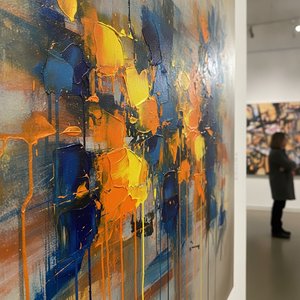
Beyond the Lines: Mastering the High-Impact World of Contemporary Abstraction
Master the high-impact world of contemporary abstraction. Discover how bold colors, textures, and modern movements like Abstract Expressionism can transform your space with premium, high-energy art curated for the design-conscious professional.


