

 Anteprima in scala reale
 Invia
Invia Condividi
 Dettagli opera

 Scarica immagine
 Simili
 Radiografia
 Slideshow
untitled (7166)


 Espandi i dettagli
Giclée / Stampe d'arte
Stampa giclée o su tela di qualità museale, con produzione rapida e diverse opzioni di finitura. ( Acquista il dipinto realizzato a mano Acquista immagine)




P118B $10

P118H $10

P118W $10

P438Z $10

P508JH $12

P508YH $12

P805H $10

P805Z $10

P919BZ $10

P919G $10

P919XJ $10

P959ZH $10

P968JZ $12

W106C $8

W218G $10

W218JH $8

W218Y $10

W307PJ $10

W316G $10

W316PJ $8

W316Y $10

W398PJ $8

W4111J $10

W500HY $15

W500JH $15

W692G $12

W849H $8

W940BG $15

W953PJ $8




Scegli tra le nostre dimensioni predefinite, che rispettano le proporzioni originali dell'opera d'arte.

È possibile inserire dimensioni personalizzate per adattare l'opera a una cornice o a uno spazio specifico. Se la dimensione selezionata non corrisponde alle proporzioni dell'immagine originale, procederemo al ritaglio dell'opera o all'estensione dell'immagine con un bordo specchiato o a tinta unita. Un mockup digitale ti verrà inviato per approvazione prima dell'inizio della produzione.
Si prega di notare che l'anteprima a schermo non riflette il ritaglio o l'estensione effettivi. Solo il mockup mostrerà accuratamente la composizione finale.
Sebbene siano disponibili dimensioni personalizzate, si raccomanda di selezionare una dimensione dall'elenco predefinito per preservare le proporzioni originali.
Consegna in tutto il mondo () in 2 settimane invece delle normali 4/5 settimane. (31 Agosto)

Spedizione espressa gratuita in tutto il mondo

Tela in lino di alta qualità

Assicurazione completa sulla spedizione

Garanzia di rimborso dei dazi doganali

Garanzia di fedeltà cromatica

Politica di reso entro 60 giorni (solo per difetti di fabbricazione)

Garanzia di rimborso al 100%

Offerta per acquisti multipli
 L'opzione vetro è disponibile solo per dimensioni inferiori a 110 cm

untitled (7166)
Giclée / Stampe d'arte
Dimensioni riproduzione
-


Prezzo totale calcolato
$ 80
Georges Braque’s “Untitled (7166)” – A Fragmented Vision of Modernity
Georges Braque's "Untitled (7166)," a captivating study in blue and stark contrasts, presents a compelling enigma from the early years of 20th-century art. This seemingly simple composition—a muted blue backdrop punctuated by a fractured helmet and a dismantled airplane propeller—is far more than a mere assemblage of objects; it’s a potent distillation of the anxieties and burgeoning futurism that defined the era, reflecting Braque's pivotal role in pioneering Cubism alongside Pablo Picasso. The painting, shrouded in an air of mystery regarding its precise date and size, invites us to contemplate the fractured realities of a rapidly changing world.
The immediate impact is one of disorientation. The black helmet, rendered with sharp angles and suggesting damage or even disintegration, dominates the right side of the canvas. It’s not merely a military artifact; it embodies a sense of loss, perhaps representing the casualties of conflict or the breakdown of traditional order. Juxtaposed against this is the airplane propeller in the left foreground – a symbol of technological advancement, speed, and ultimately, the dehumanizing potential of industrial progress. The deliberate placement creates a dynamic tension, forcing the viewer to confront these opposing forces.
The Roots of Cubism: Cézanne’s Influence and Geometric Deconstruction
To fully appreciate “Untitled (7166),” one must understand Braque's artistic journey within the context of early 20th-century art. Following his training as a house painter, Braque’s innate artistic sensibility led him to formal studies at the École des Beaux-Arts in Le Havre. However, it was his encounter with the Fauvist movement – characterized by its bold use of color and emotional expression – that served as a crucial stepping stone. Crucially, Braque's subsequent immersion in the work of Paul Cézanne proved transformative. Cézanne’s emphasis on geometric forms, multiple perspectives, and the flattening of space profoundly influenced Braque’s approach to representation.
This influence is strikingly evident in “Untitled (7166).” Braque's technique mirrors Cézanne’s – a deliberate deconstruction of form into fragmented planes. The helmet isn’t depicted as a solid, unified object; instead, it’s broken down into geometric shards, suggesting multiple viewpoints simultaneously. Similarly, the propeller is similarly dissected, its whirling blades reduced to angular segments. This fragmentation wasn't simply an aesthetic choice; it was a radical attempt to represent reality in a way that captured the dynamism and complexity of modern life – a key tenet of Cubism.
Symbolic Layers: War, Technology, and the Fragmented Self
Beyond its formal innovations, “Untitled (7166)” resonates with deeper symbolic meanings. The helmet, often associated with military conflict and authority, hints at the pervasive influence of war during this period. The airplane propeller, a symbol of technological progress and modernity, simultaneously evokes anxieties about industrialization and its potential consequences – displacement, alienation, and the loss of human connection. The figure holding a gun further amplifies these themes, suggesting a world where violence and control are ever-present.
Furthermore, the painting can be interpreted as an exploration of the fragmented self—a common theme in early 20th-century art reflecting the psychological impact of rapid social change. Braque’s deconstructed forms mirror the breakdown of traditional values and the disorientation experienced by individuals navigating a rapidly evolving world. The overall effect is one of unsettling beauty, prompting viewers to question their own perceptions of reality and the nature of modern existence.
A Legacy of Innovation: Braque's Contribution to Modern Art
“Untitled (7166)” stands as a testament to Georges Braque’s pivotal role in shaping the course of 20th-century art. Alongside Pablo Picasso, he was instrumental in developing Cubism – an artistic movement that irrevocably altered the way artists represented space, form, and perspective. His meticulous study of Cézanne's principles, combined with his own innovative experimentation, resulted in a body of work characterized by its geometric precision, multiple viewpoints, and profound exploration of modern themes. Reproductions of this piece offer a unique opportunity to experience firsthand the genius of Braque’s vision – a fragmented yet powerfully evocative reflection of a world on the cusp of transformation.
Biografia dell'artista
**primi anni di vita e formazione**
Georges Braque, un illustre pittore francese, collageur, disegnatore, stampatore e scultore, nacque il 13 maggio 1882 ad Argenteuil, Val-d'Oise. È cresciuto a Le Havre e inizialmente si è formato per diventare pittore di facciate e decoratore come suo padre e nonno. Tuttavia, le inclinazioni artistiche di Braque lo hanno portato a studiare pittura all’École des Beaux-Arts a Le Havre dal 1897 al 1899.**evoluzione artistica e fauvismo**
Nel 1902, dopo aver completato il suo apprendistato con un decoratore a Parigi, Braque ha frequentato l'Académie Humbert fino al 1904. Questo periodo ha segnato la sua introduzione al fauvismo, uno stile caratterizzato da colori vivaci e risposte emotive. Influenzato dalle opere di Henri Matisse e André Derain, Braque ha adottato un approccio fauvista, come si può vedere nel suo dipinto La Pazienza (fauvismo, olio su tela).**contributo al cubismo**
La collaborazione di Braque con Pablo Picasso dal 1908 al 1912 ha portato allo sviluppo del cubismo. Le loro opere cubiste analitiche, come Georges Braque: La Pazienza e Pablo Picasso: Clarinet(cubismo analitico, olio su tela), sono oggi considerate pietre miliari della storia dell'arte.**eredità e opere notevoli**
* Le Case all’Éstaque: una testimonianza dell'uso innovativo di geometria e prospettiva simultanea da parte di Braque. * La Pazienza(fauvismo, olio su tela): dimostra lo stile fauvista di Braque. * Clarinet(cubismo analitico, olio su tela): un'opera cubista collaborativa con Picasso.**musei e collezioni**
* Musée d’Orsay: presenta una vasta collezione di arte impressionista e post-impressionista, inclusi lavori di Braque. * Musée de l’Orangerie: espone una vasta gamma di opere d'arte, inclusi quelle di Braque e altri artisti notevoli.- Scopri di più sulla vita e sull'opera di Georges Braque su OriginalUniqueArt.com
- Esplora la collezione del Musée d’Orsay, che include opere di Braque e altri artisti, su Musée d'Orsay - Wikipedia
- Impara di più sul fauvismo e sulla sua influenza sullo sviluppo del cubismo con Fauvismo - movimento artistico su OriginalUniqueArt.com
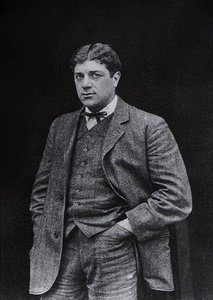
Georges Braque
1882 - 1963 , Francia
Dati rapidi
- Artisti Influenti:
- Henri Matisse
- André Derain
- Paul Cézanne
- Artisti Influenzati: ['Pablo Picasso']
- Data Di Nascita: 13 maggio 1882
- Luogo Di Nascita: Argenteuil, Francia
- Movimento Artistico: Cubismo, Fauvismo
- Nazionalità: Francese
- Nome Completo: Georges Braque
- Opere Notevoli:
- Case a L'Estaque
- La Pazienza (fauvista)
- Chitarra, Frutta e Brocca
- Natura morta con Bass
Articoli correlati

Georges Braque: I 25 Capolavori che Hanno Rivoluzionato l'Arte Moderna | OriginalUniqueArt
Esplora i 25 capolavori di Georges Braque, pioniere del Cubismo. Scopri la storia, le tecniche e l'impatto di opere iconiche come 'The Patience'. Trova riproduzioni d'arte di alta qualità per decorare casa tua su OriginalUniqueArt.com.

Georges Seurat: I 25 Capolavori che Rivoluzionarono la Pittura | OriginalUniqueArt
Esplora i 25 capolavori di Georges Seurat, il maestro del Pointillismo. Scopri la storia, le tecniche e l'emozione dietro dipinti iconici come 'Un dimanche à la Grande Jatte'. Trova riproduzioni d'arte di alta qualità per decorare casa tua su OriginalUniqueArt.com.

I 10 Dipinti Più Famosi Dominati dal Blu Ardesia: Storia, Arte e Decorazioni Raffinate
Esplora i 10 dipinti più iconici dominati dal blu ardesia! Scopri la storia, gli artisti e le tecniche dietro capolavori impressionisti e moderni. Trova riproduzioni artistiche di alta qualità per decorare casa con .
Serene Blue Backgrounds: Discover Soulful Art to Transform Your Space with Timeless Elegance
Transform your home with soulful blue art. From serene Monet impressions to modern textured sculptures, discover curated masterpieces designed to inspire calm. Explore expert art consultations and bespoke hand-painted reproductions to create your personal sanctuary.

Cubism Unveiled: How Picasso and Braque Redefined Modern Art through Geometric Revolution
Explore the revolutionary world of Cubism. Discover how Pablo Picasso and Georges Braque dismantled perspective to redefine modern art through geometric innovation and analytical mastery. An essential guide for art students, collectors, and history enthusiasts.



