Anteprima in scala reale
 Condividi
 Condividi
 Dettagli

 Scarica immagine
 Articoli simili
 Radiografia
 Slideshow
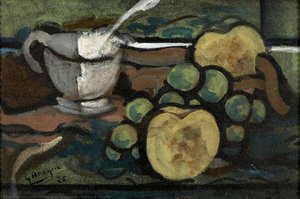
Teapot, Lemon And Spoon - Teiera, Limone E Cucchiaio


 Leggi tutto
Riproduzione a olio fatta a mano
Olio su tela dipinto a mano nelle tue dimensioni e con la tua cornice, realizzato su ordinazione dai nostri artisti. ( Ordina stampa Acquista download)




P118B $10

P118H $10

P118W $10

P438Z $10

P508JH $12

P508YH $12

P805H $10

P805Z $10

P919BZ $10

P919G $10

P919XJ $10

P959ZH $10

P968JZ $12

W106C $8

W218G $10

W218JH $8

W218Y $10

W307PJ $10

W316G $10

W316PJ $8

W316Y $10

W398PJ $8

W4111J $10

W500HY $15

W500JH $15

W692G $12

W849H $8

W940BG $15

W953PJ $8




Scegli tra le nostre dimensioni predefinite, che rispettano le proporzioni originali dell'opera d'arte.

È possibile inserire dimensioni personalizzate per adattare l'opera a una cornice o a uno spazio specifico. Se la dimensione selezionata non corrisponde alle proporzioni dell'immagine originale, provvederemo a ritagliare l'opera o a estendere il dipinto con elementi aggiuntivi dipinti a mano. Un mockup digitale ti sarà inviato per approvazione prima dell'inizio della produzione.
Si prega di notare che l'anteprima a schermo non riflette il ritaglio o l'estensione effettivi. Solo il mockup mostrerà accuratamente la composizione finale.
Sebbene siano disponibili dimensioni personalizzate, consigliamo di selezionare una dimensione dall'elenco predefinito per preservare le proporzioni originali.
Dopo l'ordine, il team di OriginalUniqueArt.com contatterà il cliente via e-mail per le istruzioni e fornirà un'anteprima del mockup
Consegna in tutto il mondo () in 3/4 settimane anziché nelle normali 5 settimane. (13 Agosto). Nessun compromesso sulla qualità.

Spedizione espressa gratuita in tutto il mondo

Tela in lino di alta qualità

Assicurazione completa sulla spedizione

Garanzia di rimborso dei dazi doganali

Garanzia di fedeltà cromatica dell'originale

Politica di reso entro 60 giorni (solo per difetti di fabbricazione)

Garanzia di rimborso al 100%

Sconto per acquisti multipli
 L'opzione vetro è disponibile solo per dimensioni inferiori a 110 cm

Teapot, Lemon And Spoon - Teiera, Limone E Cucchiaio
Tecnica di riproduzione
Dimensioni della riproduzione
-


Prezzo totale
$ 300
Descrizione dell'opera
Teapot, Lemon And Spoon: A Study in Form and Hue
Georges Braque’s ‘Teapot, Lemon And Spoon,’ painted in 1949, stands as a testament to the artist's unwavering dedication to exploring fundamental artistic principles—form, color, and texture—even beyond the initial fervor of Fauvism. This deceptively simple still life transcends mere representation; it embodies Braque’s profound engagement with Cubist ideas, subtly foreshadowing their radical evolution into abstraction while retaining a palpable sense of emotional resonance. The artwork's quiet contemplation invites viewers to consider not just what is depicted but *how* it is depicted—a deliberate departure from traditional artistic conventions that cemented Braque’s legacy as one of the pioneers of modern art.Subject & Composition: Everyday Objects Elevated
At its core, ‘Teapot, Lemon And Spoon’ presents a carefully considered arrangement of commonplace objects – a teapot, a lemon, and a spoon – transforming them into subjects worthy of artistic scrutiny. Braque eschews conventional perspective, opting instead for a flattened composition that prioritizes geometric shapes and spatial relationships over realistic depiction. The teapot, lemon, and spoon aren't rendered as recognizable forms but rather suggested through bold lines and simplified contours, emphasizing their essential structural qualities. This approach isn’t about capturing visual accuracy; it’s about distilling the essence of these objects into their fundamental geometric components—a technique characteristic of Cubist thinking.Style & Technique: Impasto Texture and Fauvist Echoes
The painting's stylistic lineage is complex, blending elements of Post-Fauvism with early Analytical Cubism. Braque employs a muted palette dominated by dark greens and browns, creating an atmosphere of subdued solemnity punctuated by the vibrant yellow hue of the lemon – a focal point designed to draw the eye and stimulate visual interest. Crucially, Braque utilizes impasto—thickly applied oil paint—creating a tactile surface that invites viewers to appreciate not only its aesthetic qualities but also its physicality. The visible brushstrokes are energetic and deliberate, conveying movement and emotion while simultaneously reinforcing the painting’s structural integrity. This technique anticipates Picasso's later Cubist explorations where form would be fragmented and reassembled in increasingly abstract ways, demonstrating Braque’s pioneering role in shaping the trajectory of 20th-century art.Historical Context & Braque’s Artistic Journey
Born in Argenteuil in 1882, Georges Braque emerged as a pivotal figure in the artistic landscape of his time—a period marked by groundbreaking experimentation and intellectual ferment. Initially influenced by Cézanne's emphasis on geometric simplification and spatial recession, Braque swiftly embraced Fauvism’s bold chromatic palette and expressive brushwork. However, recognizing the limitations of this stylistic approach, he embarked on a transformative journey toward Cubism alongside Picasso, fundamentally altering the course of artistic representation. The collaborative effort between Braque and Picasso resulted in masterpieces that redefined visual perception—a testament to their shared vision and unwavering commitment to pushing the boundaries of artistic convention. ‘Teapot, Lemon And Spoon’ serves as an enduring symbol of this pivotal moment in art history, encapsulating Braque's pioneering spirit and his profound engagement with the intellectual currents shaping the era.Symbolism & Emotional Impact: Quiet Contemplation
Despite its apparent simplicity, ‘Teapot, Lemon And Spoon’ possesses a subtle symbolic depth—a reflection of Braque’s preoccupation with exploring the emotional resonance inherent in everyday objects. The muted colors evoke feelings of introspection and melancholy, while the lemon's brilliant yellow embodies optimism and vitality—creating a harmonious tension that underscores the painting’s contemplative mood. Ultimately, ‘Teapot, Lemon And Spoon’ invites viewers to engage in a dialogue with the artwork itself—to consider not just what is seen but also how it feels—a testament to Braque’s masterful ability to convey emotion through form and color.Biografia dell'artista
**primi anni di vita e formazione**
Georges Braque, un illustre pittore francese, collageur, disegnatore, stampatore e scultore, nacque il 13 maggio 1882 ad Argenteuil, Val-d'Oise. È cresciuto a Le Havre e inizialmente si è formato per diventare pittore di facciate e decoratore come suo padre e nonno. Tuttavia, le inclinazioni artistiche di Braque lo hanno portato a studiare pittura all’École des Beaux-Arts a Le Havre dal 1897 al 1899.**evoluzione artistica e fauvismo**
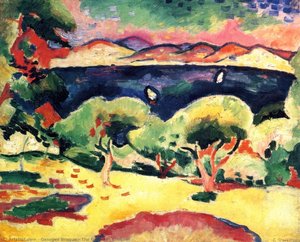
Nel 1902, dopo aver completato il suo apprendistato con un decoratore a Parigi, Braque ha frequentato l'Académie Humbert fino al 1904. Questo periodo ha segnato la sua introduzione al fauvismo, uno stile caratterizzato da colori vivaci e risposte emotive. Influenzato dalle opere di Henri Matisse e André Derain, Braque ha adottato un approccio fauvista, come si può vedere nel suo dipinto La Pazienza (fauvismo, olio su tela).**contributo al cubismo**
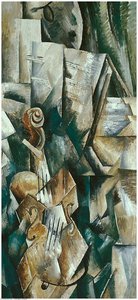
La collaborazione di Braque con Pablo Picasso dal 1908 al 1912 ha portato allo sviluppo del cubismo. Le loro opere cubiste analitiche, come Georges Braque: La Pazienza e Pablo Picasso: Clarinet(cubismo analitico, olio su tela), sono oggi considerate pietre miliari della storia dell'arte.**eredità e opere notevoli**
* Le Case all’Éstaque: una testimonianza dell'uso innovativo di geometria e prospettiva simultanea da parte di Braque. * La Pazienza(fauvismo, olio su tela): dimostra lo stile fauvista di Braque. * Clarinet(cubismo analitico, olio su tela): un'opera cubista collaborativa con Picasso.**musei e collezioni**
* Musée d’Orsay: presenta una vasta collezione di arte impressionista e post-impressionista, inclusi lavori di Braque. * Musée de l’Orangerie: espone una vasta gamma di opere d'arte, inclusi quelle di Braque e altri artisti notevoli.- Scopri di più sulla vita e sull'opera di Georges Braque su OriginalUniqueArt.com
- Esplora la collezione del Musée d’Orsay, che include opere di Braque e altri artisti, su Musée d'Orsay - Wikipedia
- Impara di più sul fauvismo e sulla sua influenza sullo sviluppo del cubismo con Fauvismo - movimento artistico su OriginalUniqueArt.com
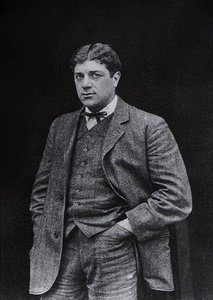
Georges Braque
1882 - 1963 , Francia
Informazioni rapide
- Artisti Influenti:
- Henri Matisse
- André Derain
- Paul Cézanne
- Artisti Influenzati: ['Pablo Picasso']
- Data Di Nascita: 13 maggio 1882
- Luogo Di Nascita: Argenteuil, Francia
- Movimento Artistico: Cubismo, Fauvismo
- Nazionalità: Francese
- Nome Completo: Georges Braque
- Opere Notevoli:
- Case a L'Estaque
- La Pazienza (fauvista)
- Chitarra, Frutta e Brocca
- Natura morta con Bass
Articoli correlati

Georges Braque: I 25 Capolavori che Hanno Rivoluzionato l'Arte Moderna | OriginalUniqueArt
Esplora i 25 capolavori di Georges Braque, pioniere del Cubismo. Scopri la storia, le tecniche e l'impatto di opere iconiche come 'The Patience'. Trova riproduzioni d'arte di alta qualità per decorare casa tua su OriginalUniqueArt.com.

Georges Seurat: I 25 Capolavori che Rivoluzionarono la Pittura | OriginalUniqueArt
Esplora i 25 capolavori di Georges Seurat, il maestro del Pointillismo. Scopri la storia, le tecniche e l'emozione dietro dipinti iconici come 'Un dimanche à la Grande Jatte'. Trova riproduzioni d'arte di alta qualità per decorare casa tua su OriginalUniqueArt.com.

Cubist Still Life: Redefining Reality Through Fragmented Forms and Geometric Abstraction
Explore the profound evolution of Cubist still life, from Cézanne's structural foundations to the fragmented brilliance of Braque and Léger. Discover how geometric abstraction redefined reality through a sophisticated lens of form, color, and modern artistic mastery.
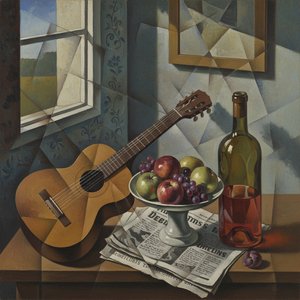
Deconstructing Reality: A Comprehensive Exploration of Cubist Still Life
Explore the revolutionary world of Cubist Still Life with OriginalUniqueArt. Discover Picasso & Braque's groundbreaking techniques, its philosophical roots, and lasting impact on modern art. Expert insights for collectors.

Espressionismo Astratto: I 10 Capolavori che Hanno Definito un Movimento Artistico Rivoluzionario
Esplora i 10 capolavori dell'Espressionismo Astratto con ! Scopri Pollock, Rothko e De Kooning: storia, tecnica e significato di opere iconiche per arredare la tua casa con arte di alta qualità. Esplora la collezione online!