Passa alle stampe
 Espandi i dettagli







































 Per opere d'arte o riproduzioni con un lato superiore a 105 cm (circa 41 pollici), la cornice verrà spedita in forma di kit smontato. Questo metodo garantisce una consegna sicura e previene danni durante il trasporto.


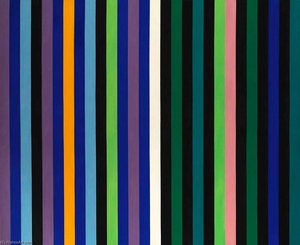
The Red Baron is a striking painting created by Gene Bernard Davis in 1966. This acrylic on canvas piece measures 200 x 103 cm and is a prime example of the artist's unique style, which blends bold colors and geometric shapes to create a visually stunning effect.
The Red Baron is a testament to the enduring power of Color Field art, and its influence can still be seen in contemporary art today. As a masterpiece of American art, it continues to inspire and delight audiences around the world.
Artist Background
Gene Bernard Davis was an American artist known for his contributions to the Color Field movement. His work often featured vertical stripes of color, which gave his paintings a sense of rhythm and energy. The Red Baron is a quintessential example of this style, with its bold red and orange hues evoking a sense of dynamism and movement.Painting Description
The Red Baron features two distinct sections: one predominantly red and the other mostly orange. The red section appears as a solid color, while the orange section has some texture and detail. This contrast between smooth and textured surfaces adds depth to the painting, making it more engaging for the viewer.Museum Collections
The Red Baron is part of the collection at the Smithsonian American Art Museum. You can find more information about this painting and other works by Gene Bernard Davis on the OriginalUniqueArt.com website.- The Red Baron is a significant work in the Gene Bernard Davis oeuvre, showcasing his unique style and contribution to the Color Field movement.
- The painting's bold colors and geometric shapes make it a visually striking piece that continues to captivate audiences today.
- As a leading figure in the Washington Color School, Gene Bernard Davis played an important role in shaping the development of American art in the mid-20th century.
The Red Baron is a testament to the enduring power of Color Field art, and its influence can still be seen in contemporary art today. As a masterpiece of American art, it continues to inspire and delight audiences around the world.
Domande e risposte
I colori di "Red Baron" di Gene Bernard Davis sono vivaci o tenui?
La saturazione del colore di "Red Baron" è Vivid Color e la sua intensità è Vivid.
"Red Baron" di Gene Bernard Davis è un ritratto, un paesaggio o una composizione quadrata?
"Red Baron" di Gene Bernard Davis è una composizione in Panoramic. Le proporzioni meritano di essere verificate prima di scegliere la dimensione della stampa.
In che modo "Red Baron" bilancia luci e ombre?
I valori rilevati per "Red Baron" di Gene Bernard Davis sono: luminosità brilliant, luminanza Gentle Luminance.
Maggiori informazioni su questo dipinto
 Anteprima in scala reale
 Invia
Invia Condividi
 Dettagli opera
 Guida
Guida

 Scarica
 Simili
 Radiografia
 Slideshow
 Domande e risposte
 Statistiche