

 Anteprima in scala reale
 Invia
Invia Condividi
 Dettagli opera

 Scarica immagine
 Simili
 Radiografia
 Slideshow
 Statistiche
Christmas Night
 Oil
Oil- WallArt
- Impressionism
 19th Century
 83.0 x 101.0 cm
 Espandi i dettagli
Giclée / Stampe d'arte
Stampa giclée o su tela di qualità museale, con produzione rapida e diverse opzioni di finitura. ( Acquista il dipinto realizzato a mano Passa all'immagine digitale)




P118B $10

P118H $10

P118W $10

P438Z $10

P508JH $12

P508YH $12

P805H $10

P805Z $10

P919BZ $10

P919G $10

P919XJ $10

P959ZH $10

P968JZ $12

W106C $8

W218G $10

W218JH $8

W218Y $10

W307PJ $10

W316G $10

W316PJ $8

W316Y $10

W398PJ $8

W4111J $10

W500HY $15

W500JH $15

W692G $12

W849H $8

W940BG $15

W953PJ $8




Scegli tra le nostre dimensioni predefinite, che rispettano le proporzioni originali dell'opera d'arte.

È possibile inserire dimensioni personalizzate per adattare l'opera a una cornice o a uno spazio specifico. Se la dimensione selezionata non corrisponde alle proporzioni dell'immagine originale, procederemo al ritaglio dell'opera o all'estensione dell'immagine con un bordo specchiato o a tinta unita. Un mockup digitale ti verrà inviato per approvazione prima dell'inizio della produzione.
Si prega di notare che l'anteprima a schermo non riflette il ritaglio o l'estensione effettivi. Solo il mockup mostrerà accuratamente la composizione finale.
Sebbene siano disponibili dimensioni personalizzate, si raccomanda di selezionare una dimensione dall'elenco predefinito per preservare le proporzioni originali.
Consegna in tutto il mondo () in 2 settimane invece delle normali 4/5 settimane. (11 Settembre)

Spedizione espressa gratuita in tutto il mondo

Tela in lino di alta qualità

Assicurazione completa sulla spedizione

Garanzia di rimborso dei dazi doganali

Garanzia di fedeltà cromatica

Politica di reso entro 100 giorni (solo per difetti)

Garanzia di rimborso al 100%

Offerta per acquisti multipli
 L'opzione vetro è disponibile solo per dimensioni inferiori a 110 cm

Christmas Night
Giclée / Stampe d'arte
Dimensioni riproduzione
-


Prezzo totale calcolato
$ 80
A Quiet Radiance: The Intimacy of Christmas Night
In the soft, flickering glow of Fritz von Uhde’s Christmas Night, we are invited into a sanctuary of profound domestic peace. This evocative masterpiece captures a fleeting moment of stillness within a family gathering, where the weight of the world seems to dissolve into the warmth of a shared holiday. The composition centers on a tender scene: a woman cradling her infant upon a bed, her presence serving as the emotional anchor of the room. Around her, the subtle movements of other figures—a person standing nearby, others positioned at the periphery—create a sense of lived-in reality. It is not merely a depiction of a holiday; it is an exploration of the sacredness found within the mundane, where the simple act of being together becomes a form of quiet worship.
The room itself is a character in this narrative, filled with the humble artifacts of daily life that lend the scene its authentic, grounded atmosphere. A cup rests near the center, a bowl sits to the left, and a small spoon catches the light in the corner, while a bottle stands poised in the upper reaches of the frame. These scattered objects are not mere clutter; they are the textures of existence, grounding the spiritual significance of Christmas in the tangible reality of a home. For the collector or interior designer, this painting offers a unique ability to infuse a space with a sense of "hygge"—that much-coveted feeling of cozy contentment and soulful security.
The Intersection of Realism and Impressionist Light
Fritz von Uhde was a pioneer of his era, a master who navigated the delicate boundary between the gritty truth of Realism and the luminous, atmospheric possibilities of Impressionism. In Christmas Night, we see this technical mastery on full display. Rather than relying on the rigid, studio-bound lighting of the traditional academy, Uhde employs a technique that suggests the soft, diffused light of an indoor evening, perhaps filtered through candlelight or a low hearth. His brushwork is deliberate yet fluid, capturing the way light clings to fabric and skin, creating a sense of volume and warmth that feels almost tactile.
As one of the first German artists to champion plein-air sensibilities within genre painting, Uhde brings an unprecedented naturalism to this interior scene. He avoids the overly dramatic or theatrical, opting instead for a subtle play of shadows and highlights that mimics the way our eyes truly perceive a dim room. This approach creates a profound emotional resonance; the viewer does not feel like an intruder looking through a window, but rather a silent participant sitting in the corner of the room, breathing in the same quiet air as the subjects. For those seeking to decorate with art that possesses both depth and light, this piece serves as a perfect focal point, offering a sophisticated interplay of shadow and warmth.
A Legacy of Devotion and Human Connection
To understand the soul of Christmas Night, one must look to the artist’s own background. Raised in a Lutheran environment and deeply influenced by his family's connection to the arts, Uhde possessed a unique ability to depict religious themes through a humanistic lens. He did not paint grand, distant biblical epics; instead, he found the divine in the everyday. In this work, the "Christmas" of the title is not found in grand decorations or external spectacle, but in the quiet, rhythmic pulse of family devotion and the protection of the new generation.
This painting resonates deeply with the modern collector because its themes are universal and timeless. It speaks to the enduring human need for connection, safety, and the celebration of life's smallest miracles. Whether placed in a grand living room or a quiet study, a high-quality reproduction of this work brings with it an aura of contemplative grace. It is an investment in an atmosphere of peace, providing a visual anchor that reminds all who view it of the enduring beauty found in the quietest moments of our lives.
Biografia dell'artista
Early Life and Artistic Influences
Fritz von Uhde (born Friedrich Hermann Carl Uhde; 22 May 1848 – 25 February 1911) was a German painter of genre and religious subjects. His style lay between Realism and Impressionism, marking him as one of the first artists to champion plein-air painting in Germany—a bold departure from the studio tradition dominant at the time. Born in Wolkenburg, Saxony, Uhde’s familial background instilled within him a deep appreciation for artistic pursuits. His father, a part-time painter himself, and his maternal grandfather, director of the Royal Museums in Dresden, nurtured an environment rich in visual culture. From a young age, Uhde demonstrated a fervent fascination with art at Gymnasium, where he excelled academically and found solace in creative expression. Notably, his family’s Lutheran faith profoundly shaped his worldview and artistic sensibilities.Academic Training and Military Service
Driven by this passion, Uhde enrolled at the Dresden Academy of Fine Arts in 1866, encountering a prevailing artistic spirit markedly different from his own inclinations. Dissatisfied with the academy’s conservative approach, he swiftly abandoned formal studies to join the army, serving as horsemanship instructor to the regiment of the assembled guard and achieving the rank of Lieutenant in 1868. This military experience broadened his perspective and honed his observational skills—skills that would prove invaluable later in his artistic endeavors. The encounter with painter Makart in Vienna in 1876 proved pivotal, sparking a desire for independent artistic exploration and ultimately leading to his departure from the army in 1877.The Pursuit of Artistic Independence and Parisian Influences
Determined to forge his own path, Uhde relocated to Munich in 1877, immersing himself in the vibrant artistic milieu of the Bavarian capital and enrolling at the Academy there. Seeking inspiration from Dutch Old Masters—particularly Rembrandt—he diligently studied their techniques and compositional strategies. He also found mentorship under Lilla Cabot Perry, whose influence extended beyond mere stylistic imitation; Perry encouraged Uhde to embrace a more expressive use of color, reflecting the burgeoning Impressionist movement. Despite facing rejection from prestigious studios like Piloty’s or Lindenschmit’s, Uhde persevered in his quest for artistic recognition, traveling to Paris in 1879 where he continued his studies under Mihály Munkácsy's guidance.The Impressionist Breakthrough and Munich Secession
A transformative journey to the Netherlands in 1882 decisively altered Uhde’s artistic trajectory, prompting him to abandon the dark chiaroscuro favored by Munich artists in favor of a colorism deeply rooted in Impressionist principles. Encouraged by fellow artist Adolf Hölzel, Uhde experimented with plein-air painting—capturing landscapes and scenes directly from nature—a technique championed by luminaries like Claude Monet and Pierre Auguste Renoir. His iconic painting “The Singer” (1880), exhibited at the Paris Salon, garnered honorable mention and signaled a breakthrough moment in his artistic career. Recognizing the need for artistic renewal beyond academic confines, Uhde co-founded the Munich Secession in 1890 alongside Ludwig Dill and Lovis Corinth—a collective dedicated to challenging established conventions and advocating for a more liberated aesthetic vision.Later Years and Legacy
Throughout his later years, Uhde continued to produce masterful paintings characterized by profound psychological depth and symbolic resonance. His work achieved considerable acclaim during his lifetime, earning him honorary membership in the academies of Munich, Dresden, and Berlin. He became the first President of the Secession, solidifying his role as a leader within the German avant-garde. Considered one of the most important artists of the 20th century, Fritz von Uhde’s enduring influence can be seen in the works of subsequent generations of painters—artists who embraced his pioneering spirit and championed the expressive power of color and observation.
Fritz von Uhde
1848 - 1911 , Germania
Dati rapidi
- Artistic Movement Or Style: Impressionismo
- Artists Or Movements Influenced By This Artist: ['Vincent van Gogh']
- Artists Who Influenced This Artist:
- Rembrandt
- Makart
- Date Of Birth: 22 maggio 1848
- Date Of Death: 25 febbraio 1911
- Full Name: Fritz Hermann Carl Uhde
- Nationality: Germano
- Notable Artworks:
- Il cantante
- I bambini pescatori
- Place Of Birth: Wolkenburg, Sassonia
Articoli correlati

Impressionismo: I 10 Capolavori che Rivoluzionarono la Pittura | OriginalUniqueArt
Esplora i 10 capolavori dell'Impressionismo con OriginalUniqueArt. Scopri Monet, Renoir e Degas: storia, tecnica e colori che hanno rivoluzionato l'arte. Stampe di alta qualità per la tua casa! Esplora la collezione online.

I 10 Capolavori Post-Impressionisti che Hanno Rivoluzionato l'Arte e la Decorazione d'Interni
Esplora i 10 capolavori del Post-Impressionismo con Van Gogh, Monet e Cézanne. Scopri le storie dietro questi dipinti iconici e lasciati ispirare per la tua decorazione d'interni. Stampe su tela di alta qualità su !
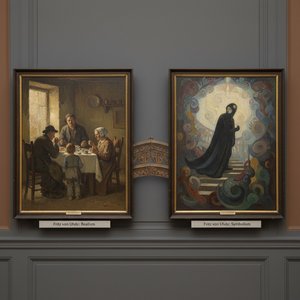
Fritz von Uhde: Bridging Realism & Symbolism in Late 19th-Century German Painting
Explore the captivating world of Fritz von Uhde, a pivotal German painter bridging Realism & Symbolism. Discover his plein-air techniques, religious themes, and influence on modern art. Learn about this fascinating artist at OriginalUniqueArt.

Espressionismo Tedesco: 10 Capolavori Rivoluzionari per Arredare con Emozione
Esplora i 10 capolavori dell'Espressionismo Tedesco con OriginalUniqueArt.com! Scopri Kirchner, Munch e Nolde, le loro emozioni intense e tecniche rivoluzionarie. Arreda la tua casa con stampe d'arte di alta qualità. Esplora la collezione online!

Anton von Werner: Pittore Imperiale, Testimone Storico e l'Identità Tedesca in Evoluzione
Esplora la vita e le opere di Anton von Werner, pittore imperiale tedesco e testimone chiave della storia prussiana. Analisi approfondite, contesto storico e l'eredità artistica di un maestro del realismo.


