Invia
Invia Condividi
 Dettagli opera

 Scarica immagine
 Simili
 Slideshow
The Stampede


 Espandi i dettagli
Giclée / Stampe d'arte
Stampa giclée o su tela di qualità museale, con produzione rapida e diverse opzioni di finitura. ( Acquista il dipinto realizzato a mano Acquista immagine)




































Scegli tra le nostre dimensioni predefinite, che rispettano le proporzioni originali dell'opera d'arte.

È possibile inserire dimensioni personalizzate per adattare l'opera a una cornice o a uno spazio specifico. Se la dimensione selezionata non corrisponde alle proporzioni dell'immagine originale, procederemo al ritaglio dell'opera o all'estensione dell'immagine con un bordo specchiato o a tinta unita. Un mockup digitale ti verrà inviato per approvazione prima dell'inizio della produzione.
Si prega di notare che l'anteprima a schermo non riflette il ritaglio o l'estensione effettivi. Solo il mockup mostrerà accuratamente la composizione finale.
Sebbene siano disponibili dimensioni personalizzate, si raccomanda di selezionare una dimensione dall'elenco predefinito per preservare le proporzioni originali.
Consegna in tutto il mondo () in 2 settimane invece delle normali 4/5 settimane. (28 Agosto)

Spedizione espressa gratuita in tutto il mondo

Tela in lino di alta qualità

Assicurazione completa sulla spedizione

Garanzia di rimborso dei dazi doganali

Garanzia di fedeltà cromatica

Politica di reso entro 60 giorni (solo per difetti di fabbricazione)

Garanzia di rimborso al 100%

Offerta per acquisti multipli
 L'opzione vetro è disponibile solo per dimensioni inferiori a 110 cm

The Stampede
Giclée / Stampe d'arte
Dimensioni riproduzione
-


Prezzo totale calcolato
$ 80
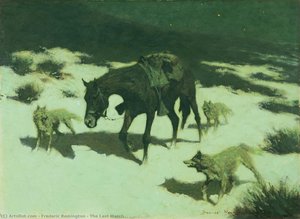
The Stampede: A Chronicle of the American West
Frederic Remington’s “The Stampede” isn't merely a depiction of cowboys and cattle; it’s a visceral embodiment of the American frontier, a moment frozen in time that captures both the raw power of nature and the indomitable spirit of those who wrestled with it. Completed in 1910, this bronze sculpture stands as a testament to Remington’s profound understanding of his subject – not just cowboys and horses, but the very essence of the vanishing West he so passionately chronicled. The piece resonates deeply, evoking feelings of exhilaration, danger, and an undeniable connection to a bygone era.
Remington, born in Canton, New York, wasn’t destined for the dusty trails he immortalized. His lineage was rooted in Eastern industry – his father a Civil War colonel and newspaper editor, connected through distant cousins to the Remington Arms dynasty. Yet, an early fascination with military themes, coupled with a restless spirit and a keen eye for storytelling, propelled him westward. “The Stampede” exemplifies this journey; it’s a deliberate departure from the idealized romanticism of earlier Western art, presenting instead a brutally honest portrayal of the chaos and energy inherent in cattle drives. The sculpture's creation coincided with a period of rapid change in the West – the decline of open range ranching, the rise of railroads, and the encroachment of civilization – making it a poignant reflection on a way of life rapidly disappearing.
A Study in Dynamic Form and Bronze
Remington’s masterful use of bronze is central to the sculpture's impact. The material itself—dark, earthy, and subtly textured—provides an ideal foundation for capturing movement and conveying weight. He skillfully employed *lost-wax casting*, a technique that allowed him to achieve incredible detail in the musculature of both animals and men. Notice the tautness of the horses’ muscles as they surge forward, the powerful stance of the bull dominating the center, and the determined expressions on the cowboys' faces. The subtle variations in shading – from deep shadows highlighting the contours of the bodies to brighter areas catching the light – create a remarkable sense of depth and volume, drawing the viewer into the heart of the action.
The composition is deliberately dynamic, utilizing a strong diagonal flow that leads the eye through the scene. The overlapping figures, the intertwined limbs, and the sheer number of animals contribute to a feeling of overwhelming movement. Remington’s attention to anatomical accuracy is remarkable; he wasn't simply depicting cowboys riding horses; he was rendering the complex mechanics of animal locomotion with astonishing precision. Even the base of the sculpture—a simple geometric form—provides a grounding element, anchoring the frenetic energy above.
Symbolism and the Vanishing Frontier
“The Stampede” is rich in symbolic meaning. The stampede itself represents not just a literal event but also the relentless drive of progress – the westward expansion that fundamentally reshaped America. The cowboys, though undeniably skilled and courageous, are presented as participants in a process larger than themselves, caught within the currents of history. The bull, a symbol of both power and danger, embodies the untamed wilderness that defined the West. The sculpture subtly acknowledges the precariousness of this existence – the potential for chaos and destruction lurking beneath the surface of apparent control.
Furthermore, the piece speaks to the romantic ideal of the cowboy—a figure often idealized in popular culture. Remington’s depiction is far more complex, portraying a life of hardship, danger, and constant struggle. The sculpture isn't celebrating heroism; it’s documenting a reality, capturing the grit and determination required to survive on the frontier. The weathered faces of the cowboys, their clothing worn and dusty, hint at years spent battling the elements and confronting the unknown.
A Legacy in Bronze
“The Stampede” remains one of Frederic Remington’s most iconic works, a powerful testament to his artistic vision and his profound understanding of the American West. Its enduring appeal lies not only in its technical brilliance but also in its ability to evoke a strong emotional response – a sense of awe, excitement, and perhaps even a touch of melancholy for a way of life that is now largely lost. Reproductions capture much of this power, offering a tangible connection to this pivotal moment in American history and a lasting tribute to the artist who so brilliantly documented it.
Biografia dell'artista
La Vita e l'Educazione di Frederic Remington
- Nascita e Famiglia: Frederic Sackrider Remington nacque il 4 ottobre 1861 a Canton, New York. La sua famiglia aveva origini franco-basche.
- Influenza Militare: Suo padre, il Colonnello Seth Pierrepont Remington, proprietario di un negozio di ferramenta e veterano della Guerra Civile Americana, influenzò significativamente la sua vita iniziale. L'esposizione a temi militari avrebbe poi plasmato la sua arte.
- Educazione Iniziale: Frequentò l'Istituto Episcopale del Vermont, una scuola militare dove iniziò a disegnare. Successivamente trasferendosi in un'altra accademia militare, alla fine scelse di perseguire l'arte invece di una carriera militare a causa della mancanza di concentrazione.
La Carriera Artistica e lo Stile
- Prime Illustrazioni: La sua prima illustrazione pubblicata fu un cartone animato per il Yale Courant, dimostrando una precoce abilità nel rappresentare scene d'azione.
- Focus sul West Americano: Un viaggio fondamentale in Montana nel 1881 accese la sua passione per il West americano, diventando il tema centrale della sua carriera artistica.
- Soggetti Artistici: Il suo lavoro presentava principalmente cowboy, nativi americani e la cavalleria statunitense, catturando lo spirito e le sfide della vita di frontiera.
- Stile Artistico: Remington sviluppò uno stile distintivo caratterizzato da composizioni dinamiche, pennellate energiche e un focus sul realismo mescolato con un'espressività drammatica. Spesso utilizzava schizzi rapidi per catturare movimento ed emozione.
Opere Principali e Realizzazioni
- Dipinti Notabili: Diverse opere si distinguono come esempi significativi del suo talento:
- My Ranch – Mostra lo stile unico di Remington e la sua prospettiva sul West.
- Waiting in the Moonlight – Dimostra la sua capacità di catturare l'essenza del West americano attraverso immagini evocative.
- Ridden Down (1905) - Una potente rappresentazione di un attacco della cavalleria.
- The Long-Horn Cattle Sign (1908) – Cattura la vivacità della vita da cowboy.
- Illustrazioni e Sculture: Oltre alla pittura, Remington fu anche un prolifico illustratore per riviste come Harper's Weekly e Collier’s. Creò anche sculture, dimostrando ulteriormente la sua versatilità artistica.
- Riconoscimento: Il suo lavoro ottenne ampio riconoscimento durante la sua vita, stabilendolo come una figura di spicco nell'arte del West americano.
Influenze e Sviluppo Artistico
- Primi Anni: L’infanzia di Remington fu segnata dall’influenza del padre, un veterano della guerra civile, che gli raccontò storie dell’esercito e del West. Questo contribuì a formare il suo interesse per i soggetti militari e western. La sua breve formazione artistica alla Yale University e all'Art Students League fornì le basi tecniche, ma fu l’esperienza diretta nel West che plasmò veramente il suo stile.
- Sviluppo dello Stile: Inizialmente, Remington si ispirò ai pittori accademici francesi come Ernest Meissonier ed Édouard Detaille, adottando uno stile preciso e dettagliato. Tuttavia, col tempo sviluppò un approccio più dinamico e impressionistico, catturando il movimento e l'energia della vita nel West.
- Influenze: Oltre ai pittori accademici, Remington fu influenzato dalla fotografia e dall’illustrazione di riviste come Harper's Weekly. La sua capacità di combinare elementi realistici con una sensibilità romantica lo rese unico nel suo genere.
Eredità e Significato Storico
- Impatto sull'Arte del West: I contributi di Frederic Remington alla rappresentazione del West americano sono innegabili. Aiutò a definire il genere e a popolare immagini di cowboy, nativi americani e vita di frontiera.
- Influenza su Altri Artisti: Il suo lavoro ha ispirato numerosi artisti, tra cui N.C. Wyeth e Zane Grey.
- Museo d'Arte Frederic Remington: Il Museo d'Arte Frederic Remington a Ogdensburg, New York, preserva la sua eredità attraverso un’estesa collezione di dipinti, schizzi e sculture.
- Significato Storico: L'arte di Remington fornisce preziose informazioni sulla storia, la cultura e la mitologia del West americano durante un periodo di significativi cambiamenti e conflitti. Le sue rappresentazioni, sebbene a volte romanticizzate, offrono uno sguardo su un’epoca cruciale della storia americana.
Ultimi Anni e Morte
- Prolifica Produzione Artistica: Remington continuò a produrre arte prolificamente fino alla sua morte.
- Declino della Salute: Nel 1909, soffrì di appendicite mentre era in servizio in Florida.
- Morte: Frederic Remington morì il 26 dicembre 1909 a Bronxville, New York, all'età di 48 anni. La sua eredità come artista americano significativo continua ad ispirare e affascinare il pubblico oggi.

Frederic Remington
1861 - 1909 , Stati Uniti d'America
Dati rapidi
- Artistic Movement Or Style: Realismo pittorico
- Artists Or Movements Influenced By This Artist:
- N. C. Wyeth
- Zane Grey
- Date Of Birth: 4 ottobre 1861
- Date Of Death: 26 dicembre 1909
- Full Name: Frederic Sackrider Remington
- Nationality: Americano
- Notable Artworks:
- My Ranch
- Waiting in the Moonlight
- Ridden Down
- The Long-Horn Cattle Sign
- The Trooper
- Cavalryman of the Line, Mexico
- Place Of Birth: Canton, Stati Uniti d'America
Articoli correlati

I 10 Capolavori in Bronzo che Hanno Rivoluzionato la Storia dell'Arte | OriginalUniqueArt
Esplora i 10 capolavori in bronzo che hanno segnato la storia dell'arte! Da Michelangelo a Rodin, scopri le storie e le tecniche dietro queste statue iconiche. Trova riproduzioni artistiche di alta qualità per decorare casa tua con OriginalUniqueArt.com.

I 10 Capolavori Bronzei che Hanno Rivoluzionato la Storia dell'Arte | OriginalUniqueArt
Esplora i 10 capolavori bronzei che hanno segnato la storia dell'arte! Da Rodin a Michelangelo, scopri le storie e le tecniche dietro queste sculture iconiche. Trova riproduzioni d'arte di alta qualità per decorare la tua casa con OriginalUniqueArt.com.

The Enduring Legacy of Bronze: A Historical & Artistic Exploration for the Collector
Explore the rich history & enduring appeal of bronze sculpture with expert insights for collectors at OriginalUniqueArt. Learn about casting techniques, iconic artists, collecting tips & contemporary interpretations.
The Enduring Legacy of Bronze: History, Technique & Artistic Expression for the Collector
Explore the rich history & enduring appeal of bronze sculpture with expert insights for collectors at OriginalUniqueArt. Learn about casting techniques, iconic artists, and collecting tips.
The Enduring Legacy of Bronze Sculpture: A Collector's Guide to Form & Cultural Significance
Explore the rich history & enduring appeal of bronze sculpture with expert insights for collectors at OriginalUniqueArt. Learn about casting techniques, iconic artists, and collecting tips to build a discerning art collection.