 Passa alle stampe
 Espandi i dettagli







































 Per opere d'arte o riproduzioni con un lato superiore a 105 cm (circa 41 pollici), la cornice verrà spedita in forma di kit smontato. Questo metodo garantisce una consegna sicura e previene danni durante il trasporto.


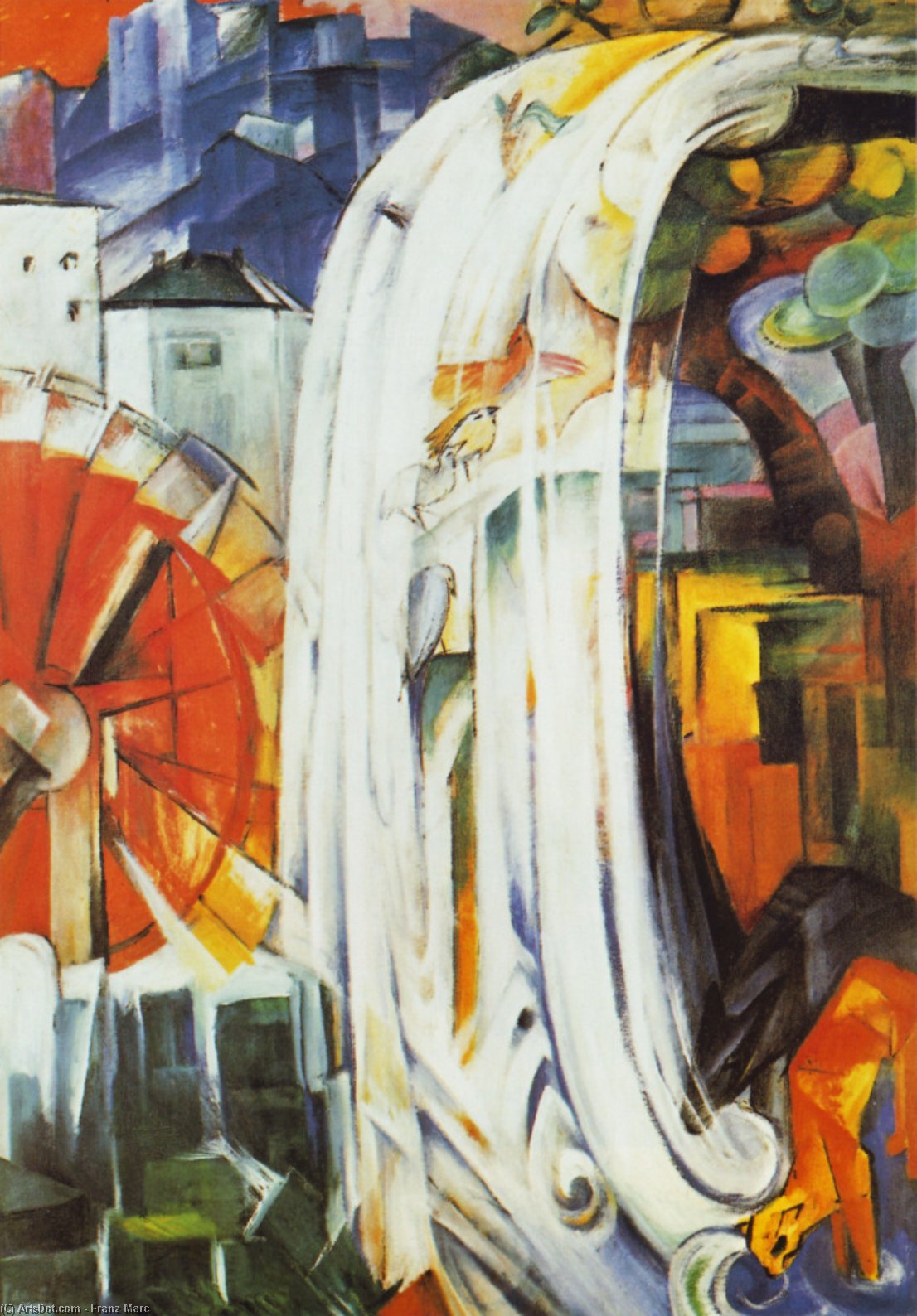
The Enchanted Mill
Franz Marc’s “The Enchanted Mill” stands as an emblem of German Expressionism—a movement that sought to convey emotion and spiritual experience through bold color and distorted forms, rejecting academic conventions in favor of visceral impact. Created in 1913, this monumental oil painting on canvas (130 x 90 cm) resides at the Art Institute of Chicago, offering viewers a glimpse into Marc’s unique artistic vision during a pivotal moment in European art history.Composition and Elements: A Symphony of Symbols
At first glance, the painting presents a deceptively simple scene: a towering mill wheel dominates the composition, spinning with an almost frenetic energy. However, beneath this dominant element lie layers of symbolic significance. To its left sits a clock—a motif frequently employed by Marc to represent time and mortality, reminding us of the fleeting nature of existence. Above, perched on the upper right corner, is a bird—often interpreted as representing freedom and aspiration, soaring against the backdrop of the landscape. Two figures inhabit the scene: one positioned centrally near the wheel’s base and another closer to the bottom right, adding human presence to the natural world. These elements intertwine to create an atmosphere charged with emotion and contemplation.Color Palette: Vibrant Expressions of Feeling
Marc’s masterful use of color is undeniably central to “The Enchanted Mill.” He employs a palette dominated by reds, blues, greens, yellows, and whites—colors chosen not merely for their visual appeal but for their ability to convey specific moods and sensations. The artist skillfully manipulates light and shadow, deepening the hues and enhancing their expressive power. This chromatic richness reflects Marc’s belief that color could communicate ideas and emotions directly, bypassing rational thought.Artistic Style: Cubism Meets Surrealism
Marc’s style blends elements of Cubism—characterized by fragmented geometric forms—with surrealist influences—drawing inspiration from dreams and subconscious imagery. The wheel itself is depicted in a fractured perspective, mirroring the artist's desire to capture not just what he sees but also what he feels. This stylistic fusion distinguishes “The Enchanted Mill” as a precursor to later developments in modern art, anticipating the exploration of irrationality and symbolism that would define Surrealism.Relevance to Modern Art: A Legacy of Spiritual Vision
“The Enchanted Mill” transcends its formal innovations to embody a profound spiritual quest—a conviction that art could illuminate the hidden truths of existence. Its influence extends beyond Marc’s immediate contemporaries, resonating with artists who followed in his wake and shaping the trajectory of Expressionism as a whole. As a testament to Marc's artistic genius, this painting continues to captivate audiences today, inviting them to contemplate the relationship between humanity and nature—a theme that remains remarkably pertinent in our contemporary world.- Franz Marc Museum: https://en.wikipedia.org/wiki/Franz_Marc_Museum
- Other Works by Franz Marc: Franz Marc at OriginalUniqueArt.com
Domande e risposte
In che modo i colori di "La Mulinella Incantata" di Franz Marc si riflettono nel suo impatto emotivo?
La tavolozza Toni neutri di "La Mulinella Incantata" di Franz Marc si sposa con il suo tono emotivo Misterioso. Il colore è uno dei mezzi attraverso cui un'opera trasmette emozioni.
Che tipo di opera è "La Mulinella Incantata"?
"La Mulinella Incantata" è un'opera in Opere da parete.
Cosa rappresenta "La Mulinella Incantata" di Franz Marc e quale atmosfera trasmette?
"La Mulinella Incantata" di Franz Marc unisce animals, mill, wheel, clock, color palette, cubism, surrealism, expressionism con un'atmosfera Sereno.
Maggiori informazioni su questo dipinto
 Anteprima in scala reale
 Invia
Invia Condividi
 Dettagli opera
 Guida
Guida

 Scarica
 Simili
 Radiografia
 Slideshow
 Domande e risposte
 Statistiche