Bauhaus · 1957
SALES COUNTER (Franz Ehrlich, 1957)
Franz Ehrlich (1907–1984) ha realizzato SALES COUNTER. Risale al 1957. Fa parte del movimento Bauhaus. È realizzato in Drawing. È conservata presso il Fondazione Bauhaus Dessau a Dessau-Roßlau, Germania. Le dimensioni sono 51 × 66 cm.
- 1957
- Drawing
- 51 × 66 cm
- Fondazione Bauhaus Dessau, Dessau-Roßlau

 Anteprima in scala reale

 Dipinto a olio fatto a mano
 Invia
 Condividi
 Scheda didattica


 Scarica
 Simili
 Radiografia
 Slideshow
 Domande e risposte

 Statistiche
SALES COUNTER, in breve
- Titolo
- SALES COUNTER
- Artista
- Franz Ehrlich (1907–1984)
- Artista nato a
- Reuth, Germania
- Date
- 1957
- Tecnica
- Drawing
- Dimensioni
- 51 × 66 cm
- Dove vederlo
- Fondazione Bauhaus Dessau, Dessau-Roßlau, Germania
- Movimento
- Bauhaus
- Epoca
- Modern
- Soggetto
- retro sales counter, mid century design, geometric art print, 1950s office scene, bauhaus style artwork, vintage graphic art
Cosa raffigura SALES COUNTER?
A Glimpse into Mid-Century Commerce
In the delicate lines of "SALES COUNTER," created in 1957 by the visionary German artist Franz Ehrlich, we are transported to a moment frozen in time. This captivating drawing serves as more than just a depiction of a commercial space; it is a window into the social fabric of the mid-2'0s. The composition captures a meticulously arranged sales counter, divided into distinct sections that guide the viewer's eye through a landscape of 1950s utility and design. Within this scene, the presence of chairs scattered near the counter and a central dining table suggests a space where commerce and community intersect. The inclusion of two figures—one standing poised on the left and another positioned toward the right—adds a layer of human narrative, transforming a structural study into a living, breathing vignette of daily life.
The artwork breathes with the unmistakable influence of the Bauhaus, an institution that shaped Ehrlich’s very soul. One can sense the architectural precision in the way the counter is rendered, reflecting his training in Dessau. The style is characterized by a clean, graphic clarity that emphasizes form and function, yet it avoids the coldness often associated with industrial design. Instead, there is a rhythmic quality to the placement of objects—the mounted television, the arrangement of seating, and the spatial relationship between the people and the furniture—that creates a sense of balanced harmony. For the collector or interior designer, this piece offers a sophisticated interplay of geometry and atmosphere, making it an ideal focal point for spaces that celebrate modernism and structural elegance.
Beyond its aesthetic appeal, "SALES COUNTER" carries a profound historical weight. Having survived the turbulence of the Nazi regime and the complexities of his political affiliations, Ehrlich’s work often reflects a resilient spirit of reconstruction and order. This drawing, produced in 1957, embodies a period of post-war stabilization, where the design of everyday objects became a way to rebuild a sense of normalcy and progress. The emotional impact of the piece lies in this quiet tension between the rigid lines of architecture and the soft, transient presence of human interaction. It invites the viewer to contemplate the beauty found in the mundane and the enduring strength of organized design.
For those seeking to adorn a contemporary interior with a sense of history and intellectual depth, a high-quality reproduction of this masterpiece offers an unparalleled opportunity. Whether placed in a minimalist gallery setting or a warm, classic study, "SALES COUNTER" brings with it the prestige of the Bauhaus legacy and the evocative charm of a bygone era. It is a piece that does not merely decorate a wall; it starts a conversation about the intersection of art, life, and the enduring power of the graphic line.
In quale museo si trova SALES COUNTER?
Fondazione Bauhaus Dessau
Dessau-Roßlau, Germania
La Fondazione Bauhaus Dessau: Un’Anima di Innovazione nel Cuore della Sassonia-Anhalt Nel cuore pulsante della Sassonia-Anhalt, a Dessau-Roßlau, sorge un edificio che trascende la semplice architettura, diventando simbolo di una rivoluzione del pensiero e del design: la Fondazione Bauhaus Dessau. Nata dalla volontà di preservare e far rivivere l’eredità del movimento Bauhaus, questo complesso straordinario non è solo un museo, ma un vero e proprio laboratorio di idee, un luogo dove passato e presente si fondono in una continua ricerca di bellezza funzionale e innovazione sociale. L'edificio stesso, progettato da Walter Gropius, è un capolavoro di razionalismo e sperimentazione, un manifesto visivo dei principi fondamentali del Bauhaus: la collaborazione tra arte, artigianato e industria, l’importanza della luce naturale, la ricerca di forme semplici ed essenziali.


Immagini ad alta risoluzione di SALES COUNTER

Protetti da copyright: questi file sono per uso personale e non costituiscono una licenza per la ripubblicazione.
Franz Ehrlich, SALES COUNTER (1957), Fondazione Bauhaus Dessau.
Domande su SALES COUNTER, risposte
In quale museo è conservato l'originale di "SALES COUNTER"?
Puoi ammirare l'originale "SALES COUNTER" presso il Fondazione Bauhaus Dessau, Dessau-Roßlau, Germania.
In che anno è stata creata "SALES COUNTER" di Franz Ehrlich?
L'opera "SALES COUNTER" di Franz Ehrlich risale al 1957.
Quale tecnica è stata utilizzata per "SALES COUNTER" di Franz Ehrlich?
La tecnica utilizzata per "SALES COUNTER" di Franz Ehrlich è Drawing. Le riproduzioni mirano a restituire l'aspetto di questa tecnica.
Quali sono le dimensioni dell'originale "SALES COUNTER" di Franz Ehrlich?
"SALES COUNTER" misura 51 x 66 cm nella sua forma originale. Le dimensioni originali sono un utile riferimento per scegliere la dimensione di una riproduzione.
Qual è il soggetto di "SALES COUNTER"?
I temi presenti in "SALES COUNTER" di Franz Ehrlich includono retro sales counter, mid century design, geometric art print, 1950s office scene, bauhaus style artwork, vintage graphic art, modern wall decor, elementi che insieme sintetizzano il soggetto dell'opera.
L'immagine di "SALES COUNTER" di Franz Ehrlich può essere riprodotta liberamente?
"SALES COUNTER" di Franz Ehrlich è ancora protetta dal diritto d'autore. Questo stato determina le modalità con cui l'immagine dell'opera può essere riprodotta.
A quale artista è attribuito "SALES COUNTER"?
L'artista che ha creato "SALES COUNTER" è Franz Ehrlich. L'opera è catalogata sotto il nome di Franz Ehrlich.
A quale corrente artistica appartiene "SALES COUNTER" di Franz Ehrlich?
"SALES COUNTER" di Franz Ehrlich appartiene al movimento Bauhaus. Questo movimento fornisce il contesto stilistico dell'opera.
A quale periodo della carriera di Franz Ehrlich appartiene "SALES COUNTER"?
"SALES COUNTER" appartiene al Modern della carriera di Franz Ehrlich. Questa classificazione riconduce l'opera all'evoluzione dell'artista.
Informazioni sull'artista, Franz Ehrlich
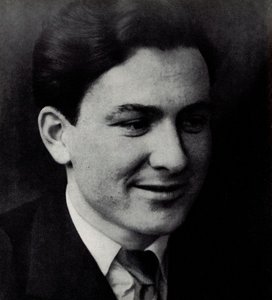
1907–1984, Germania
Franz Ehrlich
Early Life and Education Franz Ehrlich, a name synonymous with both architectural innovation and poignant political experience, was born in Reuth, Germany, in 1907. From his earliest years, a deep-seated passion for the arts ignited within him – a desire to translate vision into tangible form. This innate inclination led him to enroll at the Bauhaus in Dessau, one of the most influential art schools of the 20th century, from 1927 to 1930. The Bauhaus wasn’t merely an educational institution; it was a crucible where radical ideas about design, function, and aesthetics were forged.
Altre opere di Franz Ehrlich
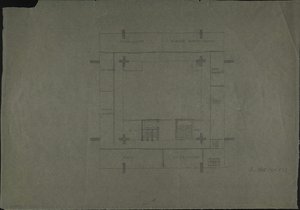 TERZO PIANO (Progetto per una rappresentazione estera della DDR. Pianta)
 LBH MACCHINARI PER L'EDILIZIA E MACCHINARI PER LA Lavorazione del Legno SALA 5 (Fiera di Lipsia, pianta dell'allestimento espositivo)1949
 4 sedute. 1 Banco. Ufficio del vicepresidente (dell'Accademia delle Scienze della RDA a Berlino)
 Bookshop Hauptstraße / Transversal section (FDGB Bookshop1949
Saggi su SALES COUNTER
 I 25 capolavori delle Bavarian State Painting Collections a MonacoScopri i 25 capolavori delle Bavarian State Painting Collections. Dai maestri del Barocco al Surrealismo, esplora la collezione su Original…
 I 25 Capolavori di Ernst Ludwig Kirchner: L'Anima dell'Espressionismo TedescoScopri i 25 capolavori di Ernst Ludwig Kirchner e l'anima dell'Espressionismo. Esplora la collezione su OriginalUniqueArt.com.
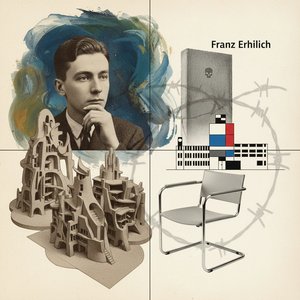 Franz Ehrlich: Bridging Expressionism, Bauhaus & the Shadows of HistoryExplore the life of Franz Ehrlich, a pivotal Bauhaus architect whose career spanned Expressionism, resistance during Nazi Germany, and GDR …