

 Anteprima in scala reale
 Condividi
 Condividi
 Dettagli

 Scarica immagine
 Articoli simili
 Radiografia
 Slideshow
2-family house (Floor plan)
 Graphite Pencil
- Modernism
 1939
1939 34.0 x 26.0 cm
 Fondazione Bauhaus Dessau
 Leggi tutto
Riproduzione a olio fatta a mano
Olio su tela dipinto a mano nelle tue dimensioni e con la tua cornice, realizzato su ordinazione dai nostri artisti. ( Ordina stampa Acquista download)




P118B $10

P118H $10

P118W $10

P438Z $10

P508JH $12

P508YH $12

P805H $10

P805Z $10

P919BZ $10

P919G $10

P919XJ $10

P959ZH $10

P968JZ $12

W106C $8

W218G $10

W218JH $8

W218Y $10

W307PJ $10

W316G $10

W316PJ $8

W316Y $10

W398PJ $8

W4111J $10

W500HY $15

W500JH $15

W692G $12

W849H $8

W940BG $15

W953PJ $8




Scegli tra le nostre dimensioni predefinite, che rispettano le proporzioni originali dell'opera d'arte.

È possibile inserire dimensioni personalizzate per adattare l'opera a una cornice o a uno spazio specifico. Se la dimensione selezionata non corrisponde alle proporzioni dell'immagine originale, provvederemo a ritagliare l'opera o a estendere il dipinto con elementi aggiuntivi dipinti a mano. Un mockup digitale ti sarà inviato per approvazione prima dell'inizio della produzione.
Si prega di notare che l'anteprima a schermo non riflette il ritaglio o l'estensione effettivi. Solo il mockup mostrerà accuratamente la composizione finale.
Sebbene siano disponibili dimensioni personalizzate, consigliamo di selezionare una dimensione dall'elenco predefinito per preservare le proporzioni originali.
Dopo l'ordine, il team di OriginalUniqueArt.com contatterà il cliente via e-mail per le istruzioni e fornirà un'anteprima del mockup
Consegna in tutto il mondo () in 3/4 settimane anziché nelle normali 5 settimane. (13 Agosto). Nessun compromesso sulla qualità.

Spedizione espressa gratuita in tutto il mondo

Tela in lino di alta qualità

Assicurazione completa sulla spedizione

Garanzia di rimborso dei dazi doganali

Garanzia di fedeltà cromatica dell'originale

Politica di reso entro 60 giorni (solo per difetti di fabbricazione)

Garanzia di rimborso al 100%

Sconto per acquisti multipli
 L'opzione vetro è disponibile solo per dimensioni inferiori a 110 cm

2-family house (Floor plan)
Tecnica di riproduzione
Dimensioni della riproduzione
-


Prezzo totale
$ 300
Descrizione dell'opera
The Geometry of Modern Life: An Examination of Franz Ehrlich's Floor Plan
To gaze upon this architectural rendering by Franz Ehrlich is not merely to look at lines on paper; it is to step into the very blueprint of a modern existence. Dating from 1939, this detailed floor plan for a two-family house captures the rigorous spirit of early 20th-century design. The piece speaks in the precise, unwavering language of graphite pencil upon textured paper—a dialogue between human habitation and structural necessity. It embodies the modernist ideal: functionality elevated to an art form. One can almost hear the scratch of the draftsman's pencil as Ehrlich meticulously mapped out the divisions of space, suggesting a life lived with order, efficiency, and clean lines.
A Bauhaus Echo in Graphite
The historical context surrounding this work is inseparable from its aesthetic power. Emerging from the intellectual crucible of the Bauhaus movement, Ehrlich’s hand carries the weight of avant-garde principles. The composition is dominated by orthogonal geometry—the perfect rectangles and squares that define rooms and walls. This adherence to pure form reflects a cultural yearning for clarity amidst the turbulent times leading up to the Second World War. While the subject matter is purely utilitarian—a dwelling plan—its execution imbues it with profound symbolic weight. It suggests a belief in rational living, where every square foot has its purpose, echoing the utopian aspirations of modernist architects.
Mastery of Line and Tone
Technically, the piece is a masterclass in restraint. The palette is almost entirely monochromatic, ranging from the palest grey wash to deep charcoal accents. This limitation forces the viewer's attention entirely onto the quality of the line itself. Ehrlich employs hatching—the careful cross-hatching technique—not just for shading, but as a tool to suggest depth and volume where none naturally exists in a top-down view. The visible texture of the paper acts as an integral part of the artwork, giving the graphite markings a palpable connection to history. It is this delicate interplay between the artist's precise hand and the aged materiality of the support that gives the reproduction its enduring allure.
Beyond Structure: Emotional Resonance
For the contemporary collector or designer, this piece offers more than mere decoration; it offers inspiration for thought. While there are no overt emotional narratives, the sense of profound order is deeply affecting. It speaks to a desire for sanctuary—a perfectly organized haven. The inclusion of the smaller sketch, perhaps a stylized lamp fixture, adds a touch of delicate artistry to the otherwise severe structure, reminding us that even the most functional space must accommodate beauty and light. Owning this reproduction allows one to curate an environment steeped in intellectual rigor and timeless design elegance.
Biografia dell'artista
Early Life and Education
Franz Ehrlich, a name synonymous with both architectural innovation and poignant political experience, was born in Reuth, Germany, in 1907. From his earliest years, a deep-seated passion for the arts ignited within him – a desire to translate vision into tangible form. This innate inclination led him to enroll at the Bauhaus in Dessau, one of the most influential art schools of the 20th century, from 1927 to 1930. The Bauhaus wasn’t merely an educational institution; it was a crucible where radical ideas about design, function, and aesthetics were forged. Here, Ehrlich immersed himself in the avant-garde movements of the time, absorbing the philosophies of Walter Gropius, László Moholy-Nagy, Paul Klee, and Joost Schmidt – figures who profoundly shaped his artistic perspective. His training encompassed carpentry, typography, and a deep understanding of spatial relationships, laying the groundwork for his future architectural endeavors. The rigorous environment fostered a meticulous approach to craft and a commitment to exploring new forms of expression.Artistic Career and Communist Affiliation
Ehrlich’s life took a dramatic turn when he became deeply involved with the communist party in Germany. This political engagement, while driven by a genuine belief in social justice, ultimately led to his arrest and imprisonment by the Nazi regime in 1935. His incarceration in Zwickau prison and later at Buchenwald concentration camp represents a harrowing chapter in his life – an experience that indelibly marked his artistic trajectory. Despite these immense hardships, Ehrlich refused to abandon his creative pursuits. He continued to work as an architect and designer, producing works that reflected both the constraints of his circumstances and his unwavering spirit. Notably, he designed the entrance gate inscription for Buchenwald: “Jedem das Seine” – a phrase laden with irony and profound meaning in the context of the camp’s brutal reality. This act, simultaneously defiant and deeply sorrowful, stands as a testament to his complex moral compass. His work during this period demonstrates an extraordinary ability to find beauty and purpose even amidst unimaginable suffering.Notable Works
Ehrlich's artistic output spanned diverse disciplines, showcasing his versatility and innovative spirit. Among his most significant achievements are: the “800 YRS. FRAMEWORK WALL 3,” a monumental installation that explored the relationship between space and time; an exhibit display rack design for the Leipzig Trade Fair, demonstrating his mastery of spatial planning and visual communication; and the execution plan for Professor Dr. Baumann’s house, revealing his meticulous attention to detail and architectural expertise. Perhaps most strikingly, he conceived of “1933,” a groundbreaking photo-sculptural advertising project that seamlessly blended photography and sculpture – an experimental approach that foreshadowed later developments in multimedia art. These projects weren't simply functional; they were imbued with a sense of intellectual curiosity and a desire to push the boundaries of artistic expression. His work consistently sought to integrate form, function, and meaning in innovative ways.Museums and Collections
Ehrlich’s legacy is preserved through several key institutions: The OriginalUniqueArt.com website features an extensive collection of his works, offering a comprehensive overview of his artistic output. Furthermore, the Bauhaus Dessau Foundation in Dessau-Roßlau, Germany, serves as a vital repository for his architectural drawings, models, and other archival materials. The museum’s dedication to preserving and interpreting the Bauhaus legacy ensures that Ehrlich's contributions to modern design continue to be recognized and appreciated. His work is also featured within the broader context of German art history, offering valuable insights into the artistic landscape of the interwar period.Legacy and Impact
Franz Ehrlich’s life story is a poignant reflection of the tumultuous era in which he lived – a time marked by political upheaval, social unrest, and profound human suffering. His experiences as an artist, architect, and political activist shaped his creative vision and left an enduring impact on the world of art and design. He demonstrated remarkable resilience in the face of adversity, refusing to allow his circumstances to extinguish his artistic spirit. Ehrlich’s work serves as a reminder of the power of art to transcend boundaries, challenge conventions, and bear witness to the complexities of human experience. His legacy continues to inspire artists and designers today, urging them to embrace innovation, social responsibility, and the enduring pursuit of beauty.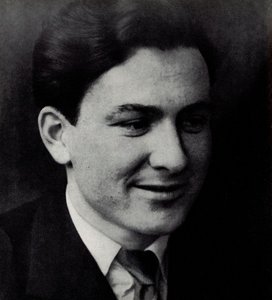
Franz Ehrlich
1907 - 1984 , Germania
Informazioni rapide
- Artistic Movement Or Style: Bauhaus, Espressionismo
- Artists Or Movements Influenced By This Artist: ['Young Communist League']
- Artists Who Influenced This Artist:
- Walter Gropius
- Moholy-Nagy
- Klee
- Joost Schmidt
- Date Of Birth: 1907
- Full Name: Franz Ehrlich
- Nationality: Tedesco
- Notable Artworks:
- 800 YRS. FRAMEWORK WALL 3
- Painting with Violin
- Ground Plan and Views
- Place Of Birth: Reuth, Germania
Articoli correlati
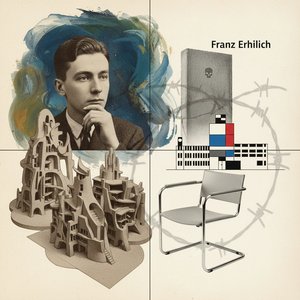
Franz Ehrlich: Bridging Expressionism, Bauhaus & the Shadows of History
Explore the life of Franz Ehrlich, a pivotal Bauhaus architect whose career spanned Expressionism, resistance during Nazi Germany, and GDR reconstruction. Discover his complex legacy & view museum-quality reproductions at OriginalUniqueArt.

Espressionismo Tedesco: 10 Capolavori Rivoluzionari per Arredare con Emozione
Esplora i 10 capolavori dell'Espressionismo Tedesco con OriginalUniqueArt.com! Scopri Kirchner, Munch e Nolde, le loro emozioni intense e tecniche rivoluzionarie. Arreda la tua casa con stampe d'arte di alta qualità. Esplora la collezione online!
Anni '30 nell'Arte: 10 Capolavori Iconici per Arredare con Stile
Esplora i 10 capolavori iconici degli anni '30! Dal Surrealismo di Dalí al Realismo Magico, scopri la storia e l'arte dietro questi dipinti senza tempo. Arreda con stile grazie a OriginalUniqueArt.com: riproduzioni di alta qualità per ogni ambiente.
The Nuances of Graphite: Exploring Emotional Depth & Technical Mastery in Pencil Drawing
Explore the captivating world of graphite drawing! Discover its rich history, master essential techniques like chiaroscuro, and learn how artists evoke emotion through this timeless medium. Expert insights for art enthusiasts.
Mastering the Line: A Comprehensive Expert Guide to Technical Precision and Expressive Depth in Drawing
Elevate your artistic practice with this expert guide to mastering the line. Discover advanced techniques in graphite, charcoal, and contour drawing designed for art students seeking technical precision and expressive depth in their fine art studies.



