Anteprima in scala reale
 Invia
Invia Condividi
 Dettagli opera
 Guida
Guida

 Scarica
 Simili
 Radiografia
 Slideshow
 Domande e risposte
 Statistiche
Singing Boy with a Flute

- 62.0 x 55.0 cm


 Espandi i dettagli
Giclée / Stampe d'arte
Stampa giclée o su tela di qualità museale, con produzione rapida e diverse opzioni di finitura. ( Acquista il dipinto realizzato a mano Passa all'immagine digitale)




P118B €10

P118H €10

P118W €10

P438Z €10

P508JH €12

P508YH €12

P805H €10

P805Z €10

P919BZ €10

P919G €10

P919XJ €10

P959ZH €10

P968JZ €12

W106C €8

W218G €10

W218JH €8

W218Y €10

W307PJ €10

W316G €10

W316PJ €8

W316Y €10

W398PJ €8

W4111J €10

W500HY €15

W500JH €15

W692G €12

W849H €8

W940BG €15

W953PJ €8




Scegli tra le nostre dimensioni predefinite, che rispettano le proporzioni originali dell'opera d'arte.

Inserisci la larghezza e l'altezza desiderate, per adattarle alla tua cornice o alla tua parete. Una stampa può essere solo ritagliata, mai resa più grande dell'immagine originale; pertanto, un formato con una forma differente comporterà la perdita di una parte dell'opera. Ti invieremo un mockup digitale da approvare prima di procedere con la stampa. L'immagine mostrata in questa pagina non rappresenta il ritaglio reale — solo il mockup lo mostra.
Consegna in tutto il mondo () in 2 settimane invece delle normali 4/5 settimane. (7 Novembre)

Spedizione espressa gratuita in tutto il mondo

Tela in lino di alta qualità

Assicurazione completa sulla spedizione

Garanzia di rimborso dei dazi doganali

Garanzia di fedeltà cromatica assoluta

Politica di reso entro 100 giorni (solo per difetti di fabbricazione)

Garanzia di rimborso al 100%

Offerta per acquisti multipli
 L'opzione vetro è disponibile solo per dimensioni inferiori a 110 cm

Singing Boy with a Flute
Giclée / Stampe d'arte
Dimensioni riproduzione
-


Prezzo finale calcolato
€ 72
Singing Boy with a Flute: A Window into Dutch Golden Age Life
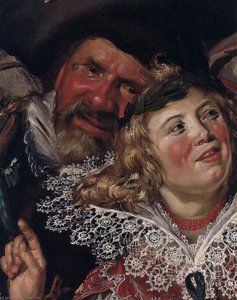
Frans Hals’ “Singing Boy with a Flute,” painted in 1623, isn't merely a portrait; it’s a vibrant snapshot of a fleeting moment, a testament to the artist’s revolutionary approach to capturing human character and emotion. This intimate piece, measuring just 62 x 55 cm, immediately draws the viewer into a scene brimming with youthful exuberance and quiet contemplation. The subject, a young man dressed in a simple yet elegant black hat adorned with a striking white feather – a detail that hints at both status and perhaps a touch of playful vanity – holds a flute to his lips, poised as if about to release a cascade of melody. His gaze, directed squarely at the viewer, is not one of grand pronouncements but rather an expression of absorbed enjoyment, suggesting he’s lost in the pleasure of the music itself.
Hals' genius lies in his masterful manipulation of brushwork. Unlike many of his contemporaries who meticulously rendered every detail with painstaking precision, Hals employed a remarkably loose and expressive technique. Notice how the paint seems to dance across the canvas – short, broken strokes create an immediate sense of movement and vitality. This spontaneity isn’t haphazard; it's deliberate, designed to capture not just the appearance of the boy but also his spirit, his energy, and the very essence of a joyful moment. The background, a deceptively simple blue sky, provides a crucial contrast, emphasizing the figure and adding depth to the composition without distracting from the central subject.
The Artist and His Time: Frans Hals’ Revolutionary Portraiture
Frans Hals I (1582-1585), though his life was tragically short, left an indelible mark on the art world. Born in Antwerp and trained initially in that vibrant artistic hub, he later found a home in Haarlem, where he quickly established himself as one of the most important figures of the Dutch Golden Age. Hals’s work stands apart from the prevailing trends of his era. While other artists focused on idealized representations or elaborate courtly scenes, Hals favored capturing everyday life – portraits of merchants, militia members, and ordinary citizens. This shift reflected a broader cultural change in the Netherlands, where there was growing interest in depicting the lives of common people.
His innovative approach to portraiture wasn’t simply about recording likenesses; it was about revealing personality. Hals frequently used informal poses, direct gazes, and subtle gestures to convey character. He understood that a truly compelling portrait wasn't just a visual representation but an intimate glimpse into the soul of his subject. The inclusion of the feather, for example, is not merely decorative; it’s a detail that adds to the boy’s personality, suggesting perhaps a youthful confidence or a connection to social standing.
Symbolism and Context: A Portrait of Youthful Joy
Beyond the immediate depiction of a young man enjoying music, “Singing Boy with a Flute” offers clues about the cultural context of 17th-century Haarlem. The flute itself was a popular instrument during this period, often associated with entertainment and leisure. The boy’s attire – the simple black hat and clothing – suggests he is likely from a modest background, yet his posture and expression convey a sense of self-possession and contentment. It's a scene that speaks to the pleasures of youth, the importance of community, and the value of artistic expression.
The painting’s placement within the Gemäldegalerie in Berlin is particularly significant. It stands as a cornerstone of Hals’s oeuvre, demonstrating his mastery of capturing fleeting moments and conveying profound emotion with remarkable economy. The work's enduring appeal lies not just in its technical brilliance but also in its ability to transport us back to a specific time and place – a vibrant corner of the Dutch Golden Age where youthful joy and artistic spirit flourished.
Bringing Hals’ Masterpiece Home: A High-Quality Reproduction
OriginalUniqueArt offers meticulously crafted, hand-painted reproductions of “Singing Boy with a Flute,” allowing you to experience the artistry of Frans Hals in your own home. Our skilled artisans replicate Hals's distinctive brushwork and vibrant colors with exceptional accuracy, ensuring that your reproduction captures the essence of this iconic painting. Whether you’re an art enthusiast, a collector, or simply seeking a beautiful addition to your interior décor, our reproductions provide a stunning way to connect with one of the greatest masters of the Dutch Golden Age. Explore our collection today and bring a touch of Hals's brilliance into your life.
Domande e risposte
A quale periodo della carriera di Frans Hals I appartiene "Singing Boy with a Flute"?
"Singing Boy with a Flute" appartiene al Mature Period della carriera di Frans Hals I. Questa classificazione riconduce l'opera all'evoluzione dell'artista.
In quale stanza si consiglia di collocare "Singing Boy with a Flute" di Frans Hals I, considerando i suoi colori?
I colori Toni della terra di "Singing Boy with a Flute" di Frans Hals I si armonizzano con l'ambiente consigliato: un/una Zona living.
Per quale motivo lo stato del copyright di "Singing Boy with a Flute" è questo?
"Singing Boy with a Flute" di Frans Hals I è di di pubblico dominio - il copyright è scaduto. I termini del copyright si calcolano a partire dalla morte dell'artista, e Frans Hals I è deceduto nel 1585.
Biografia dell'artista
Frans Hals I: Una Vita Dipinta
Frans Hals I era un pittore olandese nato ad Anversa, Belgio, intorno al 1580. Sebbene la sua vita giovanile rimanga in gran parte avvolta nel mistero, è emerso come una delle figure più importanti del periodo d'oro olandese, celebrato per la sua innovativa pittura di ritratti e scene di genere.
Primi Anni e Formazione
I dettagli che circondano gli anni formativi di Hals sono scarsi. Si ritiene che abbia ricevuto una formazione artistica iniziale ad Anversa, un centro importante per la pittura all'epoca. Tuttavia, a causa delle turbolenze religiose e politiche, la sua famiglia si trasferì a Haarlem nei Paesi Bassi. È diventato membro della Gilda di San Luca di Haarlem nel 1610, segnando l'inizio formale della sua carriera professionale.
Stile Artistico e Sviluppo
Hals si distinse attraverso uno stile fresco e spontaneo. Contrariamente a molti dei suoi contemporanei che preferivano un dettaglio meticoloso, Hals impiegava una ricca pennellata espressiva. Questa tecnica infondeva ai suoi dipinti un senso di immediatezza e vitalità, catturando la personalità e il carattere dei suoi soggetti in un modo rivoluzionario per l'epoca.
- I suoi ritratti non erano semplici simili; erano studi psicologici.
- Eccelleva nel rappresentare momenti fugaci – risate, conversazioni o contemplazione.
- L'uso di luce e ombra da parte di Hals aggiungeva profondità e dramma alle sue composizioni.
Opere Notevoli
Sebbene Hals abbia prodotto una vasta gamma di opere, è più noto per i suoi ritratti. Alcuni dei suoi dipinti più celebrati includono:
- Il Cavaliere che Ride (1624) – Un esempio tipico della sua capacità di catturare carattere e movimento.
- Malle Babbe (c. 1633-1635) – Una rappresentazione sorprendente di una donna anziana, che mostra la maestria di Hals nel dipingere l'età e il carattere.
- Ritratti dei Revisori della Casa degli Anziani di Haarlem (1664) - Dimostrando la sua padronanza della pittura di gruppo.
Ha anche creato scene di genere convincenti – rappresentazioni della vita quotidiana – che offrivano uno sguardo sulla società olandese.
Influenze e Eredità
Determinare le influenze dirette di Hals è una sfida, poiché ha sviluppato uno stile altamente individuale. Tuttavia, è probabile che fosse a conoscenza del lavoro di pittori fiamminghi più anziani come Pieter Bruegel il Vecchio. Il suo approccio innovativo alla pittura di ritratti ha avuto un profondo impatto sulle generazioni successive di artisti.
- Ha influenzato artisti come Adriaen Brouwer e Johannes Vermeer.
- Il suo accento sul catturare la personalità ha aperto la strada a ritratti più intimi e psicologici.
- Artisti successivi, tra cui gli Impressionisti, hanno ammirato la sua pennellata libera e il suo focus sulla luce.
Significato Storico
Frans Hals I ha svolto un ruolo cruciale nel plasmare la pittura olandese durante l'età d'oro. La sua opera riflette la prosperità crescente e l'individualismo dei Paesi Bassi di quel tempo. Si è allontanato dalla rigidità formale verso uno stile più naturalistico ed espressivo, lasciando un'eredità duratura nel mondo dell'arte.
Oggi, i suoi dipinti sono molto ricercati e si possono trovare nei principali musei di tutto il mondo, tra cui il Frans Hals Museum a Haarlem, che ospita la più grande collezione del suo lavoro. I suoi contributi continuano a ispirare artisti e a catturare il pubblico secoli dopo.

Frans Hals I
1580 - 1585 , Belgio
Dettagli rapidi
- Artistic Movement Or Style: Dutch Golden Age
- Artists Or Movements Influenced By This Artist:
- Adriaen Brouwer
- Johannes Vermeer
- Artists Who Influenced This Artist: ['Pieter Bruegel the Elder']
- Date Of Birth: c. 1582
- Full Name: Frans Hals I
- Nationality: Dutch
- Notable Artworks:
- The Laughing Cavalier
- Malle Babbe
- Place Of Birth: Antwerp, Belgium
Articoli correlati

Golden Age Reflections: Dutch Baroque Painting & Cultural Innovation
Explore the Dutch Golden Age of painting! Discover key artists like Vermeer & ter Borch, their innovative techniques, and the rich cultural context behind these Baroque masterpieces. Learn about collecting & appreciating this iconic art period.

Frans Hals e l'Età dell'Oro Olandese: Innovazione, Intimità e la Rivoluzione del Ritratto
Esplora la rivoluzionaria arte di Frans Hals e l'Età dell'Oro Olandese. Approfondimenti sulla tecnica, l'intimità dei ritratti e il contesto storico. Scopri i capolavori e lasciati ispirare!

Golden Light & Dutch Skies: The Timeless Magic of Dutch Golden Age Landscapes
Discover the breathtaking beauty of Dutch Golden Age landscapes. Explore the mastery of light, chiaroscuro, and 17th-century realism through an expert art history lens, celebrating the enduring legacy of the Dutch Masters for discerning collectors and art lovers.

Illuminating Innovation: Exploring the Dutch Golden Age of Painting
Explore the Dutch Golden Age of painting with OriginalUniqueArt. Discover Rembrandt, Vermeer & other Masters. Learn about key characteristics, iconic artworks, and lasting influence. Expert insights for collectors & enthusiasts.

I 10 Capolavori dell'Età d'Oro Olandese: Arte, Storia e Stile per la Tua Casa
Esplora i 10 capolavori dell'Età d'Oro Olandese con ! Rembrandt, Vermeer e altri maestri rivivono in dipinti iconici. Scopri storia, tecnica e colori di opere senza tempo per arredare la tua casa con arte di qualità museale. Esplora la collezione online!