

 Anteprima in scala reale
 Condividi
 Condividi
 Dettagli

 Scarica immagine
 Articoli simili
 Radiografia
 Slideshow
Girl Reading


 Leggi tutto
Riproduzione a olio fatta a mano
Olio su tela dipinto a mano nelle tue dimensioni e con la tua cornice, realizzato su ordinazione dai nostri artisti. ( Ordina stampa Acquista download)




P118B $10

P118H $10

P118W $10

P438Z $10

P508JH $12

P508YH $12

P805H $10

P805Z $10

P919BZ $10

P919G $10

P919XJ $10

P959ZH $10

P968JZ $12

W106C $8

W218G $10

W218JH $8

W218Y $10

W307PJ $10

W316G $10

W316PJ $8

W316Y $10

W398PJ $8

W4111J $10

W500HY $15

W500JH $15

W692G $12

W849H $8

W940BG $15

W953PJ $8




Scegli tra le nostre dimensioni predefinite, che rispettano le proporzioni originali dell'opera d'arte.

È possibile inserire dimensioni personalizzate per adattare l'opera a una cornice o a uno spazio specifico. Se la dimensione selezionata non corrisponde alle proporzioni dell'immagine originale, provvederemo a ritagliare l'opera o a estendere il dipinto con elementi aggiuntivi dipinti a mano. Un mockup digitale ti sarà inviato per approvazione prima dell'inizio della produzione.
Si prega di notare che l'anteprima a schermo non riflette il ritaglio o l'estensione effettivi. Solo il mockup mostrerà accuratamente la composizione finale.
Sebbene siano disponibili dimensioni personalizzate, consigliamo di selezionare una dimensione dall'elenco predefinito per preservare le proporzioni originali.
Dopo l'ordine, il team di OriginalUniqueArt.com contatterà il cliente via e-mail per le istruzioni e fornirà un'anteprima del mockup
Consegna in tutto il mondo () in 3/4 settimane anziché nelle normali 5 settimane. (21 Agosto). Nessun compromesso sulla qualità.

Spedizione espressa gratuita in tutto il mondo

Tela in lino di alta qualità

Assicurazione completa sulla spedizione

Garanzia di rimborso dei dazi doganali

Garanzia di fedeltà cromatica dell'originale

Politica di reso entro 60 giorni (solo per difetti di fabbricazione)

Garanzia di rimborso al 100%

Sconto per acquisti multipli
 L'opzione vetro è disponibile solo per dimensioni inferiori a 110 cm

Girl Reading
Tecnica di riproduzione
Dimensioni della riproduzione
-


Prezzo totale
$ 300
Descrizione dell'opera
A Moment of Quiet Reflection: Frank Duveneck’s “Girl Reading”
Frank Duveneck's "Girl Reading," painted in 1876, isn’t merely a portrait; it’s a carefully constructed tableau of domesticity and intellectual pursuit. The painting immediately draws the viewer into a scene of serene contemplation – a young woman lost within the pages of her book, bathed in a soft, diffused light that speaks to both intimacy and a certain melancholy. Duveneck, a remarkably prolific artist whose life was tragically cut short at the age of 71, masterfully captures this quiet moment, imbuing it with an emotional resonance that transcends its simple subject matter.
The composition is deceptively straightforward. The girl, dressed in a vibrant crimson gown – a bold and striking color choice for the era – sits poised on what appears to be a small stool or bench. Her posture suggests both comfort and concentration; her hand rests lightly upon the book, while her gaze is utterly absorbed by its contents. The dark shawl draped across her shoulders and the matching hat contribute to a sense of understated elegance and perhaps a touch of reserve. The background, rendered in muted browns and greens, serves as a subtle counterpoint to the girl’s vivid attire, directing the eye back to her central figure.
Impressionistic Realism: A Delicate Balance
Duveneck's style is often described as “impressionistic realism,” a term that perfectly encapsulates his approach. He skillfully blends elements of both movements – the loose brushstrokes and emphasis on capturing fleeting moments characteristic of Impressionism, with the meticulous detail and accurate representation favored by Realists. Notice how he uses broken color to create an atmospheric effect, particularly in the dappled light filtering through an unseen window. The paint isn’t blended smoothly; instead, it's applied in short, visible strokes that give the scene a sense of immediacy and vitality. This technique allows him to convey not just what he *sees*, but also how he *feels* about what he sees – a subtle emotional layering that elevates the painting beyond a simple likeness.
The artist’s use of light is particularly noteworthy. It's not harsh or dramatic, but rather soft and diffused, creating a sense of warmth and intimacy. This gentle illumination highlights the girl’s face and hands, drawing attention to her engagement with the book. The shadows are equally deliberate, adding depth and dimension to the scene and subtly hinting at the quiet solitude of the moment.
A Window into 19th-Century Life
"Girl Reading" offers a poignant glimpse into the domestic life of mid-19th century America. The painting reflects a time when education, particularly for women, was increasingly valued, though still often limited. The girl’s act of reading represents a burgeoning intellectual curiosity and a desire for knowledge – a subtle assertion of agency within a society that frequently confined women to traditional roles. Furthermore, the setting itself—a simple interior space—suggests a life centered around family and home, values deeply rooted in the era.
Considering Duveneck’s own biography adds another layer of meaning. His early life was marked by profound loss – the death of his father at a young age and the subsequent remarriage of his mother. These experiences undoubtedly shaped his artistic vision, imbuing his work with a sense of melancholy and perhaps a yearning for stability and connection. “Girl Reading,” therefore, can be interpreted as an exploration of these themes—a quiet meditation on loss, memory, and the solace found in intellectual pursuits.
Symbolism and Emotional Resonance
Beyond its historical context, "Girl Reading" is rich with symbolic meaning. The book itself represents knowledge, wisdom, and escape – a portal to other worlds and ideas. The girl’s posture suggests introspection and a desire for self-discovery. The crimson dress, while vibrant, also carries connotations of passion and perhaps even vulnerability. Duveneck masterfully uses color and composition to create an atmosphere of quiet contemplation, inviting the viewer to share in the girl's moment of solitude.
Ultimately, “Girl Reading” is a remarkably evocative work that transcends its simple subject matter. It’s a testament to Duveneck’s artistic skill and his ability to capture not just the physical appearance of his subjects, but also their inner lives. It remains a powerful reminder of the enduring appeal of quiet moments, intellectual pursuits, and the beauty found in the everyday.
Biografia dell'artista
La Primi Anni e la Formazione
Frank Duveneck, figura di spicco nella scena artistica americana, nacque il 9 ottobre 1848 a Covington, nel Kentucky. Suo padre, Bernhard Decker, un immigrato tedesco, morì quando Frank aveva solo un anno, e sua madre successivamente risposò Joseph Duveneck. Questa eredità influenzò significativamente lo stile artistico di Duveneck. All'età di 15 anni, Duveneck iniziò a studiare arte sotto la guida di Johann Schmitt, un pittore locale, e fu apprendista presso una ditta tedesca di decoratori di chiese. Questa prima esposizione pose le basi per il suo futuro successo.Evoluzione Artistica e Opere Notabili
Nel 1869, Duveneck si recò a Monaco per studiare con Wilhelm von Diez e Wilhelm Leibl alla Royal Academy di Monaco. Questo periodo segnò una svolta nel suo stile, abbracciando un approccio realistico, scuro e diretto alla pittura. Tra le opere più celebrate di Duveneck figurano:- Lady with Fan (1873), che mostra il suo debito verso la tavolozza scura e i colpi di pennello vigorosi di Frans Hals.
- The Whistling Boy (1872), un altro esempio del suo stile espressivo giovanile.
- The Cobbler's Apprentice (1877), olio su tela, ora al Taft Museum of Art a Cincinnati, Ohio.
Insegnamento e Eredità
Nel 1878, Duveneck aprì una scuola a Monaco e successivamente a Polling, in Baviera. I suoi studenti, noti come i "Duveneck Boys", includevano John Twachtman, Otto Bacher, Julius Rolshoven e John White Alexander. Dopo essere tornato in America, Duveneck insegnò all'Art Academy di Cincinnati. Tra gli allievi degni di nota figuravano Ida Holterhoff Holloway, John Christen Johansen, M. Jean McLane, Edward Charles Volkert, Russel Wright, Charles Mills, Herman e Bessie Wessel.Gli Ultimi Anni e la Morte
Duveneck morì il 3 gennaio 1919 a Covington, Kentucky. La sua opera può essere ammirata in vari musei, tra cui il Metropolitan Museum of Art di New York City, la National Gallery of Art di Washington, D.C., e il Cincinnati Art Museum. Le sue opere riflettono un'evoluzione che spazia da scene d'interni scure e pesanti a paesaggi en plein air più luminosi, influenzato dalle atmosfere veneziane. La sua capacità di catturare la vita quotidiana con realismo e una pennellata vibrante lo ha reso una figura chiave nel movimento del Realismo americano.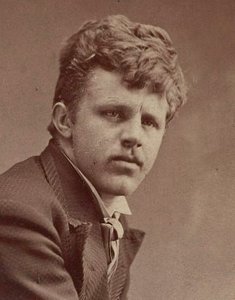
Frank Duveneck
1848 - 1919 , Stati Uniti d'America
Informazioni rapide
- Artisti Influenti:
- Frans Hals
- Gustave Courbet
- Wilhelm von Diez
- Artisti Influenzati:
- John Twachtman
- Otto Bacher
- Julius Rolshoven
- Data Di Morte: 3 gennaio 1919
- Data Di Nascita: 9 ottobre 1848
- Luogo Di Nascita: Covington, USA
- Movimento Artistico: Realismo americano
- Nazionalità: Americana
- Nome Completo: Frank Duveneck
- Opere Notevoli:
- Lady with Fan (1873)
- The Whistling Boy (1872)
- The Cobbler's Apprentice (1877)
Articoli correlati

Romantic Realism's Finest: 10 Masterpieces for Your Home | OriginalUniqueArt
Explore 10 defining masterpieces of Romantic Realism! Discover Courbet, Millet & Daumier's powerful paintings—capturing emotion and social realities. Find museum-quality reproductions for your home at OriginalUniqueArt.com.
Realismo nell'Arte: I 10 Capolavori che Rivoluzionano la Percezione
Esplora i 10 capolavori del Realismo con OriginalUniqueArt.com! Da Courbet a Manet, scopri la storia e le tecniche di questi dipinti iconici. Trova riproduzioni d'arte di alta qualità per decorare casa tua. Scopri tutte le opere su OriginalUniqueArt.com

Echoes of Society: Exploring Social Realism's Enduring Legacy in Art
Explore the powerful world of Social Realism art! Discover key artists, masterpieces & its profound social commentary. Expert insights into this influential movement's history and enduring legacy.
Realism in Art: A Professional Guide to Authentic Detail and Lifelike Masterpieces for Large-Scale Interior Projects
Master the use of Realism in professional interiors. This expert guide explores 19th-century masterpieces, offering procurement managers and designers technical insights into selecting authentic, hand-painted oil reproductions for high-end hotel and corporate projects.
The Raw Truth: A Definitive Guide to the Power and Legacy of Social Realism Art
Explore the profound impact of Social Realism. Discover how masters like Courbet rejected idealism to capture the raw, socio-political truths of the working class through powerful, unvarnished art history and enduring visual critique.



