
 Anteprima in scala reale
 Invia
Invia Condividi
 Dettagli opera
 Guida
Guida

 Scarica
 Simili
 Radiografia
 Slideshow
 Statistiche
Bacchanal
 Oil On Canvas
- WallArt
- Rococo Period
 1740
1740- Early Modern
 142.0 x 210.0 cm
 Gallerie dell’Accademia
 Espandi i dettagli
Giclée / Stampe d'arte
Stampa giclée o su tela di qualità museale, con produzione rapida e diverse opzioni di finitura. ( Acquista il dipinto realizzato a mano Passa all'immagine digitale)




P118B €10

P118H €10

P118W €10

P438Z €10

P508JH €12

P508YH €12

P805H €10

P805Z €10

P919BZ €10

P919G €10

P919XJ €10

P959ZH €10

P968JZ €12

W106C €8

W218G €10

W218JH €8

W218Y €10

W307PJ €10

W316G €10

W316PJ €8

W316Y €10

W398PJ €8

W4111J €10

W500HY €15

W500JH €15

W692G €12

W849H €8

W940BG €15

W953PJ €8




Scegli tra le nostre dimensioni predefinite, che rispettano le proporzioni originali dell'opera d'arte.

Inserisci la larghezza e l'altezza desiderate, per adattarle alla tua cornice o alla tua parete. Una stampa può essere solo ritagliata, mai resa più grande dell'immagine originale; pertanto, un formato con una forma differente comporterà la perdita di una parte dell'opera. Ti invieremo un mockup digitale da approvare prima di procedere con la stampa. L'immagine mostrata in questa pagina non rappresenta il ritaglio reale — solo il mockup lo mostra.
Consegna in tutto il mondo () in 2 settimane invece delle normali 4/5 settimane. (27 Ottobre)

Spedizione espressa gratuita in tutto il mondo

Tela in lino di alta qualità

Assicurazione completa sulla spedizione

Garanzia di rimborso dei dazi doganali

Garanzia di fedeltà cromatica assoluta

Politica di reso entro 100 giorni (solo per difetti di fabbricazione)

Garanzia di rimborso al 100%

Offerta per acquisti multipli
 L'opzione vetro è disponibile solo per dimensioni inferiori a 110 cm

Bacchanal
Giclée / Stampe d'arte
Dimensioni riproduzione
-


Prezzo finale calcolato
€ 70
Francesco Zuccarelli’s Bacchanal: A Symphony of Pastoral Elegance
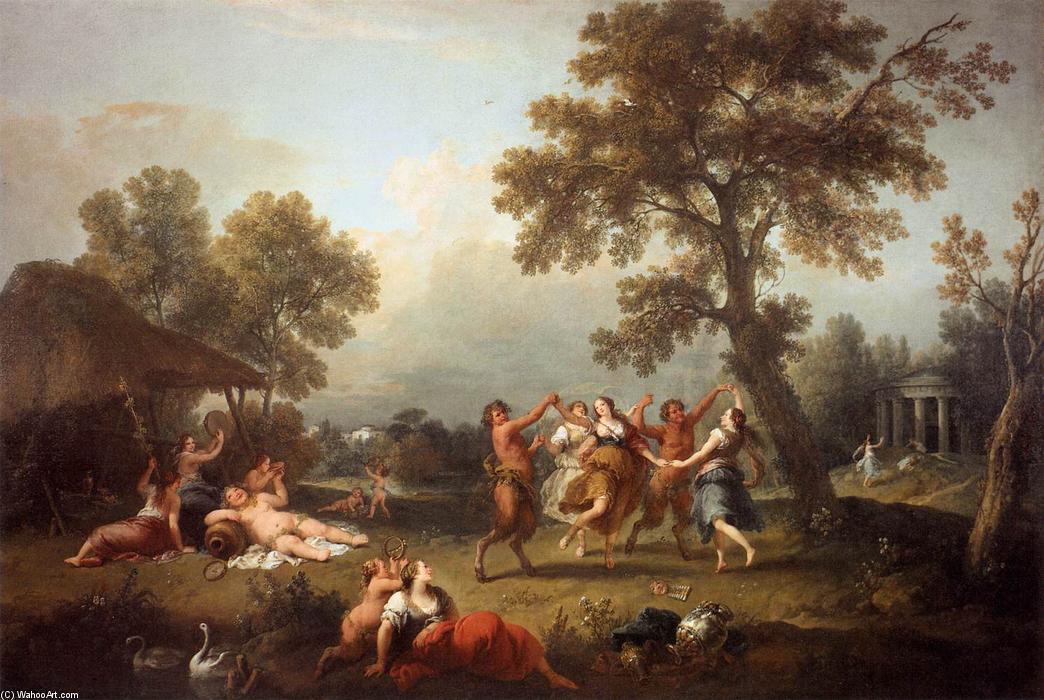
The Bacchanal by Francesco Zuccarelli stands as an emblem of the Rococo artistic movement, capturing not merely a scene but an entire ethos—one steeped in aristocratic indulgence and idealized beauty. Painted circa 1740-50, this oil on canvas masterpiece resides within the Gallerie dell’Accademia in Venice, Italy, offering visitors a glimpse into a period defined by opulent interiors and refined sensibilities. Zuccarelli's skill lies not just in depicting figures engaged in joyous revelry but in crafting an immersive experience that transports the viewer to a realm of pastoral serenity infused with vibrant color and masterful composition.Composition and Style: Balancing Chaos and Harmony
Zuccarelli’s approach distinguishes itself from the more dramatic Baroque tradition, prioritizing balance and grace over theatrical grandeur. The painting depicts a lively bacchanal—a celebration honoring Dionysus, the Greek god of wine and ecstasy—yet it avoids overwhelming visual sensation. A central group of figures dominates the canvas, their postures dynamic yet carefully arranged around a prominent architectural element: a classical structure reminiscent of Roman temples, subtly anchoring the scene in antiquity. The artist employs meticulous detailing to portray each participant’s attire and expression, conveying both physicality and emotion with remarkable precision. Notice how Zuccarelli utilizes light and shadow to sculpt forms, creating depth and enhancing the sense of movement—a hallmark of Rococo aesthetics.Color Palette and Technique: Embracing Pastel Radiance
The color palette is dominated by earthy tones – ochre, umber, Sienna – providing a grounding counterpoint to the splashes of vibrant hues adorning the figures’ clothing. Crimson reds, emerald greens, and sapphire blues punctuate the scene, symbolizing fertility, vitality, and divine inspiration. Zuccarelli's technique showcases exceptional brushwork, layering pigments with subtle gradations to achieve luminous surfaces that shimmer with reflected light. The artist skillfully blends colors on canvas, creating a velvety texture that contributes to the painting’s overall impression of luxurious softness. This meticulous attention to detail underscores Zuccarelli’s dedication to capturing not just what is seen but also how it feels—a testament to the transformative power of art.Historical Context: Venetian Aristocracy and Artistic Patronage
The Bacchanal reflects the cultural landscape of Venice during the mid-18th century, a city ruled by an aristocratic elite deeply invested in artistic patronage. Zuccarelli’s work exemplifies the Rococo style's fascination with idealized landscapes and mythological narratives—themes favored by Venetian noble families eager to express their status and sophistication. The painting aligns perfectly with broader European trends toward decorative art and emotional expression, signaling a shift away from Baroque solemnity towards a celebration of sensual pleasure and imaginative vision.Symbolism: Dionysian Ecstasy and Pastoral Tranquility
Beyond its visual splendor, Bacchanal is laden with symbolic significance. The bacchanalia itself represents the unrestrained pursuit of joy and indulgence—a deliberate rejection of Puritan morality—while simultaneously evoking images of Arcadia, the mythical pastoral paradise inhabited by shepherds and nymphs. The figures’ gestures convey a profound connection to nature and divine inspiration, mirroring the Rococo preoccupation with themes of beauty, harmony, and sensual experience. Zuccarelli's masterful depiction captures not only the outward spectacle of celebration but also its inner resonance—a reminder that art can transcend mere representation to communicate deeper truths about human emotion and spiritual aspiration.Legacy: Rediscovering Zuccarelli’s Vision
Francesco Zuccarelli’s reputation waned in the early 19th century, yet his work has experienced a resurgence of interest in recent decades, displayed prominently in museums worldwide. Bacchanal stands as a cornerstone of Rococo art history—a testament to Zuccarelli's artistic genius and his ability to distill the essence of an era into a single unforgettable image. Its enduring appeal lies in its exquisite beauty, balanced composition, and profound exploration of human emotion, continuing to inspire artists and collectors alike.Domande e risposte
È disponibile il download di "Bacchanal"?
Puoi scaricare "Bacchanal" di Francesco Zuccarelli dalla pagina Scarica l'opera dell'opera, come download di un'immagine digitale ad alta risoluzione.
Qual è la luminosità di "Bacchanal" di Francesco Zuccarelli?
"Bacchanal" di Francesco Zuccarelli ha una luminanza di Gentle Luminance. La luminanza descrive quanta luce sembrano riflettere i colori.
In che anno è stata realizzata l'opera "Bacchanal" di Francesco Zuccarelli?
L'opera "Bacchanal" di Francesco Zuccarelli risale al 1740.
Biografia dell'artista
Francesco Zuccarelli: Vita e Opere
- Nome Completo: Giacomo Francesco Zuccarelli
- Altri Nomi: Francesco Zuccarelli
- Nascita: 15 agosto 1702, Pitigliano, Italia
- Morte: 30 dicembre 1788, Firenze, Italia
Formazione e Primi Anni
- Zuccarelli nacque a Pitigliano, in Toscana, da una famiglia benestante. Il padre possedeva vigneti e un negozio di utensili da cucina e spezie.
- All'età di undici o dodici anni, iniziò il suo apprendistato a Roma con i ritrattisti Giovanni Maria Morandi e Pietro Nelli, dove apprese le basi del disegno e assorbì le lezioni del classicismo romano.
- Nel 1725-27 completò la sua prima commissione nella sua città natale, un paio di altarpieces per una cappella.
- Grazie al sostegno del collezionista d'arte fiorentino Francesco Maria Niccolò Gabburri, dal 1728 al 1731 si dedicò principalmente alla xilografia, producendo almeno 43 stampe che documentavano i deteriorati affreschi di Giovanni da San Giovanni e Andrea del Sarto.
- Durante il suo soggiorno a Firenze, iniziò a sperimentare con disegni paesaggistici, conservati presso il dipartimento di stampe e disegni degli Uffizi.
- Luigi Lanzi affermò che Paolo Anesi fu il mentore chiave di Zuccarelli nel genere del paesaggio.
Periodo Veneziano e Successo Internazionale
- Nel 1732, dopo un breve soggiorno a Bologna, si trasferì a Venezia. La morte di Marco Ricci nel 1730 aveva creato una posizione vacante nella pittura di paesaggio.
- Pur continuando a dipingere opere religiose e mitologiche, dedicò sempre più attenzione ai paesaggi, ispirandosi al classicismo di Claude Lorrain e alla scuola romana.
- Le sue prime opere degli anni '30 mostrano l'influenza di Alessandro Magnasco e, per un periodo più lungo, di Ricci.
- Zuccarelli introdusse una tavolozza più delicata e ariosa rispetto ai colori tipici veneziani, utilizzando valori tonali con maggiore luminosità. Le figure nei suoi paesaggi idilliaci presero vita.
- Raggiunse un successo immediato a Venezia, ottenendo il patrocinio di importanti personalità come il maresciallo Schulenburg, Joseph Smith (che divenne suo protettore per molti anni) e Francesco Algarotti, che lo raccomandò all'elettore di Sassonia, Augusto III di Polonia.
- Nel 1735 sposò Giustina Agata Simonetti e ebbero quattro figli, due dei quali morirono in tenera età.
- Collaborò con altri artisti come Bernardo Bellotto e Antonio Visentini, producendo una serie di architetture palladiane sotto l'egida del console Smith (Burlington House, 1746).
- Una delle collaborazioni più interessanti fu la creazione di un set di 52 carte da gioco con soggetti dell'Antico Testamento, pubblicato a Venezia nel 1748.
- Un importante risultato del suo primo periodo veneziano fu una serie di sette tele, ora conservate al Castello di Windsor, che rappresentano i personaggi biblici di Rebecca, Giacobbe ed Esaù.
Riconoscimenti e Declino
- Nel 1768, Zuccarelli divenne membro fondatore della Royal Academy of Arts a Londra.
- Al suo ritorno in Italia, fu eletto presidente dell'Accademia Veneziana.
- Nonostante la fama che ebbe durante la sua vita, la reputazione di Zuccarelli declinò nei primi anni del XIX secolo con l'ascesa del naturalismo nel paesaggio. Turner lo criticò seppur riconoscendo la bellezza delle sue figure.
- Michael Levey suggerì perché Zuccarelli godette di un ampio appeal contemporaneo in Inghilterra, concludendo che le sue opere migliori sono altamente decorative.
- A partire dagli anni '90, gli studiosi italiani hanno rivalutato Zuccarelli, dedicandogli libri e articoli e esponendo regolarmente i suoi dipinti e disegni.
Stile e Influenze
- Influenze: Paolo Anesi, Claude Lorrain, Alessandro Magnasco, Marco Ricci.
- Caratteristiche dello stile: Paesaggi idilliaci, arcadia, atmosfera ariosa, colori delicati, figure vivaci, elementi classici e religiosi.
- Tecniche: Pittura a olio su tela, xilografia, disegno.

Francesco Zuccarelli
1702 - 1788 , Italia
Dettagli rapidi
- Artistic Movement Or Style: Rococò e Barocco
- Artists Who Influenced This Artist:
- Paolo Anesi
- Claude Lorrain
- Alessandro Magnasco
- Marco Ricci
- Date Of Birth: 15 agosto 1702
- Date Of Death: 30 dicembre 1788
- Full Name: Francesco Zuccarelli
- Nationality: Italiana
- Notable Artworks:
- Bacco
- Paesaggio Classico
- Ragazze al Fiume
- San Giorgio Maggiore
- Bestiame e Figure
- Capriccio Pastorale
- Paesaggio con Pastori
- Place Of Birth: Pitigliano, Italia
Articoli correlati

The Rococo Aesthetic: Opulence, Rebellion & the Pursuit of Pleasure in 18th-Century Art
Explore the opulent world of Rococo art! Discover its origins, key artists like Watteau & Boucher, and lasting influence on design. Expert insights for collectors & enthusiasts.

Pietro Longhi's Venetian Scenes: A Study of Rococo Society & Domestic Life
Explore the captivating world of Pietro Longhi's Venetian scenes! Discover insightful analysis of his Rococo masterpieces & social commentary on 18th-century life. Learn about this 'Venetian Hogarth' and his lasting artistic legacy.

The Allure of Elegance in Art: A Historical & Aesthetic Exploration of Refinement & Grace
Explore the exquisite world of Rococo art! Discover its history, masters (Watteau, Boucher & more), and defining elegance. Expert insights for collectors seeking museum-quality reproductions & custom portraits.

I 10 Capolavori Rococò che Hanno Definito un'Epoca | Arte e Decorazioni di Lusso
Esplora i 10 capolavori del Rococò con ! Scopri Fragonard, Boucher e Tiepolo e lasciati ispirare da colori pastello e decorazioni di lusso. Quadri antichi e riproduzioni d'arte per interni eleganti. Esplora la collezione online!

Francesco Guardi: Luce Veneziana, Prospettiva Atmosferica e la Transizione dal Rococò al Neoclassicismo
Esplora l'opera di Francesco Guardi, maestro della pittura veneziana e innovatore del 'pittura di tocco'. Analisi approfondita del suo stile unico, la transizione dal Rococò al Neoclassicismo e il confronto con Canaletto. Scopri perché le sue vedute sono così apprezzate dai collezionisti.

