
 Preview
 Acquista stampa Acquista download
 Invia
Invia
 Condividi
 Dettagli opera
 Aggiungi ai preferiti

 Scarica
 Simili
 Radiografia
 Slideshow
Work
 Oil On Canvas
- WallArt
- Pre-Raphaelite Revival
 1852
1852 137.0 x 197.0 cm
 Galleria d'Arte della Città
 Scopri di più
Riproduzione a olio fatta a mano
Olio su tela dipinto a mano nelle tue dimensioni e con la tua cornice, realizzato su ordinazione dai nostri artisti.




P118B $10

P118H $10

P118W $10

P438Z $10

P508JH $12

P508YH $12

P805H $10

P805Z $10

P919BZ $10

P919G $10

P919XJ $10

P959ZH $10

P968JZ $12

W106C $8

W218G $10

W218JH $8

W218Y $10

W307PJ $10

W316G $10

W316PJ $8

W316Y $10

W398PJ $8

W4111J $10

W500HY $15

W500JH $15

W692G $12

W849H $8

W940BG $15

W953PJ $8




Scegli tra le nostre dimensioni predefinite, che rispettano le proporzioni originali dell'opera d'arte.

È possibile inserire dimensioni personalizzate per adattare l'opera a una cornice o a uno spazio specifico. Se la dimensione selezionata non corrisponde alle proporzioni dell'immagine originale, provvederemo a ritagliare l'opera o a estendere il dipinto con elementi aggiuntivi dipinti a mano. Un mockup digitale ti sarà inviato per approvazione prima dell'inizio della produzione.
Si prega di notare che l'anteprima a schermo non riflette il ritaglio o l'estensione effettivi. Solo il mockup mostrerà accuratamente la composizione finale.
Sebbene siano disponibili dimensioni personalizzate, consigliamo di selezionare una dimensione dall'elenco predefinito per preservare le proporzioni originali.
Dopo l'ordine, il team di OriginalUniqueArt.com invierà un'e-mail al cliente per le istruzioni e fornirà un'anteprima del mockup
Consegna in tutto il mondo () in 3/4 settimane anziché nelle normali 5 settimane. (23 Luglio). Nessun compromesso sulla qualità.

Spedizione espressa gratuita in tutto il mondo

Tela in lino di alta qualità

Assicurazione completa sulla spedizione

Garanzia di rimborso dei dazi doganali

Garanzia di fedeltà cromatica

Politica di reso entro 60 giorni (solo per difetti)

Garanzia di rimborso al 100%

Sconto per acquisti multipli
 L'opzione vetro è disponibile solo per dimensioni inferiori a 110 cm

Work
Tecnica di riproduzione
Dimensioni riproduzione
-


Prezzo totale finale
-
Descrizione dell'opera
Ford Madox Brown’s “Work”: A Symphony of Labor and Salvation
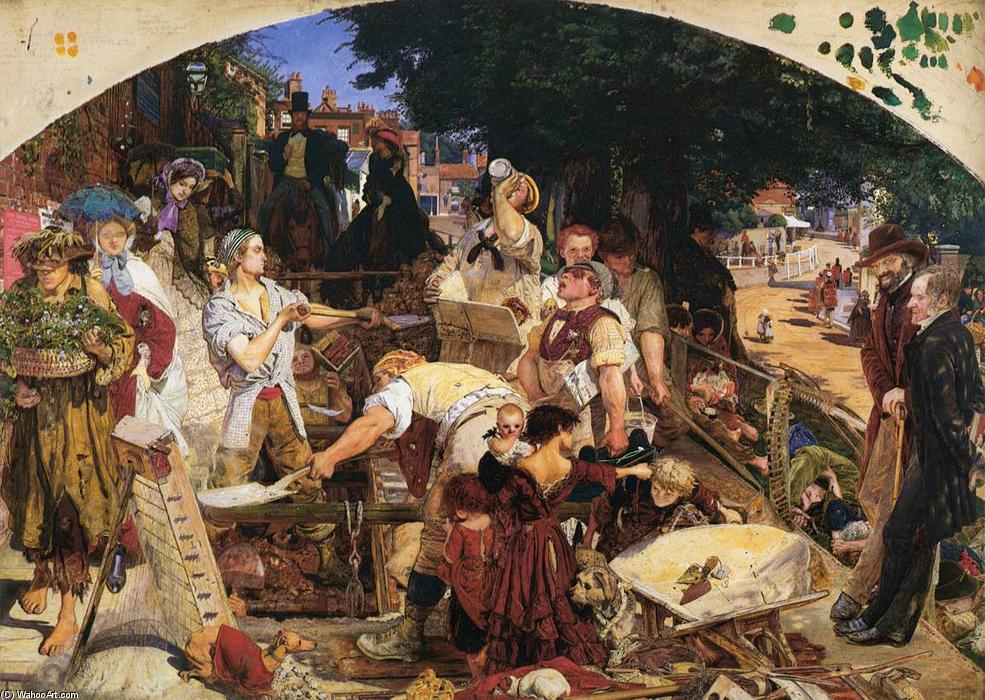
Ford Madox Brown's "Work," completed between 1852 and 1865, isn’t merely a depiction of a bustling Victorian street scene; it’s a profound meditation on the very nature of labor, morality, and the spiritual condition of an era grappling with rapid industrialization. This monumental oil painting, now residing in the Manchester City Art Gallery, stands as a testament to Brown's Pre-Raphaelite vision—a fusion of meticulous realism, vibrant color, and deeply embedded social commentary. The canvas explodes with activity, yet within this apparent chaos lies a carefully orchestrated narrative designed to provoke reflection on the value of honest toil and its connection to divine grace.
The scene unfolds in Hampstead Heath, capturing a group of navvies – laborers constructing a new water supply system—engaged in their arduous task. Brown’s genius lies not just in his technical mastery but in his ability to imbue these figures with dignity and humanity. He avoids the typical romanticized portrayal of manual labor often found in earlier works; instead, he presents them as complex individuals, each contributing to a larger communal effort. The composition is dominated by a semi-circular arrangement, drawing the viewer’s eye towards a central female figure, arguably representing both the Virgin Mary and a symbol of domestic virtue. Surrounding her are a diverse cast—a young couple struggling to feed their child, an unemployed haymaker, a pious middle-class woman distributing temperance tracts, and even a skeptical aristocrat observing the scene from horseback.
A Pre-Raphaelite Vision: Color, Detail, and Symbolism
Brown’s artistic approach is deeply rooted in the Pre-Raphaelite movement's core tenets. He employs a remarkably rich and vibrant palette—a departure from the muted tones often associated with academic painting—to capture the intensity of sunlight and the textures of clothing and skin. The meticulous detail, evident in every brushstroke, invites close scrutiny, revealing an astonishing level of observation and technical skill. The figures are rendered with a heightened sense of realism, yet imbued with a symbolic weight that elevates the scene beyond a simple snapshot of daily life.
Symbolism permeates “Work.” The bright sunlight, for instance, isn’t merely atmospheric; it represents divine illumination—a metaphorical light guiding the laborers towards salvation through honest labor. The placement of figures within the composition is deliberate, creating a visual hierarchy that underscores Brown's moral argument. The central female figure acts as a focal point, connecting the earthly realm of labor with the spiritual realm of grace. Even seemingly mundane details, such as the discarded temperance leaflet or the broken wheelbarrow, carry symbolic weight, highlighting the social injustices and inequalities prevalent in Victorian England.
Historical Context: Industrialization and Moral Reform
“Work” was painted during a period of profound social and economic upheaval. The rise of industrialization had transformed Britain into an empire fueled by factories and railways, but it also created immense poverty, overcrowding, and social unrest. The Pre-Raphaelites, including Brown, sought to challenge the prevailing artistic conventions and address pressing social issues through their art. They were influenced by thinkers like Thomas Carlyle, who argued that labor was a moral imperative—a means of achieving spiritual fulfillment. Carlyle’s ideas resonated deeply with Brown, informing his depiction of work as a pathway to salvation.
The painting reflects the broader intellectual and religious currents of the time. The Victorian era witnessed a resurgence of interest in biblical themes and a renewed emphasis on Christian morality. Brown's decision to depict laborers—often marginalized and ignored by mainstream society—as potential heroes underscores this shift in values. He suggests that true nobility lies not in wealth or status, but in the dedication and perseverance required to earn one’s livelihood through honest work.
Emotional Resonance: A Timeless Message
“Work” continues to resonate with viewers today because of its enduring message about the dignity of labor and the importance of social justice. The painting's raw energy, vibrant colors, and complex symbolism create a powerful emotional experience—one that challenges us to consider our own relationship to work, community, and spirituality. It’s a reminder that even in the midst of hardship and struggle, there is inherent value in contributing to something larger than oneself.
Reproductions of “Work” offer a remarkable opportunity to bring this masterpiece into your home or office—a visual testament to the enduring power of art to inspire reflection and promote social awareness. Each brushstroke captures not just a scene, but an entire era’s anxieties and aspirations, making it a truly timeless addition to any collection.
Biografia dell'artista
La Vita e l'Opera di Ford Madox Brown
Ford Madox Brown, nato il 16 aprile 1821 a Calais, in Francia, e deceduto il 6 ottobre 1893 a Londra, è stato un pittore britannico noto per le sue opere che affrontano temi morali e storici. La sua arte si distingue per uno stile distintivo, grafico e spesso influenzato da William Hogarth, all'interno del movimento Pre-Raffaellita.
Primi Anni e Formazione
La vita di Brown fu segnata da frequenti trasferimenti tra Calais e le contee del Kent, a causa delle precarie condizioni finanziarie della sua famiglia. Questo limitò le sue opportunità educative formali, ma dimostrò un talento artistico precoce, in particolare nella riproduzione di stampe dei maestri antichi. Suo padre, purser nella Royal Navy, cercò inizialmente per lui una carriera navale, ma Brown si dedicò all'arte. Studiò ad Anversa sotto Pieter van Hanselaere e Gustaf Wappers, acquisendo solide basi tecniche.
Stile Artistico e Opere Principali
Lo stile di Brown è caratterizzato da colori vivaci e un realismo dettagliato, spesso utilizzato per rappresentare soggetti storici e morali. Tra le sue opere più significative spiccano:
- Work (1852-1865): Considerata la sua opera più notevole, Work incarna il suo stile grafico e hogarthiano, raffigurando scene di vita quotidiana con un'attenzione particolare alla dignità del lavoro.
- The Manchester Murals: Una serie di dodici dipinti realizzati per il municipio di Manchester, che narrano la storia della città. Questi murales sono considerati tra gli esempi più raffinati dell'arte pre-raffaelita.
- The Last of England (1855): Un’opera potente e malinconica che riflette temi di esilio, perdita e declino nazionale.
Influenze e Legato
Brown fu un consigliere e amico dei membri della Fratellanza Pre-Raffaellita, influenzando il loro stile artistico con la sua attenzione al realismo e alla rappresentazione di soggetti contemporanei. Fu particolarmente influente su Dante Gabriel Rossetti e William Holman Hunt. La sua opera ha ispirato altri artisti, come Thomas Benjamin Kennington, che ne riprese lo stile in opere come The Pinch of Poverty.
Vita Personale e Eredità
La vita personale di Brown fu segnata da due matrimoni: con Elizabeth Bromley (1841-1846) e successivamente con Emily Hill (1853-1890). Ebbe cinque figli, tra cui Lucy Madox Brown e Catherine Madox Brown. Il suo contributo all'arte britannica è innegabile, e la sua eredità continua a essere celebrata per il suo ruolo pionieristico nel movimento pre-raffaelita e per la sua capacità di rappresentare con realismo e dignità la vita quotidiana e i temi morali del suo tempo.
Importanti Link

Ford Madox Brown
1821 - 1893 , Francia
Dati rapidi
- Artistic Movement Or Style: Pre-Raffaellita, Realismo
- Artists Or Movements Influenced By This Artist:
- Pre-Raffaelliti
- Thomas Benjamin Kennington
- Artists Who Influenced This Artist:
- Hans Holbein
- William Hogarth
- Date Of Birth: 16 aprile 1821
- Date Of Death: 6 ottobre 1893
- Full Name: Ford Madox Brown
- Nationality: Britannico
- Notable Artworks:
- Work (1852-1865)
- The Manchester Murals
- The Last of England
- Place Of Birth (City And Country): Calais, Francia
Articoli correlati

Anthony Frederick Sandys: Pre-Raphaelite Vision & Victorian Aesthetic Exploration
Discover the captivating Pre-Raphaelite world of Anthony Frederick Sandys (1829-1904). Explore his mythological scenes, portraits & Victorian artistry. Learn about his influences and lasting legacy.
R.A. Benjamin Williams: Victorian Genre Painting & Social Commentary
Explore the captivating world of Benjamin Williams Leader's Victorian genre paintings. Discover his mastery of naturalism, social commentary & lasting influence on British art. Expert insights at OriginalUniqueArt.

I Preraffaelliti: Ribellione Estetica e Dettaglio Narrativo nell'Inghilterra Vittoriana
Esplora il movimento preraffaellita con OriginalUniqueArt. Analisi approfondite di Millais, Rossetti e Hunt, tecniche innovative e l'impatto rivoluzionario sull'arte vittoriana. Scopri la bellezza e i dettagli narrativi delle opere più iconiche.

Edmund Leighton e l'Età d'Oro della Pittura Narrativa Vittoriana
Esplora il mondo affascinante di Edmund Leighton, maestro della pittura vittoriana. Scopri le sue opere iconiche, l'influenza dei Preraffaelliti e la tecnica meticolosa che lo rese celebre. Approfondimenti storici e artistici su OriginalUniqueArt.
John Collier: Realismo Preraffaellita e la Psicologia del Ritratto nell'Inghilterra Vittoriana
Esplora la vita e l'opera di John Collier, maestro del realismo preraffaellita. Analisi approfondite dei suoi ritratti psicologicamente penetranti e dell'influenza sull'arte vittoriana.



