Anteprima in scala reale
 Invia
Invia Condividi
 Dettagli opera
 Guida
Guida

 Scarica
 Simili
 Radiografia
 Slideshow
 Statistiche
Millie Smith
 Oil
Oil- WallArt
- Pre-Raphaelite Movement
 1846
1846- 19th Century
 23.0 x 18.0 cm
 Galleria d'Arte Walker
 Espandi i dettagli
Riproduzione a olio fatta a mano
Olio su tela dipinto a mano nelle tue dimensioni e con la tua cornice, realizzato su ordinazione dai nostri artisti. ( Passa alle stampe Passa all'immagine digitale)




P118B €10

P118H €10

P118W €10

P438Z €10

P508JH €12

P508YH €12

P805H €10

P805Z €10

P919BZ €10

P919G €10

P919XJ €10

P959ZH €10

P968JZ €12

W106C €8

W218G €10

W218JH €8

W218Y €10

W307PJ €10

W316G €10

W316PJ €8

W316Y €10

W398PJ €8

W4111J €10

W500HY €15

W500JH €15

W692G €12

W849H €8

W940BG €15

W953PJ €8




Scegli tra le nostre dimensioni predefinite, che rispettano le proporzioni originali dell'opera d'arte.

Inserisci la larghezza e l'altezza desiderate, per adattarle alla tua cornice o alla tua parete. Trattandosi di un'opera dipinta a mano, in caso di dimensioni con un formato differente, l'artista può estendere leggermente il dipinto oltre i bordi dell'immagine o ritagliare una piccola parte — la scelta spetta a te. Ti invieremo un mockup digitale da approvare prima che la realizzazione abbia inizio. L'immagine mostrata in questa pagina non rappresenta il risultato finale — solo il mockup lo fa.
Dopo l'ordine, il team di OriginalUniqueArt.com contatterà il cliente via e-mail per ricevere le istruzioni e fornirà un'anteprima del mockup
Consegna in tutto il mondo () in 3/4 settimane anziché nelle normali 5 settimane. (27 Ottobre). Nessun compromesso sulla qualità.

Spedizione espressa gratuita in tutto il mondo

Tela in lino di alta qualità

Assicurazione completa sulla spedizione

Garanzia di rimborso dei dazi doganali

Garanzia di fedeltà cromatica assoluta

Politica di reso entro 100 giorni (solo per difetti di fabbricazione)

Garanzia di rimborso al 100%

Offerta per acquisti multipli
 L'opzione vetro è disponibile solo per dimensioni inferiori a 110 cm

Millie Smith
Tecnica di riproduzione
Dimensioni riproduzione
-


Prezzo finale calcolato
€ 264
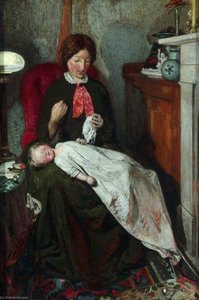
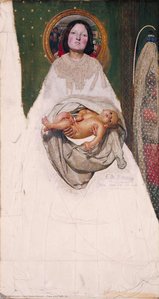
A Glimpse of Innocence: The Soul of Millie Smith
In the quiet, evocative depths of Ford Madox Brown’s 1846 masterpiece, “Millie Smith,” we encounter more than a mere portrait; we step into a profound moment of Victorian psychological realism. This painting captures the likeness of a young girl, the daughter of a local landlady, during Brown's stay in Southend-on-Sea. At first glance, the viewer is met with the striking, direct gaze of a child—a gaze that possesses an unsettling intimacy, as if she is peering directly into the soul of the observer. This confrontation breaks the traditional boundaries of 19th-century portraiture, moving away from the stiff, idealized poses of the era toward a raw, unvarnished naturalism that would become a hallmark of the burgeoning Pre-Raphaelite spirit.
The composition is anchored by a sense of grounded reality. Seated at a simple table, Millie is framed against the rugged texture of a brick wall, a detail that strips away any aristocratic pretension and places her firmly within the everyday world. A single red flower tucked into her hair serves as a poignant focal point, a small burst of vitality amidst a more somber environment. This subtle use of color, paired with the meticulous rendering of her white dress and the delicate skin tones, demonstrates Brown's extraordinary ability to find extraordinary beauty in the mundane.
Technique and the Pre-Raphaelite Vision
To observe “Millie Smith” is to witness a revolutionary departure from the academic conventions of the mid-19th century. While many of his contemporaries sought refuge in the luminous, soft glazes of the Renaissance masters to create an ethereal glow, Brown took a different path. He embraced a darker, more earth-bound palette dominated by rich browns, ochres, and muted tones. This choice was intentional; it mirrored the grit and truth of Victorian life, eschewing superficial prettiness for a deeper, more tactile reality.
His technique is characterized by an almost scientific precision. Every element—from the weave of the tablecloth to the subtle shadows cast by the flower vase—is rendered with a clarity that demands close inspection. This meticulous attention to detail was not merely a display of skill but a philosophical statement. By avoiding excessive shading and prioritizing sharp, direct light, Brown achieved a graphic intensity that makes the scene feel immediate and alive. For the collector or interior designer, this level of detail ensures that a reproduction of this work remains a captivating centerpiece, offering new discoveries with every viewing.
A Legacy of Emotional Resonance
Beyond its technical brilliance, “Millie Smith” carries an emotional weight that transcends time. The painting was created during a period of intense social anxiety and strict moral codes in Britain, yet Brown’s subject offers a sense of vulnerability and pure, unadulterated innocence. There is a haunting quality to the way Millie looks at us—a mixture of curiosity and a quiet, knowing stillness. This emotional depth makes the piece an ideal acquisition for those looking to add character and narrative weight to a curated space.
Whether placed in a sunlit gallery or a sophisticated study, a high-quality hand-painted reproduction of this work serves as a window into the heart of the Pre-Raphaelite movement. It is a piece that invites conversation, prompting viewers to reflect on the intersection of childhood innocence and the heavy realities of the world. For the discerning art lover, owning such a work is not just about decorating a wall; it is about preserving a moment of profound human connection captured forever in oil.
Domande e risposte
Chi ha creato "Millie Smith" e in quale anno?
L'autore di "Millie Smith" è Ford Madox Brown e l'opera risale al 1846.
Come può essere utilizzato "Millie Smith" di Ford Madox Brown nell'arredamento d'interni?
"Millie Smith" è ideale per Accent e si adatta perfettamente a un Living Room.
Quale colore domina la composizione di "Millie Smith" di Ford Madox Brown?
Il colore dominante di "Millie Smith" di Ford Madox Brown è Espresso (#353025).
Biografia dell'artista
La Vita e l'Opera di Ford Madox Brown
Ford Madox Brown, nato il 16 aprile 1821 a Calais, in Francia, e deceduto il 6 ottobre 1893 a Londra, è stato un pittore britannico noto per le sue opere che affrontano temi morali e storici. La sua arte si distingue per uno stile distintivo, grafico e spesso influenzato da William Hogarth, all'interno del movimento Pre-Raffaellita.
Primi Anni e Formazione
La vita di Brown fu segnata da frequenti trasferimenti tra Calais e le contee del Kent, a causa delle precarie condizioni finanziarie della sua famiglia. Questo limitò le sue opportunità educative formali, ma dimostrò un talento artistico precoce, in particolare nella riproduzione di stampe dei maestri antichi. Suo padre, purser nella Royal Navy, cercò inizialmente per lui una carriera navale, ma Brown si dedicò all'arte. Studiò ad Anversa sotto Pieter van Hanselaere e Gustaf Wappers, acquisendo solide basi tecniche.
Stile Artistico e Opere Principali
Lo stile di Brown è caratterizzato da colori vivaci e un realismo dettagliato, spesso utilizzato per rappresentare soggetti storici e morali. Tra le sue opere più significative spiccano:
- Work (1852-1865): Considerata la sua opera più notevole, Work incarna il suo stile grafico e hogarthiano, raffigurando scene di vita quotidiana con un'attenzione particolare alla dignità del lavoro.
- The Manchester Murals: Una serie di dodici dipinti realizzati per il municipio di Manchester, che narrano la storia della città. Questi murales sono considerati tra gli esempi più raffinati dell'arte pre-raffaelita.
- The Last of England (1855): Un’opera potente e malinconica che riflette temi di esilio, perdita e declino nazionale.
Influenze e Legato
Brown fu un consigliere e amico dei membri della Fratellanza Pre-Raffaellita, influenzando il loro stile artistico con la sua attenzione al realismo e alla rappresentazione di soggetti contemporanei. Fu particolarmente influente su Dante Gabriel Rossetti e William Holman Hunt. La sua opera ha ispirato altri artisti, come Thomas Benjamin Kennington, che ne riprese lo stile in opere come The Pinch of Poverty.
Vita Personale e Eredità
La vita personale di Brown fu segnata da due matrimoni: con Elizabeth Bromley (1841-1846) e successivamente con Emily Hill (1853-1890). Ebbe cinque figli, tra cui Lucy Madox Brown e Catherine Madox Brown. Il suo contributo all'arte britannica è innegabile, e la sua eredità continua a essere celebrata per il suo ruolo pionieristico nel movimento pre-raffaelita e per la sua capacità di rappresentare con realismo e dignità la vita quotidiana e i temi morali del suo tempo.
Importanti Link

Ford Madox Brown
1821 - 1893 , Francia
Dettagli rapidi
- Artistic Movement Or Style: Pre-Raffaellita, Realismo
- Artists Or Movements Influenced By This Artist:
- Pre-Raffaelliti
- Thomas Benjamin Kennington
- Artists Who Influenced This Artist:
- Hans Holbein
- William Hogarth
- Date Of Birth: 16 aprile 1821
- Date Of Death: 6 ottobre 1893
- Full Name: Ford Madox Brown
- Nationality: Britannico
- Notable Artworks:
- Work (1852-1865)
- The Manchester Murals
- The Last of England
- Place Of Birth (City And Country): Calais, Francia
Articoli correlati

I Preraffaelliti: Ribellione Estetica e Dettaglio Narrativo nell'Inghilterra Vittoriana
Esplora il movimento preraffaellita con OriginalUniqueArt. Analisi approfondite di Millais, Rossetti e Hunt, tecniche innovative e l'impatto rivoluzionario sull'arte vittoriana. Scopri la bellezza e i dettagli narrativi delle opere più iconiche.
Ford Madox Brown: Visionario Preraffaellita e Commentatore Sociale dell'Era Vittoriana
Esplora la vita e le opere di Ford Madox Brown, figura chiave del movimento preraffaellita. Analisi approfondite, contesto storico e l'influenza italiana sulla sua arte rivoluzionaria.

Dante Gabriel Rossetti: I 25 Capolavori che Definiscono un Maestro del Simbolismo
Esplora i 25 capolavori di Dante Gabriel Rossetti, pittore preraffaellita simbolo del romanticismo vittoriano. Scopri storie, tecniche e colori unici delle sue opere più famose. Trova riproduzioni d'arte di alta qualità per la tua casa su OriginalUniqueArt.com
The Pre-Raphaelite Brotherhood: Reclaiming Beauty, Nature, and Truth in Victorian Art History
Explore the revolutionary Pre-Raphaelite Brotherhood. Discover how these visionary artists rejected academic tradition to reclaim beauty, nature, and truth through luminous detail and literary depth in Victorian art history.

Pre-Raphaelite Romanticism: A Guide to Vivid Detail and Medieval Beauty in Victorian Art
Explore the vivid detail and medieval beauty of Pre-Raphaelite Romanticism. Discover the history of masters like Rossetti and Millais through our expert guide to Victorian art, perfect for collectors and professionals seeking authentic, museum-quality reproductions.