
 Anteprima in scala reale
 Invia
Invia Condividi
 Dettagli opera
 Guida
Guida

 Scarica
 Simili
 Radiografia
 Slideshow
 Q&A
Q&A Statistiche
Bistro

- 38.0 x 46.0 cm


 Espandi i dettagli
L'opera d'arte visualizzata in questa pagina è protetta dalle leggi sul diritto d'autore, il che significa che non possiamo legalmente creare o vendere una riproduzione identica. Tale protezione è garantita da accordi internazionali quali la Convenzione di Berna e dalle leggi nazionali, incluse quelle stabilite da Legge sul copyright degli Stati Uniti - Titolo 17. Tutti i diritti riservati. Le immagini presenti su questo sito sono protette da copyright e non possono essere riprodotte o utilizzate senza l'autorizzazione scritta di WahooArt.com o dei rispettivi proprietari del copyright.
Questo metodo è pienamente conforme alle normative sul diritto d'autore poiché non prevede la copia o la duplicazione dell'opera protetta. Si tratta invece di una rielaborazione creativa: un nuovo dipinto che trae ispirazione dall'originale, senza tuttavia esserne identico.
Giclée / Stampe d'arte
Stampa giclée o su tela di qualità museale, con produzione rapida e diverse opzioni di finitura. ( Acquista il dipinto realizzato a mano Passa all'immagine digitale)




P118B €10

P118H €10

P118W €10

P438Z €10

P508JH €12

P508YH €12

P805H €10

P805Z €10

P919BZ €10

P919G €10

P919XJ €10

P959ZH €10

P968JZ €12

W106C €8

W218G €10

W218JH €8

W218Y €10

W307PJ €10

W316G €10

W316PJ €8

W316Y €10

W398PJ €8

W4111J €10

W500HY €15

W500JH €15

W692G €12

W849H €8

W940BG €15

W953PJ €8




Scegli tra le nostre dimensioni predefinite, che rispettano le proporzioni originali dell'opera d'arte.

Inserisci la larghezza e l'altezza desiderate, per adattarle alla tua cornice o alla tua parete. Una stampa può essere solo ritagliata, mai resa più grande dell'immagine originale; pertanto, un formato con una forma differente comporterà la perdita di una parte dell'opera. Ti invieremo un mockup digitale da approvare prima di procedere con la stampa. L'immagine mostrata in questa pagina non rappresenta il ritaglio reale — solo il mockup lo mostra.
Consegna in tutto il mondo () in 2 settimane invece delle normali 4/5 settimane. (2 Novembre)

Spedizione espressa gratuita in tutto il mondo

Tela in lino di alta qualità

Assicurazione completa sulla spedizione

Garanzia di rimborso dei dazi doganali

Garanzia di fedeltà cromatica assoluta

Politica di reso entro 100 giorni (solo per difetti di fabbricazione)

Garanzia di rimborso al 100%

Offerta per acquisti multipli
 L'opzione vetro è disponibile solo per dimensioni inferiori a 110 cm

Bistro
Giclée / Stampe d'arte
Dimensioni riproduzione
-


Prezzo finale calcolato
€ 71
A Vibrant Symphony of Parisian Life
In the evocative masterpiece Bistro, created in 1952, the Turkish avant-garde master Fikret Muallâ Saygı invites us into a world where color and movement dance together on the canvas. The painting serves as a window into a lively social gathering, capturing the quintessential essence of a bustling café or bistro setting. Through his expressive brushwork, Muallively reconstructs a scene of communal joy, where figures are gathered around a table laden with the humble artifacts of daily life—cups, bowls, and bottles that suggest a shared moment of respite. The composition is not merely a depiction of a meal, but a rhythmic arrangement of souls, where the presence of individuals in ties hints at the sophisticated yet casual atmosphere of mid-century European social life.
The technique employed in this work is a breathtaking testament to the influence of Fauvism and Expressionism. Muallâ does not seek to replicate reality with photographic precision; instead, he utilizes a bold, saturated palette to convey the emotional temperature of the room. The greenery of potted plants provides a refreshing organic contrast to the structured social interaction, while the figures on the periphery add depth and a sense of an unfolding narrative that extends beyond the frame. Each stroke feels deliberate yet spontaneous, contributing to an overall atmosphere that is both energetic and deeply nostalgic, making it a captivating centerpiece for any collection focused on the emotive power of color.
The Soul Behind the Canvas
To truly appreciate Bistro, one must understand the poignant duality of Fikret Muallâ’s life. Born in Kadıköy, Istanbul, his journey was marked by profound personal tragedy and a subsequent migration to the heart of the art world: Paris. The shadows of his early life—marked by physical injury and the loss of his mother—often haunted his psyche, yet they also fueled his ability to find beauty in the transient moments of street life and social gatherings. This painting represents the triumph of light over shadow; it is an exploration of the "joie de vivre" that Muallâ sought to capture amidst his own internal emotional turmoil. The lively, social atmosphere of the bistro serves as a sanctuary of connection, a stark and beautiful contrast to the artist's often solitary struggles.
For the discerning collector or interior designer, this reproduction offers more than just aesthetic appeal; it offers a piece of art history that resonates with emotional depth. The work’s ability to anchor a room with its warm tones and dynamic energy makes it an ideal choice for sophisticated living spaces, boutique hotels, or curated galleries. It is a conversation starter that bridges the gap between the historical significance of the Turkish avant-garde and the timeless allure of Parisian cafe culture. Owning a piece of Muallâ’s vision is to possess a fragment of a world where every color tells a story of resilience, community, and the enduring beauty of the human spirit.
Domande e risposte
Con quale tecnica è realizzato "Bistro"?
Fikret Muallâ Saygı ha utilizzato la tecnica del Oil On Board per "Bistro". La tecnica definisce la natura materica dell'opera originale.
Da quale paese proviene l'opera del Expressionism "Bistro"?
"Bistro" è stata creata da Fikret Muallâ Saygı, nato in Turchia, nell'ambito del movimento Expressionism. L'origine dell'artista lega l'opera al Expressionism così come praticato dagli artisti di Turchia.
Qual è il ruolo di "Bistro" di Fikret Muallâ Saygı nella storia dell'arte?
Storicamente, "Bistro" è un'opera Expressionism appartenente alla più ampia epoca Modern.
Biografia dell'artista
primi anni e lotte personali
fikret muallâ saygı, pittore d'avanguardia del XX secolo di origini turche, nacque il 20 luglio 1903 a Kadıköy, Istanbul, nell'Impero Ottomano. La sua esistenza fu segnata precocemente da un tragico incidente all'età di dodici anni, che lo lasciò con una zoppia al piede destro, e dalla dolorosa perdita della madre, vittima di un'epidemia di influenza poco dopo. Questi eventi traumatici ebbero un impatto profondo sulla sua salute mentale e sulla sua personalità.il percorso artistico
Il viaggio creativo di Muallâ Saygı ebbe inizio sotto l'influenza dell'espressionismo e del fauvismo, concentrandosi sulla vita di strada parigina, sulle aggregazioni sociali e su temi evocativi come i caffè e i circhi. La sua opera è caratterizzata da una profonda intensità emotiva e da un'interpretazione soggettiva, specchio delle sue stesse lotte contro la malattia mentale e il tumulto interiore.- paris, sacré-cœur (35 x 28 cm, olio su tavola, Sakıp Sabancı Museum, Istanbul, Türkiye), esemplifica la sua fascinazione per l'anima vibrante della città.
- La sua opera cannes (37 x 50 cm, olio su tela, Sakıp Sabancı Museum, Istanbul, Türkiye) mette in mostra la sua straordinaria capacità di catturare l'essenza dei ritrovi sociali.
- bistro (38 x 46 cm, tecnica mista, Sakıp Sabancı Museum, Istanbul, Türkiye), dimostra ulteriormente la sua maestria nel ritrarre la vita urbana attraverso una prospettiva unica e personale.
sfide e mecenatismo
La vita di Muallâ Saygı fu tormentata dalla dipendenza dall'alcol, dall'alienazione mentale e da una costante dissonanza cognitiva. Tuttavia, egli trovò conforto nella sua arte e nel sostegno di protettori come Madame Angles, che gli permisero di trarre sostentamento dal proprio lavoro.eredità e riconoscimenti
- Divenne amico di artisti illustri, tra cui pablo picasso, arrivando persino a vendere una foto autografata di Picasso in cambio di una bottiglia di vino.
- La sua seconda mostra segnò l'inizio del suo riconoscimento come pittore, nonostante la sua notorietà legata alla reputazione di uomo stravagante e tormentato.
- Infine, le condizioni di salute di Muallâ Saygı peggiorarono, portandolo alla paralisi nel 1962 e alla morte il 20 luglio 1967 a Réillanne, in Francia.
ricordando fikret muallâ saygı
Muallâ Saygı è considerato uno dei massimi rappresentanti delle arti turche del XX secolo, insieme ad abidin dino. La sua eredità continua a ispirare artisti e appassionati d'arte, poiché la sua opera rimane una testimonianza del potere dell'espressione artistica di fronte all'avversità.- scopri altre opere di fikret muallâ saygı su OriginalUniqueArt.com
- esplora il mondo dell'espressionismo e del fauvismo attraverso i 5 migliori artisti espressionisti di tutti i tempi

Fikret Muallâ Saygı
1903 - 1967 , Turchia
Dettagli rapidi
- Artisti Che Hanno Influenzato Questo Artista:
- Camille Pissarro
- Vincent van Gogh
- Artisti O Movimenti Influenzati Da Questo Artista:
- Paul Cézanne
- Fauvismo
- Data Di Morte: 8 maggio 1903
- Data Di Nascita: 7 luglio 1848
- Luogo Di Nascita: Parigi, Francia
- Movimento O Stile Artistico:
- Post-Impressionismo
- Simbolismo
- Nazionalità: Francese
- Nome Completo: Eugène Henri Paul Gauguin
- Opere D'Arte Note:
- Visione della Predica
- Iahona e suo figlio
Articoli correlati
L'Arte come Elemento Chiave dell'Esperienza Gastronomica: Strategie di Selezione Tematica per l'Atmosfera, la Permanenza e il Coinvolgimento Sociale nei Ristoranti
Scopri come l'arte eleva l'esperienza gastronomica del tuo ristorante. Strategie di design e psicologia ambientale per un ambiente unico, clienti fidelizzati e successo garantito.

Risonanza Atmosferica: L'Arte come Catalizzatore Narrativo nel Design Contemporaneo dei Ristoranti
Scopri come l'arte e il design trasformano l'esperienza gastronomica. Guide esperte, soluzioni innovative e consigli pratici per ristoratori che desiderano creare ambienti unici e memorabili.
Il Palcoscenico Gastronomico: L'Interior Design come Cornice Narrativa nell'Esperienza Ristorativa Contemporanea
Trasforma il tuo ristorante in un'esperienza indimenticabile! Scopri come l'interior design strategico crea atmosfera, fidelizza i clienti e aumenta il successo del tuo locale. Consulenza esperta.
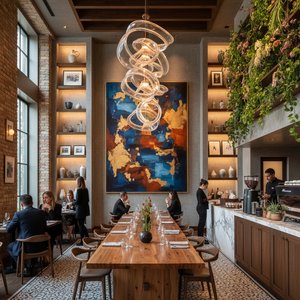
Arredamento Artistico per Ristoranti e Caffè: Creare Atmosfere Uniche con
Trasforma il tuo ristorante o caffè con l'arte di ! Scopri riproduzioni artistiche personalizzate, murales e decorazioni uniche per creare atmosfere indimenticabili. Consulenza gratuita.
Dalla Tela al Tavolo: Il Ruolo Strategico dei Murales nella Definizione dell'Identità Ristorativa e nella Formazione di un’Esperienza Memorabile
Trasforma il tuo ristorante con murales personalizzati! Scopri come l'arte murale definisce l'identità del tuo locale, crea un'esperienza memorabile e fidelizza i clienti. Consulenza esperta e progetti su misura.
