

 Anteprima in scala reale
 Invia
Invia Condividi
 Dettagli opera
 Guida
Guida

 Scarica
 Simili
 Radiografia
 Slideshow
 Statistiche
Duino-Nueve (Orrantia/92)
 Acrilico su tela
- Opere da parete
- Abstract Expressionism
 1992
1992 Galleria d’Arte ArtLAC della Banca Interamericana di Sviluppo
 Espandi i dettagli
L'opera d'arte visualizzata in questa pagina è protetta dalle leggi sul diritto d'autore, il che significa che non possiamo legalmente creare o vendere una riproduzione identica. Tale protezione è garantita da accordi internazionali quali la Convenzione di Berna e dalle leggi nazionali, incluse quelle stabilite da Legge sul copyright degli Stati Uniti - Titolo 17. Tutti i diritti riservati. Le immagini presenti su questo sito sono protette da copyright e non possono essere riprodotte o utilizzate senza l'autorizzazione scritta di WahooArt.com o dei rispettivi proprietari del copyright.
Come alternativa rispettosa e legale, offriamo opere d'arte personalizzate e dipinte a mano, ispirate all'originale. I nostri artisti esperti e professionisti studiano con cura lo stile, l'atmosfera e l'essenza artistica dell'opera originale per creare un pezzo nuovo e unico che evochi la stessa emozione, pur rimanendo una creazione originale a pieno titolo.
Questo metodo è pienamente conforme alle normative sul diritto d'autore poiché non prevede la copia o la duplicazione dell'opera protetta. Si tratta invece di una rielaborazione creativa: un nuovo dipinto che trae ispirazione dall'originale, senza tuttavia esserne identico.
Riproduzione a olio fatta a mano
Olio su tela dipinto a mano nelle tue dimensioni e con la tua cornice, realizzato su ordinazione dai nostri artisti. ( Passa alle stampe Passa all'immagine digitale)




P118B €10

P118H €10

P118W €10

P438Z €10

P508JH €12

P508YH €12

P805H €10

P805Z €10

P919BZ €10

P919G €10

P919XJ €10

P959ZH €10

P968JZ €12

W106C €8

W218G €10

W218JH €8

W218Y €10

W307PJ €10

W316G €10

W316PJ €8

W316Y €10

W398PJ €8

W4111J €10

W500HY €15

W500JH €15

W692G €12

W849H €8

W940BG €15

W953PJ €8




Scegli tra le nostre dimensioni predefinite, che rispettano le proporzioni originali dell'opera d'arte.

Inserisci la larghezza e l'altezza desiderate, per adattarle alla tua cornice o alla tua parete. Trattandosi di un'opera dipinta a mano, in caso di dimensioni con un formato differente, l'artista può estendere leggermente il dipinto oltre i bordi dell'immagine o ritagliare una piccola parte — la scelta spetta a te. Ti invieremo un mockup digitale da approvare prima che la realizzazione abbia inizio. L'immagine mostrata in questa pagina non rappresenta il risultato finale — solo il mockup lo fa.
Dopo l'ordine, il team di OriginalUniqueArt.com contatterà il cliente via e-mail per ricevere le istruzioni e fornirà un'anteprima del mockup
Consegna in tutto il mondo () in 3/4 settimane anziché nelle normali 5 settimane. (28 Ottobre). Nessun compromesso sulla qualità.

Spedizione espressa gratuita in tutto il mondo

Tela in lino di alta qualità

Assicurazione completa sulla spedizione

Garanzia di rimborso dei dazi doganali

Garanzia di fedeltà cromatica assoluta

Politica di reso entro 100 giorni (solo per difetti di fabbricazione)

Garanzia di rimborso al 100%

Offerta per acquisti multipli
 L'opzione vetro è disponibile solo per dimensioni inferiori a 110 cm

Duino-Nueve (Orrantia/92)
Tecnica di riproduzione
Dimensioni riproduzione
-


Prezzo finale calcolato
€ 264
Duino-Nueve (Orrantia/92): A Symphony of Andean Echoes and Modern Boldness
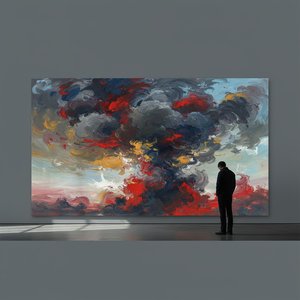
Fernando de Szyszlo’s “Duino-Nueve” stands as an extraordinary testament to the fusion of artistic vision—a masterful embodiment of abstract expressionism tempered by a profound respect for Peru’s ancient heritage. Painted in 1992, this artwork transcends mere visual representation; it's a dialogue between European avant-garde sensibilities and the enduring spirit of Andean cosmology. Szyszlo, recognizing the influence of masters like Rembrandt and Titian, sought to capture not just form but also feeling—a courageous undertaking that cemented his place as one of Latin America’s foremost artists.- Subject Matter: The painting depicts a solitary figure positioned on a precipitous ledge, gazing outwards with unwavering intensity. This posture immediately evokes images of Andean shamanic rituals and the contemplation of vast landscapes—a deliberate juxtaposition designed to resonate with viewers on multiple levels.
- Style & Technique: Szyszlo employed a bold palette dominated by deep blues and blacks, punctuated by flashes of crimson and ochre. The textured surface achieved through thick impasto technique conveys palpable energy and dynamism, mirroring the turbulent forces shaping Andean mountainsides. This textural approach aligns perfectly with the principles of abstract expressionism, prioritizing gesture and emotion over precise depiction.
- Historical Context: Szyszlo’s work emerged during a period of significant artistic experimentation in Latin America—a reaction against academic conventions and an embrace of spontaneous creativity. The influence of Surrealism is evident in the unsettling juxtaposition of elements and the exploration of subconscious imagery, furthering Szyszlo's commitment to pushing boundaries.
- Symbolism: The knife held by the figure serves as a potent symbol – representing both vulnerability and decisive action. Simultaneously, it echoes ancient Andean weaponry used for ceremonial purposes, symbolizing protection and spiritual fortitude. The dark background amplifies these themes, creating an atmosphere of solemn contemplation and confronting existential questions.
- Emotional Impact: “Duino-Nueve” compels the viewer to confront feelings of isolation yet simultaneously inspires awe at the grandeur of nature. Szyszlo’s masterful use of color and texture generates a visceral response—a reminder that art can communicate profound truths beyond words, connecting us to primal forces and fostering introspection.
Further Exploration & Reproduction Recommendations
To appreciate the full depth of Szyszlo's artistic achievement, delve into his broader oeuvre – particularly “Trashumantes” and “Untitled, SZY #1.” These pieces showcase similar stylistic choices and thematic concerns. For those seeking a high-quality reproduction of “Duino-Nueve,” OriginalUniqueArt.com offers exceptional giclee prints crafted with archival inks on premium canvas—preserving the artwork’s vibrancy for generations to come. Consider framing it in a minimalist style to accentuate its dramatic composition and honor Szyszlo's legacy as an innovator of Latin American art.Domande e risposte
Quale artista e quale stile si celano dietro "Duino-Nueve (Orrantia/92)"?
L'opera "Duino-Nueve (Orrantia/92)" è opera di Fernando De Szyszlo e appartiene al movimento Abstract Expressionism.
Quanto è conosciuta "Duino-Nueve (Orrantia/92)" di Fernando De Szyszlo?
Il livello di popolarità registrato per "Duino-Nueve (Orrantia/92)" di Fernando De Szyszlo è Riconosciuto.
Quale emozione e quale stato d'animo trasmette "Duino-Nueve (Orrantia/92)" di Fernando De Szyszlo?
L'atmosfera che traspare da "Duino-Nueve (Orrantia/92)" di Fernando De Szyszlo è Drammatico, e il suo tono emotivo è Drammatico.
Biografia dell'artista
L'Alchimista dell'Astrazione Andina
Fernando de Szyszlo (1925-2017) si erge come una figura monumentale nella storia dell'arte peruviana, riconosciuto per il suo ruolo pionieristico nell'instaurare l'espressionismo astratto in America Latina, onorando al contempo il profondo retaggio della cultura andina. Nato a Lima da una madre peruviana di discendenza ispanico-indigena e un padre polacco, gli anni formativi di Szyszlo gli infondevano un apprezzamento sia per le tradizioni intellettuali europee che per l'eredità indigena—una dualità che avrebbe plasmato profondamente la sua visione artistica. La sua prima formazione presso l'Università Nazionale dell'Ingegneria fu brevemente interrotta da una passione per l'architettura, prima di abbracciare decisamente la Scuola di Arti Plastiche della Pontificia Università Cattolica del Perù, dove affinò le sue capacità e intraprese un viaggio verso una profonda esplorazione artistica.
La traiettoria della carriera di Szyszlo fu irrevocabilmente alterata dai suoi viaggi in Europa alla fine degli anni '40. Immergendosi nelle opere dei Grandi Maestri come Rembrandt, Tiziano e Tintoretto, assorbì una maestria nell'uso della luce drammatica e dell'intensità emotiva che avrebbe successivamente informato il suo approccio unico all'ombra e alla profondità. Il suo periodo a Parigi e Firenze tra il 1948 e il 1955 lo collocò al cuore della vibrante scena d'avanguardia latinoamericana concentrata attorno al Café Flore. Partecipando a vivaci dialoghi con luminari come il poeta surrealista Octavio Paz e André Breton, Szyszlo si confrontò con una tensione centrale e definitoria: come conciliare gli ideali modernisti internazionali con la preservazione di una distinta identità culturale latinoamericana.
Una Sintesi tra Modernità e Mito
Al suo ritorno in Perù, Szyszlo divenne un catalizzatore di rinnovamento artistico, spingendo i confini dell'espressione attraverso forme non rappresentative per soggetti peruviani. Questo rappresentò una rottura audace con le convenzioni stilistiche dell'indigenismo che dominavano l'epoca. La sua opera cercava di reinventare i temi surrealisti in un contesto latinoamericano, concentrandosi meno sul mero artificio artistico e più sui sentimenti profondamente radicati legati al misticismo indigeno. Tessendo immagini precolombiane e motivi incaici nella trama dell'astrazione, egli creò un linguaggio visivo che appariva allo stesso tempo antico e d'avanguardia.
La sua tecnica era caratterizzata da una magistrale manipolazione di texture e luce. Attraverso l'uso di impasti spessi, colori stratificati e una tavolozza spesso smorzata, Szyszlo evocava le superfici erose dei reperti archeologici e il peso atmosferico dei paesaggi andini. I suoi dipinti presentano spesso:
- Tavolozze cromatiche liriche che bilanciano toni terrosi con sfumature improvvise e sorprendenti.
- Forme geometriche che suggeriscono la permanenza strutturale dell'architettura antica.
- Ricchezza materica creata attraverso pesanti stratificazioni per evocare un senso di tempo geologico.
- Forme ambigue che invitano lo spettatore in uno stato di contemplazione e meraviglia surrealista.
Eredità e Significato Storico
L'importanza storica di Fernando de Szyszlo non può essere sopravvalutata; egli fu il ponte tra il passato ancestrale e il futuro moderno. La sua capacità di articolare la modernità attraverso il simbolismo precolombiano generò una profonda rottura con la tradizione, entrando simultaneamente in un dialogo profondo e rispettoso con essa. Non dipingeva semplicemente in modo astratto; cercava di trovare l' "anima" del Perù nel linguaggio dell'astrazione internazionale, assicurandosi che lo spirito indigeno non andasse perduto nella transizione verso il modernismo.
Al di là della tela, Szyszlo fu un umanista e un educatore, servendo come professore d'arte presso la Cornell University e contribuendo significativamente alla vita intellettuale del suo paese. Oggi, la sua eredità è preservata in alcune delle istituzioni più prestigiose al mondo, tra cui il Museum of Modern Art (MoMA) di New York, il Museum of Fine Arts di Houston e il Museo de Arte Contemporaneo Arequipa. Mentre ci avviciniamo al centenario della sua nascita, Szyszlo rimane un soggetto di studio vitale, ricordandoci che la vera innovazione risiede spesso nell'atto coraggioso di ricordare.

Fernando De Szyszlo
1925 - 2017 , Perù
Dettagli rapidi
- Artistic Movement Or Style: Espressionismo Astratto
- Artists Or Movements Influenced By This Artist:
- Cubismo
- Surrealismo
- Informalismo
- Artists Who Influenced This Artist:
- Rembrandt
- Titian
- Tintoretto
- Date Of Birth: Lima, Peru (1925)
- Date Of Death: October 9, 2017
- Full Name: Fernando de Szyszlo Valdelomar
- Nationality: Peruviano
- Notable Artworks:
- Trashumantes
- Untitled, SZY #1
- Camino a Mendieta V
- Place Of Birth: Lima
Articoli correlati

Goya: I 25 Capolavori Immortali dell'Anima Spagnola | OriginalUniqueArt
Esplora i 25 capolavori di Francisco Goya, il genio spagnolo tra Romanticismo e Realismo. Ritratti iconici, 'Los Caprichos' e le toccanti 'Disastri della Guerra'. Trova stampe su tela e riproduzioni artistiche di alta qualità per la tua casa su OriginalUniqueArt.com.
Beyond Representation: Exploring the Emotional Landscape of Abstract Expressionism
Explore the profound emotional world of Abstract Expressionism with OriginalUniqueArt. Discover key artists like Pollock & Rothko, learn about collecting, and find museum-quality reproductions to inspire your space.

Espressionismo Astratto: I 10 Capolavori che Hanno Definito un Movimento Artistico Rivoluzionario
Esplora i 10 capolavori dell'Espressionismo Astratto con ! Scopri Pollock, Rothko e De Kooning: storia, tecnica e significato di opere iconiche per arredare la tua casa con arte di alta qualità. Esplora la collezione online!

Willem de Kooning: Astrazione, Gesto e l'Evoluzione della Pittura Americana del Dopoguerra
Esplora l'evoluzione dell'espressionismo astratto con Willem de Kooning. Analisi approfondita del suo stile, l'influenza italiana e il suo impatto sull'arte moderna. Scopri perché De Kooning è un investimento prezioso per i collezionisti.

Kandinsky: I 25 Capolavori che Hanno Rivoluzionato l'Arte Moderna | OriginalUniqueArt
Esplora i 25 capolavori di Wassily Kandinsky, pioniere dell'arte astratta. Scopri la storia, il significato e le tecniche dietro ogni dipinto iconico. Trova riproduzioni d'arte di alta qualità per decorare la tua casa su OriginalUniqueArt.com.
