- Home

- Stampa su tela
- Fernand Léger
- The Red Bodice
 Ordina la riproduzione Acquista download
 Invia
Invia
 Condividi
 Dettagli opera
 Aggiungi ai preferiti

 Scarica
 Simili
 Radiografia
 Slideshow
The Red Bodice

 Scopri di più
Giclée / Stampa d'arte
Stampa giclée o su tela di qualità museale, con produzione rapida e diverse opzioni di finitura.




P118B $10

P118H $10

P118W $10

P438Z $10

P508JH $12

P508YH $12

P805H $10

P805Z $10

P919BZ $10

P919G $10

P919XJ $10

P959ZH $10

P968JZ $12

W106C $8

W218G $10

W218JH $8

W218Y $10

W307PJ $10

W316G $10

W316PJ $8

W316Y $10

W398PJ $8

W4111J $10

W500HY $15

W500JH $15

W692G $12

W849H $8

W940BG $15

W953PJ $8




Scegli tra le nostre dimensioni predefinite, che rispettano le proporzioni originali dell'opera d'arte.

È possibile inserire dimensioni personalizzate per adattare l'opera a una cornice o a uno spazio specifico. Se la dimensione selezionata non corrisponde alle proporzioni dell'immagine originale, procederemo al ritaglio dell'opera o all'estensione dell'immagine con un bordo specchiato o a tinta unita. Un mockup digitale ti verrà inviato per approvazione prima dell'inizio della produzione.
Si prega di notare che l'anteprima a schermo non riflette il ritaglio o l'estensione effettivi. Solo il mockup mostrerà accuratamente la composizione finale.
Sebbene siano disponibili dimensioni personalizzate, si raccomanda di selezionare una dimensione dall'elenco predefinito per preservare le proporzioni originali.
Consegna in tutto il mondo () in 2 settimane invece delle normali 4/5 settimane. (23 Luglio)

Spedizione espressa gratuita in tutto il mondo

Tela in lino di alta qualità

Assicurazione completa sulla spedizione

Garanzia di rimborso dei dazi doganali

Garanzia di fedeltà cromatica

Politica di reso entro 60 giorni (solo per difetti)

Garanzia di rimborso al 100%

Sconto per acquisti multipli
 L'opzione vetro è disponibile solo per dimensioni inferiori a 110 cm

The Red Bodice
Giclée / Stampa d'arte
Dimensioni riproduzione
-


Prezzo totale finale
-
Descrizione dell'opera
The Red Bodice: A Bold Vision of Modernity
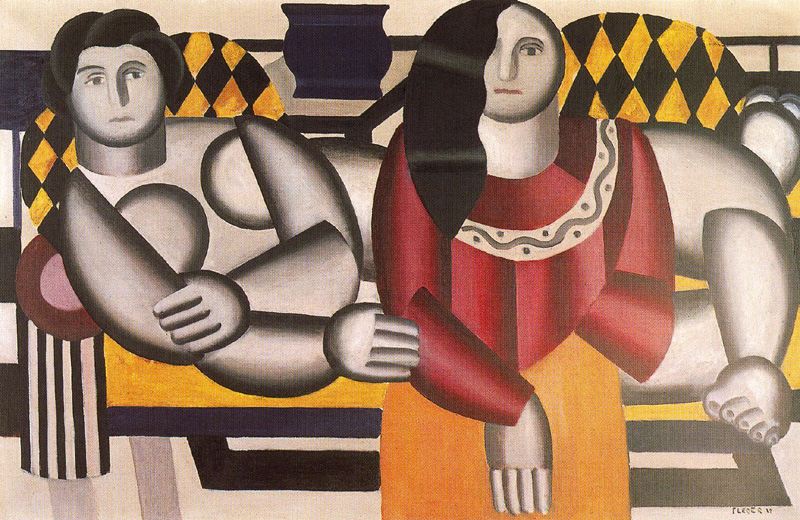
Fernand Léger’s “The Red Bodice,” painted around 1925, isn't merely a depiction of two women seated on a bench; it’s a manifesto of Tubism—Léger’s groundbreaking artistic movement that sought to distill the essence of industrial civilization into geometric abstraction. This striking canvas captures a moment frozen in time, reflecting Léger’s fascination with the dynamism and rhythmic repetition characteristic of machines and urban life. The painting immediately draws the eye to the vibrant red bodice worn by one woman, a bold assertion of color against the muted yellows and blacks of her dress—a deliberate choice mirroring the assertive hues found within the burgeoning industrial landscape.A Synthesis of Form and Feeling
Léger’s Tubism represents a radical departure from Impressionism and Cubism, prioritizing simplified geometric shapes – circles, squares, triangles – over realistic representation. He meticulously analyzed the patterns of machinery, translating these forms into visual language that conveyed movement and energy without resorting to traditional perspective. The artist's technique involved applying thick impasto—heavy layers of paint—to create textured surfaces that echoed the physicality of industrial materials like steel and concrete. This tactile approach wasn’t simply stylistic; it was a conscious effort to engage the viewer’s senses and evoke an emotional response akin to experiencing the rhythm of the machine age. Léger believed art should communicate ideas, not just imitate appearances.Historical Context: Embracing the Machine Age
“The Red Bodice” emerged during a period of significant societal transformation—the interwar years following World War I—marked by rapid industrial expansion and urbanization. Léger’s artistic vision mirrored this cultural shift, reflecting anxieties about modernity alongside an optimism regarding technological progress. He was deeply influenced by Futurism, another avant-garde movement that championed speed, dynamism, and the glorification of machines. However, Léger distinguished Tubism from Futurism's frenetic energy, arguing for a more contemplative engagement with the machine age—a recognition of its underlying order and beauty alongside its potential dangers.Symbolic Resonance: Beyond Representation
While eschewing literal depiction, Léger imbued “The Red Bodice” with symbolic significance. The red bodice itself can be interpreted as representing passion, vitality, and perhaps even a defiant assertion against societal constraints—themes prevalent in Léger’s broader artistic oeuvre. Furthermore, the positioning of the figures on the bench suggests a deliberate consideration of space and composition, mirroring the structured patterns found within industrial environments. Léger's aim wasn’t to tell a story but to convey an emotion or idea – a feeling of movement and rhythm that encapsulates the spirit of his time.Emotional Impact: A Quiet Celebration
Despite its abstract style, “The Red Bodice” possesses a palpable emotional resonance. The careful balance between color and form creates a sense of calm contemplation amidst the perceived chaos of modern life. Léger’s masterful use of texture invites viewers to engage with the painting on a visceral level—to feel the solidity of the shapes and experience the subtle variations in tone. Ultimately, this artwork serves as a testament to Léger's belief that art could transcend mere visual pleasure and communicate profound truths about human existence within the context of an evolving world.Biografia dell'artista
vitae e formazione
Fernand Léger, pittore, scultore e filmmaker francese, nacque il 4 febbraio 1881 ad Argentan, Orne, nella bassa Normandia. Suo padre allevava bovini e Léger iniziò la sua formazione come architetto nel 1897-1899. Successivamente si trasferì a Parigi nel 1900, sostenendosi con il lavoro di disegnatore architettonico.sviluppo artistico
Le prime opere di Léger furono influenzate dall'impressionismo, come visto in Le jardin de ma mère (Il giardino di mia madre) (1905). Dopo aver frequentato la scuola d'arte decorativa e l'Académie Julian, iniziò a lavorare seriamente come pittore a 25 anni. Il suo stile si evolse in una forma personale di cubismo, che i critici definirono "tubismo" per la sua enfasi su forme cilindriche.Cubismo e il gruppo dei Puteaux
Nel 1910, Léger espose al Salon d'automne insieme a Jean Metzinger e Henri Le Fauconnier. Entrò nel gruppo dei Puteaux, noto anche come la sezione d'or (la sezione aurea), insieme ad altri artisti come Francis Picabia e Marcel Duchamp.Guerra e la sua influenza sull'opera di Léger
Le esperienze di Léger nella Prima Guerra Mondiale ebbero un impatto significativo sulla sua opera. Durante il suo tempo al fronte, produsse schizzi di pezzi d'artiglieria, aerei e soldati. Il suo dipinto Soldier with a Pipe (1916) riflette questo periodo.Lavoro successivo e eredità
Il lavoro post-bellico di Léger, caratterizzato da forme meccaniche lisce, lo legò alla tradizione della pittura figurativa francese. I suoi paesaggi animati del 1921 mostrarono figure e animali in forme armoniose e razionalizzate.- visualizza le opere di Fernand Léger su OriginalUniqueArt
- altro sul Fernand Léger su Wikipedia
- scopri il Musée National Fernand Légère (Francia) con OriginalUniqueArt
- La donna seduta (100 x 81 cm, tubismo)
- Elemento macchina (cubismo)

Fernand Léger
1881 - 1955 , Francia
Dati rapidi
- Artisti Influenti:
- Cézanne
- Impressionismo
- Artisti Influenzati: ['Pop Art']
- Data Di Nascita: 4 febbraio 1881
- Luogo Di Nascita: Argentan, Francia
- Movimento Artistico: Cubismo, Tubismo
- Nazionalità: Francese
- Nome Completo: Fernand Léger
- Opere Notevoli:
- La Grande Parata
- L'Elemento Macchina
- Donna Seduta
- The City
Articoli correlati
The Dawn of a New Vision: Exploring Early Modernism's Enduring Legacy in Art
Explore the revolutionary world of Early Modernism! Discover key artists like Picasso & Léger, pivotal movements, and lasting philosophical influences. Uncover the seeds of change that shaped 20th-century art.
Cubismo: I 10 Capolavori che Hanno Rivoluzionato l'Arte Moderna |
Esplora i 10 capolavori del Cubismo con ! Scopri Picasso, Braque e Gris e la rivoluzione dell'arte moderna. Quadri iconici, storie affascinanti e riproduzioni di alta qualità per decorare la tua casa. Esplora la collezione online!
Fernand Léger: I 25 Capolavori che Hanno Definito l'Arte Moderna | OriginalUniqueArt
Esplora i 25 capolavori di Fernand Léger, pioniere del cubismo e del tubismo. Scopri la storia, le tecniche e l'impatto dell'arte moderna francese. Stampe d'arte e riproduzioni su OriginalUniqueArt.com.
Orphism: A Symphony of Color and Form – Exploring the Abstract Roots of Modern Art
Explore Orphism, the vibrant abstract art movement pioneered by Robert & Sonia Delaunay. Discover its unique color theory, lasting influence on modern art, and how to bring this 'symphony of color' into your home with OriginalUniqueArt.
Cubismo Espressivo: 10 Capolavori che Hanno Definito un Movimento Artistico Rivoluzionario
Esplora i 10 capolavori del Cubismo Espressivo con OriginalUniqueArt.com! Scopri Picasso, Braque e Gris, la storia di questo rivoluzionario movimento artistico e lasciati ispirare per decorare casa con arte di alta qualità. Esplora la collezione online!