- Home

- Riproduzione di dipinto a olio
- Fernand Léger
- The Lunch

 Acquista stampa Acquista download
 Invia
Invia
 Condividi
 Dettagli opera
 Aggiungi ai preferiti

 Scarica
 Simili
 Radiografia
 Slideshow
The Lunch

 Scopri di più
Riproduzione a olio fatta a mano
Olio su tela dipinto a mano nelle tue dimensioni e con la tua cornice, realizzato su ordinazione dai nostri artisti.




P118B $10

P118H $10

P118W $10

P438Z $10

P508JH $12

P508YH $12

P805H $10

P805Z $10

P919BZ $10

P919G $10

P919XJ $10

P959ZH $10

P968JZ $12

W106C $8

W218G $10

W218JH $8

W218Y $10

W307PJ $10

W316G $10

W316PJ $8

W316Y $10

W398PJ $8

W4111J $10

W500HY $15

W500JH $15

W692G $12

W849H $8

W940BG $15

W953PJ $8




Scegli tra le nostre dimensioni predefinite, che rispettano le proporzioni originali dell'opera d'arte.

È possibile inserire dimensioni personalizzate per adattare l'opera a una cornice o a uno spazio specifico. Se la dimensione selezionata non corrisponde alle proporzioni dell'immagine originale, provvederemo a ritagliare l'opera o a estendere il dipinto con elementi aggiuntivi dipinti a mano. Un mockup digitale ti sarà inviato per approvazione prima dell'inizio della produzione.
Si prega di notare che l'anteprima a schermo non riflette il ritaglio o l'estensione effettivi. Solo il mockup mostrerà accuratamente la composizione finale.
Sebbene siano disponibili dimensioni personalizzate, consigliamo di selezionare una dimensione dall'elenco predefinito per preservare le proporzioni originali.
Dopo l'ordine, il team di OriginalUniqueArt.com invierà un'e-mail al cliente per le istruzioni e fornirà un'anteprima del mockup
Consegna in tutto il mondo () in 3/4 settimane anziché nelle normali 5 settimane. (20 Luglio). Nessun compromesso sulla qualità.

Spedizione espressa gratuita in tutto il mondo

Tela in lino di alta qualità

Assicurazione completa sulla spedizione

Garanzia di rimborso dei dazi doganali

Garanzia di fedeltà cromatica

Politica di reso entro 60 giorni (solo per difetti)

Garanzia di rimborso al 100%

Sconto per acquisti multipli
 L'opzione vetro è disponibile solo per dimensioni inferiori a 110 cm

The Lunch
Tecnica di riproduzione
Dimensioni riproduzione
-


Prezzo totale finale
-
Descrizione dell'opera
A Symphony of Form and Feeling: Exploring Fernand Léger’s “The Lunch”
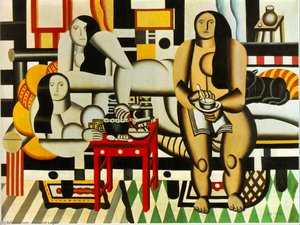
Fernand Léger's "The Lunch" isn't merely a depiction of a midday meal; it’s a bold declaration of artistic intent—a masterful synthesis of abstraction and observation that encapsulates the anxieties and aspirations of the early 20th century. Painted in 1916, during the tumultuous years of World War I, this artwork transcends its immediate subject matter to become a profound meditation on humanity's relationship with technology and the shifting contours of modern life. Léger, deeply influenced by Cubism’s fragmentation of perspective and Picasso’s exploration of geometric shapes, sought to liberate painting from representational constraints—to convey not what *is* seen but what *feels* like seeing it.The Style and Technique: Geometric Precision Meets Organic Rhythm
At first glance, “The Lunch” appears strikingly austere – dominated by a palette of muted reds, yellows, and blues punctuated by stark white accents. However, beneath this deceptively simple surface lies an intricate network of geometric forms—circles, squares, triangles—that relentlessly dissect the scene into its constituent parts. Léger meticulously renders these shapes with precise lines and planes, mirroring the mechanized precision of the industrial landscape that surrounded him. Yet, despite this rigid formalism, the painting pulsates with a subtle organic rhythm. The woman’s posture, the positioning of the baby, and even the scattered objects on the table contribute to an illusion of movement—a suggestion that these forms are not merely static representations but active participants in the unfolding drama of existence. Léger achieved this effect through layering techniques—applying thin washes of color over thicker undercoats—creating a textured surface that enhances the visual impact without sacrificing geometric clarity.Historical Context: War, Progress, and the Search for Meaning
The painting’s creation coincided with the height of the First World War, a period marked by unprecedented devastation and disillusionment. Léger's artistic response to this crisis wasn’t one of despair but rather of defiant optimism—a conviction that art could offer solace and inspiration amidst the horrors of conflict. He viewed technology not as an instrument of destruction but as a catalyst for transformation—a force capable of reshaping human consciousness and liberating us from the limitations of traditional thought. “The Lunch” embodies this worldview by presenting a simplified, idealized vision of domestic life—a refuge from the chaos of war—while simultaneously confronting viewers with the unsettling implications of industrialization. Léger’s intention was to provoke contemplation about humanity's place in the evolving cosmos.Symbolism: Representing Humanity Amidst Mechanical Forms
The woman and child at the center of “The Lunch” serve as potent symbols of femininity, nurturing, and continuity—representing the enduring values of family and tradition amidst the encroaching dominance of machinery. Léger deliberately contrasts these organic forms with the geometric shapes that surround them—creating a visual dialogue between nature and technology. The scattered objects on the table—the bowl, vase, apple, banana—further amplify this symbolic tension, suggesting that even seemingly mundane elements can hold profound significance. They represent the fragments of everyday life—the building blocks of human experience—that Léger sought to capture in his abstract style.Emotional Impact: A Quiet Assertion of Artistic Vision
Despite its formal rigor, “The Lunch” possesses a remarkable emotional resonance. The painting’s muted colors convey a sense of melancholy and introspection—reflecting the anxieties of wartime but also hinting at an underlying yearning for beauty and harmony. Léger's masterful use of perspective and layering creates a captivating visual experience that draws viewers into the scene—inviting them to contemplate its complexities and appreciate its artistic achievement. Ultimately, “The Lunch” stands as a testament to Léger’s unwavering belief in the transformative power of art—a quiet assertion of vision amidst the clamor of history.Biografia dell'artista
vitae e formazione
Fernand Léger, pittore, scultore e filmmaker francese, nacque il 4 febbraio 1881 ad Argentan, Orne, nella bassa Normandia. Suo padre allevava bovini e Léger iniziò la sua formazione come architetto nel 1897-1899. Successivamente si trasferì a Parigi nel 1900, sostenendosi con il lavoro di disegnatore architettonico.sviluppo artistico
Le prime opere di Léger furono influenzate dall'impressionismo, come visto in Le jardin de ma mère (Il giardino di mia madre) (1905). Dopo aver frequentato la scuola d'arte decorativa e l'Académie Julian, iniziò a lavorare seriamente come pittore a 25 anni. Il suo stile si evolse in una forma personale di cubismo, che i critici definirono "tubismo" per la sua enfasi su forme cilindriche.Cubismo e il gruppo dei Puteaux
Nel 1910, Léger espose al Salon d'automne insieme a Jean Metzinger e Henri Le Fauconnier. Entrò nel gruppo dei Puteaux, noto anche come la sezione d'or (la sezione aurea), insieme ad altri artisti come Francis Picabia e Marcel Duchamp.Guerra e la sua influenza sull'opera di Léger
Le esperienze di Léger nella Prima Guerra Mondiale ebbero un impatto significativo sulla sua opera. Durante il suo tempo al fronte, produsse schizzi di pezzi d'artiglieria, aerei e soldati. Il suo dipinto Soldier with a Pipe (1916) riflette questo periodo.Lavoro successivo e eredità
Il lavoro post-bellico di Léger, caratterizzato da forme meccaniche lisce, lo legò alla tradizione della pittura figurativa francese. I suoi paesaggi animati del 1921 mostrarono figure e animali in forme armoniose e razionalizzate.- visualizza le opere di Fernand Léger su OriginalUniqueArt
- altro sul Fernand Léger su Wikipedia
- scopri il Musée National Fernand Légère (Francia) con OriginalUniqueArt
- La donna seduta (100 x 81 cm, tubismo)
- Elemento macchina (cubismo)

Fernand Léger
1881 - 1955 , Francia
Dati rapidi
- Artisti Influenti:
- Cézanne
- Impressionismo
- Artisti Influenzati: ['Pop Art']
- Data Di Nascita: 4 febbraio 1881
- Luogo Di Nascita: Argentan, Francia
- Movimento Artistico: Cubismo, Tubismo
- Nazionalità: Francese
- Nome Completo: Fernand Léger
- Opere Notevoli:
- La Grande Parata
- L'Elemento Macchina
- Donna Seduta
- The City
Articoli correlati

Willem de Kooning: Astrazione, Gesto e l'Evoluzione della Pittura Americana del Dopoguerra
Esplora l'evoluzione dell'espressionismo astratto con Willem de Kooning. Analisi approfondita del suo stile, l'influenza italiana e il suo impatto sull'arte moderna. Scopri perché De Kooning è un investimento prezioso per i collezionisti.
Oltre la Rappresentazione: Esplorando Gestualità, Emozione e Fondamenti Filosofici della Pittura Astratta Contemporanea
Esplora il mondo della pittura astratta contemporanea con OriginalUniqueArt. Analisi approfondite, artisti chiave e consigli per collezionisti esigenti. Scopri l'arte che emoziona!
The Dawn of a New Vision: Exploring Early Modernism's Enduring Legacy in Art
Explore the revolutionary world of Early Modernism! Discover key artists like Picasso & Léger, pivotal movements, and lasting philosophical influences. Uncover the seeds of change that shaped 20th-century art.
Cubismo: I 10 Capolavori che Hanno Rivoluzionato l'Arte Moderna |
Esplora i 10 capolavori del Cubismo con ! Scopri Picasso, Braque e Gris e la rivoluzione dell'arte moderna. Quadri iconici, storie affascinanti e riproduzioni di alta qualità per decorare la tua casa. Esplora la collezione online!
I 10 Capolavori Acrilico su Tela che Hanno Rivoluzionato l'Arte |
Esplora i 10 capolavori acrilico su tela che hanno rivoluzionato l'arte moderna! Scopri le storie di Pollock, Rothko e altri maestri. Stampe artistiche di alta qualità per arredare con stile. Visita