- Home

- Riproduzione di dipinto a olio
- Fernand Léger
- L'acrobata e il suo partner
 Acquista stampa Acquista download
 Invia
Invia
 Condividi
 Dettagli opera
 Aggiungi ai preferiti

 Scarica
 Simili
 Radiografia
 Slideshow
L'acrobata e il suo partner


 Scopri di più
Riproduzione a olio fatta a mano
Olio su tela dipinto a mano nelle tue dimensioni e con la tua cornice, realizzato su ordinazione dai nostri artisti.




P118B $10

P118H $10

P118W $10

P438Z $10

P508JH $12

P508YH $12

P805H $10

P805Z $10

P919BZ $10

P919G $10

P919XJ $10

P959ZH $10

P968JZ $12

W106C $8

W218G $10

W218JH $8

W218Y $10

W307PJ $10

W316G $10

W316PJ $8

W316Y $10

W398PJ $8

W4111J $10

W500HY $15

W500JH $15

W692G $12

W849H $8

W940BG $15

W953PJ $8




Scegli tra le nostre dimensioni predefinite, che rispettano le proporzioni originali dell'opera d'arte.

È possibile inserire dimensioni personalizzate per adattare l'opera a una cornice o a uno spazio specifico. Se la dimensione selezionata non corrisponde alle proporzioni dell'immagine originale, provvederemo a ritagliare l'opera o a estendere il dipinto con elementi aggiuntivi dipinti a mano. Un mockup digitale ti sarà inviato per approvazione prima dell'inizio della produzione.
Si prega di notare che l'anteprima a schermo non riflette il ritaglio o l'estensione effettivi. Solo il mockup mostrerà accuratamente la composizione finale.
Sebbene siano disponibili dimensioni personalizzate, consigliamo di selezionare una dimensione dall'elenco predefinito per preservare le proporzioni originali.
Dopo l'ordine, il team di OriginalUniqueArt.com invierà un'e-mail al cliente per le istruzioni e fornirà un'anteprima del mockup
Consegna in tutto il mondo () in 3/4 settimane anziché nelle normali 5 settimane. (23 Luglio). Nessun compromesso sulla qualità.

Spedizione espressa gratuita in tutto il mondo

Tela in lino di alta qualità

Assicurazione completa sulla spedizione

Garanzia di rimborso dei dazi doganali

Garanzia di fedeltà cromatica

Politica di reso entro 60 giorni (solo per difetti)

Garanzia di rimborso al 100%

Sconto per acquisti multipli
 L'opzione vetro è disponibile solo per dimensioni inferiori a 110 cm

L'acrobata e il suo partner
Tecnica di riproduzione
Dimensioni riproduzione
-


Prezzo totale finale
-
Descrizione dell'opera
Fernand Léger’s “The Acrobat and His Partner”: A Celebration of Form and Movement
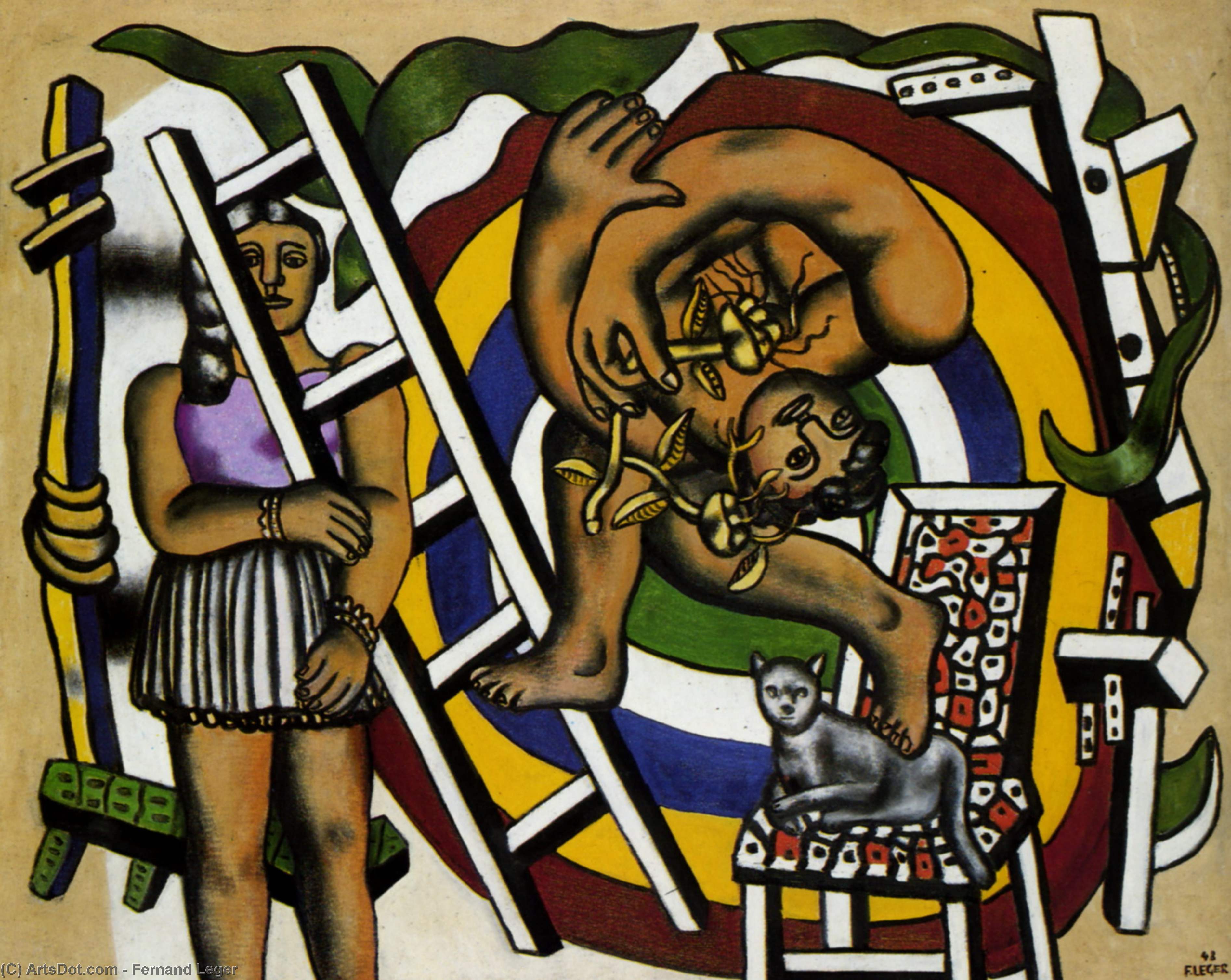
“The Acrobat and his Partner,” painted in 1948, transcends mere representation; it embodies Fernand Léger's singular artistic vision—a daring fusion of Cubism’s fragmented geometry with a palpable dynamism inspired by the burgeoning industrial landscape. This artwork isn’t simply an image captured on canvas; it’s a deliberate provocation, urging viewers to contemplate balance, collaboration, and perhaps even the very process of creative endeavor within a stylized theatrical realm. Léger's intention wasn’t to mirror reality but rather to distill its essence into a powerfully expressive form.Subject & Narrative: Beyond the Circus Ring
At first glance, the composition presents two figures—an acrobat meticulously holding a paintbrush – a striking juxtaposition highlighting the convergence of physical prowess and artistic creation – and his companion, poised with an outstretched arm. They inhabit a simplified architectural backdrop featuring a tower and building, punctuated by the unexpected presence of a cat. This isn’t a literal depiction of a circus act; rather, Léger employs symbolism to explore concepts of equilibrium and partnership. The acrobats' gestures suggest movement and action, mirroring the rhythm of industrial progress—a theme central to Léger’s artistic preoccupations during this period. Consider the cat – often interpreted as representing cunning or intuition – adding another layer of intrigue to the scene’s narrative potential.Style & Technique: Tubism Revisited
Léger's groundbreaking “Tubism,” a derivative of Cubism, dominates the artwork’s visual language. The figures are dissected into cylindrical forms and flattened planes, rejecting traditional perspective in favor of bold brushstrokes that emphasize surface texture. This technique deliberately minimizes detail, prioritizing impactful color combinations and geometric shapes—a stylistic hallmark of Léger's oeuvre. The flattened canvas contributes to a sense of immediacy, inviting contemplation of the artwork’s formal elements rather than immersing the viewer in illusionistic depth. It’s as if Léger wished to capture not just what he saw but also *how* it felt – a characteristic found throughout his celebrated paintings.Color & Composition: A Symphony of Contrasts
The palette explodes with vibrant hues—pink, green, yellow, blue, and brown—deployed strategically for both emotional resonance and compositional harmony. Léger eschews naturalistic coloration, opting instead for bold contrasts between warm and cool tones to generate visual tension and guide the eye across the canvas. These colors aren’t merely decorative; they convey mood and intention, mirroring the energy of the industrial age. The diagonal lines created by architectural elements and the acrobats' postures reinforce this dynamism, creating a sense of movement that elevates the artwork beyond static representation.Historical Context & Legacy: Embracing Modernity
Painted in 1948, “The Acrobat and His Partner” reflects Léger’s unwavering commitment to portraying the transformative influence of technology on human experience. Influenced by his involvement with the Communist Party and his fascination with urban life—particularly the dynamism of billboards and industrial factories—Léger sought to capture the spirit of a new era. This artwork stands as a pivotal moment in the evolution of modern art, foreshadowing developments in Pop Art and cementing Léger’s reputation as a visionary artist who dared to reimagine artistic expression within the context of the 20th century. Its enduring appeal lies in its ability to communicate complex ideas through deceptively simple forms—a testament to Léger's genius.Biografia dell'artista
vitae e formazione
Fernand Léger, pittore, scultore e filmmaker francese, nacque il 4 febbraio 1881 ad Argentan, Orne, nella bassa Normandia. Suo padre allevava bovini e Léger iniziò la sua formazione come architetto nel 1897-1899. Successivamente si trasferì a Parigi nel 1900, sostenendosi con il lavoro di disegnatore architettonico.sviluppo artistico
Le prime opere di Léger furono influenzate dall'impressionismo, come visto in Le jardin de ma mère (Il giardino di mia madre) (1905). Dopo aver frequentato la scuola d'arte decorativa e l'Académie Julian, iniziò a lavorare seriamente come pittore a 25 anni. Il suo stile si evolse in una forma personale di cubismo, che i critici definirono "tubismo" per la sua enfasi su forme cilindriche.Cubismo e il gruppo dei Puteaux
Nel 1910, Léger espose al Salon d'automne insieme a Jean Metzinger e Henri Le Fauconnier. Entrò nel gruppo dei Puteaux, noto anche come la sezione d'or (la sezione aurea), insieme ad altri artisti come Francis Picabia e Marcel Duchamp.Guerra e la sua influenza sull'opera di Léger
Le esperienze di Léger nella Prima Guerra Mondiale ebbero un impatto significativo sulla sua opera. Durante il suo tempo al fronte, produsse schizzi di pezzi d'artiglieria, aerei e soldati. Il suo dipinto Soldier with a Pipe (1916) riflette questo periodo.Lavoro successivo e eredità
Il lavoro post-bellico di Léger, caratterizzato da forme meccaniche lisce, lo legò alla tradizione della pittura figurativa francese. I suoi paesaggi animati del 1921 mostrarono figure e animali in forme armoniose e razionalizzate.- visualizza le opere di Fernand Léger su OriginalUniqueArt
- altro sul Fernand Léger su Wikipedia
- scopri il Musée National Fernand Légère (Francia) con OriginalUniqueArt
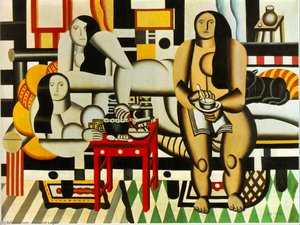
- La donna seduta (100 x 81 cm, tubismo)
- Elemento macchina (cubismo)

Fernand Léger
1881 - 1955 , Francia
Dati rapidi
- Artisti Influenti:
- Cézanne
- Impressionismo
- Artisti Influenzati: ['Pop Art']
- Data Di Nascita: 4 febbraio 1881
- Luogo Di Nascita: Argentan, Francia
- Movimento Artistico: Cubismo, Tubismo
- Nazionalità: Francese
- Nome Completo: Fernand Léger
- Opere Notevoli:
- La Grande Parata
- L'Elemento Macchina
- Donna Seduta
- The City
Articoli correlati
Fernand Léger: I 25 Capolavori che Hanno Definito l'Arte Moderna | OriginalUniqueArt
Esplora i 25 capolavori di Fernand Léger, pioniere del cubismo e del tubismo. Scopri la storia, le tecniche e l'impatto dell'arte moderna francese. Stampe d'arte e riproduzioni su OriginalUniqueArt.com.

Kandinsky: I 25 Capolavori che Hanno Rivoluzionato l'Arte Moderna | OriginalUniqueArt
Esplora i 25 capolavori di Wassily Kandinsky, pioniere dell'arte astratta. Scopri la storia, il significato e le tecniche dietro ogni dipinto iconico. Trova riproduzioni d'arte di alta qualità per decorare la tua casa su OriginalUniqueArt.com.

I 25 Capolavori del MoMA di New York: Arte Moderna per la Tua Casa
Esplora i 25 capolavori del MoMA di New York: Van Gogh, Picasso, Warhol e altri maestri. Scopri la storia, le tecniche e l'emozione dietro ogni opera d'arte. Trova riproduzioni di alta qualità per decorare casa tua su OriginalUniqueArt.com!

Georges Braque: I 25 Capolavori che Hanno Rivoluzionato l'Arte Moderna | OriginalUniqueArt
Esplora i 25 capolavori di Georges Braque, pioniere del Cubismo. Scopri la storia, le tecniche e l'impatto di opere iconiche come 'The Patience'. Trova riproduzioni d'arte di alta qualità per decorare casa tua su OriginalUniqueArt.com.
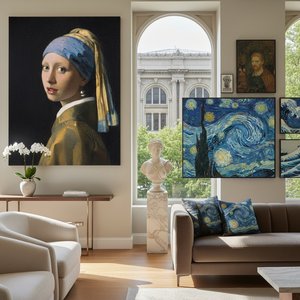
I 25 Capolavori del Metropolitan Museum di New York: Arte, Storia e Decorazioni Raffinate
Esplora i 25 capolavori del Metropolitan Museum di New York! Scopri la storia, gli artisti (Van Gogh, Monet, Rembrandt) e le emozioni dietro dipinti iconici. Trova riproduzioni artistiche di alta qualità per decorare casa con stile su OriginalUniqueArt.com.