 Espandi i dettagli


 Per opere d'arte o riproduzioni con un lato superiore a 105 cm (circa 41 pollici), la cornice verrà spedita in forma di kit smontato. Questo metodo garantisce una consegna sicura e previene danni durante il trasporto.


Maggiori informazioni su questo dipinto
Dimensione testo
() ·
Un dipinto creato per te, a mano
Riproduzione a olio fatta a mano
Olio su tela dipinto a mano nelle tue dimensioni e con la tua cornice, realizzato su ordinazione dai nostri artisti. ( Passa alle stampe Passa all'immagine digitale)
Descrizione del reperto
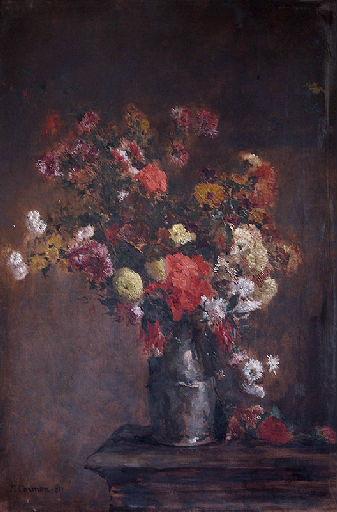
Oil still life by Fernand Cormon featuring a vibrant floral arrangement in silver. Realism meets impressionism – explore this textured, contemplative artwork.
Biografia dell'artista
Il pittore francese Fernand Cormon (1845-1924) eccelleva in scene storiche e ritratti. Scopri le sue opere tra mito, storia e dramma.
da ·
Capitolo 1
Di che dimensioni dovrebbe essere?
Scorri per cambiare la dimensione; l'immagine a sinistra mostra la cornice nella sua larghezza reale. Le proporzioni dell'originale vengono mantenute.
Formato standard
su misura
CM
INCH
Scegli tra le nostre dimensioni predefinite, che rispettano le proporzioni originali dell'opera d'arte.
Caricamento dimensioni...

larghezza
altezza
Inserisci la larghezza e l'altezza desiderate, per adattarle alla tua cornice o alla tua parete. Trattandosi di un'opera dipinta a mano, in caso di dimensioni con un formato differente, l'artista può estendere leggermente il dipinto oltre i bordi dell'immagine o ritagliare una piccola parte — la scelta spetta a te. Ti invieremo un mockup digitale da approvare prima che la realizzazione abbia inizio. L'immagine mostrata in questa pagina non rappresenta il risultato finale — solo il mockup lo fa.
Capitolo 2
Come desideri che venga consegnato?
Scegli il tipo di bordo per la tela tesa
Scegli la tua cornice

Bianco €1

Bordi sfumati €1

Bordi estesi €1

P118B €10

P118H €10

P118W €10

P438Z €10

P508JH €12

P508YH €12

P805H €10

P805Z €10

P919BZ €10

P919G €10

P919XJ €10

P959ZH €10

P968JZ €12

W106C €8

W218G €10

W218JH €8

W218Y €10

W307PJ €10

W316G €10

W316PJ €8

W316Y €10

W398PJ €8

W4111J €10

W500HY €15

W500JH €15

W692G €12

W849H €8

W940BG €15

W953PJ €8

H24-GOLD €30

H24-SILVER €30

H36-GOLD €45

H36-SILVER €45
Con cornice
Cornice: . Dimensioni complessive con cornice: .
Capitolo 3
Chi lo dipinge, e dovrebbe cambiare qualcosa?
Esempi di ciò che può essere modificato: Sostituire il volto con la foto del cliente; Aggiungere un animale domestico (ad es. sostituire il gatto con un cane); Inserire un messaggio nascosto nello sfondo; Cambiare il paesaggio o gli elementi dello sfondo.
Dopo l'ordine, il team di OriginalUniqueArt.com invierà un'e-mail al cliente per le istruzioni e fornirà un'anteprima del mockup
Dopo l'ordine, il team di OriginalUniqueArt.com invierà un'e-mail al cliente per le istruzioni e fornirà un'anteprima del mockup
Consegna in tutto il mondo () in 3/4 settimane anziché nelle normali 5 settimane. (15 Novembre). Nessun compromesso sulla qualità.
Capitolo 4
Le ultime rifiniture
Una targhetta, come quella di un museo?
Dettagli della targhetta in bronzo inciso
This elegant plaque features the artist's name and the title of the artwork, finely engraved for a timeless presentation.
It is made from bronze with a refined, elegant finish. The text is precisely laser-engraved for a sharp and permanent result. Measuring 9x2 cm, the plaque is compact yet easy to read. It's built to be durable and scratch-resistant, offering a professional, museum-quality look. Mounting is simple thanks to the included adhesive backing.
Dettagli della targhetta in acrilico trasparente
The plaque includes essential engraved details such as the artist's name, the title of the artwork, the date it was created, the type of media used-like oil on canvas or watercolor-a brief description of the piece, and a QR code that links to the complete artwork information.
It is crafted from clear acrylic, offering a sleek, modern appearance. The text is UV-engraved in black to ensure strong visual contrast. With a size of 10x15 cm, it ensures optimal readability. It comes equipped with two metal hooks for secure wall mounting. The plaque is designed to be weather-resistant, making it suitable for various environments, and it includes interactive features that work seamlessly with smartphone scanning.
Dettagli della targhetta in acrilico nero
This elegant plaque includes engraved information such as the artist's name, the title of the artwork, the date it was created, the type of media used (like oil on canvas or watercolor), a short description of the artwork, and a QR code for quick access to more information.
The plaque itself is made from refined black acrylic with a premium finish. The text is laser-engraved in white for high contrast and readability. Its size is 10x15 cm, designed to be easy to read. It comes with two metal hooks for professional mounting. The design is sleek and fits any interior style. It is also weather-resistant and durable, with built-in digital integration for mobile compatibility.
Una vernice protettiva?
Quando ti serve?
Capitolo 5
Il tuo dipinto, esattamente come lo hai ordinato
Fleurs
Tecnica di riproduzione
Dimensioni riproduzione
-
Artisti di alto livello
Maggiore dettaglio, finezza e tempi di produzione dedicati
-
Cornice per riproduzione
-
-
Per opere d'arte o riproduzioni con un lato superiore a 105 cm (circa 41 pollici), la cornice verrà spedita in forma di kit smontato. Questo metodo garantisce una consegna sicura e previene danni durante il trasporto.
Montaggio professionale richiesto - non è un prodotto fai-da-te.
Il kit deve essere assemblato e la tela tesa da un esperto cornice professionista, utilizzando colla per legno (non inclusa), una pinza per tendere la tela e morsetti per mantenere i listelli in squadra durante l'asciugatura della colla. Un montaggio errato o una tensione non uniforme della tela possono danneggiare permanentemente l'opera d'arte e non sono coperti dalla nostra garanzia.
Tutte le barre in legno massello sono incluse, tagliate con precisione alle dimensioni corrette.
Da assemblare con le viti fornite e con la colla per legno per gli incastri degli angoli, che non è inclusa e dovrà essere reperita dal vostro corniceio.
Sono necessari strumenti professionali non inclusi: una pinza tendicanvas (tenditore) e dei morsetti per mantenere i listelli in squadra durante l'asciugatura della colla.
Importante:
Gli incastri d'angolo richiedono colla per legno, i listelli devono essere mantenuti in posizione con dei morsetti finché la colla non è completamente asciutta, e il tensionamento della tela sulla cornice assemblata richiede una pinza per tendere la tela. Nessuno di questi strumenti è incluso nel kit. Si prega di consultare un incorniciatore professionista esperto prima di ordinare questa misura.
Didascalia
-
-
Vernice protettiva
Vernice lucida (esalta i colori, protegge da luce e umidità)
-
Personalizza la mia opera
Esempi di personalizzazione: sostituire il volto con una foto del cliente; aggiungere un animale domestico (ad esempio, sostituire un gatto con un cane); inserire un messaggio nascosto nello sfondo; cambiare il paesaggio o gli elementi dello sfondo.
-
Consegna rapida
Consegna in tutto il mondo () in 3/4 settimane anziché nelle normali 5 settimane. (15 Novembre). Nessun compromesso sulla qualità.
-
Spedizione espressa
Spedizione in tutto il mondo () in 5 settimane. (22 Novembre).
Spedizione inclusa
Prezzo finale calcolato
€ 267
L'opzione vetro è disponibile solo per dimensioni inferiori a 110 cm
Incluso in ogni ordine
- Spedizione espressa gratuita in tutto il mondo
- Tela in lino di alta qualità
- Assicurazione completa sulla spedizione
- Garanzia di rimborso dei dazi doganali
- Garanzia di fedeltà cromatica assoluta
- Politica di reso entro 100 giorni (solo per difetti di fabbricazione)
- Garanzia di rimborso al 100%
- Offerta per acquisti multipli
 Anteprima in scala reale
 Invia
Invia Condividi
 Dettagli opera
 Guida
Guida

 Scarica
 Simili
 Radiografia
 Slideshow
 Domande e risposte
 Statistiche
In numeri
- 29cornici tra cui scegliere
- dimensioni standard, nelle proprie proporzioni
- 5settimane per la realizzazione e la consegna
Informazioni sull'originale


Fernand Cormon
1845 - 1924, Francia
Informazioni rapide su Fernand Cormon
- Artistic Movement Or Style: Pittura storica
- Artists Or Movements Influenced By This Artist:
- Van Gogh
- Lautrec
- Artists Who Influenced This Artist:
- Cabanel
- Fromentin
- Portaels
- Date Of Birth: 1845
- Date Of Death: 1924
- Full Name: Fernand-Anne Piestre dit Cormon
- Nationality: Francese
- Notable Artworks:
- Omicidio nel Seraglio
- La morte di Ravana
- Caino in fuga da Geova
- Place Of Birth: Parigi, Francia
Biografia dell'artista
Fernand Cormon: Un Pittore di Mito, Storia e dello Spirito Umano
Fernand Cormon (1845-1924) non era un semplice pittore; era un cronista del viaggio dell'umanità attraverso il tempo, un maestro della narrazione drammatica resa attraverso colori ricchi e dettagli evocativi. Nato in un ambiente profondamente artistico – suo padre, Eugène Cormello, era un celebre drammaturgo, e sua madre, Charlotte Furais, una rinomata attrice – Fernand ereditò un profondo apprezzamento per la performance e la narrazione. Questa sensibilità teatrale plasmò profondamente il suo approccio all'arte, infondendo le sue scene storiche di un senso palpabile di dramma e immediatezza. La sua formazione iniziale negli studi di Alexandre Cabanel, Eugène Fromentin e Jean-François Portaels gli fornì una solida base nella tecnica accademica, ma fu la visione distintiva dello stesso Cormon a definire, in ultima analisi, la sua eredità.
La traiettoria artistica di Cormon ebbe inizio con una fascinazione per il sensazionale. Le prime opere come “Omicidio nel Serraglio” (1868) e “La morte di Ravana” (1875), che ritraevano scene di violenza e sangue, attirarono l'attenzione – ottenendo parte dell'apprezzamento della critica, ma anche controversie per il loro realismo grafico. Questi pezzi stabilirono la sua reputazione di artista non timoroso di affrontare soggetti difficili, una caratteristica che avrebbe continuato a informare il suo lavoro per tutta la carriera. Tuttavia, gli interessi artistici di Cormon si ampliarono presto oltre il mero spettacolo. Egli dimostrò un vivo interesse per la mitologia e le grandi narrazioni della storia, cercando di catturare non solo gli eventi, ma anche le emozioni e i drammi umani intrinseci in essi.
Gli anni del Salon e lo sviluppo artistico
L'ascesa al successo di Cormon fu indissolubilmente legata al prestigioso Salon di Parigi, la mostra d'arte dominante del suo tempo. Espose costantemente al Salon a partire dal 1863, guadagnando riconoscimento per le sue composizioni potenti e la maestria della pennellata. L'enfasi del Salon sulla pittura storica fornì a Cormon una piattaforma vitale per mostrare le proprie abilità e affermarsi come uno dei principali artisti storici della Francia. I suoi primi successi – le medaglie nel 1870 e nel 1873 – consolidarono la sua posizione all'interno dell'establishment artistico.
Un momento cruciale nella carriera di Cormon arrivò con l'incarico per “Caino in fuga dalla maledizione di Geova” (1880), un'opera monumentale che cementò la sua reputazione di intensità drammatica. Questo dipinto, che illustra la storia biblica di Caino e Abele, dimostrò la capacità di Cormon di trasmettere una profonda emozione attraverso il gesto, il colore e la composizione. La scala monumentale e la forza emotiva di “Caino” lo stabilirono come una forza primaria nell'arte francese. Egli continuò a esplorare i temi della mitologia e della storia, producendo opere iconiche come "Una fucina" (1894) e "Anticipazione", ognuna intrisa del suo caratteristico vigore drammatico.
Oltre il Salon: Ritratti e commissioni istituzionali
Sebbene Cormon sia rimasto un partecipante fedele al sistema del Salon, espanse anche la sua pratica artistica oltre la pittura storica tradizionale. Divenne sempre più ricercato come ritrattista, catturando i volti di figure prominenti della società parigina. I suoi ritratti erano notevoli per la profondità psicologica e la capacità di rivelare la vita interiore dei suoi soggetti; era particolarmente noto per le sue evocative rappresentazioni femminili.
Una commissione significativa in questo periodo arrivò dal Musée de l'Homme (oggi parte del Museo di Storia Naturale), dove creò una serie di pannelli che illustravano le fasi chiave dello sviluppo umano: nascita, morte, matrimonio, guerra e pace. Questi murales in grisaille, eseguiti con straordinaria abilità e dettaglio, offrirono una narrazione visiva del viaggio dell'umanità nel tempo e dimostrarono la versatilità di Cormon come artista. Il suo lavoro sulle collezioni preistoriche del museo, in particolare le sue raffigurazioni della vita dell'Età della Pietra, mostrò il suo impegno nell'esplorazione dei temi delle origini e dell'evoluzione umana.
Eredità e influenza
La carriera di Fernand Cormon abbracciò diversi decenni, testimoniando cambiamenti significativi nel mondo dell'arte. Nonostante abbia vissuto un periodo di relativo oblio dopo la Prima Guerra Mondiale, rimase una figura rispettata all'interno della comunità artistica. La sua influenza è visibile nelle opere di numerosi artisti che studiarono nel suo atelier, tra cui Henri de Toulouse-Lautrec, Louis Anquetin e Vincent van Gogh (che visitò lo studio di Cormon nel 1888). L'enfasi di Cormon sulla narrazione drammatica, la pennellata espressiva e un profondo impegno con i temi storici e mitologici ha lasciato un segno indelebile nella pittura francese.
La sua prematura morte nel 1924 – travolto da un taxi fuori dal suo studio – interruppe una carriera straordinaria. Oggi, i dipinti di Cormon sono conservati nei principali musei in tutta la Francia e oltre, testimonianza del potere duraturo della sua visione artistica. Egli rimane una figura affascinante nella storia dell'arte francese, celebrato per la sua capacità di catturare il dramma, l'emozione e lo spirito eterno dell'umanità.
Articoli correlati
I 10 Capolavori dell'Accademismo: Realismo e Grandezza nella Pittura
Esplora i 10 capolavori dell'Accademismo, tra cui Bouguereau e Gérôme. Scopri la storia, le tecniche e l'emozione dietro questi dipinti realisti iconici. Riproduzioni di alta qualità su OriginalUniqueArt.com!

The Botanical Chronicle: A History of Scientific Precision and Floral Artistry
Explore the evolution of botanical art from scientific herbals to Impressionism. Discover the history behind nature's finest masterpieces.

The Botanical Canvas: Precision and Poetics in Floral Still Life Art
Explore the technical mastery of floral still life from Dutch masters to Impressionism. Discover the art of botanical precision today.

I 25 capolavori di Corot: l'anima e la luce del paesaggio francese
Scopri i 25 capolavori di Corot tra luce e natura. Esplora le riproduzioni d'arte su OriginalUniqueArt.com.
Esplora le opere d'arte organizzate per temi, stili e caratteristiche.
