- Home

- Immagine digitale
- Eugène Delacroix
- Andromeda
 Acquista stampa Ordina la riproduzione
 Invia
Invia
 Condividi
 Dettagli opera
 Aggiungi ai preferiti

 Scarica
 Simili
 Radiografia
 Slideshow
Andromeda

 Scopri di più
Acquista un'immagine digitale ad alta risoluzione e ottimizzata, di qualità nettamente superiore all'anteprima online.
Ogni file è meticolosamente preparato dai nostri specialisti interni attraverso l'uso di strumenti avanzati e un sapiente ritocco manuale. Garantiamo che ogni immagine presenti una chiarezza eccezionale, una precisione cromatica impeccabile e dettagli raffinati.
Il file finale viene consegnato via e-mail entro 72 ore, ottimizzato per un uso immediato in contesti professionali, editoriali e di stampa. Si tratta della stessa qualità affidata dai più prestigiosi studi di design, editori e gallerie d'arte.
Immagine Digitale
Scarica un file ad alta risoluzione per uso personale, per la stampa e per progetti creativi.
Incluso in ogni ordine di immagini digitali
Consegna digitale professionale e garantita
Quando scegli OriginalUniqueArt.com, non riceverai solo un'immagine: riceverai un'opera d'arte digitale professionalmente ottimizzata, realizzata con la massima precisione e accompagnata da una garanzia di soddisfazione. Ecco tutto ciò che include il tuo ordine, automaticamente:

Consegna rapida via email
Riceverai il file dell'immagine digitale ad alta risoluzione via email entro 72 ore dall'ordine, pronto per un uso immediato.

File digitale ottimizzato dall'IA
La tua opera d'arte viene ottimizzata professionalmente attraverso l'uso di strumenti avanzati di intelligenza artificiale e una revisione manuale, garantendo il massimo livello di dettaglio, nitidezza e accuratezza cromatica.

Riconsegna gratuita a vita
Hai eliminato o perso accidentalmente il tuo file? Non preoccuparti: te lo invieremo di nuovo in qualsiasi momento, gratuitamente.

Nessun costo di importazione - Sempre
Goditi la tua opera d'arte istantaneamente senza costi doganali, dazi o spese di spedizione: i download digitali sono sempre esenti da tasse.

Garanzia di fedeltà cromatica
Garantiamo che la tua immagine digitale rifletta i colori originali con la massima fedeltà, grazie all'uso di strumenti professionali e a una gestione accurata del colore.

Garanzia di soddisfazione di 60 giorni
Se non sei soddisfatto della tua immagine digitale, la revisioneremo o ti rimborseremo il 100% entro 60 giorni, senza domande.

Garanzia di rimborso al 100%
Non sei soddisfatto? Ricevi un rimborso completo entro 60 giorni dalla ricezione del tuo file digitale, senza dover fornire spiegazioni.

Sconti per ordini multipli
Acquista 3 immagini, risparmia il 10% - Acquista 5, risparmia il 15% - Acquista 10+, risparmia il 20%. Ideale per progetti creativi, gallerie e agenzie.
Descrizione del Collezionabile
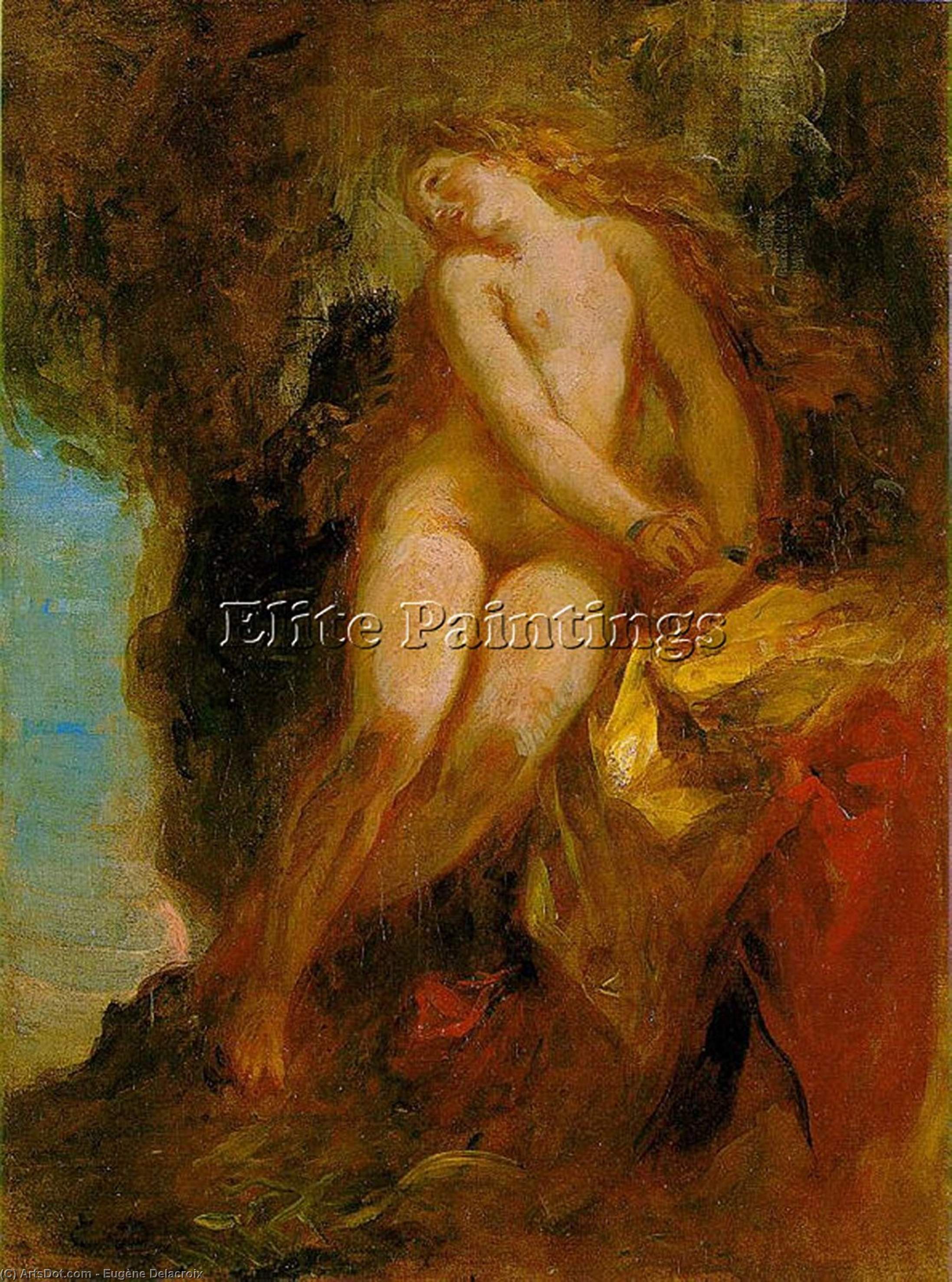
Delacroix’s “Andromeda”: A Romantic Tapestry of Myth and Emotion
Eugène Delacroix's "Andromeda," painted in 1852, is more than just a depiction of a classical myth; it’s a profound exploration of human vulnerability, celestial longing, and the raw power of Romantic emotion. This oil on canvas, measuring a modest 33 x 25 cm, currently residing within the Museum of Fine Arts, Houston, Texas, immediately captivates with its dramatic lighting and vibrant color palette – hallmarks of Delacroix’s signature style. The painting transports us to a desolate, windswept landscape, dominated by towering mountains that seem to press down upon the central figure, instantly establishing a sense of isolation and impending doom. Delacroix masterfully employs chiaroscuro—the dramatic contrast between light and shadow—to sculpt Andromeda's form, emphasizing her physical vulnerability against the vastness of the heavens. The loose brushstrokes, characteristic of Romanticism, create an almost turbulent surface, mirroring the emotional turmoil within the subject.The Mythological Narrative: A Tale of Fate and Despair
The story of Andromeda originates from ancient Greek mythology, a poignant tale of divine punishment and heroic intervention. She was chained to a rock as a sacrifice to the monstrous sea serpent Cetus, destined to be devoured unless rescued by Perseus. Delacroix doesn’t simply illustrate this narrative; he imbues it with an intensely personal resonance. Andromeda is not merely a passive victim; she possesses a quiet dignity and a contemplative gaze that suggests resilience rather than despair. Her hands are gracefully positioned behind her back, a gesture of both restraint and a subtle defiance against her fate. The upward tilt of her head, directed towards the unseen stars, speaks to an enduring hope—a yearning for salvation or perhaps simply a connection with something beyond her earthly predicament. The artist deliberately avoids depicting the rescue by Perseus, choosing instead to focus on Andromeda’s internal state and her relationship with the natural world.Romanticism in Color and Composition: A Symphony of Feeling
“Andromeda” is a quintessential example of Romantic art—a movement that prioritized emotion, imagination, and individualism over classical restraint. Delacroix's use of color is particularly striking. He employs rich, saturated hues – deep blues and purples for the stormy sky, earthy browns and ochres for the rocks – to create a sense of drama and intensity. The light, seemingly emanating from an unseen source, washes over Andromeda’s body, highlighting her form while simultaneously emphasizing her isolation. The composition itself is carefully constructed to draw the viewer into the scene. The diagonal lines created by the mountains and the rocky terrain lead the eye towards Andromeda, creating a sense of movement and drawing us into her world. Furthermore, Delacroix's decision to place her in such a desolate landscape underscores the Romantic fascination with the sublime—the awe-inspiring power and beauty of nature that simultaneously evokes both terror and wonder.Symbolism and Emotional Resonance: A Portrait of Human Experience
Beyond its mythological subject matter, “Andromeda” operates on a deeper symbolic level. The chained figure represents not only Andromeda’s physical imprisonment but also the broader human condition—the feeling of being trapped by circumstance, fate, or personal struggles. The vastness of the sky and the turbulent landscape serve as metaphors for the uncertainties and challenges of life. Yet, despite her predicament, Andromeda retains a sense of inner strength and serenity. Her gaze suggests an acceptance of her fate, a quiet contemplation of her situation, and perhaps even a glimmer of hope. The painting’s enduring appeal lies in its ability to tap into universal human emotions—longing, vulnerability, resilience, and the search for meaning in a seemingly indifferent universe. It is a testament to Delacroix's skill as an artist and his profound understanding of the human heart.For more information on Eugène Delacroix and his works, visit /art/list/?Filter=eugène+delacroix,eugène,delacroix.
To explore other paintings by the artist, including Perseus and Andromeda, see /art/list/?Filter=8YDM43-Eugene-Delacroix-Perseus-and-Andromeda.
The Musée Eugène Delacroix in Paris is also a must-visit destination for art enthusiasts, offering a unique glimpse into the life and work of this renowned artist: /art/list/?Filter=A@D3CET9-Discover-the-Musee-Eugene-Delacroix-a-Hidden-Gem-in-Paris.
Biografia dell'artista
Eugène Delacroix: The Soul of Romanticism
Eugène Delacroix, born Ferdinand Victor Eugène Delacroix in Chantonnay, France on April 26, 1798, stands as a monumental figure within the French Romantic movement. From his formative years onwards, he was recognized not merely as an artist but as its undisputed champion—a visionary who irrevocably altered artistic conventions and captivated audiences with his bold embrace of emotion and dramatic narrative.
- Early Influences: Delacroix’s artistic sensibilities were profoundly shaped by the legacy of Rubens and painters of the Venetian Renaissance. Unlike the prevailing academic style, which prioritized meticulous detail and idealized form, he championed color and movement as primary expressive tools—a deliberate rejection of classical restraint in favor of visceral sensation.
- A Visionary Palette: His artistic approach was characterized by an unwavering commitment to capturing the essence of experience rather than simply reproducing reality. He sought inspiration from historical events and literature, notably Victor Hugo’s “Les Misérables,” which fueled his imagination and propelled him toward ambitious projects.
- The Exotic Call of Morocco: A pivotal moment in Delacroix's artistic journey arrived with his expedition to Morocco in 1838-39. This immersive encounter ignited his passion for exotic subjects—the vibrant colors, dramatic landscapes, and captivating traditions of North Africa—resulting in paintings that embody the spirit of adventure and cultural exploration.
- Iconic Masterpieces: Delacroix’s oeuvre boasts an unparalleled collection of masterpieces that continue to resonate with audiences worldwide. “Liberty Leading the People,” commemorating the July Revolution of 1830, remains a symbol of republican ideals and artistic courage—a monumental canvas brimming with dynamism and imbued with profound political significance. Similarly, “La Morte di Sardanapalus” confronts viewers with unsettling imagery and explores themes of decadence and mortality, demonstrating Delacroix’s mastery of theatrical composition and psychological depth.
- Legacy: Delacroix's influence extended far beyond his own lifetime, profoundly impacting subsequent generations of artists—particularly Impressionists and Post-Impressionists who adopted his bold use of color and expressive brushstrokes. He cemented his place as one of the most influential figures in 19th-century art, forever altering the trajectory of artistic innovation.

Eugène Delacroix
1798 - 1863 , Francia
Informazioni rapide
- Artistic Movement Or Style: Romanticismo
- Artists Who Influenced This Artist:
- Rubens
- Pittori veneziani
- Date Of Birth: 26 aprile 1798
- Date Of Death: 13 agosto 1863
- Full Name: Eugène Delacroix
- Nationality: Francese
- Notable Artworks:
- La Libertà guida il popolo
- La Morte di Sardanapalo
- Cavalli Arabi in Combattimento
- Place Of Birth: Chantonnay, Francia

