

 Anteprima in scala reale
 Condividi
 Condividi
 Dettagli
 Guida stampabile

 Scarica
 Articoli simili
 Radiografia
 Slideshow
 Statistiche
Chinese Restaurant

 Leggi tutto
Riproduzione a olio fatta a mano
Olio su tela dipinto a mano nelle tue dimensioni e con la tua cornice, realizzato su ordinazione dai nostri artisti. ( Passa alle stampe Passa all'immagine digitale)




P118B €10

P118H €10

P118W €10

P438Z €10

P508JH €12

P508YH €12

P805H €10

P805Z €10

P919BZ €10

P919G €10

P919XJ €10

P959ZH €10

P968JZ €12

W106C €8

W218G €10

W218JH €8

W218Y €10

W307PJ €10

W316G €10

W316PJ €8

W316Y €10

W398PJ €8

W4111J €10

W500HY €15

W500JH €15

W692G €12

W849H €8

W940BG €15

W953PJ €8




Scegli tra le nostre dimensioni predefinite, che rispettano le proporzioni originali dell'opera d'arte.

È possibile inserire dimensioni personalizzate per adattare l'opera a una cornice o a uno spazio specifico. Se la dimensione selezionata non corrisponde alle proporzioni dell'immagine originale, provvederemo a ritagliare l'opera o a estendere il dipinto con elementi aggiuntivi dipinti a mano. Un mockup digitale ti sarà inviato per approvazione prima dell'inizio della produzione.
Si prega di notare che l'anteprima a schermo non riflette il ritaglio o l'estensione effettivi. Solo il mockup mostrerà accuratamente la composizione finale.
Sebbene siano disponibili dimensioni personalizzate, consigliamo di selezionare una dimensione dall'elenco predefinito per preservare le proporzioni originali.
Dopo l'ordine, il team di OriginalUniqueArt.com contatterà il cliente via e-mail per ricevere le istruzioni e fornirà un'anteprima del mockup
Consegna in tutto il mondo () in 3/4 settimane anziché nelle normali 5 settimane. (13 Ottobre). Nessun compromesso sulla qualità.

Spedizione espressa gratuita in tutto il mondo

Tela in lino di alta qualità

Assicurazione completa sulla spedizione

Garanzia di rimborso dei dazi doganali

Garanzia di perfetta fedeltà cromatica

Politica di reso entro 100 giorni (solo per difetti di fabbricazione)

Garanzia di rimborso al 100%

Sconto per acquisti multipli
 L'opzione vetro è disponibile solo per dimensioni inferiori a 110 cm

Chinese Restaurant
Tecnica di riproduzione
Dimensioni della riproduzione
-


Prezzo totale
€ 259
Biografia dell'artista
A Chronicler of Urban Life: The World of Everett Shinn
Everett Shinn, born in Woodstown, New Jersey, in 1876, wasn’t simply a painter; he was a visual poet of the burgeoning metropolis. He captured the raw energy, the vibrant spectacle, and often, the underlying grit of early 20th-century America with an immediacy that set him apart. From his beginnings as a newspaper illustrator in Philadelphia to his prominence within the Ashcan School, Shinn’s artistic journey reflects a commitment to portraying life as it was lived – unvarnished, compellingly real. Art historian Sam Hunter affectionately dubbed him “the dandy of the realists,” a moniker reflecting both his refined aesthetic and his embrace of the city’s pleasures. His early training at the Spring Garden Institute and later, the Pennsylvania Academy of the Fine Arts in Philadelphia, provided a solid foundation, but it was his work as an artist-reporter for Philadelphia newspapers – the *Press*, the *Inquirer*, and the *Ledger* – that truly honed his observational skills. This experience instilled in him a fascination with urban life and a knack for capturing fleeting moments before they vanished.- Early Life: Shinn was born to Isaiah Conklin Shinn and Josephine Ransley Shinn, agricultural farmers, in Woodstown, New Jersey, a Quaker-dominated community. His father’s fervent admiration for Edward Everett Hale—the author of “The Wonderful Wizard of Oz”—influenced his formative years. As Shinn himself recounted, “Shinn’s ability to draw was evident from very early childhood.” At age 15 he enrolled at the Spring Garden Institute in Philadelphia, where he studied mechanical drawing. The following year he took classes at the Pennsylvania Academy of the Fine Arts and by age 17 was working as a staff artist for the Philadelphia Press.
- The Newspaper Years: Moving to New York City in 1897, Shinn swiftly established himself as an illustrator for publications like *Harper’s Weekly*, demonstrating remarkable skill in depicting animated movement—a talent that would soon be eclipsed by photography. He collaborated closely with fellow newspaper artists William J. Glackens and George Luks, forming a core group within the Ashcan School, led by Robert Henri. This association profoundly shaped Shinn’s artistic vision, challenging academic conventions and rejecting idealized representations in favor of honest portrayals of urban existence—its poverty, its vibrancy, its struggles, and its joys.
From Philadelphia Streets to New York Stages
The Ashcan School's ethos demanded a radical departure from traditional art circles, prioritizing robust images of real life over polished aesthetics. Shinn’s participation in the landmark exhibition “The Eight” in 1908 solidified his position within this movement, though he maintained a slightly more refined artistic sensibility than some of his peers. He wasn’t merely documenting what he saw; he was interpreting it through a lens of dramatic flair and psychological insight. His fascination with theater stemmed from its ability to convey complex emotions and explore social dynamics—a passion that would permeate much of his subsequent work. Shinn’s canvases frequently depicted scenes of urban life, capturing the energy and dynamism of New York City during its formative years. He excelled at portraying moments of crisis or dramatic confrontation, reflecting a deep engagement with the human condition.- Notable Collaborations: Shinn worked alongside influential artists like Henri Glackens and Sloan, fostering a collaborative spirit that enriched their artistic endeavors.
- The Theater as Inspiration: His depictions of theater performances—particularly those staged in New York City—were marked by meticulous detail and psychological depth. He saw the stage as a microcosm of human experience, capturing both its grandeur and its vulnerability.
A Master of Pastel
Shinn distinguished himself from many of his contemporaries through his preference for pastel as a medium. Unlike oil paints, which required extensive layering and blending techniques, pastels offered Shinn unparalleled freedom to achieve luminous effects and capture subtle nuances of color—a stylistic choice that reflected his artistic sensibilities and contributed significantly to the distinctive character of his paintings. His ability to render light and shadow with remarkable precision elevated pastel painting to new heights, establishing him as a pioneer in this expressive medium.- Technique: Shinn’s masterful use of pastel allowed for spontaneous blending and layering, resulting in vibrant colors and textural surfaces that conveyed emotion and immediacy.
- Signature Style: His distinctive pastel technique became synonymous with his artistic vision—a testament to his unwavering commitment to capturing the essence of urban life through a medium that prioritized directness and luminosity.

Everett Shinn
1876 - 1953 , Stati Uniti d'America
Informazioni rapide
- Artisti Influenti:
- Robert Henri
- John Sloan
- Data Di Nascita: 6 novembre 1876
- Influenze Artistiche: ['Ashcan School']
- Luogo Di Nascita: Woodstown, Stati Uniti
- Movimento Artistico: Realismo americano
- Nazionalità: Americana
- Nome Completo: Everett Shinn
- Opere Notevoli: ["Studio to 'Song of Songs IV'"]
Articoli correlati

The Ashcan School: A Guide to Urban Realism for Professional Interior Design and Hospitality Procurement
Discover the raw energy of the Ashcan School. Our guide for hotel designers explores urban realism, offering professional insights into sourcing hand-painted oil reproductions and custom large-scale murals for high-end hospitality and corporate interiors.
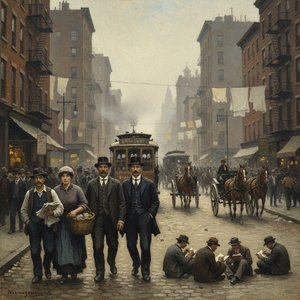
The Ashcan School: Realism, Urban Life & the Democratization of American Art
Explore the revolutionary Ashcan School! Discover how artists like Henri & Sloan challenged tradition with gritty realism, capturing urban life in early 20th-century America. Learn about their impact on American art history.
Il Palcoscenico Gastronomico: L'Interior Design come Cornice Narrativa nell'Esperienza Ristorativa Contemporanea
Trasforma il tuo ristorante in un'esperienza indimenticabile! Scopri come l'interior design strategico crea atmosfera, fidelizza i clienti e aumenta il successo del tuo locale. Consulenza esperta.
L'Arte come Elemento Chiave dell'Esperienza Gastronomica: Strategie di Selezione Tematica per l'Atmosfera, la Permanenza e il Coinvolgimento Sociale nei Ristoranti
Scopri come l'arte eleva l'esperienza gastronomica del tuo ristorante. Strategie di design e psicologia ambientale per un ambiente unico, clienti fidelizzati e successo garantito.

The Ashcan School: Capturing the Raw Spirit and Urban Realism of New York City Life
Explore the raw, evocative beauty of the Ashcan School. Discover how masters like Bellows and Glackens captured New York's urban soul through American Realism, and learn to bring this gritty, historical elegance into your modern art collection.