

 Anteprima in scala reale
 Condividi
 Condividi
 Dettagli
 Guida stampabile

 Scarica
 Articoli simili
 Radiografia
 Slideshow
 Statistiche
Washington Bridge


 Leggi tutto
Giclée / Stampe d'arte
Stampa giclée o su tela di qualità museale, con produzione rapida e diverse opzioni di finitura. ( Ordina la riproduzione dipinta a mano Passa all'immagine digitale)




P118B €10

P118H €10

P118W €10

P438Z €10

P508JH €12

P508YH €12

P805H €10

P805Z €10

P919BZ €10

P919G €10

P919XJ €10

P959ZH €10

P968JZ €12

W106C €8

W218G €10

W218JH €8

W218Y €10

W307PJ €10

W316G €10

W316PJ €8

W316Y €10

W398PJ €8

W4111J €10

W500HY €15

W500JH €15

W692G €12

W849H €8

W940BG €15

W953PJ €8




Scegli tra le nostre dimensioni predefinite, che rispettano le proporzioni originali dell'opera d'arte.

Inserisci la larghezza e l'altezza desiderate, per adattarle alla tua cornice o alla tua parete. Una stampa può essere solo ritagliata, mai resa più grande dell'immagine originale; pertanto, un formato con una forma differente comporterà la perdita di una parte dell'opera. Ti invieremo un mockup digitale da approvare prima di procedere con la stampa. L'immagine mostrata in questa pagina non rappresenta il ritaglio reale — solo il mockup lo mostra.
Consegna in tutto il mondo () in 2 settimane invece delle normali 4/5 settimane. (24 Ottobre)

Spedizione espressa gratuita in tutto il mondo

Tela in lino di alta qualità

Assicurazione completa sulla spedizione

Garanzia di rimborso dei dazi doganali

Garanzia di perfetta fedeltà cromatica

Politica di reso entro 100 giorni (solo per difetti di fabbricazione)

Garanzia di rimborso al 100%

Sconto per acquisti multipli
 L'opzione vetro è disponibile solo per dimensioni inferiori a 110 cm

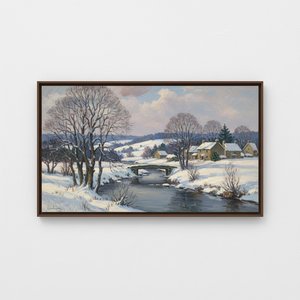
Washington Bridge
Giclée / Stampe d'arte
Dimensioni della riproduzione
-


Prezzo totale
€ 70
A Symphony of Light and Steel: Reimagining the Washington Bridge
In the heart of the American Impressionist movement, few works capture the delicate tension between industrial progress and natural serenity as poignantly as Ernest Lawson’s Washington Bridge. Painted in 1910, this evocative oil on canvas serves as a window into a bygone era, where the burgeoning skyline of New York began to intertwine with the rhythmic pulse of the river. The painting presents a breathtaking view of the bridge spanning the water, framed by the soft, textured foliage of the riverbank. Lawson does not merely depict a structure; he captures a fleeting moment in time, an atmospheric breath caught between the heavy permanence of steel and the ephemeral dance of light filtering through an overcast sky.
The brilliance of this masterpiece lies in its masterful use of broken color and visible, energetic brushstrokes. Eschewing the rigid lines of traditional realism, Lawson employs a technique that leans toward the expressive qualities of Fauvism, using small, distinct patches of pigment to build form and depth. This approach creates a tactile surface where the viewer can almost feel the roughness of the earth in the foreground and the cool, damp mist clinging to the bridge’s arches. The composition is expertly guided by a diagonal pathway that draws the eye inward, leading the observer on a visual journey from the organic textures of the riverbank toward the geometric majesty of the urban horizon.
Historical Resonance and Artistic Legacy
To understand Washington Bridge is to understand the evolution of American landscape painting at the turn of the twentieth century. Having studied under John Twachtman and been deeply influenced by the plein air traditions of French Impressionists like Alfred Sisley, Lawson brought a unique North American sensibility to the movement. His work reflects a profound connection to the landscape, finding beauty in the industrial transitions of his time. This painting stands as a testament to that era—a period where artists sought to find the soul within the expanding metropolis, celebrating the way light interacts with man-made monuments.
For the discerning collector or interior designer, this artwork offers more than mere decoration; it provides an emotional anchor for any space. The muted, sophisticated palette of the overcast sky and river tones creates a sense of calm and contemplative depth, making it an ideal centerpiece for a room designed for reflection. Whether placed in a contemporary gallery setting or a classic study, the painting’s ability to evoke nostalgia while maintaining a modern, textured vitality ensures it remains a timeless addition to any curated collection. Owning a high-quality reproduction of this Lawson masterpiece allows one to invite the quiet, atmospheric grandeur of 1910 New York into the modern home.
Domande e risposte
Da quale paese proviene l'opera del Impressionism "Washington Bridge"?
"Washington Bridge" connette il movimento Impressionism con Canada attraverso il luogo di nascita del suo creatore.
Quale collocazione si adatta meglio al formato di "Washington Bridge" di Ernest Lawson?
Il formato (Landscape) e lo spazio consigliato (Living Room) sono i due dettagli di posizionamento registrati per "Washington Bridge" di Ernest Lawson.
A quale corrente artistica appartiene "Washington Bridge" di Ernest Lawson?
Il movimento associato a "Washington Bridge" di Ernest Lawson è Impressionism. Questa classificazione colloca l'opera tra artisti e opere d'arte correlati.
Biografia dell'artista
Primi anni e formazione
Ernest Lawson, figura di spicco dell'impressionismo americano, nacque ad Halifax, Nuova Scozia, Canada, il 22 marzo 1873. Nel 1888 la sua famiglia si trasferì negli Stati Uniti, stabilendosi a Kansas City, nel Missouri, per poi spostarsi a New York nel 1891. Qui, all'età di diciotto anni, Ernest si iscrisse alla Art Students League di New York, dove ebbe come maestro John Henry Twachtman, che lo introdusse allo spirito e alla tecnica dell'impressionismo, influenzando profondamente la sua formazione artistica. Durante gli estati degli anni '90, agli insegnamenti di Twachtman si aggiunsero quelli di Julian Alden Weir a Cos Cob, nel Connecticut.Sviluppo Artistico e Influenze
Lo stile di Lawson, caratterizzato da una fusione di impressionismo e realismo, fu plasmato dalle sue interazioni con diversi artisti. Studiò all'Académie Julian a Parigi nel 1893, dove incontrò Jean-Joseph Benjamin-Constant e Jean-Paul Laurens. Le sue esperienze di pittura *en plein air* nel sud della Francia e a Moret-sur-Loing, dove conobbe Alfred Sisley, arricchirono ulteriormente la sua prospettiva artistica. Lawson condivise uno studio parigino con W. Somerset Maugham, che si dice abbia tratto ispirazione dalla figura di Lawson per il personaggio di Frederick Lawson nel suo romanzo "Of Human Bondage".Partecipazione agli "Otto" e Mostre Significative
Nel 1908, Lawson aderì agli "Otto", un gruppo di artisti che protestavano contro i gusti ristretti e le politiche espositive restrittive della National Academy of Design. Questa adesione portò a una mostra cruciale alla Macbeth Galleries di New York, che attirò notevole attenzione mediatica e scatenò un dibattito sulla diversità di stile e soggetto nell'arte americana.- City Suburbs, una delle opere più note di Lawson, fa ora parte della collezione Phillips a Washington, D.C., mostrando la sua originale fusione di impressionismo e realismo.
- Un altro lavoro significativo, Approaching Storm, anch’esso nella collezione Phillips, dimostra la maestria di Lawson nel catturare l'essenza dei paesaggi americani.
Evoluzione Stilistica e Riconoscimenti
Dopo il suo ritorno negli Stati Uniti nel 1896, Lawson iniziò a sviluppare la sua personale concezione estetica della pittura. Si interessò ai paesaggi di confine tra città e campagna, alle zone di transizione dove campi, ponti, barche ormeggiate e colline boscose si fondevano con l'ambiente urbano. Nel 1907 tenne la sua prima mostra personale alla Pennsylvania Academy of the Fine Arts, ottenendo un premio per il suo Paesaggio d’inverno. Nel 1917 divenne accademico della National Academy. William Merritt Chase lo considerò il più grande pittore di paesaggi americano.Eredità e Significato Storico
Lo stile sobrio ma vibrante di Lawson, descritto dal critico d'arte James Gibbons Huneker come proveniente da una "palette di gioielli schiacciati", ha lasciato un segno indelebile nell'arte americana. La sua partecipazione agli Otto e il suo approccio artistico unico lo hanno reso una figura notevole nella storia dell'impressionismo, contribuendo a ampliare i confini dell'espressione pittorica nel contesto americano.
Ernest Lawson
1873 - 1939 , Canada
Informazioni rapide
- Artisti Influenti:
- John Henry Twachtman
- Alfred Sisley
- Data Di Morte: 18 dicembre 1939
- Data Di Nascita: 22 marzo 1873
- Luogo Di Nascita: Halifax, Canada
- Movimento Artistico: Impressionismo americano
- Nazionalità: Canadese, Americana
- Nome Completo: Ernest Lawson
- Opere Notevoli:
- City Suburbs
- Approaching Storm
Articoli correlati
Ernest Lawson: Un Pioniere dell'Impressionismo Americano e la Sua Visione del Paesaggio Rurale
Scopri la vita e l'opera di Ernest Lawson, pioniere dell'Impressionismo americano. Analisi approfondita del suo stile unico, i suoi dipinti più celebri e il contributo all'arte paesaggista americana.

Evocations of Place: A Historical Journey Through Landscape Art
Explore the rich history of landscape art with OriginalUniqueArt. Discover renowned artists, movements like Impressionism & tonalism, and expert guidance for collecting timeless pieces. Find your perfect serene escape today!

Paul Cézanne: I 25 Capolavori che Hanno Rivoluzionato l'Arte Moderna | OriginalUniqueArt
Esplora i 25 capolavori di Paul Cézanne, il maestro dell'impressionismo e post-impressionismo. Scopri la storia, le tecniche e i colori iconici dietro opere come 'Le grandi bagnanti' e 'Mont Sainte-Victoire'. Trova riproduzioni artistiche di alta qualità per decorare la tua casa su OriginalUniqueArt.com.

Evocations of Place: A Historical Journey Through Landscape Art
Explore the rich history of landscape art with OriginalUniqueArt. Discover renowned artists, movements like Impressionism & Romanticism, and expert guidance for collecting timeless pieces. Find your perfect serene escape today!

John Constable: I 25 Capolavori che Celebrano la Bellezza della Campagna Inglese
Esplora i 25 capolavori di John Constable, il maestro del Romanticismo inglese. Paesaggi suggestivi, luce naturale e colori vibranti ti aspettano. Acquista riproduzioni d'arte di alta qualità su OriginalUniqueArt.com e porta la bellezza della campagna inglese nella tua casa.
