

 Anteprima in scala reale
 Condividi
 Condividi
 Dettagli
 Guida stampabile

 Scarica
 Articoli simili
 Radiografia
 Slideshow
 Statistiche
Mismatched Couple


 Leggi tutto
Riproduzione a olio fatta a mano
Olio su tela dipinto a mano nelle tue dimensioni e con la tua cornice, realizzato su ordinazione dai nostri artisti. ( Passa alle stampe Passa all'immagine digitale)




P118B €10

P118H €10

P118W €10

P438Z €10

P508JH €12

P508YH €12

P805H €10

P805Z €10

P919BZ €10

P919G €10

P919XJ €10

P959ZH €10

P968JZ €12

W106C €8

W218G €10

W218JH €8

W218Y €10

W307PJ €10

W316G €10

W316PJ €8

W316Y €10

W398PJ €8

W4111J €10

W500HY €15

W500JH €15

W692G €12

W849H €8

W940BG €15

W953PJ €8




Scegli tra le nostre dimensioni predefinite, che rispettano le proporzioni originali dell'opera d'arte.

Type the width and the height you need, to fit your frame or your wall. This is hand-painted, so for a size with a different shape the artist can paint a bit more around the picture, or cut a bit — you choose. We send you a digital mockup to approve before the painting starts. The picture shown on this page does not show the real result — only the mockup does.
Dopo l'ordine, il team di OriginalUniqueArt.com contatterà il cliente via e-mail per ricevere le istruzioni e fornirà un'anteprima del mockup
Consegna in tutto il mondo () in 3/4 settimane anziché nelle normali 5 settimane. (15 Ottobre). Nessun compromesso sulla qualità.

Spedizione espressa gratuita in tutto il mondo

Tela in lino di alta qualità

Assicurazione completa sulla spedizione

Garanzia di rimborso dei dazi doganali

Garanzia di perfetta fedeltà cromatica

Politica di reso entro 100 giorni (solo per difetti di fabbricazione)

Garanzia di rimborso al 100%

Sconto per acquisti multipli
 L'opzione vetro è disponibile solo per dimensioni inferiori a 110 cm

Mismatched Couple
Tecnica di riproduzione
Dimensioni della riproduzione
-


Prezzo totale
€ 282
A Portrait of Discord: Unpacking Emile Nolde’s ‘Mismatched Couple’
Emile Nolde's “Mismatched Couple” is not merely a depiction of two individuals; it’s a raw, visceral exploration of human connection – or perhaps disconnection – rendered with the uncompromising intensity characteristic of Expressionism. Painted in 1923, this work immediately confronts the viewer with its unsettling composition and emotionally charged palette, inviting contemplation on themes of intimacy, conflict, and the inherent complexities of relationships. Nolde’s masterful manipulation of color and form transcends simple portraiture, offering a glimpse into the turbulent depths of the human psyche.
Composition and Technique: A Deliberate Distortion
- The asymmetrical arrangement is immediately arresting. The dominant presence of the male figure on the left side contrasts sharply with the partially obscured female form to the right, creating a palpable sense of imbalance. This deliberate disruption of traditional perspective underscores Nolde’s rejection of objective realism in favor of conveying subjective experience.
- Nolde employs thick, gestural brushstrokes – almost violent in their application – to define the figures' forms. These lines aren’t smooth or refined; they are deliberately rough and expressive, contributing significantly to the painting’s overall energy and emotional impact. The simplification and distortion of features further amplify this effect, pushing beyond mere representation towards a powerful expression of inner turmoil.
- The medium – likely watercolor or gouache on paper – lends itself beautifully to Nolde's technique. The fluidity of the paint allows for dynamic layering and blending, while the visible texture adds another layer of tactile interest and reinforces the painting’s raw, unfinished quality.
Chromatic Intensity: A Language of Emotion
The color palette in “Mismatched Couple” is anything but subtle. Deep purples, fiery reds, vibrant greens, and bold yellows collide with a deliberate lack of naturalistic harmony. These colors aren’t used to depict reality; instead, they serve as a potent language of emotion, intensifying the painting's dramatic effect. The stark contrast between the dark tones of the man’s face and body and the bright red and yellow hues of the woman’s head creates a visual tension that mirrors the potential conflict within the relationship. This unconventional use of color aligns perfectly with Nolde’s Expressionist sensibilities, prioritizing emotional impact over accurate representation.
Symbolism and Interpretation: A Portrait of Unease
The title itself, “Mismatched Couple,” immediately suggests a discordance – a fundamental incompatibility between the two figures. While the subject matter is ostensibly a portrait, it transcends simple identification. The distorted features and intense colors contribute to a pervasive sense of unease, hinting at deeper psychological complexities. It’s possible that Nolde intended to represent not just a specific couple but rather the universal struggle for connection amidst inherent differences. The painting's ambiguity invites viewers to project their own interpretations onto the scene, adding to its enduring power and resonance.
Historical Context and Artistic Legacy
Created in 1923, “Mismatched Couple” reflects the broader artistic currents of the Expressionist movement. Nolde, a key figure in this movement, was deeply influenced by artists like Vincent van Gogh and Paul Gauguin, particularly their use of bold color and expressive brushwork. His work often explored themes of spirituality, mythology, and folklore, reflecting his deep connection to German traditions. “Mismatched Couple” stands as a testament to Nolde’s unique vision – a powerful and unsettling portrait that continues to captivate viewers with its raw emotion and enduring psychological depth.
Domande e risposte
È disponibile un download per "Mismatched Couple"?
Puoi scaricare "Mismatched Couple" di Emil Nolde dalla pagina Scarica dell'opera, come download di un'immagine digitale ad alta risoluzione.
Dove posso acquistare un'immagine digitale di "Mismatched Couple" di Emil Nolde?
"Mismatched Couple" is available as download di un'immagine digitale ad alta risoluzione, purchased directly on its Digital Image page.
"Mismatched Couple" di Emil Nolde è di pubblico dominio, e perché?
Lo stato del copyright di "Mismatched Couple" - di pubblico dominio - il suo copyright è scaduto - deriva dalla morte dell'artista avvenuta nel 1956.
Biografia dell'artista
Emil Nolde: Vita e Eredità
Primi Anni di Vita e Inizi Artistici
Emil Nolde, un rinomato pittore tedesco-danese, nato Hans Emil Hansen il 7 agosto 1867 a Nolde, Schleswig-Holstein, in Germania. Proveniva da una famiglia con forti legami con la vita rurale e le credenze religiose, fattori che avrebbero profondamente influenzato la sua visione artistica. Nonostante l'iniziale resistenza dei suoi genitori, che preferivano che intraprendesse una carriera più convenzionale, Nolde perseguì instancabilmente la sua passione per l’arte. Inizialmente lavorò come intagliatore di legno e decoratore di mobili prima di dedicarsi completamente alla pittura nella sua ventina.
Sviluppo Artistico e Influenze
Il percorso artistico di Nolde è stato segnato dall'auto-educazione ed esplorazione. Ha viaggiato ampiamente, assorbendo influenze da diverse culture e forme d’arte. Le prime influenze includevano Vincent van Gogh, Paul Gauguin e l’arte popolare tradizionale – in particolare la potenza espressiva delle maschere e degli intagli primitivi. Questi incontri hanno acceso il suo interesse per colori audaci, forme semplificate e soggetti carichi di emozione. Inizialmente ha sperimentato con il Realismo e l'Impressionismo ma si è rapidamente spostato verso uno stile più soggettivo ed espressivo.
Die Brücke e la Rottura Espressionista
Nel 1905, Nolde co-fondò Die Brücke (Il Ponte), un gruppo fondamentale di artisti espressionisti tedeschi. Questa collettiva cercava di liberarsi dalle tradizioni accademiche ed esprimere le emozioni interiori attraverso un’ardita sperimentazione artistica. Il contributo di Nolde a Die Brücke è stato significativo; il suo uso intenso del colore e delle forme distorte ha spinto i confini della rappresentazione. Tuttavia, ha mantenuto una via relativamente indipendente all'interno del gruppo, spesso divergendo in materia di soggetto e approccio stilistico.
Temi Chiave e Stile Artistico
L’opera di Nolde è caratterizzata da diversi temi ricorrenti: scene religiose, paesaggi, marine e ritratti. Era particolarmente affascinato dal potere delle maschere – sia come oggetti fisici che come rappresentazioni simboliche di emozioni primordiali. Il suo stile artistico è definito da:
- Colori audaci e vibranti utilizzati per esprimere l'intensità emotiva
- Forme distorte che enfatizzano l’espressione piuttosto che la rappresentazione realistica
- Tecnica dell’impasto – applicazione spessa della pittura creando texture
- Un focus sulla cattura degli stati psicologici interiori
Opere Notevoli e Realizzazioni
Nel corso della sua carriera, Nolde ha creato un vasto corpo di lavoro. Alcune delle sue opere più celebrate includono:
- Maschere (1906-1907) – che mostra il suo fascino per l’arte primitiva
- La Morte di Cristo (1909) – una scena religiosa potente ed emotivamente carica
- Il Mare d'Autunno (1908) - dimostra la sua pittura paesaggistica espressiva.
- Giardino di Fiori (Ragazza e Lavaggio) (1907)
- La Danza intorno al Bue d’Oro (1909)
Nonostante le critiche e la censura durante il regime nazista – la sua opera è stata definita “degenerata” – Nolde ha continuato a dipingere in segreto. Ha prodotto un significativo corpo di opere acquarellari durante questo periodo, dimostrando il suo impegno incrollabile per l’espressione artistica.
Significato Storico e Eredità
L'uso innovativo del colore e della pennellata espressiva di Emil Nolde ha profondamente influenzato le generazioni successive di artisti. La sua opera ha colmato il divario tra l’arte rappresentazionale tradizionale e i movimenti astratti che ne sono seguiti. Rimane una figura centrale nella storia dell’espressionismo tedesco, celebrato per la sua intensità emotiva, la sperimentazione audace e la visione artistica duratura. La sua eredità continua a ispirare artisti e amanti dell'arte in tutto il mondo.
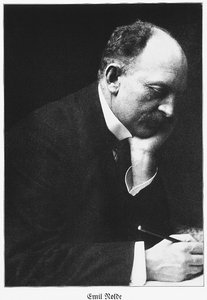
Emil Nolde
1867 - 1956 , Germania
Informazioni rapide
- Artistic Movement Or Style: Expressionism, Die Brücke
- Artists Who Influenced This Artist:
- Vincent van Gogh
- Paul Gauguin
- Date Of Birth: August 7, 1867
- Date Of Death: April 13, 1956
- Full Name: Emil Nolde
- Nationality: German-Danish
- Notable Artworks:
- Masks
- The Mocking of Christ
- Flower Garden (Girl and Washing)
- Autumn Sea
- Place Of Birth: Nolde, Schleswig-Holstein
Articoli correlati
Espressionismo: I 10 Capolavori che Hanno Definito un Movimento Artistico | .it
Esplora i 10 capolavori dell'Espressionismo con .it! Scopri Munch, Kirchner e altri artisti iconici, le loro emozioni intense e tecniche rivoluzionarie. Trova riproduzioni di alta qualità per arredare la tua casa con arte senza tempo. Esplora la collezione online!
Emile Nolde: Un Viaggio nell'Espressionismo tra Natura e l'Io Primordiale
Esplora il mondo intenso di Emil Nolde, pioniere dell'Espressionismo tedesco. Analisi approfondita della sua arte, dalle origini nordiche al primitivismo e all'influenza sulla pittura moderna. Scopri le sue opere più significative.

Espressionismo Tedesco: 10 Capolavori Rivoluzionari per Arredare con Emozione
Esplora i 10 capolavori dell'Espressionismo Tedesco con OriginalUniqueArt.com! Scopri Kirchner, Munch e Nolde, le loro emozioni intense e tecniche rivoluzionarie. Arreda la tua casa con stampe d'arte di alta qualità. Esplora la collezione online!
Mark Rothko: Le 25 Opere Più Iconiche per Arredare con Emozione e Profondità
Esplora le 25 opere più iconiche di Mark Rothko, il maestro dell'espressionismo astratto. Scopri la storia, i colori e l'emozione dietro ogni tela. Acquista riproduzioni artistiche di alta qualità per arredare con stile su OriginalUniqueArt.com

Crimson Threads of Narrative: Exploring Symbolism & Representation in Artworks Featuring the Red Dress
Explore the rich symbolism of the red dress in art history! From ancient power displays to iconic portraits like Cézanne’s 'Madame Cezanne', discover the cultural and artistic significance behind this captivating color. Expert analysis & insights.


