

 Anteprima in scala reale
 Invia
Invia Condividi
 Dettagli opera

 Scarica immagine
 Simili
 Radiografia
 Slideshow
 Statistiche
Interior with a Lady Playing the Virginal


 Espandi i dettagli
Riproduzione a olio fatta a mano
Olio su tela dipinto a mano nelle tue dimensioni e con la tua cornice, realizzato su ordinazione dai nostri artisti. ( Passa a Stampe Passa all'immagine digitale)




P118B $10

P118H $10

P118W $10

P438Z $10

P508JH $12

P508YH $12

P805H $10

P805Z $10

P919BZ $10

P919G $10

P919XJ $10

P959ZH $10

P968JZ $12

W106C $8

W218G $10

W218JH $8

W218Y $10

W307PJ $10

W316G $10

W316PJ $8

W316Y $10

W398PJ $8

W4111J $10

W500HY $15

W500JH $15

W692G $12

W849H $8

W940BG $15

W953PJ $8




Scegli tra le nostre dimensioni predefinite, che rispettano le proporzioni originali dell'opera d'arte.

È possibile inserire dimensioni personalizzate per adattare l'opera a una cornice o a uno spazio specifico. Se la dimensione selezionata non corrisponde alle proporzioni dell'immagine originale, provvederemo a ritagliare l'opera o a estendere il dipinto con elementi aggiuntivi dipinti a mano. Un mockup digitale ti sarà inviato per approvazione prima dell'inizio della produzione.
Si prega di notare che l'anteprima a schermo non riflette il ritaglio o l'estensione effettivi. Solo il mockup mostrerà accuratamente la composizione finale.
Sebbene siano disponibili dimensioni personalizzate, consigliamo di selezionare una dimensione dall'elenco predefinito per preservare le proporzioni originali.
Dopo l'ordine, il team di OriginalUniqueArt.com contatterà il cliente via e-mail per le istruzioni e fornirà un'anteprima del mockup
Consegna in tutto il mondo () in 3/4 settimane anziché nelle normali 5 settimane. (10 Settembre). Nessun compromesso sulla qualità.

Spedizione espressa gratuita in tutto il mondo

Tela in lino di alta qualità

Assicurazione completa sulla spedizione

Garanzia di rimborso dei dazi doganali

Garanzia di fedeltà cromatica

Politica di reso entro 100 giorni (solo per difetti)

Garanzia di rimborso al 100%

Offerta per acquisti multipli
 L'opzione vetro è disponibile solo per dimensioni inferiori a 110 cm

Interior with a Lady Playing the Virginal
Tecnica di riproduzione
Dimensioni riproduzione
-


Prezzo totale calcolato
$ 300
A Glimpse into Dutch Golden Age Intimacy
Emanuel de Witte’s “Interior with a Lady Playing the Virginal” isn't merely a painting; it’s a carefully constructed invitation. Completed around 1665, this oil on canvas transports us to a private chamber within a grand Dutch house, radiating an atmosphere of quiet contemplation and subtle drama. De Witte, a master of capturing the essence of space and light, eschews the meticulous architectural documentation favored by his contemporary, Pieter Saenredam, instead focusing on the *feeling* of being present within this intimate scene. The painting whispers stories of domestic life, musical performance, and perhaps even a touch of melancholy – all rendered with an exquisite sensitivity to color, texture, and the play of light.
The composition is immediately arresting. A woman, elegantly dressed and absorbed in her music, dominates the central space. She plays a virginal, a keyboard instrument popular during the period, its intricate workings hinted at by the surrounding instruments – a violin resting against a wall and a harpsichord subtly visible in the background. The room itself is richly detailed: a checkered floor suggesting a sense of order, a chandelier casting a warm glow, and two figures observing the performance from doorways—one standing, one seated. De Witte’s skill lies not just in depicting these objects but in creating an illusion of depth and perspective that draws us into the scene.
The Language of Light and Shadow
De Witte's mastery of chiaroscuro – the dramatic contrast between light and shadow – is central to the painting’s power. He doesn’t simply illuminate the room; he sculpts it with light, creating a sense of intimacy and drawing our attention to key elements. The light source, unseen but implied, casts long shadows that define the forms of the furniture and figures, adding a layer of mystery and sophistication. Notice how the light catches the woman's face, highlighting her expression of concentration, while leaving other areas in soft shadow. This technique isn’t just aesthetic; it contributes to the painting’s overall mood – a blend of serenity and quiet introspection.
The use of color is equally deliberate. De Witte employs a restrained palette of browns, golds, and reds, creating a harmonious and refined atmosphere. The rich hues of the fabrics and furniture are subtly contrasted with the cooler tones of the walls and floor, further enhancing the sense of depth and perspective. He avoids bright, flashy colors, opting instead for muted shades that evoke the warmth and comfort of a domestic setting.
Symbolism and Context
“Interior with a Lady Playing the Virginal” is more than just a snapshot of 17th-century life; it’s laden with symbolism. The virginal itself represents refinement, education, and musical skill – qualities highly valued in aristocratic society. The presence of multiple instruments suggests a gathering or performance, hinting at social interaction and cultural pursuits. Some art historians interpret the scene as a meditation on love and erotic melancholy, perhaps referencing the fleeting nature of beauty and pleasure. The figure observing from the doorway could represent an unspoken longing or a detached contemplation of domestic life.
Created during the Dutch Golden Age, a period of unprecedented prosperity and artistic flourishing, the painting reflects the values and sensibilities of the time. De Witte’s work aligns with the broader trends of the era – a fascination with interior spaces, an interest in capturing fleeting moments of everyday life, and a commitment to realism and naturalism. The painting is currently housed at the Museum Boijmans Van Beuningen in Rotterdam, offering visitors a chance to experience this remarkable masterpiece firsthand.
A Timeless Masterpiece
Emanuel de Witte’s “Interior with a Lady Playing the Virginal” remains a captivating work of art, demonstrating his exceptional skill and artistic vision. Its evocative atmosphere, masterful use of light and shadow, and subtle symbolism continue to resonate with viewers today. Whether you're an art enthusiast, a collector seeking a piece of Dutch history, or simply someone looking for a beautiful addition to your home, this painting offers a glimpse into a bygone era – a world of refined elegance, quiet contemplation, and enduring artistic beauty.
Biografia dell'artista
Emanuel de Witte: Una Vita in Prospettiva
- Nato: Alkmaar, Paesi Bassi (1617)
- Morto: Amsterdam, Paesi Bassi (1692)
- Professione: Pittore olandese di prospettiva, pittore di genere
Emanuel de Witte fu una figura significativa nell'arte olandese del XVII secolo, rinomato per le sue raffigurazioni atmosferiche degli interni delle chiese. A differenza dei suoi contemporanei come Pieter Jansz Saenredam che davano la priorità all'accuratezza architettonica, De Witte si concentrò sulla cattura dell'umore e della luce all'interno di questi spazi, creando esperienze immersive per lo spettatore.
Primi Anni e Formazione
- Background Familiare: Nato ad Alkmaar, suo padre era un maestro di scuola, suggerendo una precoce esposizione all'istruzione e agli sforzi intellettuali.
- Appartenenza alla Gilda: Entrò nella locale Gilda di San Luca nel 1636, segnando la sua formale entrata nella professione artistica.
- Primi Studi: Studiò con Evert van Aelst a Delft, un pittore di nature morte, che probabilmente influenzò la sua attenzione ai dettagli e l'uso della luce.
- Prime Opere: Inizialmente dipinse ritratti, scene mitologiche e opere religiose prima di specializzarsi in interni di chiese.
Sviluppo come Artista e Stile Caratteristico
- Trasferimento ad Amsterdam (1651): Questo trasferimento si rivelò fondamentale, fornendo accesso a numerose chiese che divennero i soggetti dei suoi lavori più celebrati.
- Focus sugli Interni delle Chiese: De Witte si specializzò sempre più nella rappresentazione degli interni delle chiese, dipingendo spesso l'Oude Kerk di Amsterdam da varie prospettive.
- Chiese Immaginarie: Combinava frequentemente elementi provenienti da diverse chiese per creare spazi interni idealizzati, popolati da figure e permeati di un senso di realismo.
- Prospettiva Atmosferica: Il suo magistrale uso della luce e dell'ombra creò un'atmosfera unica all'interno dei suoi dipinti, enfatizzando le qualità spaziali degli interni. Walter Liedtke notò che l'interesse primario di De Witte era "lo spazio stesso - la sua luce, il suo colore, la sua estensione e il suo umore."
Sfide e Vita Personale
- Turbamenti Personali: La vita di De Witte fu segnata da difficoltà personali, tra cui la morte della sua prima moglie e successivi problemi legali che coinvolsero sua seconda moglie e figlia.
- Servitù per Debito: Costretto alla servitù per debito verso l'artefice Joris de Wijs a causa di vincoli finanziari e contratti non rispettati.
- Personalità Difficile: I registri indicano un temperamento volatile, con resoconti di urla contro i clienti e coinvolgimento in dispute.
- Fine Tragica: Morì in circostanze tragiche nel 1692, presumibilmente tentando il suicidio impiccandosi da un ponte sul canale; la corda si ruppe e annegò.
Eredità e Significato Storico
- Ultima Fase della Pittura Architettonica: De Witte è considerato parte dell'ultima fase della pittura architettonica nei Paesi Bassi, colmando il divario tra la documentazione meticolosa e l'interpretazione atmosferica.
- Influenza su Artisti Successivi: Il suo innovativo uso della luce e della prospettiva influenzò le generazioni successive di artisti.
- Rappresentazione della Società Olandese: I suoi dipinti offrono preziose informazioni sulla vita religiosa e sulle usanze sociali olandesi del XVII secolo.
- Collezioni Museali: Opere di De Witte sono conservate in prestigiose collezioni in tutto il mondo, tra cui il Metropolitan Museum of Art, la National Gallery of Art e il Rijksmuseum.

Emanuel De Witte
1617 - 1692 , Paesi Bassi
Dati rapidi
- Artistic Movement Or Style: Barocco, Prospettiva
- Artists Who Influenced This Artist: ['Evert van Aelst']
- Date Of Birth: 1617
- Date Of Death: 1692
- Full Name: Emanuel de Witte
- Nationality: Olandese
- Notable Artworks:
- Interno dell'Oude Kerk
- Interno della Nieuwe Kerk
- Place Of Birth: Alkmaar, Paesi Bassi
Articoli correlati

I 10 Capolavori dell'Età d'Oro Olandese: Arte, Storia e Stile per la Tua Casa
Esplora i 10 capolavori dell'Età d'Oro Olandese con ! Rembrandt, Vermeer e altri maestri rivivono in dipinti iconici. Scopri storia, tecnica e colori di opere senza tempo per arredare la tua casa con arte di qualità museale. Esplora la collezione online!

Mastering Light & Shadow: A Journey Through the Dutch Golden Age's Luminous Legacy
Embark on a cultural journey through the Dutch Golden Age. Explore the masterful interplay of light and shadow in 17th-century masterpieces, from Rembrandt to Vermeer, and discover how this era of profound realism continues to inspire fine art collectors today.

Golden Light & Dutch Skies: The Timeless Magic of Dutch Golden Age Landscapes
Discover the breathtaking beauty of Dutch Golden Age landscapes. Explore the mastery of light, chiaroscuro, and 17th-century realism through an expert art history lens, celebrating the enduring legacy of the Dutch Masters for discerning collectors and art lovers.
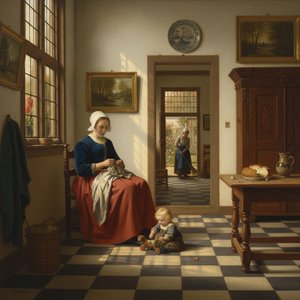
Pieter de Hooch e l'Illuminazione della Vita Domestica Olandese: Fascino dell'Età d'Oro e Innovazioni Pittoriche
Esplora il genio di Pieter de Hooch e l'illuminazione della vita domestica olandese nel Secolo d'Oro. Analisi approfondita dello stile, delle tecniche e del simbolismo nelle sue opere più iconiche.

Golden Age Reflections: Dutch Baroque Painting & Cultural Innovation
Explore the Dutch Golden Age of painting! Discover key artists like Vermeer & ter Borch, their innovative techniques, and the rich cultural context behind these Baroque masterpieces. Learn about collecting & appreciating this iconic art period.

