Passa alle stampe
 Espandi i dettagli







































 Per opere d'arte o riproduzioni con un lato superiore a 105 cm (circa 41 pollici), la cornice verrà spedita in forma di kit smontato. Questo metodo garantisce una consegna sicura e previene danni durante il trasporto.


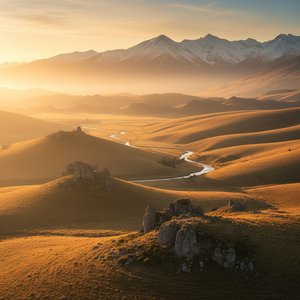
Elioth Gruner was born in New Zealand and arrived in Australia. He studied with Julian Ashton at the Art Society of New South Wales where he met the flamboyant George Lambert, an artist whose work would inspire Gruner. He died in Sydney in 1939, alone and destitute, a few weeks after the declaration of war between Great Britain and the Commonwealth and Germany.Gruner was one of the most popular landscape artists working in Australia in the period from c.1910 to 1939. He was awarded the Wynne Prize for landscape at the Art Gallery of New South Wales no fewer than 7 times from 1916 to 1937.Landscape is one of a number of works painted when Gruner discovered the Murrumbidgee River whilst staying at a property near Yass in 1929. He returned to this area a number of times over the next ten years and produced some of his major late works. The clarity of light in the region particularly impressed him and this is beautifully expressed in this picture.Gruner
Domande e risposte
Qual è la luminosità di "Landscape" di Elioth Gruner?
I colori di "Landscape" presentano una luminanza Gentle Luminance.
"Landscape" è rimasta nel paese d'origine dell'artista?
No - l'opera si trova all'estero. Elioth Gruner è nato/a in Nuova Zelanda, e l'originale "Landscape" è conservato in un museo in Australia.
In che modo il soggetto di "Landscape" si relaziona ai temi abituali di Elioth Gruner?
"Landscape" raffigura landscape, rural australia, murrumbidgee river, tranquility, light study, impressionism, australian art, serene valley, mentre i temi ricorrenti di Elioth Gruner sono late works, light studies, wynne prize winner", heidelberg school, plein air, julian ashton, rural life, australian landscape. Il confronto tra i due evidenzia come l'opera si relazioni con i soggetti abituali dell'artista.
Maggiori informazioni su questo dipinto
 Anteprima in scala reale

 Invia
 Condividi
 Dettagli opera
 Guida


 Scarica
 Simili
 Radiografia
 Slideshow
 Domande e risposte
 Statistiche