Anteprima in scala reale
 Condividi
 Condividi
 Dettagli
 Guida stampabile

 Scarica
 Articoli simili
 Radiografia
 Slideshow
 Statistiche
Four (arithmetic) actions


 Leggi tutto
Riproduzione a olio fatta a mano
Olio su tela dipinto a mano nelle tue dimensioni e con la tua cornice, realizzato su ordinazione dai nostri artisti. ( Passa alle stampe Passa all'immagine digitale)




P118B €10

P118H €10

P118W €10

P438Z €10

P508JH €12

P508YH €12

P805H €10

P805Z €10

P919BZ €10

P919G €10

P919XJ €10

P959ZH €10

P968JZ €12

W106C €8

W218G €10

W218JH €8

W218Y €10

W307PJ €10

W316G €10

W316PJ €8

W316Y €10

W398PJ €8

W4111J €10

W500HY €15

W500JH €15

W692G €12

W849H €8

W940BG €15

W953PJ €8




Scegli tra le nostre dimensioni predefinite, che rispettano le proporzioni originali dell'opera d'arte.

Inserisci la larghezza e l'altezza di cui hai bisogno, per adattarle alla tua cornice o alla tua parete. Trattandosi di un'opera dipinta a mano, in caso di dimensioni con una forma differente, l'artista può dipingere un po' più oltre i bordi dell'immagine o ritagliare leggermente — la scelta spetta a te. Ti invieremo un mockup digitale da approvare prima che la pittura abbia inizio. L'immagine mostrata in questa pagina non rappresenta il risultato reale — solo il mockup lo fa.
Dopo l'ordine, il team di OriginalUniqueArt.com contatterà il cliente via e-mail per ricevere le istruzioni e fornirà un'anteprima del mockup
Consegna in tutto il mondo () in 3/4 settimane anziché nelle normali 5 settimane. (22 Ottobre). Nessun compromesso sulla qualità.

Spedizione espressa gratuita in tutto il mondo

Tela in lino di alta qualità

Assicurazione completa sulla spedizione

Garanzia di rimborso dei dazi doganali

Garanzia di perfetta fedeltà cromatica

Politica di reso entro 100 giorni (solo per difetti di fabbricazione)

Garanzia di rimborso al 100%

Sconto per acquisti multipli
 L'opzione vetro è disponibile solo per dimensioni inferiori a 110 cm

Four (arithmetic) actions
Tecnica di riproduzione
Dimensioni della riproduzione
-


Prezzo totale
€ 263
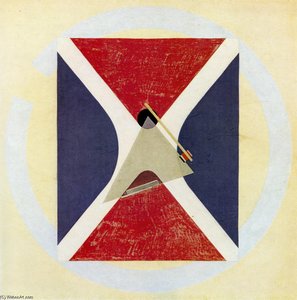
El Lissitzky’s “Four (Arithmetic) Actions”: A Constructivist Meditation on Form and Number
El Lissitzky's "Four (Arithmetic) Actions," painted in 1928, is more than just a depiction of four stacked figures; it’s a potent distillation of the core tenets of Russian Constructivism. This striking black-and-white image, born from Lissitzky’s revolutionary vision, embodies his belief that art could be a tool for social and intellectual transformation – a concept deeply rooted in the burgeoning modernist movement of the time. The painting's stark simplicity belies its complex engagement with mathematical principles, presenting them not as abstract concepts but as tangible forms demanding rigorous investigation.
Constructivist Principles and Geometric Abstraction
Created during a period of intense artistic experimentation following the Russian Revolution, “Four (Arithmetic) Actions)” exemplifies Constructivism’s rejection of traditional representational art. Lissitzky, along with other key figures like Vladimir Tatlin, sought to build a new visual language based on geometric abstraction and industrial forms. The painting's composition – the deliberate layering of the red figures – is a direct manifestation of this approach. Each figure isn't merely a representation of an action; it’s a carefully constructed element contributing to a larger, dynamic whole. The use of bold, primary colors—a conscious choice reflecting the era’s embrace of industrial materials and machine aesthetics—further emphasizes this geometric sensibility.
Symbolism Within the Structure
The numerical markings associated with each figure are crucial to understanding the artwork's deeper meaning. These aren’t arbitrary additions; they represent fundamental mathematical operations – addition, subtraction, multiplication, and division. Lissitzky was interested in exploring how visual forms could embody abstract concepts, transforming mathematics from a theoretical discipline into an accessible and engaging aesthetic experience. The larger figure, visually dominant, can be interpreted as representing the culmination of these actions—the result or outcome of the mathematical process. This layering creates a sense of progression and hierarchy, mirroring the sequential nature of calculation itself.
Historical Context and Artistic Legacy
"Four (Arithmetic) Actions)" was created in 1928, a pivotal year for Lissitzky’s career. It reflects his growing interest in exploring the relationship between art, architecture, and technology – themes that would become central to his later work. The painting's influence extends far beyond its immediate historical context. Lissitzky’s pioneering use of geometric abstraction paved the way for subsequent developments in modern art, including Suprematism and De Stijl. Today, “Four (Arithmetic) Actions)” remains a powerful example of Constructivism’s ambition – a testament to the idea that art can be both intellectually stimulating and profoundly beautiful.
Domande e risposte
In quale ambiente si consiglia di collocare "Four (arithmetic) actions" di El Lissitzky?
Una riproduzione di "Four (arithmetic) actions" si adatta perfettamente a un/una Living Room.
In che modo il movimento e l'epoca si incontrano in "Four (arithmetic) actions" di El Lissitzky?
"Four (arithmetic) actions" di El Lissitzky si inserisce nel movimento Constructivism, all'interno dell'epoca Età Moderna del suo autore.
In quale periodo della carriera di El Lissitzky si colloca "Four (arithmetic) actions"?
"Four (arithmetic) actions" rappresenta il Early Period di El Lissitzky.
Biografia dell'artista
primi anni di vita ed educazione
El Lissitzky, un rinomato artista, designer, fotografo, tipografo, polemista e architetto russo, è nato il 23 novembre 1890 a Pochinok, Russia. I suoi primi anni sono stati segnati da un interesse innato per il disegno, che lo ha portato a ricevere istruzioni da Yehuda Pen, un artista ebreo locale, all'età di 13 anni.carriera e influenze
La carriera di Lissitzky è stata caratterizzata dalla sua collaborazione con Kazimir Malevich nello sviluppo del suprematismo, influenzando significativamente il Bauhaus e i movimenti costruttivisti. La sua opera, che spazia in diversi media, ha svolto un ruolo fondamentale nel plasmare la grafica del XX secolo.- contributi chiave:
- ha sviluppato il gruppo artistico suprematista Unovis con Kazimir Malevich
- ha creato la serie Proun, una variante della serie suprematista
- è stato ambasciatore culturale russo a Weimar Germania, influenzando le figure chiave del Bauhaus e dello Stilismo
- innovazioni:
- tipografia
- progettazione di mostre
- fotomontaggio
- progettazione di libri
opere notevoli e eredità
Alcune delle opere più importanti di Lissitzky includono:- Il Costruttore (1924), un fotomontaggio autoritratto che presenta temi ricorrenti come la mano di Dio, collegando la sua eredità ebraica ai movimenti artistici contemporanei.
- un poster propagandistico sovietico (1941), uno dei suoi ultimi lavori, che esorta il popolo a costruire più carri armati per combattere contro i nazisti.
musei e collezioni
Le opere di Lissitzky si trovano in vari musei, tra cui:- Taganrog Art Museum, Russia /it/art/show/art-d3bb5m-it/
- Novokuznetsk Art Museum, Russia /it/art/show/art-d3akex-it/
fondazione e catalogo ragionato
Nel 2014 è stata istituita la Fondazione Lissitzky in collaborazione con il Van Abbemuseum e studiosi di spicco di tutto il mondo per preservare l'eredità dell'artista e preparare un catalogo ragionato della sua opera.- Per ulteriori informazioni su El Lissitzky, visita: https://OriginalUniqueArt.com/@/el-lissitzky
- Esplora le opere esposte al Taganrog Art Museum: /it/art/show/to-explore-the-artworks-exhibited-in-taganrog-art-museum/
riferimenti:
- https://en.wikipedia.org/wiki/el_lissitzky
- https://OriginalUniqueArt.com/@/el-lissitzky

El Lissitzky
1890 - 1941 , Russia
Informazioni rapide
- Artisti Influenti: ['Kazimir Malevich']
- Artisti Influenzati:
- Bauhaus
- De Stijl
- Data Di Nascita: 23 novembre 1890
- Luogo Di Nascita: Pochinki, Russia
- Movimento Artistico: Suprematismo, Costruttivismo
- Nazionalità: Russa
- Nome Completo: El Lissitzky
- Opere Notevoli:
- Il Costruttore (1924)
- Serie Proun
- Poster sovietico (1941)
Articoli correlati

Constructivism: A Revolutionary Aesthetic – Ideology, Form & Impact on 20th-Century Art
Explore the revolutionary world of Constructivism! Discover key artists like Malevich & Lissitzky, its impact on modern art & design, and guidance for building a valuable collection. Expert insights at OriginalUniqueArt.

El Greco: I 25 Capolavori Immortali dell'Arte Spirituale | OriginalUniqueArt
Esplora i 25 capolavori immortali di El Greco, il maestro del manierismo e della pittura religiosa. Scopri la storia, lo stile unico e le emozioni dietro ogni opera. Stampe e riproduzioni d'arte su OriginalUniqueArt.com per decorare con bellezza.

I 10 Dipinti Più Famosi Dominati dal Nero: Maestri e Storie d'Arte
Esplora i 10 dipinti più iconici dominati dal nero, da Caravaggio a Munch. Scopri storie, tecniche e il potere espressivo di artisti come Rembrandt e Goya. Trova stampe d'arte di alta qualità per la tua casa su .
Kazimir Malevich: Le 25 Opere Iconiche che Hanno Rivoluzionato l'Arte Moderna | OriginalUniqueArt
Esplora le 25 opere iconiche di Kazimir Malevich, pioniere del suprematismo e dell'arte astratta. Scopri la storia dietro 'Black Square', 'Bianco su bianco' e altre creazioni rivoluzionarie. Trova riproduzioni d'arte di alta qualità per decorare la tua casa su OriginalUniqueArt.com.

The Gilded Age Reimagined: Exploring the Aesthetic Principles & Enduring Legacy of Art Deco
Explore the captivating world of Art Deco! Discover its origins, defining features, cultural impact & enduring legacy. Expert insights for collectors and design enthusiasts. Shop handmade reproductions at OriginalUniqueArt.