- Home

- Riproduzione di dipinto a olio
- Eileen Agar
- Figures in a Garden
 Preview
 Acquista stampa Acquista download
 Invia
Invia
 Condividi
 Dettagli opera
 Aggiungi ai preferiti

 Scarica
 Simili
 Radiografia
 Slideshow
Figures in a Garden


 Scopri di più
Riproduzione a olio fatta a mano
Olio su tela dipinto a mano nelle tue dimensioni e con la tua cornice, realizzato su ordinazione dai nostri artisti.




P118B $10

P118H $10

P118W $10

P438Z $10

P508JH $12

P508YH $12

P805H $10

P805Z $10

P919BZ $10

P919G $10

P919XJ $10

P959ZH $10

P968JZ $12

W106C $8

W218G $10

W218JH $8

W218Y $10

W307PJ $10

W316G $10

W316PJ $8

W316Y $10

W398PJ $8

W4111J $10

W500HY $15

W500JH $15

W692G $12

W849H $8

W940BG $15

W953PJ $8




Scegli tra le nostre dimensioni predefinite, che rispettano le proporzioni originali dell'opera d'arte.

È possibile inserire dimensioni personalizzate per adattare l'opera a una cornice o a uno spazio specifico. Se la dimensione selezionata non corrisponde alle proporzioni dell'immagine originale, provvederemo a ritagliare l'opera o a estendere il dipinto con elementi aggiuntivi dipinti a mano. Un mockup digitale ti sarà inviato per approvazione prima dell'inizio della produzione.
Si prega di notare che l'anteprima a schermo non riflette il ritaglio o l'estensione effettivi. Solo il mockup mostrerà accuratamente la composizione finale.
Sebbene siano disponibili dimensioni personalizzate, consigliamo di selezionare una dimensione dall'elenco predefinito per preservare le proporzioni originali.
Dopo l'ordine, il team di OriginalUniqueArt.com invierà un'e-mail al cliente per le istruzioni e fornirà un'anteprima del mockup
Consegna in tutto il mondo () in 3/4 settimane anziché nelle normali 5 settimane. (27 Luglio). Nessun compromesso sulla qualità.

Spedizione espressa gratuita in tutto il mondo

Tela in lino di alta qualità

Assicurazione completa sulla spedizione

Garanzia di rimborso dei dazi doganali

Garanzia di fedeltà cromatica

Politica di reso entro 60 giorni (solo per difetti)

Garanzia di rimborso al 100%

Sconto per acquisti multipli
 L'opzione vetro è disponibile solo per dimensioni inferiori a 110 cm

Figures in a Garden
Tecnica di riproduzione
Dimensioni riproduzione
-


Prezzo totale finale
-
Descrizione dell'opera
A Dreamscape of Color and Form
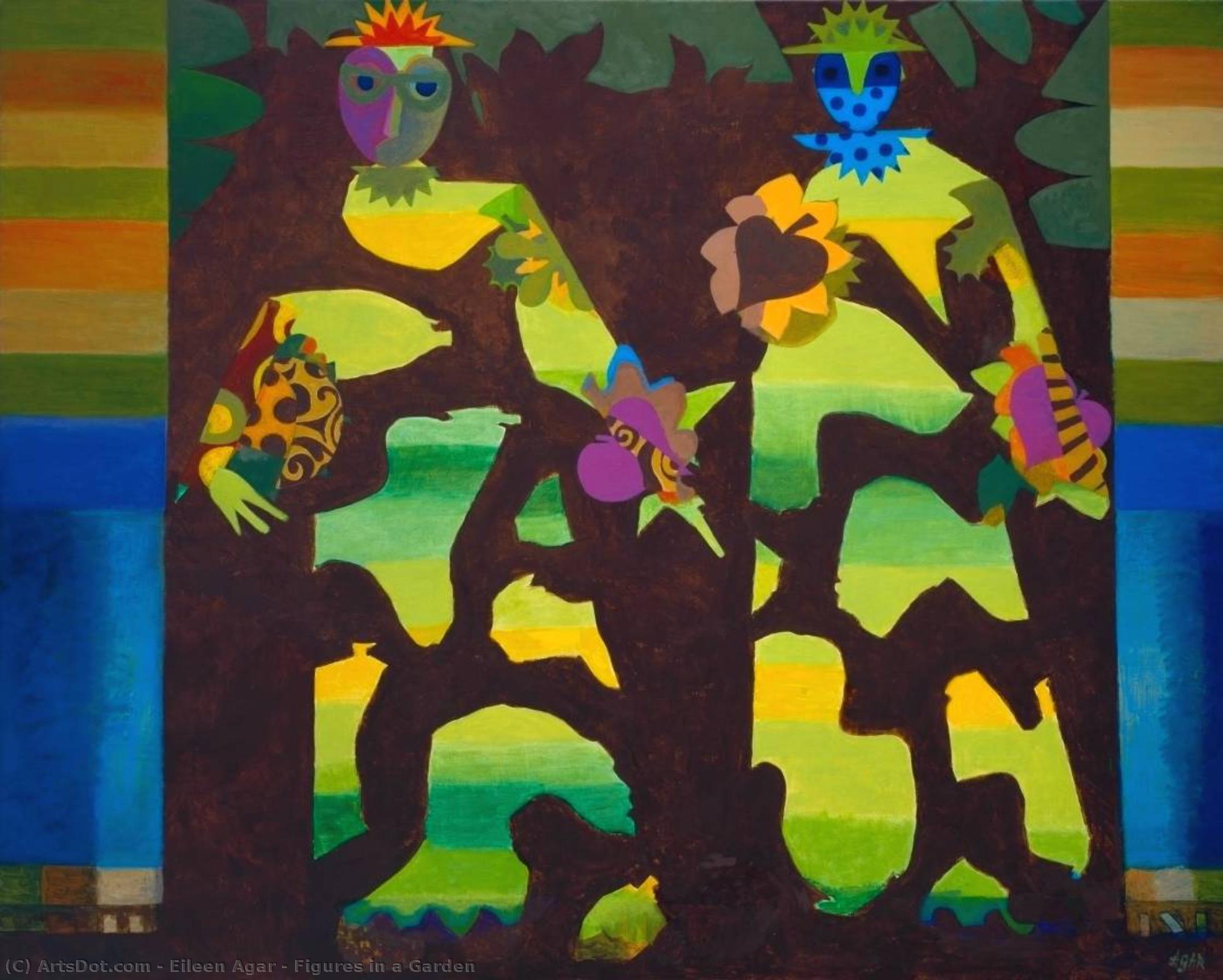
In the enchanting realm of Eileen Agar’s Figures in a Garden, the boundaries between reality and the subconscious dissolve into a vibrant tapestry of color and shape. This 1981 masterpiece serves as a breathtaking window into a surrealist Eden, where the natural world is reimagined through a lens of playful abstraction. The viewer is immediately greeted by an explosion of saturated hues—electric yellows, deep blues, and soft pinks—that dance across the canvas in a rhythmic, almost musical arrangement. Rather than a literal depiction of a garden, Agar presents a dreamlike sanctuary where stylized figures wander amidst simplified foliage, creating a scene that feels both intimately familiar and wonderfully otherworldly.
The composition is a masterclass in balanced tension. While the central area is anchored by dark, dense shapes suggesting deep thickets or ancient trees, the edges of the canvas are framed by vertical bands of color that lend a sense of structured enclosure. This creates a feeling of being tucked away within a secret, private world. The figures themselves are stripped of individual identity, rendered instead as biomorphic forms that interact with their environment in ways that defy traditional narrative. They exist not to tell a specific story, but to embody the very essence of movement and existence within this enchanted landscape.
The Language of Surrealist Abstraction
Technically, Figures in a Garden showcases Agar’s profound ability to manipulate oil paint into flat, graphic layers that evoke the precision of modernism. The use of strong, decisive black outlines provides a structural clarity to the organic shapes, reminiscent of the works of Joan Miró or Paul Klee. This technique lends the painting a certain whimsical, almost illustrative quality, yet the depth of color and the complexity of the overlapping forms prevent it from ever feeling superficial. There is no heavy impasto here; instead, the smooth application of paint allows the light to appear diffused and even, as if the entire scene were illuminated by a soft, eternal twilight.
The symbolism within the piece invites endless interpretation, making it a captivating subject for collectors and thinkers alike. The garden serves as a universal archetype for growth, fertility, and the subconscious mind. By stripping away perspective and spatial depth, Agar forces the eye to focus on the relationships between shapes—the way a circular flower petal mirrors the curve of a figure’s limb, or how a dark leaf provides a stage for a bright yellow bloom. This flattening of space creates a decorative elegance that is highly sought after by interior designers looking to introduce a focal point of sophisticated, avant-garde energy into a contemporary space.
An Emotional Resonance for the Modern Collector
Beyond its visual splendor, the emotional impact of this work lies in its ability to evoke a sense of mystery and quiet wonder. There is a subtle duality at play: while the bright palette suggests joy and whimsy, the ambiguous actions of the figures and the dense, dark foliage introduce a touch of the uncanny. It is an artwork that rewards prolonged contemplation, offering new layers of meaning with every glance. For those seeking to adorn their homes or galleries with a piece that transcends mere decoration, Figures in a Garden offers a profound connection to the Surrealist legacy.
Owning a high-quality reproduction of this work allows one to bring the transformative power of Eileen Agar’s vision into the everyday environment. It is more than just an image; it is an invitation to wander through a landscape where the imagination knows no bounds, making it an ideal acquisition for anyone moved by the intersection of modern abstraction and the enduring magic of the natural world.
Biografia dell'artista
Primi Anni e Formazione
- Nata: Buenos Aires, Argentina (1899)
- Morta: 1991
- Eileen Forrester Agar è nata a Buenos Aires da padre scozzese e madre americana. La sua famiglia si trasferì a Londra nel 1911.
- Frequentò la Heathfield St Mary's School e successivamente studiò alla Byam Shaw School of Art (1919) e alla Slade School of Fine Art (1925-1926).
- Ulteriori studi furono intrapresi a Parigi dal 1928 al 1930.
- Le prime influenze includevano Edmund Dulac e Arthur Rackham, così come artisti come Charles Sims e Paul Nash.
Influenze Surrealiste e Sviluppo Artistico
- Alla fine degli anni '20, Agar si associò al movimento surrealista dopo aver incontrato André Breton e Paul Éluard a Parigi.
- Fu membro del London Group dal 1934 in poi.
- Il suo lavoro durante gli anni '30 esplorò oggetti naturali in modo spensierato, esemplificato da fotografie come "Bum-Thumb Rock".
- Agar iniziò a sperimentare con tecniche automatiche e nuovi materiali, incorporando fotografia, collage e creazione di oggetti nella sua pratica.
- Una significativa collaborazione avvenne con Paul Nash negli anni '30, risultando in opere come "Seashore Monster at Swanage", che dimostrava l'influenza degli oggetti trovati.
Opere Chiave e Stile Artistico
- "The Flying Pillar/Three Symbols" (1930): Un dipinto surrealista precoce che riflette il coinvolgimento di Agar con il manifesto di Breton.
- "Angel of Anarchy" (1936-40): Una testa in gesso ricoperta di tessuto e materiali, ora nella collezione della Tate, che mostra il suo innovativo uso dei materiali.
- Il suo stile artistico era caratterizzato da una miscela di forme biomorfiche, simbolismo personale e immagini oniriche.
- L'opera di Agar incorporava spesso elementi di mitologia, natura e autobiografia.
- Ha abilmente combinato pittura, collage, fotografia e creazione di oggetti per creare composizioni uniche ed evocative.
Carriera Successiva e Eredità
- Dopo la seconda guerra mondiale, Agar sperimentò un rinnovato periodo di produttività artistica con numerose mostre personali a partire dal 1946.
- Le sue opere successive esplorarono tecniche pittoriche tachiste con elementi surrealisti.
- Agar pubblicò la sua autobiografia, "A Look at My Life", nel 1988.
- Fu eletta Associate della Royal Academy nel 1990.
- L'opera di Eileen Agar è ora riconosciuta per il suo ruolo pionieristico nel Surrealismo britannico e per il suo approccio innovativo ai materiali e alle immagini. La sua eredità continua a ispirare gli artisti oggi.
Significato Storico
- Agar fu l'unica donna britannica ad esporre opere alla Mostra Internazionale Surrealista del 1936 a Londra.
- I suoi contributi hanno contribuito a plasmare lo sviluppo del Surrealismo in Gran Bretagna, sfidando i confini artistici convenzionali.
- È ricordata come una figura significativa nell'arte del XX secolo, nota per la sua visione unica e l'approccio sperimentale.
- L'opera di Agar è stata esposta in importanti musei in tutto il mondo, consolidando il suo posto nella storia dell'arte.

Eileen Agar
1899 - 1991 , Argentina
Dati rapidi
- Artisti Influenti:
- Edmund Dulac
- Arthur Rackham
- Charles Sims
- Paul Nash
- Data Di Morte: 17 novembre 1991
- Data Di Nascita: 1° dicembre 1899
- Luogo Di Nascita: Buenos Aires, Argentina
- Movimento Artistico: Surrealismo
- Nazionalità: Britannico-argentina
- Nome Completo: Eileen Forrester Agar
- Opere Notevoli:
- The Flying Pillar
- Three Symbols
- Angel of Anarchy
Articoli correlati
Stephen Chaplin: A Study in Light, Form & Emotional Space in Contemporary Landscape Painting
Explore the captivating landscape paintings of Stephen Chaplin, renowned for his 'Treatment in Minors' series & unique blend of Pop Art and historical realism. Discover his artistic journey & emotional depth.
Orphism: A Symphony of Color and Form – Exploring the Abstract Roots of Modern Art
Explore Orphism, the vibrant abstract art movement pioneered by Robert & Sonia Delaunay. Discover its unique color theory, lasting influence on modern art, and how to bring this 'symphony of color' into your home with OriginalUniqueArt.
Marcel Dyf: A Study in Belgian Surrealist Landscape and the Poetics of Memory
Explore the captivating landscapes of Marcel Dyf (1899-1985). Discover his Impressionist roots, subtle Surrealism, and enduring legacy. Learn about his life, art, and value with OriginalUniqueArt.
Beatrice Parsons: A Study in Abstract Expressionism & the Poetics of Color Field Painting
Explore the captivating world of Beatrice Parsons, a pioneering British abstract expressionist. Discover her journey from garden watercolors to evocative color field paintings and learn about her place within art history.

Concrete Visions: Exploring the Urban Landscape in Painting – From Realism to Contemporary Art
Explore the evolution of cityscape painting from Realism to contemporary art with OriginalUniqueArt. Discover key artists & invest in timeless urban visions. Expert guidance, museum-quality reproductions.


