

 Anteprima in scala reale
 Condividi
 Condividi
 Dettagli
 Guida stampabile

 Scarica
 Articoli simili
 Radiografia
 Slideshow
 Statistiche
Indian Weaver


 Leggi tutto
Riproduzione a olio fatta a mano
Olio su tela dipinto a mano nelle tue dimensioni e con la tua cornice, realizzato su ordinazione dai nostri artisti. ( Passa alle stampe Passa all'immagine digitale)




P118B €10

P118H €10

P118W €10

P438Z €10

P508JH €12

P508YH €12

P805H €10

P805Z €10

P919BZ €10

P919G €10

P919XJ €10

P959ZH €10

P968JZ €12

W106C €8

W218G €10

W218JH €8

W218Y €10

W307PJ €10

W316G €10

W316PJ €8

W316Y €10

W398PJ €8

W4111J €10

W500HY €15

W500JH €15

W692G €12

W849H €8

W940BG €15

W953PJ €8




Scegli tra le nostre dimensioni predefinite, che rispettano le proporzioni originali dell'opera d'arte.

È possibile inserire dimensioni personalizzate per adattare l'opera a una cornice o a uno spazio specifico. Se la dimensione selezionata non corrisponde alle proporzioni dell'immagine originale, provvederemo a ritagliare l'opera o a estendere il dipinto con elementi aggiuntivi dipinti a mano. Un mockup digitale ti sarà inviato per approvazione prima dell'inizio della produzione.
Si prega di notare che l'anteprima a schermo non riflette il ritaglio o l'estensione effettivi. Solo il mockup mostrerà accuratamente la composizione finale.
Sebbene siano disponibili dimensioni personalizzate, consigliamo di selezionare una dimensione dall'elenco predefinito per preservare le proporzioni originali.
Dopo l'ordine, il team di OriginalUniqueArt.com contatterà il cliente via e-mail per ricevere le istruzioni e fornirà un'anteprima del mockup
Consegna in tutto il mondo () in 3/4 settimane anziché nelle normali 5 settimane. (30 Settembre). Nessun compromesso sulla qualità.

Spedizione espressa gratuita in tutto il mondo

Tela in lino di alta qualità

Assicurazione completa sulla spedizione

Garanzia di rimborso dei dazi doganali

Garanzia di perfetta fedeltà cromatica

Politica di reso entro 100 giorni (solo per difetti di fabbricazione)

Garanzia di rimborso al 100%

Sconto per acquisti multipli
 L'opzione vetro è disponibile solo per dimensioni inferiori a 110 cm

Indian Weaver
Tecnica di riproduzione
Dimensioni della riproduzione
-


Prezzo totale
€ 258
A Tapestry of Tradition: Exploring Eanger Irving Couse's "Indian Weaver"
To gaze upon Eanger Irving Couse’s Indian Weaver is to step across the threshold of time, into a moment steeped in quiet industry and profound cultural continuity. This painting transcends a mere depiction; it is a living narrative rendered in paint, capturing the intimate rhythm of daily life among Native American communities near the turn of the 20th century. The scene centers on an adult weaver, her hands gracefully engaged with the loom—a testament to generations of skill and knowledge. Beside her, a child watches, their presence acting as both observer and inheritor, suggesting that the craft itself is a sacred lineage passed from one heart to the next.
Mastery in Depiction: Technique and Composition
Couse’s technique here showcases his remarkable ability to blend academic precision with heartfelt ethnographic observation. The composition is rich, drawing the viewer into the domestic space where creation happens. Beyond the central figures—the focused weaver and the attentive child—the artist has thoughtfully populated the scene with supporting details: baskets resting near the wall, carefully placed bowls in the foreground, and a cup catching the light in the upper corner. These objects are not mere filler; they anchor the narrative, suggesting a life lived fully within this immediate environment. The handling of light seems to illuminate the texture of the woven cloth and the gentle concentration on the weaver's face, giving the entire piece a luminous, almost palpable quality.
The Cultural Resonance: Context and Symbolism
Painted in 1914, this work emerges from a period when American art was deeply engaged with documenting—and sometimes romanticizing—the cultures of its indigenous peoples. Couse, known for his deep empathy, approached these subjects not as exotic curiosities, but with palpable dignity. The act of weaving itself is profoundly symbolic; it represents connection—connecting threads into fabric, connecting past to present, and connecting the individual to their community. It speaks to resilience, patience, and the enduring beauty found in skilled, repetitive labor.
Bringing the Spirit Home: For the Modern Collector
For those seeking art that whispers stories rather than shouting statements, Indian Weaver offers a sanctuary of quiet contemplation. Whether adorning an entryway or gracing a formal sitting room, this piece introduces an element of timeless, global artistry. Owning a reproduction allows one to connect with Couse’s unique bridge between European artistic training and the soulful authenticity of American frontier life. It is an heirloom quality piece that invites conversation, sparking dialogue about tradition, craftsmanship, and the enduring human spirit.
An Emotional Echo
The emotional impact of this painting is one of gentle reverence. There is a palpable sense of peace emanating from the loom—a quietude broken only by the imagined *click-clack* of the shuttle. It invites us to slow down, to observe the meticulous beauty in the making of something lasting. This artwork does more than decorate; it enriches the atmosphere with history, grace, and the enduring warmth of human connection.
Biografia dell'artista
Primi Anni e Formazione
- Nato: 3 settembre 1866, Saginaw, Michigan
- Morto: 26 aprile 1936
- Origine: Saginaw, Stati Uniti d'America
- Un precoce interesse per le culture dei nativi americani si sviluppò crescendo vicino alle tribù Chippewa.
- Frequentò brevemente l'Art Institute di Chicago e poi la National Academy of Design a New York City.
- Studiò all'École des Beaux-Arts e all'Académie Julian sotto William-Adolphe Bouguereau a Parigi per dieci anni. Dipingeva principalmente paesaggi della costa normanna.
Carriera Artistica e Sviluppo
- Dopo essere tornato negli Stati Uniti, trascorse del tempo a New York City ed estati dipingendo in varie località.
- Iniziò a trascorrere le estati a Taos, nel Nuovo Messico, intorno al 1898.
- Studiò e dipinse la vita e la cultura dei nativi americani di Taos.
- Divenne membro fondatore e primo presidente della Taos Society of Artists nel 1915.
- Sviluppò uno stile distintivo che ritraeva la vita dei nativi americani, spesso enfatizzando scene pacifiche e idilliache.
- Il suo lavoro fu influenzato dalla sua formazione accademica a Parigi e dalle sue osservazioni della cultura dei nativi americani.
Opere Principali e Riconoscimenti
- Elk-foot of the Taos Tribe: Considerata la sua opera maestra, acquistata per la collezione nazionale d'arte degli Stati Uniti.
- The Captive: Primo lavoro che raffigura un soggetto nativo americano, esposto al Salon di Parigi nel 1892.
- Numerosi dipinti commissionati dalla Santa Fe Railway tra il 1914 e il 1936, utilizzati come materiale pubblicitario.
- Ricevette premi da varie istituzioni tra cui la National Academy of Design (Altman Prize), Salmagundi Club (Isidor Prize), Pennsylvania Academy of Fine Arts (Lippincott Prize).
- Le sue opere sono conservate in molti musei negli Stati Uniti e a livello internazionale.
Significato Storico e Eredità
- Ha contribuito significativamente allo sviluppo dell'arte occidentale americana, in particolare le rappresentazioni dei nativi americani.
- Ha contribuito a stabilire Taos come un importante centro artistico.
- La sua raffigurazione della vita dei nativi americani ha offerto una prospettiva diversa dalle rappresentazioni più stereotipate comuni all'epoca.
- La Eanger Irving Couse House and Studio—Joseph Henry Sharp Studios è elencata nel National Register of Historic Places, preservando la sua eredità per le generazioni future.
- Il suo lavoro continua a essere esposto e studiato, fornendo spunti sulla storia dell'arte americana e sulla rappresentazione culturale.
Vita Personale
- Sposò Virginia Walker nel 1889.
- Ebbe un figlio, Kibbey Couse.
- Virginia svolse un ruolo significativo a sostegno della sua carriera artistica e fornendo feedback critici.
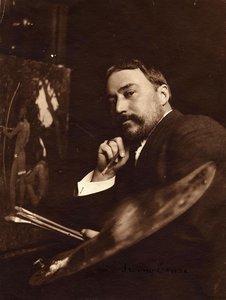
Eanger Irving Couse
1866 - 1936 , Stati Uniti d'America
Informazioni rapide
- Artistic Movement Or Style: Impressionismo, Western Art
- Artists Who Influenced This Artist:
- William-Adolphe Bouguereau
- Tony Robert Fleury
- Date Of Birth: 3 settembre 1866
- Date Of Death: 26 aprile 1936
- Full Name: Eanger Irving Couse
- Nationality: Americano
- Notable Artworks:
- Elk-foot of the Taos tribe
- The captive
- Coastal Scene, Etaples
- Place Of Birth: Saginaw, Stati Uniti
Articoli correlati

Realismo Americano: 10 Capolavori che Hanno Definito un'Epoca | OriginalUniqueArt
Esplora i 10 capolavori del Realismo Americano con OriginalUniqueArt. Scopri Andrew Wyeth, Edward Hopper e George Bellows. Quadri iconici, storie uniche e riproduzioni di alta qualità per la tua casa. Esplora la collezione online!
James Otto Lewis: Navigating American Modernism Through Regional Identity & Stylistic Innovation
Explore the captivating portraits of James Otto Lewis, a pivotal figure bridging 19th-century realism & American Modernism. Discover his groundbreaking work documenting Native American culture and regional identity.

Grant Wood e il Regionalismo Americano: Identità, Mito e Paesaggio Rurale
Esplora il Regionalismo Americano con Grant Wood e i suoi capolavori. Analisi approfondita di 'American Gothic', contesto storico, influenze artistiche e l'eredità di questo movimento iconico. Scopri la vera essenza dell'arte rurale americana.
Eanger Irving Couse: Un Ponte tra Tradizione e Modernità nell'Arte del Sud-Ovest Americano
Scopri Eanger Irving Couse, figura chiave dell'arte del Sud-Ovest americano e fondatore della Taos Society of Artists. Analisi approfondita del suo stile, opere iconiche e l'eredità artistica che continua a ispirare.
Shadow Catcher: Edward S. Curtis & the Ethnographic Portraiture of a Vanishing West
Explore the life & work of Edward S. Curtis, the 'Shadow Catcher,' and his groundbreaking photographic documentation of Native American cultures. Discover iconic images from *The North American Indian* and a critical look at his lasting legacy.

