

 Anteprima in scala reale
 Condividi
 Condividi
 Dettagli
 Guida stampabile

 Scarica
 Articoli simili
 Radiografia
 Slideshow
 Statistiche
Indian Painter
 Oil
Oil- WallArt
- Taos Society of Artists
 19th Century
 61.0 x 74.0 cm
 Leggi tutto
Giclée / Stampe d'arte
Stampa giclée o su tela di qualità museale, con produzione rapida e diverse opzioni di finitura. ( Ordina la riproduzione dipinta a mano Passa all'immagine digitale)




P118B €10

P118H €10

P118W €10

P438Z €10

P508JH €12

P508YH €12

P805H €10

P805Z €10

P919BZ €10

P919G €10

P919XJ €10

P959ZH €10

P968JZ €12

W106C €8

W218G €10

W218JH €8

W218Y €10

W307PJ €10

W316G €10

W316PJ €8

W316Y €10

W398PJ €8

W4111J €10

W500HY €15

W500JH €15

W692G €12

W849H €8

W940BG €15

W953PJ €8




Scegli tra le nostre dimensioni predefinite, che rispettano le proporzioni originali dell'opera d'arte.

È possibile inserire dimensioni personalizzate per adattare l'opera a una cornice o a uno spazio specifico. Se la dimensione selezionata non corrisponde alle proporzioni dell'immagine originale, procederemo al ritaglio dell'opera o all'estensione dell'immagine con un bordo specchiato o a tinta unita. Un mockup digitale ti verrà inviato per approvazione prima dell'inizio della produzione.
Si prega di notare che l'anteprima a schermo non riflette il ritaglio o l'estensione effettivi. Solo il mockup mostrerà accuratamente la composizione finale.
Sebbene siano disponibili dimensioni personalizzate, si raccomanda di selezionare una dimensione dall'elenco predefinito per preservare le proporzioni originali.
Consegna in tutto il mondo () in 2 settimane invece delle normali 4/5 settimane. (2 Ottobre)

Spedizione espressa gratuita in tutto il mondo

Tela in lino di alta qualità

Assicurazione completa sulla spedizione

Garanzia di rimborso dei dazi doganali

Garanzia di perfetta fedeltà cromatica

Politica di reso entro 100 giorni (solo per difetti di fabbricazione)

Garanzia di rimborso al 100%

Sconto per acquisti multipli
 L'opzione vetro è disponibile solo per dimensioni inferiori a 110 cm

Indian Painter
Giclée / Stampe d'arte
Dimensioni della riproduzione
-


Prezzo totale
€ 69
A Tender Moment Captured in Time
In the evocative masterpiece "Indian Painter," Eanger Irving Couse invites us into a sanctuary of familial warmth and cultural continuity. The scene unfolds with a profound sense of intimacy, centering on a mother and her two children engaged in the simple, timeless joy of flying a kite. There is a rhythmic grace to the composition; as the mother guides her young ones, her presence acts as an anchor of stability and tradition amidst the breezy freedom of the outdoors. The scattered bowls near the group suggest a recent or ongoing shared meal, adding a layer of domestic tranquility to the landscape. This is not merely a depiction of play, but a celebration of togetherness, where the act of teaching becomes a bridge between generations.
The painting breathes with the soft, atmospheric light characteristic of Couse’s most celebrated works. Through his masterful use of color and texture, the artist captures the subtle interplay of light upon the skin of the subjects and the delicate fabric of the kite. His technique, rooted in the rigorous traditions of academic painting but infused with a soulful sensitivity, allows the viewer to feel the warmth of the sun and the gentle movement of the wind. The palette is harmoniously balanced, utilizing earthy tones that ground the figures within their natural environment, while subtle highlights draw the eye to the emotional focal points: the focused expressions of the children and the nurturing gaze of the mother.
The Legacy of the Taos Society
To understand "Indian Painter" is to understand the heart of the Taos Society of Artists. Eanger Irving Couse was a pivotal figure in this movement, dedicated to portraying Native American life with a level of dignity and respect that was revolutionary for his era. Unlike many of his contemporaries who leaned into sensationalism, Couse sought a deeper connection, often drawing from his own lifelong fascination with the indigenous cultures of the American Southwest. This painting serves as a testament to his ability to find the universal within the specific; while the cultural markers are distinct, the themes of parental guidance and childhood wonder are globally resonant.
For the discerning collector or interior designer, this piece offers more than just visual beauty; it provides a narrative depth that can transform a space. The artwork possesses a quiet strength, making it an ideal centerpiece for a room designed for reflection or sophisticated comfort. Whether placed in a sun-drenched gallery or a cozy study, the painting’s ability to evoke nostalgia and peace makes it a timeless acquisition. It stands as a window into a vanished era, preserved through the brushstrokes of a master who saw the profound beauty in the everyday rhythms of life.
Domande e risposte
Quali stati d'animo ed emozioni si fondono in "Indian Painter"?
In "Indian Painter", un'atmosfera Nostalgic accompagna un'emozione Comforting.
Dove posso acquistare una stampa di "Indian Painter" di Eanger Irving Couse?
È possibile ordinare una stampa di "Indian Painter" di Eanger Irving Couse direttamente su questa pagina: una stampa fine art su tela di cotone o carta canvas d'archivio.
Per quale occasione è consigliato "Indian Painter" di Eanger Irving Couse come regalo?
"Indian Painter" è suggerito come regalo per Mother's Day.
Qual è il posto di "Indian Painter" di Eanger Irving Couse nella storia dell'arte?
La classificazione storico-artistica di "Indian Painter" di Eanger Irving Couse è Taos Society of Artists, nel periodo 19th Century.
Quale emozione trasmette l'opera del Taos Society of Artists "Indian Painter"?
L'emozione Comforting di "Indian Painter" accompagna il suo stile Taos Society of Artists.
Chi vende copie dipinte a mano di "Indian Painter" di Eanger Irving Couse?
"Indian Painter" è disponibile come una riproduzione a olio dipinta a mano su tela di lino. L'ordine può essere effettuato su questa pagina, con la possibilità di scegliere diverse dimensioni.
Chi è l'artista dietro "Indian Painter"?
"Indian Painter" è stata creata da Eanger Irving Couse. Le informazioni contenute in questa pagina descrivono l'opera originale di Eanger Irving Couse.
Biografia dell'artista
Primi Anni e Formazione
- Nato: 3 settembre 1866, Saginaw, Michigan
- Morto: 26 aprile 1936
- Origine: Saginaw, Stati Uniti d'America
- Un precoce interesse per le culture dei nativi americani si sviluppò crescendo vicino alle tribù Chippewa.
- Frequentò brevemente l'Art Institute di Chicago e poi la National Academy of Design a New York City.
- Studiò all'École des Beaux-Arts e all'Académie Julian sotto William-Adolphe Bouguereau a Parigi per dieci anni. Dipingeva principalmente paesaggi della costa normanna.
Carriera Artistica e Sviluppo
- Dopo essere tornato negli Stati Uniti, trascorse del tempo a New York City ed estati dipingendo in varie località.
- Iniziò a trascorrere le estati a Taos, nel Nuovo Messico, intorno al 1898.
- Studiò e dipinse la vita e la cultura dei nativi americani di Taos.
- Divenne membro fondatore e primo presidente della Taos Society of Artists nel 1915.
- Sviluppò uno stile distintivo che ritraeva la vita dei nativi americani, spesso enfatizzando scene pacifiche e idilliache.
- Il suo lavoro fu influenzato dalla sua formazione accademica a Parigi e dalle sue osservazioni della cultura dei nativi americani.
Opere Principali e Riconoscimenti
- Elk-foot of the Taos Tribe: Considerata la sua opera maestra, acquistata per la collezione nazionale d'arte degli Stati Uniti.
- The Captive: Primo lavoro che raffigura un soggetto nativo americano, esposto al Salon di Parigi nel 1892.
- Numerosi dipinti commissionati dalla Santa Fe Railway tra il 1914 e il 1936, utilizzati come materiale pubblicitario.
- Ricevette premi da varie istituzioni tra cui la National Academy of Design (Altman Prize), Salmagundi Club (Isidor Prize), Pennsylvania Academy of Fine Arts (Lippincott Prize).
- Le sue opere sono conservate in molti musei negli Stati Uniti e a livello internazionale.
Significato Storico e Eredità
- Ha contribuito significativamente allo sviluppo dell'arte occidentale americana, in particolare le rappresentazioni dei nativi americani.
- Ha contribuito a stabilire Taos come un importante centro artistico.
- La sua raffigurazione della vita dei nativi americani ha offerto una prospettiva diversa dalle rappresentazioni più stereotipate comuni all'epoca.
- La Eanger Irving Couse House and Studio—Joseph Henry Sharp Studios è elencata nel National Register of Historic Places, preservando la sua eredità per le generazioni future.
- Il suo lavoro continua a essere esposto e studiato, fornendo spunti sulla storia dell'arte americana e sulla rappresentazione culturale.
Vita Personale
- Sposò Virginia Walker nel 1889.
- Ebbe un figlio, Kibbey Couse.
- Virginia svolse un ruolo significativo a sostegno della sua carriera artistica e fornendo feedback critici.
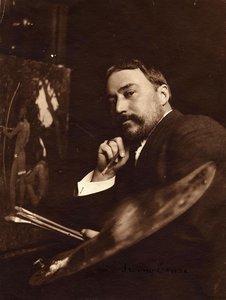
Eanger Irving Couse
1866 - 1936 , Stati Uniti d'America
Informazioni rapide
- Artistic Movement Or Style: Impressionismo, Western Art
- Artists Who Influenced This Artist:
- William-Adolphe Bouguereau
- Tony Robert Fleury
- Date Of Birth: 3 settembre 1866
- Date Of Death: 26 aprile 1936
- Full Name: Eanger Irving Couse
- Nationality: Americano
- Notable Artworks:
- Elk-foot of the Taos tribe
- The captive
- Coastal Scene, Etaples
- Place Of Birth: Saginaw, Stati Uniti
Articoli correlati

Turn Family Photos into Masterpiece Oil Portraits: The Art of Timeless Legacy
Transform cherished family memories into timeless legacies with bespoke, hand-painted oil portraits. Our master artists reimagine your photos as museum-quality masterpieces, offering unparalleled craftsmanship and elegance for the discerning collector.

