

 Anteprima in scala reale
 Condividi
 Condividi
 Dettagli
 Guida stampabile

 Scarica
 Articoli simili
 Radiografia
 Slideshow
 Statistiche
Flute Player
 Oil On Panel
- Taos Society of Artists
 1931
1931 31.0 x 41.0 cm
 Collezione privata
 Leggi tutto
Giclée / Stampe d'arte
Stampa giclée o su tela di qualità museale, con produzione rapida e diverse opzioni di finitura. ( Ordina la riproduzione dipinta a mano Passa all'immagine digitale)




P118B $10

P118H $10

P118W $10

P438Z $10

P508JH $12

P508YH $12

P805H $10

P805Z $10

P919BZ $10

P919G $10

P919XJ $10

P959ZH $10

P968JZ $12

W106C $8

W218G $10

W218JH $8

W218Y $10

W307PJ $10

W316G $10

W316PJ $8

W316Y $10

W398PJ $8

W4111J $10

W500HY $15

W500JH $15

W692G $12

W849H $8

W940BG $15

W953PJ $8




Scegli tra le nostre dimensioni predefinite, che rispettano le proporzioni originali dell'opera d'arte.

È possibile inserire dimensioni personalizzate per adattare l'opera a una cornice o a uno spazio specifico. Se la dimensione selezionata non corrisponde alle proporzioni dell'immagine originale, procederemo al ritaglio dell'opera o all'estensione dell'immagine con un bordo specchiato o a tinta unita. Un mockup digitale ti verrà inviato per approvazione prima dell'inizio della produzione.
Si prega di notare che l'anteprima a schermo non riflette il ritaglio o l'estensione effettivi. Solo il mockup mostrerà accuratamente la composizione finale.
Sebbene siano disponibili dimensioni personalizzate, si raccomanda di selezionare una dimensione dall'elenco predefinito per preservare le proporzioni originali.
Consegna in tutto il mondo () in 2 settimane invece delle normali 4/5 settimane. (26 Settembre)

Spedizione espressa gratuita in tutto il mondo

Tela in lino di alta qualità

Assicurazione completa sulla spedizione

Garanzia di rimborso dei dazi doganali

Garanzia di perfetta fedeltà cromatica

Politica di reso entro 100 giorni (solo per difetti di fabbricazione)

Garanzia di rimborso al 100%

Sconto per acquisti multipli
 L'opzione vetro è disponibile solo per dimensioni inferiori a 110 cm

Flute Player
Giclée / Stampe d'arte
Dimensioni della riproduzione
-


Prezzo totale
$ 80
The Serene Contemplation: Eanger Irving Couse’s “Flute Player”
Eager Irving Couse's "Flute Player," painted in 1931, isn’t merely a portrait; it’s a portal into the heart of Native American culture and spirituality. This oil-on-panel masterpiece, currently residing in a private collection in Akron, Ohio, captures a moment of profound stillness – a man deeply immersed in his music beneath the warm glow of what appears to be a desert sunset. Couse, a pivotal figure in the Taos Society of Artists, dedicated much of his career to respectfully portraying the lives and traditions of the Pueblo people, and “Flute Player” stands as a testament to that commitment.
The painting immediately draws the eye with its harmonious blend of realism and romanticism. Couse’s signature style—characterized by a high finish and an intense focus on capturing the quiet dignity of Native American life—is evident in every brushstroke. He masterfully employs strong sidelight, reminiscent of the dramatic lighting found in Western landscapes, to sculpt the subject's form and imbue him with a sense of both strength and vulnerability. The meticulous detail in the rendering of his traditional attire – the intricately woven headdress adorned with feathers, the beaded necklace, and the flowing garment – speaks volumes about the artistry and cultural significance embedded within each element.
A Symphony of Symbolism
Beyond its aesthetic beauty, “Flute Player” is rich in symbolic meaning. The flute itself—a central instrument in Native American ceremonies and storytelling—represents connection to the spirit world, a conduit for communication with ancestors and deities. The man’s posture, seated on the ground and completely absorbed in his music, suggests a meditative state, a deliberate disconnection from the everyday concerns of life. The carefully placed bowls, both near the bottom left corner and further back on the right side, aren't simply decorative; they subtly evoke themes of sustenance, community, and domesticity – elements deeply intertwined with Native American culture.
The choice of a solitary figure playing in what appears to be an open space is particularly significant. It speaks to the individual’s relationship with nature, with spirituality, and with the timeless rhythms of life. The absence of other figures reinforces this sense of introspection and communion with something larger than oneself.
The Artist's Vision: Couse and the Taos Society
Eanger Irving Couse’s work is inextricably linked to his involvement with the Taos Society of Artists, a group that played a crucial role in shaping the artistic landscape of the American Southwest. Founded in 1912, the society sought to capture the essence of Southwestern life and culture through authentic representation. Couse's deep respect for the Native Americans he depicted is palpable in “Flute Player,” reflecting his desire to portray their lives with dignity and understanding – a rare approach for an artist of his time.
His artistic training in Europe, particularly under Adolphe Bouguereau and Tony Robert-Fleury, provided him with the technical skills to translate his vision onto canvas. However, it was his immersion in the culture of Taos that truly informed his work, allowing him to capture not just a likeness but also the spirit and soul of its subjects.
A Legacy of Quiet Reverence
“Flute Player” is more than just a beautiful painting; it’s a window into a vanished world. It's a poignant reminder of the importance of cultural preservation, artistic integrity, and the power of art to connect us to our shared human heritage. Couse’s ability to capture both the physical details and the emotional essence of Native American life is truly remarkable, solidifying “Flute Player” as a timeless masterpiece that continues to resonate with viewers today.
Size: 31 x 41 cm
Date: 1931
Biografia dell'artista
Primi Anni e Formazione
- Nato: 3 settembre 1866, Saginaw, Michigan
- Morto: 26 aprile 1936
- Origine: Saginaw, Stati Uniti d'America
- Un precoce interesse per le culture dei nativi americani si sviluppò crescendo vicino alle tribù Chippewa.
- Frequentò brevemente l'Art Institute di Chicago e poi la National Academy of Design a New York City.
- Studiò all'École des Beaux-Arts e all'Académie Julian sotto William-Adolphe Bouguereau a Parigi per dieci anni. Dipingeva principalmente paesaggi della costa normanna.
Carriera Artistica e Sviluppo
- Dopo essere tornato negli Stati Uniti, trascorse del tempo a New York City ed estati dipingendo in varie località.
- Iniziò a trascorrere le estati a Taos, nel Nuovo Messico, intorno al 1898.
- Studiò e dipinse la vita e la cultura dei nativi americani di Taos.
- Divenne membro fondatore e primo presidente della Taos Society of Artists nel 1915.
- Sviluppò uno stile distintivo che ritraeva la vita dei nativi americani, spesso enfatizzando scene pacifiche e idilliache.
- Il suo lavoro fu influenzato dalla sua formazione accademica a Parigi e dalle sue osservazioni della cultura dei nativi americani.
Opere Principali e Riconoscimenti
- Elk-foot of the Taos Tribe: Considerata la sua opera maestra, acquistata per la collezione nazionale d'arte degli Stati Uniti.
- The Captive: Primo lavoro che raffigura un soggetto nativo americano, esposto al Salon di Parigi nel 1892.
- Numerosi dipinti commissionati dalla Santa Fe Railway tra il 1914 e il 1936, utilizzati come materiale pubblicitario.
- Ricevette premi da varie istituzioni tra cui la National Academy of Design (Altman Prize), Salmagundi Club (Isidor Prize), Pennsylvania Academy of Fine Arts (Lippincott Prize).
- Le sue opere sono conservate in molti musei negli Stati Uniti e a livello internazionale.
Significato Storico e Eredità
- Ha contribuito significativamente allo sviluppo dell'arte occidentale americana, in particolare le rappresentazioni dei nativi americani.
- Ha contribuito a stabilire Taos come un importante centro artistico.
- La sua raffigurazione della vita dei nativi americani ha offerto una prospettiva diversa dalle rappresentazioni più stereotipate comuni all'epoca.
- La Eanger Irving Couse House and Studio—Joseph Henry Sharp Studios è elencata nel National Register of Historic Places, preservando la sua eredità per le generazioni future.
- Il suo lavoro continua a essere esposto e studiato, fornendo spunti sulla storia dell'arte americana e sulla rappresentazione culturale.
Vita Personale
- Sposò Virginia Walker nel 1889.
- Ebbe un figlio, Kibbey Couse.
- Virginia svolse un ruolo significativo a sostegno della sua carriera artistica e fornendo feedback critici.
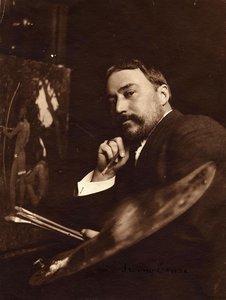
Eanger Irving Couse
1866 - 1936 , Stati Uniti d'America
Informazioni rapide
- Artistic Movement Or Style: Impressionismo, Western Art
- Artists Who Influenced This Artist:
- William-Adolphe Bouguereau
- Tony Robert Fleury
- Date Of Birth: 3 settembre 1866
- Date Of Death: 26 aprile 1936
- Full Name: Eanger Irving Couse
- Nationality: Americano
- Notable Artworks:
- Elk-foot of the Taos tribe
- The captive
- Coastal Scene, Etaples
- Place Of Birth: Saginaw, Stati Uniti
Articoli correlati
James Otto Lewis: Navigating American Modernism Through Regional Identity & Stylistic Innovation
Explore the captivating portraits of James Otto Lewis, a pivotal figure bridging 19th-century realism & American Modernism. Discover his groundbreaking work documenting Native American culture and regional identity.

Grant Wood e il Regionalismo Americano: Identità, Mito e Paesaggio Rurale
Esplora il Regionalismo Americano con Grant Wood e i suoi capolavori. Analisi approfondita di 'American Gothic', contesto storico, influenze artistiche e l'eredità di questo movimento iconico. Scopri la vera essenza dell'arte rurale americana.
Henry Farny: Romantic Visions of the American West & Indigenous Life
Explore the evocative paintings of Henry Farny, renowned for his romantic realism & depictions of Native American life in the 19th-century West. Discover his legacy and key artworks at OriginalUniqueArt.

Realismo Americano: 10 Capolavori che Hanno Definito un'Epoca | OriginalUniqueArt
Esplora i 10 capolavori del Realismo Americano con OriginalUniqueArt. Scopri Andrew Wyeth, Edward Hopper e George Bellows. Quadri iconici, storie uniche e riproduzioni di alta qualità per la tua casa. Esplora la collezione online!
Eanger Irving Couse: Un Ponte tra Tradizione e Modernità nell'Arte del Sud-Ovest Americano
Scopri Eanger Irving Couse, figura chiave dell'arte del Sud-Ovest americano e fondatore della Taos Society of Artists. Analisi approfondita del suo stile, opere iconiche e l'eredità artistica che continua a ispirare.

