Anteprima in scala reale
 Condividi
 Condividi
 Dettagli
 Guida stampabile

 Scarica
 Articoli simili
 Radiografia
 Slideshow
 Statistiche
Ciborium


 Leggi tutto
Giclée / Stampe d'arte
Stampa giclée o su tela di qualità museale, con produzione rapida e diverse opzioni di finitura. ( Ordina la riproduzione dipinta a mano Passa all'immagine digitale)




P118B €10

P118H €10

P118W €10

P438Z €10

P508JH €12

P508YH €12

P805H €10

P805Z €10

P919BZ €10

P919G €10

P919XJ €10

P959ZH €10

P968JZ €12

W106C €8

W218G €10

W218JH €8

W218Y €10

W307PJ €10

W316G €10

W316PJ €8

W316Y €10

W398PJ €8

W4111J €10

W500HY €15

W500JH €15

W692G €12

W849H €8

W940BG €15

W953PJ €8




Scegli tra le nostre dimensioni predefinite, che rispettano le proporzioni originali dell'opera d'arte.

Inserisci la larghezza e l'altezza desiderate, per adattarle alla tua cornice o alla tua parete. Una stampa può essere solo ritagliata, mai resa più grande dell'immagine originale; pertanto, un formato con una forma differente comporterà la perdita di una parte dell'opera. Ti invieremo un mockup digitale da approvare prima di procedere con la stampa. L'immagine mostrata in questa pagina non rappresenta il ritaglio reale — solo il mockup lo mostra.
Consegna in tutto il mondo () in 2 settimane invece delle normali 4/5 settimane. (21 Ottobre)

Spedizione espressa gratuita in tutto il mondo

Tela in lino di alta qualità

Assicurazione completa sulla spedizione

Garanzia di rimborso dei dazi doganali

Garanzia di perfetta fedeltà cromatica

Politica di reso entro 100 giorni (solo per difetti di fabbricazione)

Garanzia di rimborso al 100%

Sconto per acquisti multipli
 L'opzione vetro è disponibile solo per dimensioni inferiori a 110 cm

Ciborium
Giclée / Stampe d'arte
Dimensioni della riproduzione
-


Prezzo totale
€ 70
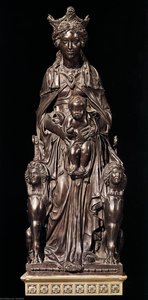
A Glimpse into Sacred Space: Donatello's Ciborium
Donatello’s 1432 *Ciborium*, currently residing within the Treasury of St. Peter’s Basilica, offers a profound and remarkably intimate window into the artistic sensibilities of the Early Renaissance in Florence. More than simply a container for the Eucharist, this sculpted masterpiece is a carefully constructed dialogue between classical antiquity, Christian iconography, and the burgeoning humanist ideals that defined the era. Donatello, already establishing his signature style—characterized by expressive realism and a masterful command of both form and emotion—crafted this work not just as an object of religious devotion but as a testament to his evolving artistic vision.
The ciborium itself is a marvel of Carrara marble, meticulously carved with a sophisticated architectonic composition. Pilasters frame the central relief, creating a sense of depth and drawing the viewer’s eye towards the heart of the piece: a depiction of Mary holding the infant Jesus. This image, often referred to as *Madonna della Febbre* (Our Lady of the Fever), is not merely a representation of the Virgin but embodies a potent symbol of compassion and divine grace. The choice of this particular Madonna—a figure associated with healing and protection—underscores the ciborium’s function as a sacred space intended for contemplation and prayer.
Classical Echoes and Renaissance Innovation
Donatello's debt to classical sculpture is immediately apparent in the *Ciborium*. The composition echoes the grandeur of Roman triumphal arches, with its soaring attic and carefully arranged figures. However, Donatello doesn’t simply replicate ancient forms; he imbues them with a distinctly Renaissance sensibility. Notice the horizontal orientation of the deposition scene—a deliberate departure from the verticality often favored in medieval sculpture—and the use of drapery that is both realistically rendered and subtly theatrical. The inclusion of putti, playful cherubs drawn from classical mythology, further reinforces this fusion of styles.
The upper relief depicts the deposition of Christ, a scene rich with symbolic meaning. The curtains drawn back by these youthful figures—a direct reference to ancient Greco-Roman depictions of mourning—reveal the body of Christ, presented in a manner that is both vulnerable and dignified. The careful attention to detail – from the folds of Mary’s robes to the expressions on the faces of the surrounding angels – speaks volumes about Donatello's technical skill and his desire to capture not just the likeness but also the essence of each figure.
Symbolism, Light, and Spiritual Resonance
Beyond its formal elements, the *Ciborium* is saturated with symbolism. The use of light—particularly in the depiction of Christ’s body—is crucial. The rays emanating from the heavens suggest divine intervention and the promise of salvation. The placement of angels at the base of the ciborium further emphasizes the sacred nature of the space, acting as intermediaries between humanity and God. The overall effect is one of profound reverence and devotion, inviting viewers to contemplate the mysteries of faith.
Donatello’s *Ciborium* stands as a pivotal work in his artistic development—a testament to his ability to synthesize classical influences with Christian iconography and humanist ideals. It's a piece that continues to resonate today, offering a glimpse into the spiritual landscape of Renaissance Florence and demonstrating Donatello’s enduring legacy as one of art history’s most innovative and influential figures.
Domande e risposte
Qual è il tono emotivo di "Ciborium" di Donatello?
"Ciborium" è associata a una sensazione Spiritual. Il tono emotivo descrive l'impressione che l'opera trasmette.
Come posso acquistare una stampa di "Ciborium" di Donatello?
"Ciborium" è disponibile come una stampa fine art su tela di cotone o carta canvas d'archivio. Gli ordini possono essere effettuati nella pagina Stampa Fine Art, nella dimensione che preferisci.
A chi è consigliato "Ciborium" come regalo e per quale occasione?
Il consiglio regalo per "Ciborium" di Donatello unisce Wedding con Statement.
Biografia dell'artista
Primi anni e carriera
Donato di Niccolò di Betto Bardi, conosciuto come Donatello, nacque a Firenze, in Italia, intorno al 1386. Studiò scultura classica, che influenzò pesantemente il suo sviluppo di uno stile rinascimentale precoce. Questo nuovo approccio all'arte e alla cultura sarebbe diventato eventualmente il marchio distintivo del Rinascimento fiorentino.Opere chiave e innovazioni
L’opera più famosa di Donatello, David, fu la prima scultura maschile nuda libera dal periodo antico. Commissionata dalla famiglia Medici, essa mostrava il suo stile innovativo e la sua competenza tecnica. Altre opere notevoli includono:- St. Louis of Toulouse (ora nel museo della basilica di Santa Croce), che presentava una cornice classica progettata da Donatello.
- Il sacrificio di Isacco, creato per il campanile di Santa Maria del Fiore a Firenze, caratterizzato da forti dettagli ritrattistici.
- Crocefix (1425) per Santa Croce, che ritraeva Cristo in un momento di agonia.
Stile artistico e eredità
Lo stile di Donatello può essere diviso in ampie fasi, a partire dallo sviluppo dell'espressività e della monumentalità classica. Il suo lavoro non fu immediatamente accettato dalla comunità ma alla fine divenne il più popolare, influenzando altre corti italiane e artisti europei. Movimenti artistici chiave:- Rinascimento italiano
- Rinascimento rinascimentale precoce
- Arte del Rinascimento fiorentino
Vita personale e stile di lavoro
Donatello era noto per essere amabile e benvoluto, ma scarso nella gestione degli affari della sua carriera. Tendeva ad accettare più commissioni di quante potesse gestire, spesso completando le opere in ritardo o affidandole ad altri scultori. Artisti e opere notevoli:- Leonardo da Vinci: Annunciazione (dettaglio)
- Amico Aspertini: Statua di Pan/Leone che azzanna un cavallo
- Michelangelo Buonarroti: Tondo Pitt
Musei e collezioni d'arte
- Museo della Collegiata (Empoli, Italia): una gemma nascosta del Rinascimento, con opere di Francesco Botticini e Raffaello Botticini.
- Il movimento artistico del primo Rinascimento italiano

Donatello
1386 - 1466 , Italia
Informazioni rapide
- Artisti Influenti:
- Lorenzo Ghiberti
- Michelangelo Buonarroti
- Nanni di Banco
- Artisti Influenzati: ['Leonardo da Vinci']
- Data Di Nascita: c. 1386
- Luogo Di Nascita: Firenze, Italia
- Movimento Artistico: Primo Rinascimento
- Nazionalità: Italiana
- Nome Completo: Donatello (Donato di Niccolò)
- Opere Notevoli:
- David (bronzo)
- St. Louis of Toulouse
- Sacrifice of Isaac
- Crucifix (1425)
Articoli correlati

I 10 Capolavori in Bronzo che Hanno Rivoluzionato la Storia dell'Arte | OriginalUniqueArt
Esplora i 10 capolavori in bronzo che hanno segnato la storia dell'arte! Da Michelangelo a Rodin, scopri le storie e le tecniche dietro queste statue iconiche. Trova riproduzioni artistiche di alta qualità per decorare casa tua con OriginalUniqueArt.com.

The Enduring Form: Sculpture Across History, Technique & Emotional Resonance
Explore the rich history of sculpture with OriginalUniqueArt. Discover key techniques, influential artists & investment potential for discerning collectors. Expert insights into valuing and collecting timeless masterpieces.

The Enduring Form: Exploring Themes & Techniques in Sculpture Across Historical Periods
Explore the rich history of sculpture from ancient masterpieces to contemporary innovations. Discover key techniques, influential artists & investment potential for discerning art collectors.
L'Eredità Duratura della Scultura in Bronzo: Storia, Tecniche e Interpretazioni Contemporanee
Esplora la storia e l'arte della scultura in bronzo con . Scopri tecniche antiche, maestri iconici e consigli per collezionisti esperti. Acquista riproduzioni di alta qualità!

I 10 Capolavori Bronzei che Hanno Rivoluzionato la Storia dell'Arte | OriginalUniqueArt
Esplora i 10 capolavori bronzei che hanno segnato la storia dell'arte! Da Rodin a Michelangelo, scopri le storie e le tecniche dietro queste sculture iconiche. Trova riproduzioni d'arte di alta qualità per decorare la tua casa con OriginalUniqueArt.com.