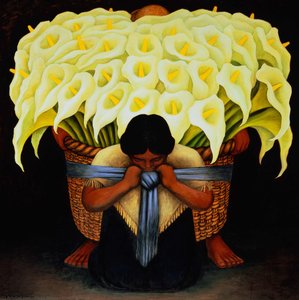
Anteprima in scala reale
 Condividi
 Condividi
 Dettagli
 Guida stampabile

 Scarica
 Articoli simili
 Radiografia
 Slideshow
 Statistiche
Nude with Calla Lilies
 Acrilico su tela
- Opere da parete
- Contemporary Realism
 1942
1942 154.0 x 118.0 cm
 Museo Dolores Olmedo
 Leggi tutto
L'opera d'arte visualizzata in questa pagina è protetta dalle leggi sul diritto d'autore, il che significa che non possiamo legalmente creare o vendere una riproduzione identica. Tale protezione è garantita da accordi internazionali quali la Convenzione di Berna e dalle leggi nazionali, incluse quelle stabilite da Legge sul copyright degli Stati Uniti - Titolo 17. Tutti i diritti riservati. Le immagini presenti su questo sito sono protette da copyright e non possono essere riprodotte o utilizzate senza l'autorizzazione scritta di WahooArt.com o dei rispettivi proprietari del copyright.
Questo metodo è pienamente conforme alle normative sul diritto d'autore poiché non prevede la copia o la duplicazione dell'opera protetta. Si tratta invece di una rielaborazione creativa: un nuovo dipinto che trae ispirazione dall'originale, senza tuttavia esserne identico.
Giclée / Stampe d'arte
Stampa giclée o su tela di qualità museale, con produzione rapida e diverse opzioni di finitura. ( Ordina la riproduzione dipinta a mano Passa all'immagine digitale)




P118B €10

P118H €10

P118W €10

P438Z €10

P508JH €12

P508YH €12

P805H €10

P805Z €10

P919BZ €10

P919G €10

P919XJ €10

P959ZH €10

P968JZ €12

W106C €8

W218G €10

W218JH €8

W218Y €10

W307PJ €10

W316G €10

W316PJ €8

W316Y €10

W398PJ €8

W4111J €10

W500HY €15

W500JH €15

W692G €12

W849H €8

W940BG €15

W953PJ €8




Scegli tra le nostre dimensioni predefinite, che rispettano le proporzioni originali dell'opera d'arte.

Inserisci la larghezza e l'altezza desiderate, per adattarle alla tua cornice o alla tua parete. Una stampa può essere solo ritagliata, mai resa più grande dell'immagine originale; pertanto, un formato con una forma differente comporterà la perdita di una parte dell'opera. Ti invieremo un mockup digitale da approvare prima di procedere con la stampa. L'immagine mostrata in questa pagina non rappresenta il ritaglio reale — solo il mockup lo mostra.
Consegna in tutto il mondo () in 2 settimane invece delle normali 4/5 settimane. (22 Ottobre)

Spedizione espressa gratuita in tutto il mondo

Tela in lino di alta qualità

Assicurazione completa sulla spedizione

Garanzia di rimborso dei dazi doganali

Garanzia di perfetta fedeltà cromatica

Politica di reso entro 100 giorni (solo per difetti di fabbricazione)

Garanzia di rimborso al 100%

Sconto per acquisti multipli
 L'opzione vetro è disponibile solo per dimensioni inferiori a 110 cm

Nude with Calla Lilies
Giclée / Stampe d'arte
Dimensioni della riproduzione
-


Prezzo totale
€ 70
Diego Rivera’s Nude with Calla Lilies: A Symphony of Sensuality and Symbolism
The painting “Nude with Calla Lilies,” completed in 1942, stands as one of Diego Rivera’s quieter yet profoundly resonant works—a testament to his enduring fascination with the female form intertwined with the evocative beauty of Mexican flora. Unlike many of his monumental murals brimming with political fervor and social critique, this piece offers a more intimate glimpse into Rivera's artistic vision, prioritizing subtle gestures and nuanced expressions within a carefully constructed composition. It’s a painting that whispers rather than shouts, inviting contemplation on themes of femininity, vulnerability, and the harmonious relationship between humanity and nature—concepts central to Rivera’s broader artistic philosophy.A Delicate Balance: Style and Technique
Rivera's masterful technique is evident in the meticulous application of charcoal on paper, resulting in a monochrome image that maximizes tonal variation and emphasizes textural subtleties. The artist eschews bold color palettes characteristic of his larger projects, opting instead for a restrained palette that allows the contours of the nude figure and the surrounding calla lilies to dominate the visual experience. Rivera’s signature style—characterized by expressive brushstrokes and a deliberate flattening of perspective—is skillfully deployed here, creating an illusionistic space that feels both grounded and ethereal. The artist's meticulous attention to detail is particularly noticeable in the rendering of the woman’s skin tones and the delicate petals of the lilies, demonstrating his unwavering commitment to capturing the essence of his subjects with remarkable accuracy.The Symbolism of Lilies: Phallic Echoes and Feminine Grace
The inclusion of calla lilies—a flower frequently associated with phallic symbolism in Rivera's oeuvre—adds a layer of complexity to the painting’s interpretation. However, Rivera transcends simplistic readings of these emblems, presenting them not merely as representations of male potency but rather as conduits for feminine grace and nurturing energy. The lilies surround the nude woman, symbolizing fertility and rebirth, subtly countering any potential suggestion of dominance or aggression. This juxtaposition underscores Rivera's belief in the interconnectedness of masculine and feminine forces—a recurring motif throughout his artistic career—and elevates the painting beyond a mere depiction of beauty to a meditation on fundamental human values.Historical Context: Postwar Reflection and Artistic Evolution
Painted shortly after the Second World War, “Nude with Calla Lilies” reflects Rivera’s evolving artistic sensibilities as he moved away from overtly political statements toward explorations of personal emotion and aesthetic contemplation. It represents a departure from his monumental murals—such as “Man at the Crossroads”—which aimed to galvanize audiences with urgent messages about social justice and revolutionary ideals. Instead, this painting embodies Rivera's desire to capture fleeting moments of beauty and vulnerability—themes that resonated deeply with artists of his time and continue to captivate viewers today. The artwork’s quiet dignity speaks volumes about Rivera’s artistic maturity and his unwavering dedication to conveying profound emotional truths through understated visual language.Emotional Resonance: A Portrait of Inner Beauty
Ultimately, “Nude with Calla Lilies” succeeds in communicating a powerful sense of serenity and introspection. The woman's gaze downward—a gesture of vulnerability and contemplation—draws the viewer into her inner world, inviting us to consider themes of solitude, reflection, and acceptance. Rivera’s masterful use of charcoal creates an atmosphere of hushed intimacy, emphasizing the subtle nuances of emotion conveyed through posture and expression. The painting transcends mere visual representation; it embodies a profound appreciation for the beauty of human experience—a sentiment that aligns perfectly with Rivera's broader artistic mission to celebrate Mexican culture and identity while simultaneously exploring universal themes of compassion and empathy.Domande e risposte
In che modo "Nude with Calla Lilies" di Diego Rivera collega Contemporary Realism al paese d'origine dell'artista?
"Nude with Calla Lilies" connette il movimento Contemporary Realism con Messico attraverso il luogo di nascita del suo creatore.
Che tipo di opera è "Nude with Calla Lilies"?
Nel catalogo, "Nude with Calla Lilies" di Diego Rivera è classificato come Opere da parete. La categoria aiuta a trovare opere simili.
Quando è stata creata "Nude with Calla Lilies" e a quale movimento appartiene?
"Nude with Calla Lilies" è stata creata nel 1942 come opera del movimento Contemporary Realism. La data e il movimento collocano l'opera all'interno della storia dell'arte.
Biografia dell'artista
Primi Anni e Formazione Artistica
- Nato: 8 dicembre 1886, Guanajuato, Messico
- Morto: 24 novembre 1957
- Il percorso artistico di Diego Rivera iniziò presto; mostrò interesse per l'arte fin dall'età di tre anni.
- Studiò all'Accademia di San Carlos a Città del Messico.
- Teodoro A. dehesa Méndez sponsorizzò i suoi studi in Europa, a partire dal 1907.
- Inizialmente studiò con Eduardo Chicharro a Madrid, Spagna.
- Si trasferì a Parigi, Francia, diventando parte della comunità artistica di Montparnasse.
Influenze Europee e Sviluppo Artistico
- I primi lavori europei furono influenzati dal Realismo.
- L'esposizione al Cubismo ebbe un impatto significativo sul suo stile dopo il 1912.
- Influenzato da artisti come Pablo Picasso e Georges Seurat.
- I suoi dipinti durante questo periodo iniziarono a incorporare forme geometriche e piani intersecanti, riflettendo il movimento cubista.
Ritorno in Messico e il Movimento del Muralismo Messicano
- Rivera tornò in Messico nel 1921, un momento cruciale nella sua carriera.
- Divenne una figura di spicco nel Movimento del Muralismo Messicano, con l'obiettivo di creare arte pubblica accessibile a tutti.
- I suoi murales spesso raffiguravano scene della storia messicana e temi sociali.
- Tra le prime opere notevoli figurano "Creazione" (1922) e i murales alla Secretaría de Educación Pública a Città del Messico.
Opere Principali e Stile Artistico
- Creazione (1922): Il suo primo murale significativo, utilizzando la tecnica dell'encausto.
- Sogni di una Domenica all'Alameda: Controversa per la sua rappresentazione dell'ateismo.
- Murales della Secretaría de Educación Pública: Presentano il suo stile unico con figure grandi, semplificate e colori audaci influenzati dall'arte azteca.
- Murales dell'Industria di Detroit (1933): Commissionati per il Detroit Institute of Arts, raffiguranti processi industriali e lavoratori.
- Stile di Rivera: Caratterizzato da scala monumentale, forme semplificate, colori vivaci e un focus su narrazioni sociali e storiche. Incorporò elementi del folclore messicano e dell'estetica precolombiana nel suo lavoro.
Eredità e Significato Storico
- Diego Rivera è considerato uno degli artisti più importanti del XX secolo.
- I suoi murales sono esempi significativi di realismo sociale e arte pubblica.
- Ha svolto un ruolo cruciale nell'istituzione del Muralismo Messicano come movimento artistico influente.
- Il lavoro di Rivera riflette le sue convinzioni politiche, in particolare le sue opinioni marxiste.
- La sua vita personale, compreso il matrimonio con Frida Kahlo, ha contribuito alla sua fama duratura e al significato culturale.

Diego Rivera
1886 - 1957 , Messico
Informazioni rapide
- Artisti Influenti:
- El Greco
- Goya
- Velázquez
- Picasso
- Data Di Nascita: 8 dicembre 1886
- Luogo Di Nascita: Guanajuato, Messico
- Movimento Artistico: Muralismo messicano
- Nazionalità: Messicana
- Nome Completo: Diego Rivera
- Opere Notevoli:
- Creazione (1922)
- Sogno domenicale
- Detroit Industry
Articoli correlati
José Clemente Orozco: Visione Rivoluzionaria del Muralismo Messicano e della Condizione Umana
Esplora la vita e le opere di José Clemente Orozco, maestro del muralismo messicano. Analisi approfondite dei suoi affreschi rivoluzionari, il contesto storico e l'impatto duraturo sulla pittura sociale e l'arte moderna.

Diego Rivera: Una Visione Rivoluzionaria dell'Identità Messicana Attraverso il Muralismo
Esplora la rivoluzionaria arte di Diego Rivera e il potente movimento del muralismo messicano. Approfondisci temi, tecniche e l'impatto culturale di questa forma d'arte unica.

Mexican Muralism for Commercial Interiors: A Procurement Guide to Large-Scale Masterpiece Reproductions
Elevate commercial interiors with premium Mexican Muralism reproductions. Our guide for hotel designers covers large-scale Diego Rivera-style murals, custom sizing, and bulk procurement solutions for high-impact hospitality spaces. Reliable global shipping and professional art consultation.

Murales in Cucina e Bagno: L'Eleganza del Design di Alto Livello
Scopri come i murales trasformano cucine e bagni in spazi unici! Consigli di esperti, materiali pregiati e soluzioni personalizzate per un design d'interni di lusso. : arte su misura per il tuo stile.
Revolution on Canvas: Exploring the Socio-Political Power & Artistic Legacy of Mexican Muralism
Explore the powerful world of Mexican muralism! Discover Diego Rivera, Frida Kahlo & Orozco's revolutionary art, social impact & lasting legacy. Expert insights & high-quality reproductions at OriginalUniqueArt.