Anteprima in scala reale
 Condividi
 Condividi
 Dettagli
 Guida stampabile

 Scarica
 Articoli simili
 Radiografia
 Slideshow
 Statistiche
Rainy night on bridlingtom promenade

 Leggi tutto
Riproduzione a olio fatta a mano
Olio su tela dipinto a mano nelle tue dimensioni e con la tua cornice, realizzato su ordinazione dai nostri artisti. ( Passa alle stampe Passa all'immagine digitale)




P118B $10

P118H $10

P118W $10

P438Z $10

P508JH $12

P508YH $12

P805H $10

P805Z $10

P919BZ $10

P919G $10

P919XJ $10

P959ZH $10

P968JZ $12

W106C $8

W218G $10

W218JH $8

W218Y $10

W307PJ $10

W316G $10

W316PJ $8

W316Y $10

W398PJ $8

W4111J $10

W500HY $15

W500JH $15

W692G $12

W849H $8

W940BG $15

W953PJ $8




Scegli tra le nostre dimensioni predefinite, che rispettano le proporzioni originali dell'opera d'arte.

È possibile inserire dimensioni personalizzate per adattare l'opera a una cornice o a uno spazio specifico. Se la dimensione selezionata non corrisponde alle proporzioni dell'immagine originale, provvederemo a ritagliare l'opera o a estendere il dipinto con elementi aggiuntivi dipinti a mano. Un mockup digitale ti sarà inviato per approvazione prima dell'inizio della produzione.
Si prega di notare che l'anteprima a schermo non riflette il ritaglio o l'estensione effettivi. Solo il mockup mostrerà accuratamente la composizione finale.
Sebbene siano disponibili dimensioni personalizzate, consigliamo di selezionare una dimensione dall'elenco predefinito per preservare le proporzioni originali.
Dopo l'ordine, il team di OriginalUniqueArt.com contatterà il cliente via e-mail per ricevere le istruzioni e fornirà un'anteprima del mockup
Consegna in tutto il mondo () in 3/4 settimane anziché nelle normali 5 settimane. (25 Settembre). Nessun compromesso sulla qualità.

Spedizione espressa gratuita in tutto il mondo

Tela in lino di alta qualità

Assicurazione completa sulla spedizione

Garanzia di rimborso dei dazi doganali

Garanzia di perfetta fedeltà cromatica

Politica di reso entro 100 giorni (solo per difetti di fabbricazione)

Garanzia di rimborso al 100%

Sconto per acquisti multipli
 L'opzione vetro è disponibile solo per dimensioni inferiori a 110 cm

Rainy night on bridlingtom promenade
Tecnica di riproduzione
Dimensioni della riproduzione
-


Prezzo totale
$ 300
David Hockney: Bridlingtom Promenade Revisited
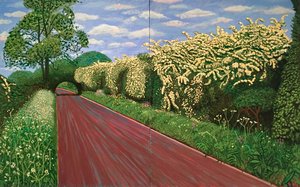
David Hockney’s “Rainy Night on Bridlingtom Promenade” isn't merely a depiction of London; it’s an embodiment of memory, perception, and the artist’s relentless pursuit of capturing fleeting moments in time. Painted in 1967 during Hockney’s formative years in Los Angeles – a period profoundly influenced by Californian light and color – this canvas transcends geographical boundaries to resonate with universal themes of solitude, contemplation, and the melancholic beauty inherent in urban decay. The painting itself is deceptively simple at first glance. A narrow promenade stretches across the composition, bathed in the muted hues of a rainy evening. The dominant palette leans heavily into blues and greens – shades that evoke not just meteorological conditions but also a deeper emotional resonance. These colors aren’t blended smoothly; instead, Hockney employs a technique he termed “joinery,” meticulously layering thin washes of pigment to create an illusion of depth and texture. This method, pioneered by Hockney alongside Frank Auerbach and Lucian Freud, prioritizes visual impact over photorealistic accuracy—a deliberate rejection of prevailing artistic conventions of the era. The promenade’s emptiness is punctuated by three strategically placed lamps – a luminous beacon against the gloom. These aren't rendered with meticulous detail; rather, they are treated as geometric shapes, radiating light and color that illuminate the surrounding area. Hockney’s use of acrylic paint—a relatively new medium at the time—allowed for unprecedented vibrancy and luminosity, pushing the boundaries of what was considered acceptable artistic expression. The lamps serve as a visual anchor, drawing the eye inward and inviting contemplation about the passage of time and the elusive nature of experience. Beyond its formal qualities, “Rainy Night on Bridlingtom Promenade” speaks to Hockney’s broader philosophical concerns. He famously stated that he wanted to paint "the world as it is seen," rejecting idealized representations in favor of capturing the raw immediacy of observation. The painting embodies this ethos—a testament to Hockney's belief that art should strive for truthfulness, even if that truthfulness resides in acknowledging imperfection and decay. It’s a poignant reminder that beauty can be found not only in grand vistas but also in the quiet corners of everyday life. The piece’s enduring appeal lies partly in its ability to evoke nostalgia—a longing for moments past that are forever lost to time. Hockney's masterful manipulation of color and texture transports viewers back to a specific place and moment, prompting reflection on memory and perception. It is a painting that invites us to slow down, observe carefully, and appreciate the subtle nuances of experience—a timeless contribution to British art history and a continuing source of inspiration for artists and collectors alike.Exploring Hockney's Technique: Joinery
David Hockney’s distinctive “joinery” technique represents a radical departure from traditional painting methods. Unlike blending colors seamlessly across surfaces, Hockney applies thin washes of pigment in successive layers—often up to 30—creating an illusion of depth and texture without resorting to glazing or scumbling. This painstaking process involves applying paint with a brush, allowing it to dry partially before adding another layer on top. The resulting surface resembles a jigsaw puzzle, where each fragment contributes to the overall visual effect. This method gained prominence during Hockney’s collaboration with fellow artists Auerbach and Freud in the mid-1960s—a period marked by experimentation and a desire to challenge artistic conventions. Joinery prioritizes visual impact over photographic realism, focusing on capturing the essence of form and color rather than striving for an accurate representation of reality. It's a technique that demands considerable patience and precision but yields extraordinary results—creating surfaces that shimmer with luminosity and conveying a palpable sense of atmosphere. Hockney himself described it as “painting with glue,” emphasizing the importance of layering and building up texture to achieve his artistic vision.Symbolism in Light and Darkness
The interplay between light and darkness within "Rainy Night on Bridlingtom Promenade" is laden with symbolic significance—reflecting Hockney’s broader engagement with philosophical ideas about perception and consciousness. The three lamps illuminate the promenade, representing not merely illumination but also a beacon of hope amidst the gloom—a visual metaphor for resilience and perseverance in the face of adversity. However, the darkness surrounding the lamps underscores the pervasive influence of melancholy and solitude—themes that recur throughout Hockney’s oeuvre. The muted blues and greens of the rainy night evoke feelings of introspection and contemplation, inviting viewers to consider the complexities of human experience. Hockney's deliberate use of color is carefully calibrated to convey emotional resonance—a testament to his belief that art should engage both intellect and emotion simultaneously. The emptiness of the promenade itself symbolizes isolation—a poignant reminder that even in bustling urban environments, individuals can experience profound feelings of loneliness. Yet, this solitude isn’t presented as bleak or despairing; rather, it serves as a catalyst for observation and reflection—encouraging viewers to appreciate the beauty inherent in stillness and simplicity. Hockney's masterful depiction captures the essence of these ideas—transforming a seemingly unremarkable scene into a powerful meditation on human existence.A Legacy of Innovation
“Rainy Night on Bridlingtom Promenade” stands as a cornerstone of David Hockney’s artistic legacy—a testament to his unwavering commitment to innovation and experimentation. By rejecting photographic realism and embracing a technique that prioritizes visual impact over meticulous detail, Hockney redefined British art in the 1960s—establishing himself as one of the most influential figures of his generation. His pioneering use of acrylic paint and his groundbreaking “joinery” method continue to inspire artists today—demonstrating the enduring power of artistic vision and the importance of challenging conventions. Hockney’s work remains a celebration of beauty, observation, and the transformative potential of art—a timeless contribution to British cultural heritage.Biografia dell'artista
Primi anni e formazione
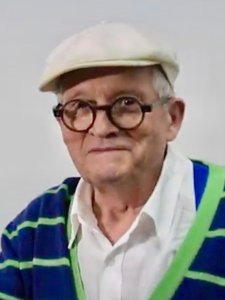
David Hockney, nato il 9 luglio 1937 a Bradford, in Inghilterra, è un pittore, disegnatore, incisore, scenografo e fotografo inglese di fama mondiale. Quarto di cinque figli di Laura e Kenneth Hockney – quest'ultimo obiettore di coscienza durante la seconda guerra mondiale – Hockney ha trascorso i suoi primi anni scolastici alla Wellington Primary School, poi al Bradford Grammar School e successivamente all’Bradford College of Art.Carriera e contributi artistici
La carriera artistica di Hockney è decollata negli anni '60, quando si è affermato come figura di spicco nel movimento Pop Art. Il suo lavoro si distingue per l'uso di colori vivaci, linee audaci e immagini riconoscibili, rendendolo uno degli artisti britannici più influenti del XX secolo.- A Bigger Splash (1966) rappresenta un esempio emblematico del suo stile pop art.
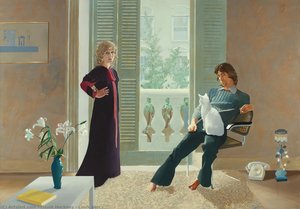
- I suoi ritratti doppi, come American Collectors (Fred and Marcia Weisman), dimostrano la sua capacità di catturare l'essenza dei soggetti.
- L’esplorazione dell'amore omosessuale nei suoi ritratti, visibile in We Two Boys Together Clinging (1961), rivela la sua apertura e volontà di sfidare le norme sociali.
Influenze e sviluppo artistico
L’opera di Hockney è stata influenzata da diversi fattori, tra cui l'ambiente culturale della Swinging London degli anni '60, l'arte popolare americana e le nuove tecnologie come la fotografia e il cinema. Il suo stile si è evoluto nel corso del tempo, passando da un approccio più pop a una ricerca di maggiore realismo e profondità emotiva. La sua permanenza in California negli anni '70 ha avuto un impatto significativo sulla sua arte, portandolo a dipingere piscine scintillanti sotto il sole californiano e paesaggi vibranti.Riconoscimenti e importanza storica
Nel corso della sua carriera, Hockney ha ricevuto numerosi riconoscimenti prestigiosi:- È stato nominato Order of the Companion of Honour (CH) nel 2018.
- È stato eletto Fellow of the Royal Society (FRS) nel 2003.
- Ha ricevuto il Praemium Imperiale per la pittura nel 2000.
Eredità e presenza online
L'opera di David Hockney è ampiamente disponibile online, con numerose gallerie virtuali che espongono i suoi dipinti. OriginalUniqueArt.com offre riproduzioni fedeli delle sue opere più famose, rendendole accessibili a un pubblico globale.- Pagina dell’artista David Hockney su OriginalUniqueArt.com
- Pagina Wikipedia di David Hockney
David Hockney
1937 - , Regno Unito
Informazioni rapide
- Artistic Movement Or Style: Pop Art
- Date Of Birth: 9 luglio 1937
- Full Name: David Hockney
- Nationality: Britannico
- Notable Artworks:
- A Bigger Splash
- American Collectors
- We Two Boys Together Clinging
- Place Of Birth (City And Country): Bradford, Regno Unito
Articoli correlati
David Hockney: Una retrospettiva sul cronista della luce, dello spazio e della quotidianità nella Pop Art
Esplora la retrospettiva completa di David Hockney, icona della Pop Art britannica. Analisi approfondita del suo uso innovativo della prospettiva e dell'influenza sulla pittura contemporanea. Scopri l'eredità artistica di un maestro senza tempo.
Acrylic Paint Guide: Mastering the Versatile Medium of Modern Art through Chemistry and Technique
Master the versatile world of acrylic painting with our expert guide for art students. Explore the chemistry, historical evolution, and advanced techniques—from watercolor-like washes to bold impasto—to elevate your modern artistry and technical skill.
Acrylic on Paper: A Modern Canvas for Contemporary Expression
Explore the versatility of acrylic painting on paper! Discover expert techniques, artist insights & archival practices for creating stunning contemporary art. Learn more at OriginalUniqueArt.
The Art Student’s Definitive Guide to Acrylic Painting: Mastering the World’s Most Versatile Medium
Unlock your creative potential with this expert guide for art students. Master acrylic painting techniques, from fluid washes to textured impasto. Learn about essential brushes, surfaces, and advanced color theory to elevate your fine arts practice with professional precision.
David Bomberg: Riscoprendo lo Spirito Pionieristico dell'Astrattismo Iniziale Britannico
Esplora la vita e l'opera di David Bomberg, figura chiave del Vorticismo britannico. Approfondisci le sue influenze artistiche, il suo stile unico e il lascito duraturo nell'arte moderna.