Acquista stampa Acquista download
 Invia
Invia
 Condividi
 Dettagli opera
 Aggiungi ai preferiti

 Scarica
 Simili
 Radiografia
 Slideshow
Ju Jitsu
 Oil On Board
- Cubism
 1913
1913- Late Medieval
 62.0 x 62.0 cm
 Tate Liverpool
 Scopri di più
Riproduzione a olio fatta a mano
Olio su tela dipinto a mano nelle tue dimensioni e con la tua cornice, realizzato su ordinazione dai nostri artisti.




P118B $10

P118H $10

P118W $10

P438Z $10

P508JH $12

P508YH $12

P805H $10

P805Z $10

P919BZ $10

P919G $10

P919XJ $10

P959ZH $10

P968JZ $12

W106C $8

W218G $10

W218JH $8

W218Y $10

W307PJ $10

W316G $10

W316PJ $8

W316Y $10

W398PJ $8

W4111J $10

W500HY $15

W500JH $15

W692G $12

W849H $8

W940BG $15

W953PJ $8




Scegli tra le nostre dimensioni predefinite, che rispettano le proporzioni originali dell'opera d'arte.

È possibile inserire dimensioni personalizzate per adattare l'opera a una cornice o a uno spazio specifico. Se la dimensione selezionata non corrisponde alle proporzioni dell'immagine originale, provvederemo a ritagliare l'opera o a estendere il dipinto con elementi aggiuntivi dipinti a mano. Un mockup digitale ti sarà inviato per approvazione prima dell'inizio della produzione.
Si prega di notare che l'anteprima a schermo non riflette il ritaglio o l'estensione effettivi. Solo il mockup mostrerà accuratamente la composizione finale.
Sebbene siano disponibili dimensioni personalizzate, consigliamo di selezionare una dimensione dall'elenco predefinito per preservare le proporzioni originali.
Dopo l'ordine, il team di OriginalUniqueArt.com invierà un'e-mail al cliente per le istruzioni e fornirà un'anteprima del mockup
Consegna in tutto il mondo () in 3/4 settimane anziché nelle normali 5 settimane. (21 Luglio). Nessun compromesso sulla qualità.

Spedizione espressa gratuita in tutto il mondo

Tela in lino di alta qualità

Assicurazione completa sulla spedizione

Garanzia di rimborso dei dazi doganali

Garanzia di fedeltà cromatica

Politica di reso entro 60 giorni (solo per difetti)

Garanzia di rimborso al 100%

Sconto per acquisti multipli
 L'opzione vetro è disponibile solo per dimensioni inferiori a 110 cm

Ju Jitsu
Tecnica di riproduzione
Dimensioni riproduzione
-


Prezzo totale finale
-
Descrizione dell'opera
David Bomberg’s ‘Ju Jitsu’: A Fragmented Dance of Energy
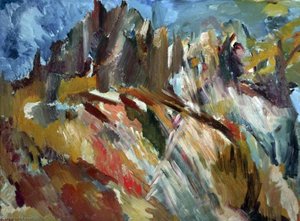
David Bomberg's 1913 painting, “Ju Jitsu,” is not merely a depiction of a martial art; it’s a dynamic exploration of form, movement, and the very essence of human interaction. Captured on a relatively small board – measuring just 62 x 62 cm – the work explodes with an arresting energy that belies its modest scale. Bomberg, a key figure within the ‘Whitechapel Boys,’ a group of East End artists pushing against established artistic conventions, presents us with a collage-like composition featuring four figures engaged in what appears to be a grappling match. However, this isn’t a straightforward representation; instead, Bomberg employs a fractured, almost Cubist approach, layering torso and arm fragments against each other, creating an illusion of simultaneous action and spatial ambiguity.
The muted color palette – dominated by ochres, browns, and greys – contributes significantly to the painting’s subdued yet powerful atmosphere. This deliberate restraint allows the geometric forms and the implied movement to take center stage. The checkered backdrop, a subtle but effective element, adds depth and reinforces the sense of fragmented space, mirroring the disjointed nature of the figures themselves. Bomberg's use of line is particularly striking; bold, angular strokes define the contours of the bodies, conveying both strength and vulnerability. The painting’s roots lie in the burgeoning avant-garde movements of the early 20th century – Cubism, Futurism, and Constructivism – all of which sought to break down traditional representation and explore new ways of perceiving and depicting reality.
Influences and Artistic Context
Bomberg’s artistic journey was shaped by a diverse range of influences. His early training at the City and Guilds Technical Art School provided a foundational understanding of technique, while his time under Walter Sickert at Westminster School of Art instilled in him an appreciation for form and urban life – elements that would later inform his own distinctive style. Crucially, Bomberg’s exposure to Paul Cézanne through the 1910 Roger Fry exhibition “Manet and the Post-Impressionists” proved transformative, introducing him to Cézanne's emphasis on geometric simplification and the exploration of underlying structure. This influence is evident in Bomberg’s own use of fragmented forms and his focus on capturing essential shapes rather than detailed representations.
Furthermore, Bomberg was deeply engaged with the radical artistic currents circulating at the Slade School of Art during this period. Alongside contemporaries like Mark Gertler and Stanley Spencer, he experimented with abstract geometric compositions, drawing inspiration from the Futurists’ celebration of dynamism and movement. The painting “Ju Jitsu” stands as a testament to this experimental spirit, embodying Bomberg's willingness to challenge conventional artistic norms and explore new visual languages.
Decoding the Symbolism
While ostensibly depicting a scene of physical combat, "Ju Jitsu" transcends a simple representation of martial arts. The fragmented figures can be interpreted as symbols of human interaction – the struggle for dominance, the interplay of power and vulnerability, and the inherent tension between individuals. The act of grappling itself represents a negotiation, a yielding and resisting, mirroring the broader themes of conflict and resolution that permeate human experience. Considering Bomberg’s background as a Jewish immigrant in London's East End, one might also read the painting as an exploration of identity and resilience within a rapidly changing urban landscape.
The painting’s abstraction further enhances its symbolic resonance. By stripping away extraneous details and focusing on essential forms, Bomberg invites viewers to engage with the underlying dynamics of the scene – to contemplate the forces at play and to project their own interpretations onto the composition. The lack of a clear narrative or resolution encourages active participation from the viewer, transforming the painting into a dynamic meditation on human interaction.
A Legacy of Innovation
“Ju Jitsu” is more than just a striking visual work; it’s a pivotal example of David Bomberg's artistic evolution. It represents a crucial stage in his development as an abstract painter, bridging the gap between his early training and his later explorations of landscape and portraiture. The painting’s bold geometric forms, dynamic composition, and muted color palette established Bomberg as a leading figure within the British avant-garde, paving the way for future generations of artists to push the boundaries of artistic expression. Reproductions of this captivating work offer a unique opportunity to experience the energy and innovation of one of Britain's most important 20th-century painters.
Biografia dell'artista
Primi Anni e Formazione Artistica
- Nato: Birmingham, Regno Unito (5 dicembre 1890)
- Morto: Londra, Regno Unito (19 agosto 1957)
- Uno dei 'Whitechapel Boys' – un gruppo di artisti dell'East End emersi nei primi anni del XX secolo.
Nato da genitori immigrati polacco-ebrei, Abraham e Rebecca Bomberg, a Birmingham. La famiglia si trasferì a Whitechapel, Londra, nel 1895.
Inizialmente studiò alla City and Guilds Technical Art School prima di formarsi come litografo a Birmingham.
Studiò sotto Walter Sickert alla Westminster School of Art (1908-1910), dove fu influenzato dall'attenzione di Sickert per la forma e la vita urbana.
Grande esposizione a Paul Cézanne attraverso la mostra del 1910 di Roger Fry "Manet e i Post-Impressionisti".
Frequentò la Slade School of Art (1911), vincendo il premio Tonks per il suo disegno dell'altro studente Isaac Rosenberg.
Gli Anni d'Avanguardia: Cubismo, Futurismo e Controversie
- Alla Slade, Bomberg faceva parte di una generazione notevole che includeva Mark Gertler, Stanley Spencer, C.R.W. Nevinson e Dora Carrington.
- Influenzato dalle mostre londinesi del 1912 dei Futuristi italiani e dalla seconda mostra post-impressionista di Fry (Picasso, Matisse, Fauvisti, Wyndham Lewis).
- Sviluppò uno stile distintivo che combinava Cubismo e Futurismo – caratterizzato da composizioni geometriche, palette di colori limitate, figure angolari e strutture a griglia.
- Il suo approccio radicale portò alla sua espulsione dalla Slade School of Art nel 1913, ritenuto troppo audace per i metodi convenzionali dell'istituzione.
- Fu brevemente associato agli Omega Workshops del Bloomsbury Group ed espose con il Camden Town Group.
- Mostrò affinità con il movimento Vorticista di Wyndham Lewis ma rimase indipendente, rifiutando un coinvolgimento completo.
Da Guerra a Paesaggio: Uno Sviluppo nello Stile
Le esperienze come soldato semplice durante la Prima Guerra Mondiale ebbero un profondo impatto sulla sua visione artistica, portandolo ad allontanarsi dall'astrazione.
Gli anni '20 videro Bomberg adottare uno stile più figurativo, concentrandosi su ritratti e paesaggi tratti direttamente dalla natura.
Sviluppò una tecnica sempre più espressionista, caratterizzata da impasto testurizzato e intensità emotiva.
Estesi viaggi in Medio Oriente (in particolare Palestina) e in Europa influenzarono significativamente la sua opera successiva. Le sue rappresentazioni di Gerusalemme sono particolarmente notevoli.
Gli Ultimi Anni e l'Eredità
- Dal 1945 al 1953, insegnò alla Borough Polytechnic (ora London South Bank University), influenzando una generazione di artisti tra cui Frank Auerbach, Leon Kossoff, Philip Holmes, Cliff Holden, Edna Mann, Dorothy Mead, Gustav Metzger, Dennis Creffield, Cecil Bailey e Miles Richmond.
- Sposò la pittrice paesaggista Lilian Holt.
- Nonostante periodi di relativa oscurità durante la sua vita, l'opera di Bomberg ha ottenuto un riconoscimento crescente negli ultimi decenni come contributo significativo all'arte moderna britannica.
- La David Bomberg House a London South Bank University è intitolata in suo onore.
- La sua eredità risiede nella sua sintesi unica dei movimenti d'avanguardia europei e nel successivo sviluppo di un potente stile paesaggistico espressivo che catturava l'essenza del luogo e dell'esperienza umana.

David Bomberg
1890 - 1957 , Regno Unito
Dati rapidi
- Artistic Movement Or Style:
- Cubismo
- Futurismo
- Espressionismo
- Artists Or Movements Influenced By This Artist:
- Frank Auerbach
- Leon Kossoff
- Artists Who Influenced This Artist:
- Paul Cézanne
- Walter Sickert
- Date Of Birth: 5 dicembre 1890
- Date Of Death: 19 agosto 1957
- Full Name: David Garshen Bomberg
- Nationality: Britannico
- Notable Artworks:
- Autoritratto (1937)
- Kitty, sorella dell'artista
- Studio per un dipinto
- Gerusalemme
- Place Of Birth: Birmingham, Regno Unito
Articoli correlati
David Bomberg: Riscoprendo lo Spirito Pionieristico dell'Astrattismo Iniziale Britannico
Esplora la vita e l'opera di David Bomberg, figura chiave del Vorticismo britannico. Approfondisci le sue influenze artistiche, il suo stile unico e il lascito duraturo nell'arte moderna.
Deconstructing Reality: Cubism's Revolutionary Impact on 20th-Century Art
Explore the revolutionary impact of Cubism on 20th-century art. Discover Picasso, Braque & beyond with our expert guide to this pivotal movement. Learn about Analytic & Synthetic Cubism's techniques and lasting legacy.

Deconstructing Reality: Cubism's Evolution, Impact & Enduring Legacy
Explore the revolutionary world of Cubism with expert insights from OriginalUniqueArt. Discover Picasso & Braque's groundbreaking techniques, its philosophical roots, and lasting impact on modern art. Expert appraisal & custom reproductions available.
Deconstructing Reality: A Comprehensive Exploration of Synthetic Cubism's Evolution & Impact
Explore the revolutionary world of Synthetic Cubism! Discover its origins, key artists like Picasso & Braque, techniques, and lasting impact on modern art. A comprehensive guide for enthusiasts.
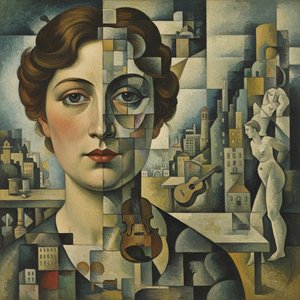
Deconstructing Reality: Cubism's Revolutionary Impact on 20th-Century Art
Explore the revolutionary world of Cubism with OriginalUniqueArt. Discover Picasso & Braque's groundbreaking techniques, its philosophical roots, and lasting impact on modern art. Expert insights for collectors.